Chihuahua Mixes: 8 Popular Crossbreeds, Sizes and Temperaments
Chipin, Chiweenie, Chorkie, Chug, Jack Chi, Pithuahua, Pomchi and Shichi compared: weight, coat, energy and the one health issue each Chihuahua mix brings.
Chihuahua mixes are everywhere: on social media, in pet store windows, in shelter listings and probably on your street. Cross a Chihuahua with a Dachshund, a Pomeranian, a Yorkie or a Pug and you get a dog with a catchy name and a personality that borrows from both sides. What you do not get is predictability, and each crossbreed comes with its own set of care needs.
We have written a full guide to eight of the most common Chihuahua crossbreeds. This page brings them together so you can compare size, coat and energy at a glance, read a short summary of each, and then jump to the full guide for the ones that interest you.
What counts as a Chihuahua mix?
A Chihuahua mix is any dog with one Chihuahua parent and one parent of another breed. Most of the crosses on this page are first-generation mixes, which means:
- They are not breeds. No major kennel club recognizes them, and there is no written standard.
- Littermates can look completely different. One puppy may take after the Chihuahua, another after the other parent.
- The size ranges are typical, not promises. They are drawn from the two parent breeds, and an individual dog can land outside them.
For reference, the AKC standard caps a purebred Chihuahua at 6 pounds. Almost every mix ends up heavier than that, sometimes much heavier.
Chihuahua mixes compared at a glance
| Mix | Other parent | Typical weight | Coat | Energy and temperament | Full guide |
|---|---|---|---|---|---|
| Chipin | Miniature Pinscher | 5 - 11 lb | Short and smooth | High, more active than a Chihuahua | Chipin |
| Chiweenie | Dachshund | 5 - 12 lb | Smooth, long or wiry | Vocal, stubborn, loves to dig | Chiweenie |
| Chorkie | Yorkshire Terrier | 4 - 9 lb | Short, semi-long or long | High and sustained, brave | Chorkie |
| Chug | Pug | 9 - 18 lb | Short and dense, sheds | Medium-low, loves to sleep | Chug |
| Jack Chi | Jack Russell type terrier | 8 - 18 lb | Usually short and smooth | Very high, about an hour a day | Jack Chi |
| Pithuahua | Pit Bull type | 15 - 35 lb | Short and glossy | More than a Chihuahua, unpredictable | Pithuahua |
| Pomchi | Pomeranian | 3 - 9 lb | Double, medium to long | Bold, vocal, very clingy | Pomchi |
| Shichi | Shih Tzu | 6 - 13 lb | Short to long, soft and wavy | Moderate, the mellowest | Shichi |
The eight crosses, one by one
Chipin (Chihuahua and Miniature Pinscher)
The Chipin, also sold as a Pinhuahua or Chi-Pin, is one of the most predictable crosses because the two parents are already close in size and build. Expect a sleek, leggy, often black and tan dog with big ears, plenty of energy and a talent for slipping through gaps in fences.
- Weight and height: about 5 to 11 pounds, 8 to 12 inches.
- Lifespan: typically 12 to 16 years.
- Exercise: roughly 30 to 60 minutes a day.
- Watch for: luxating patella and Legg-Calvé-Perthes disease; the thin coat also means it feels the cold.
Read the full Chipin guide.
Chiweenie (Chihuahua and Dachshund)
The Chiweenie, also called a Choxie or, online, a Mexican Hot Dog, usually ends up with a Dachshund body and a Chihuahua head, often with one ear up and one down. It is loyal, very vocal and a determined digger.
- Weight and height: about 5 to 12 pounds, 8 to 12 inches.
- Lifespan: 12 to 16 years.
- Coat: smooth, long or wiry, depending on the Dachshund parent.
- Watch for: the back. Dachshunds are prone to intervertebral disc disease, estimated to affect roughly one in four of them, and a long-bodied Chiweenie needs ramps, a lean weight and careful lifting.
Read the full Chiweenie guide.
Chorkie (Chihuahua and Yorkshire Terrier)
The Chorkie, or Chiyorkie, is one of the oldest and most common small-dog crosses, partly because the two parents are similar in size. It is sharp, energetic, brave beyond its size and quite a barker. Neither parent is flat-faced, so it does not inherit breathing problems.
- Weight and height: about 4 to 9 pounds, 6 to 10 inches.
- Lifespan: 13 to 16 years.
- Coat: anything from short to long and silky; a Yorkie-type coat needs a groomer every 6 to 8 weeks.
- Watch for: teeth above all, plus luxating patella and collapsing trachea.
Read the full Chorkie guide.
Chug (Chihuahua and Pug)
The Chug, also called a Pughuahua or Pug-chi, is affectionate, glued to its person and happy to sleep a lot. The short muzzle it can inherit from the Pug is what shapes everything else about its care.
- Weight and height: about 9 to 18 pounds, 10 to 14 inches.
- Lifespan: 10 to 13 years, shorter than most Chihuahua crosses.
- Coat: usually short and dense, and it sheds more than people expect.
- Watch for: brachycephalic breathing problems, heat intolerance and the bulging eyes that are easy to injure.
Read the full Chug guide.
Jack Chi (Chihuahua and Jack Russell type terrier)
The Jack Chi, or Jackhuahua, is a Chihuahua’s heart in a terrier’s body: sturdy, clever, independent and full of energy. It digs, it chases and it gets bored quickly without a job to do.
- Weight and height: about 8 to 18 pounds, 9 to 14 inches.
- Lifespan: typically 12 to 16 years.
- Exercise: about an hour a day of walks and active play.
- Watch for: luxating patella, primary lens luxation from the terrier side and congenital deafness in mostly white coats.
Read the full Jack Chi guide.
Pithuahua (Chihuahua and Pit Bull type)
The Pithuahua, also called a Chipit or Pee-wawa, is the outlier. The size gap between the parents makes natural mating nearly impossible, so almost every Pithuahua comes from a Pit Bull type mother, a Chihuahua father and artificial insemination.
- Weight and height: about 15 to 35 pounds, 12 to 18 inches.
- Lifespan: 10 to 13 years.
- Exercise: at least two walks of 20 to 30 minutes a day.
- Watch for: an unpredictable temperament that makes early socialization essential, plus inherited risks such as hip dysplasia, heart problems, luxating patella and dental disease.
Read the full Pithuahua guide.
Pomchi (Chihuahua and Pomeranian)
The Pomchi, also known as a Pomahuahua or Chiranian, is probably the smallest mix on this list: a Chihuahua face wearing a Pomeranian coat (if you’re not sure which purebred you’re looking at, start with our long haired Chihuahua vs Pomeranian comparison). It is bold, vocal, smart and very attached to its people.
- Weight and height: about 3 to 9 pounds, 6 to 10 inches.
- Lifespan: 12 to 16 years.
- Coat: a double coat that needs brushing three to four times a week and should never be shaved.
- Watch for: dental disease, retained baby teeth, collapsing trachea and coat loss inherited from the Pomeranian side.
Read the full Pomchi guide.
Shichi (Chihuahua and Shih Tzu)
The Shichi, or Chi-Tzu, is usually the mellowest of the common crosses: two companion breeds that produce an affectionate lap dog with moderate exercise needs. The real commitment is grooming and eye care.
- Weight and height: about 6 to 13 pounds, 6 to 10 inches.
- Lifespan: typically 12 to 16 years.
- Exercise: around 20 to 40 minutes of walking a day.
- Watch for: eye injuries and dry eye, breathing trouble if the muzzle is short, and a Shih Tzu coat that mats without regular brushing.
Read the full Shichi guide.
How do you choose between Chihuahua mixes?
A quick way to narrow it down is to ask which care task you are most ready to take on, because each cross trades one problem for another:
- Grooming: the Pomchi, the Chorkie and the Shichi can all need serious brushing or regular trips to a groomer.
- Exercise: the Jack Chi and the Chipin need real daily activity; the Chug and the Shichi need far less.
- Body structure: the Chiweenie’s back and the Chug’s airway call for lifelong management.
- Size uncertainty: the Pithuahua is the only one that can end up a medium-sized dog.
- Teeth and knees: every one of them, because the Chihuahua half brings both.
If you are still deciding whether a purebred Chihuahua might suit you better, our guide to the Chihuahua types explains the head shapes and coat lengths within the breed itself, including the leggy deer head Chihuahua that often gets mistaken for a mix. And if you’re not sure whether the dog in front of you is a mix at all, start with how to tell if a Chihuahua is purebred.
What to know before getting a designer mix
Catchy names sell puppies, and that is exactly the problem. Before you commit to any Chihuahua cross, keep these points in mind.
Puppy mills love designer mixes
A trendy name and a cute photo are the perfect product for puppy mills and online sellers who breed for volume. Walk away if a seller:
- Will not let you meet the mother or see where the puppies are raised.
- Offers to ship a puppy without a visit.
- Has no vet records or health results for either parent.
- Always has several “designer” mixes available at the same time.
- Uses words like “teacup,” “micro” or “imperial,” which only describe a puppy bred to be undersized.
Our guide to how much a Chihuahua costs explains why the purchase price is the smallest part of what you pay for.
There is no standard to protect you
With a recognized breed, a written standard and breed club health recommendations at least give buyers a reference point. With a mix, there is none. Nobody can promise you a final weight, a coat type or a temperament, and a seller who does is guessing.
Health comes from both sides
Crossing two breeds does not cancel out inherited problems. When both parents share a weak spot, such as luxating patella or dental disease, the puppy is still at risk. And each mix can add something new from the other parent, from a Dachshund’s spine to a Pug’s airway. Ask for health results on both parents.
Shelters and rescues are full of them
Chihuahua mixes are among the most common small dogs in shelters, often surrendered by families who were never told about the barking, the grooming or the vet bills. In listings they rarely appear under a trendy name; search for “Chihuahua mix” or “small breed mix” instead. Adopting an adult also means you can see the final size, coat and personality before you commit. Our checklist on what to know before getting a Chihuahua applies to mixes just as much.
At home I live with two purebred apple head Chihuahuas: Romeo, who is 4, cream and weighs 5.3 pounds, and Lorenzo, who is 2, fawn and weighs 5.1 pounds. So I write about these crosses as a Chihuahua person, not as the owner of any of them. What the club has taught me is that the Chihuahua half of every mix asks for the same things: careful knees, clean teeth, a harness instead of a collar and someone who is home.
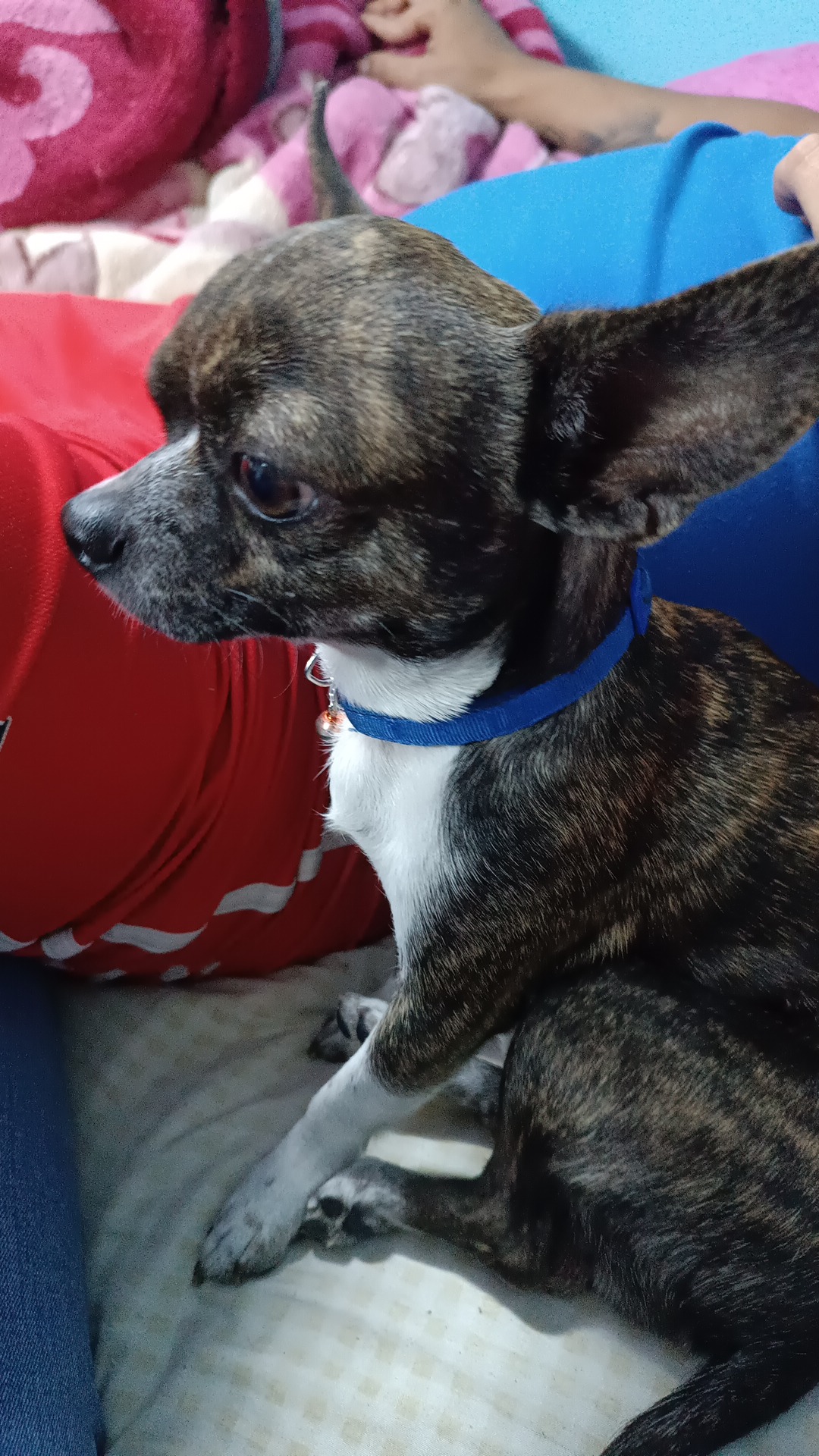
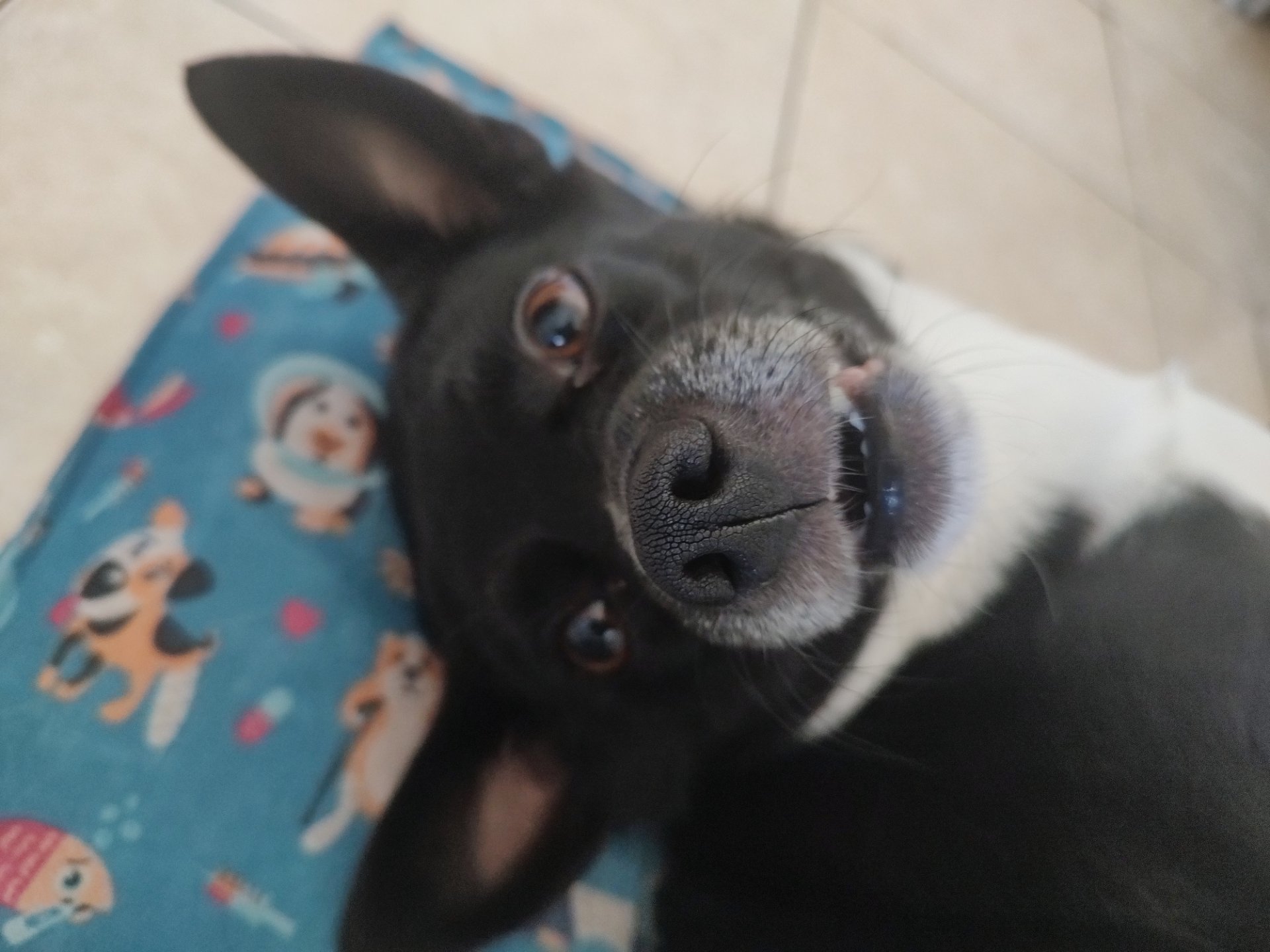
Luna, the dog in the photo at the top of this page, is one of our members registered as a Chihuahua mix. Whatever the other half of your dog turns out to be, that is what matters most: a good home for a dog who is already here.