
Types of Chihuahua: Apple Head vs Deer Head & More
The real types of Chihuahua explained: apple head vs deer head, coat length, colors and the teacup myth. With photos and a simple guide.
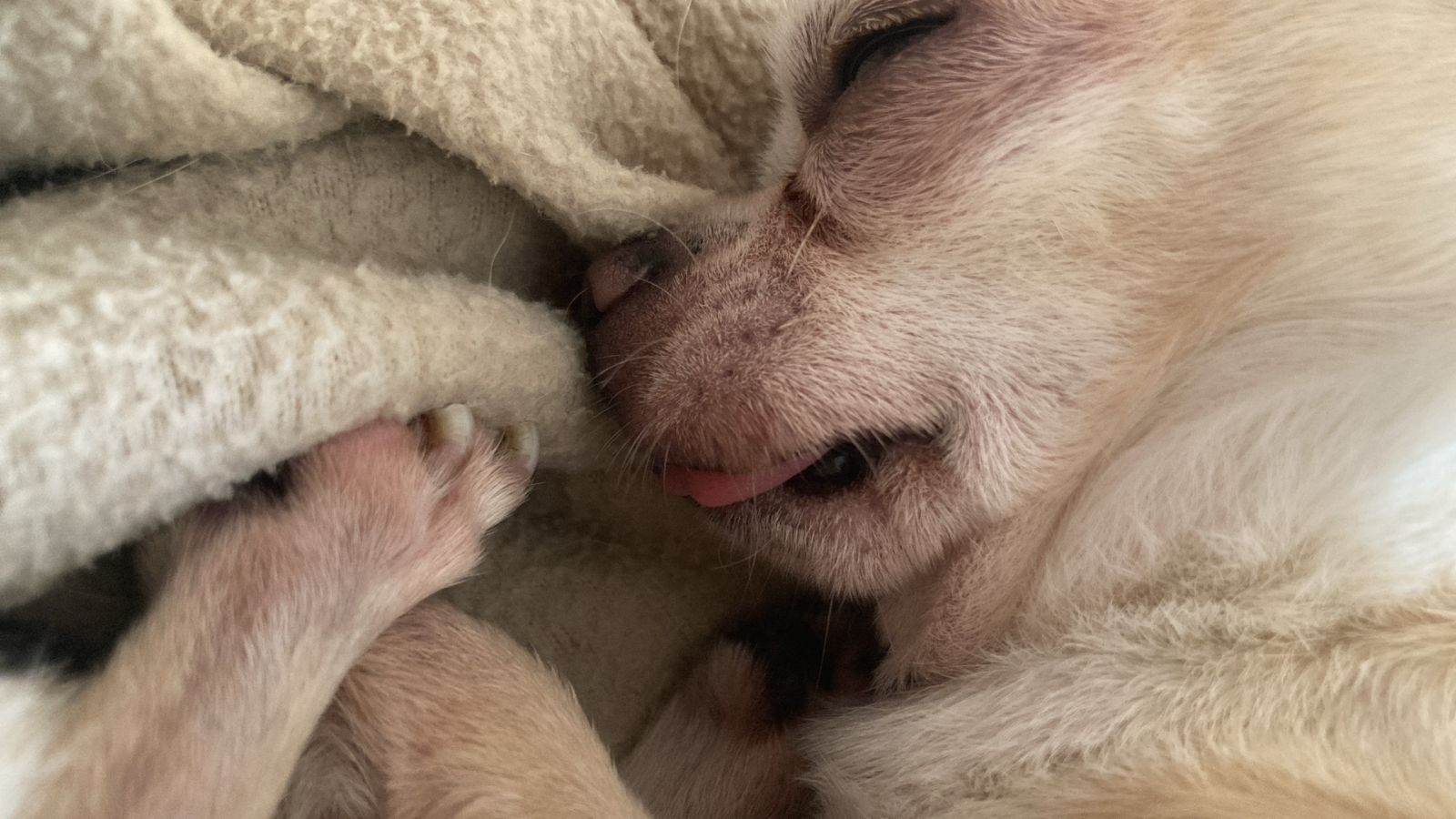
If you’ve started looking into types of Chihuahua, you’ve probably run into a wall of confusing labels: apple head, deer head, teacup, toy, mini, long coat, short coat. Some are real and recognized; others are pure marketing. Let’s sort out what actually matters — head shape, coat and size — so you know exactly what you’re looking at.
Two head shapes, one official standard
The single biggest source of confusion is the head. There are two recognized shapes, but only one is the official show standard.
Apple head Chihuahua
- The only head shape in the official standard (AKC, FCI).
- Round, domed skull with a well-marked stop (the dip between forehead and muzzle).
- Short, almost snub muzzle.
- Large, round, very expressive eyes.
- Many are born with a molera (a soft spot on the skull) that usually closes as they grow.
This is the classic “Chihuahua look” you see in shows and memes — often written as one word, applehead. My Romeo is a textbook apple head.
Deer head Chihuahua
- Not in the official standard, but extremely common.
- Longer skull, less domed forehead.
- Longer, more refined muzzle — a little like a tiny deer or a miniature pinscher.
- Often slightly larger than the apple head.
Deer head Chihuahuas are not “lesser” dogs. Genetically they’re identical, with the same temperament. They simply can’t compete in official conformation shows. Many owners prefer their look, and a deer head puppy often costs less. What matters is health and socialization, not the skull profile.
| Feature | Apple Head | Deer Head |
|---|---|---|
| Official standard | Yes | No |
| Skull | Rounded, domed | Longer, flatter |
| Muzzle | Short, snub | Longer, refined |
| Show eligible | Yes | No |
| Tear staining | More common | Often less |
What about coat length?
Beyond the head, Chihuahuas come in two coat types — and both are official.
- Short coat (smooth): the classic, low-maintenance Chihuahua. Brush twice a week.
- Long coat: soft, slightly wavy fur with feathering on the ears, legs and tail. Needs daily brushing but, surprisingly, doesn’t shed more.
Both can be born in the same litter — the long-coat gene is recessive. There’s no difference in price or temperament. If you’re trying to tell a long-coat Chihuahua apart from a similar-looking breed, see our guide on long haired Chihuahua vs Pomeranian.
And there’s one ultra-rare variety with no coat at all: the hairless Chihuahua, produced by crossing with the Mexican xoloitzcuintle.
Is “teacup Chihuahua” a real type?
No. This is where it gets commercial. “Teacup,” “mini,” “micro” and “pocket” are not recognized types — they’re labels used to charge more for very small puppies.
- Every Chihuahua is a “toy” breed by classification, so “toy Chihuahua” as a separate type doesn’t exist.
- A 1.5–6 lb adult is within standard. Under ~1.5 lb usually means health problems: chronic hypoglycemia, an open fontanelle for life, fragile bones.
- “Teacup” puppies are often the runt of a litter or the result of breeding two undersized dogs, which concentrates genetic defects and can halve life expectancy.
The rule: if a breeder sells you a “teacup Chihuahua” as a type or variety, walk away. We dig into this in teacup Chihuahua sizes.
What colors do Chihuahuas come in?
The standard allows almost any color except merle, which is banned because the gene (in double dose) causes deafness, blindness and deformities. Common colors include cream, fawn, chocolate, black and tan, white and tricolor. We break them all down in Chihuahua colors.
So which type is “best”?
None. The combination you choose — apple or deer head, short or long coat — is purely aesthetic. Temperament depends far more on genetics and upbringing than on type. What you should actually screen for is health and the breeder’s ethics, not the label on the puppy.
At home I have Romeo, a cream apple head, and Lorenzo, a fawn — also apple head — both short-coated. Two Chihuahuas, same “type” on paper, completely different personalities. That’s the real lesson: the type tells you how they look, never who they are.
Written by Belen Salto, who shares her life with Romeo and Lorenzo, two Chihuahuas. · Ver en español