
Chiweenie: The Chihuahua Dachshund Mix Explained
The Chiweenie mixes Chihuahua and Dachshund: size, temperament, lifespan and the serious back problem this crossbreed inherits. Read before adopting.
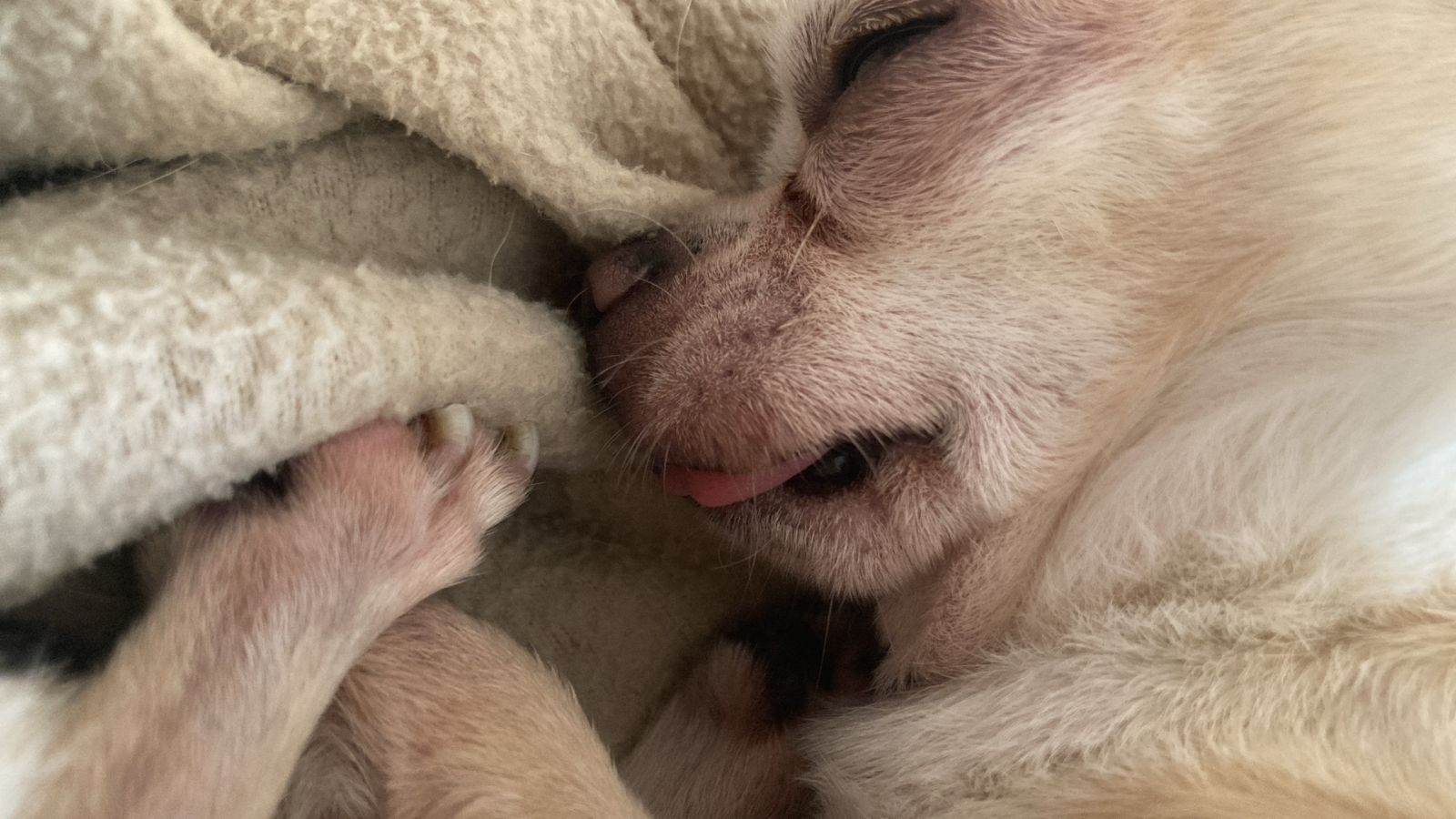
The Chiweenie is one of the most searched crossbreeds in the world and one of the most poorly explained. It mixes a Chihuahua and a Dachshund, producing a tiny, long-bodied dog with a personality that amplifies the best and the most stubborn of both parents. Before you fall for a photo, there’s a health issue almost nobody mentions that you need to understand first: the back.
What happens when you cross a Chihuahua and a Dachshund
A Chiweenie is not a breed. It’s a first-generation mix between two very distinct small breeds, which means there’s no standard, no full predictability, and every litter can turn out differently. Some puppies come out looking almost Dachshund with a Chihuahua face; others come out mostly Chihuahua with a slightly longer body.
You’ll also see it called:
- Choxie
- Mexican Hot Dog or German Taco (the internet nicknames)
- Weeniehuahua
- Chiwiener
None of these are official. Just like the Chug or the Pithuahua, they are commercial or affectionate labels people use for the mix.
What does a Chiweenie look like?
The most common outcome is a Dachshund body with a Chihuahua head. Here are the real ranges:
| Trait | Chiweenie |
|---|---|
| Adult weight | 5 - 12 lb |
| Height | 8 - 12 in |
| Body | Elongated, short legs |
| Head | Rounded, with a slightly longer muzzle |
| Ears | Erect (Chihuahua) or floppy (Dachshund), sometimes one of each |
| Coat | Smooth, long or wiry, depending on the Dachshund parent |
| Colors | Black and tan, chocolate, cream, fawn, brindle, merle |
| Lifespan | 12 - 16 years |
The ear detail is the most charming part: it’s completely normal for a Chiweenie to have one ear up and one ear down, and many don’t settle until their first birthday.
On color, the same warning applies as in our guide to Chihuahua colors: both Chihuahuas and Dachshunds can carry the merle gene, so breeding two merles together is dangerous because of the risk of deaf or blind puppies.
Temperament: loyal, bossy and very vocal
Here both parent breeds pull in the same direction, which makes the Chiweenie fairly predictable in personality:
- Intense attachment to one person. From the Chihuahua it inherits that habit of choosing “their human” and following them room to room.
- Very vocal. The Chihuahua announces everything, and the Dachshund has a deep bark that is wildly out of proportion to its size. Together you get a dog that comments on every sound in the building.
- Stubborn. Dachshunds were bred to hunt badgers underground, alone, making decisions without a human. That independence shows: your Chiweenie understands the command and then decides whether it’s worth obeying.
- A digger. Many Chiweenies burrow into blankets, pillows and sofas to build dens. That’s pure denning instinct, not misbehavior.
- Wary of strangers. Like any Chihuahua, it needs early socialization to avoid becoming reactive.
If you know the Chihuahua temperament, you already have half the map. Add hound stubbornness and a strong urge to dig.
The back problem nobody warns you about
This is the most important section of this article, and the reason a Chiweenie is not the right dog for every home.
Dachshunds are prone to intervertebral disc disease (IVDD), tied to their long spine and short legs. The MSD Veterinary Manual’s guide to bone, joint and muscle disorders in dogs singles out the Dachshund as the breed most affected by disc disease. It is estimated to affect roughly 1 in 4 Dachshunds at some point in life, and it can cause anything from severe pain to hind-leg paralysis.
A Chiweenie inherits those body proportions. The longer the back, the higher the risk. What you can actually do to protect them:
- No jumping off the couch or bed. Use ramps or pet stairs. A single bad landing can damage a disc.
- Never lift them under the front legs with the spine dangling. Support the chest with one hand and the hips with the other.
- Harness, never a choke or slip collar. It protects the neck and the trachea, which is also a Chihuahua weak point: the MSD Veterinary Manual lists collapsing trachea among the lung and airway disorders of small breeds.
- Keep them lean. Excess weight is the single biggest avoidable risk factor for the spine. One extra pound on an 8-pound dog is enormous.
- Limit stairs. Going down is harder on the back than going up; ideally, avoid both.
Red flags that mean an immediate vet visit: an arched back, trembling while moving, refusing to jump or walk, yelping when picked up, dragging the hind legs, or losing coordination.
This article is informational and does not replace veterinary advice. With any suspected spinal problem in a long-bodied dog, how fast you get to the vet changes the outcome.
Other health issues worth watching
Beyond the back, the Chiweenie combines the predispositions of both parents:
| Issue | Inherited from | What to do |
|---|---|---|
| Disc disease (IVDD) | Dachshund | Ramps, lean weight, harness |
| Luxating patella | Both | Avoid jumping, regular vet checks |
| Periodontal disease | Chihuahua | Daily brushing from puppyhood |
| Hypoglycemia in puppies | Chihuahua | Frequent meals in the first months |
| Obesity | Dachshund | Measured portions, controlled treats |
| Eye problems | Both | Annual exam |
The dental issue deserves its own note: toy breeds like the Chihuahua top the charts for periodontal disease, which the MSD Veterinary Manual calls the most common dental problem in dogs, and the Chiweenie inherits that crowded little jaw. Our guide on Chihuahua bad breath covers the first warning sign and the routine that prevents it.
How much does a Chiweenie cost?
Private breeders typically charge $300 to $900, depending on country and how trendy the mix is that year. But here is our honest position, the same one we hold for every crossbreed: a Chiweenie is a mixed-breed dog, and mixed-breed dogs are in shelters.
It’s one of the most common mixes in rescues across the US and Europe, precisely because many people buy them for the photo and surrender them when they discover the barking, the digging and the back care. Adopting an adult has one concrete advantage: you already see their final size, their formed personality and, above all, whether their spine is healthy.
Who is a Chiweenie right for?
A good fit if you:
- Are home often and want a genuinely clingy companion.
- Live in a calm household without small children who might pick the dog up wrong.
- Are willing to install ramps and manage weight for 15 years.
- Want an apartment dog and are ready to work on the barking.
A poor fit if you:
- Have a home full of stairs you cannot block off.
- Have young kids who carry dogs around unsupervised.
- Cannot tolerate barking or need a quiet home.
- Are out of the house for long hours. Separation anxiety is very common in this mix, something we cover in depth in Chihuahua separation anxiety.
At home I have two purebred Chihuahuas, Romeo and Lorenzo Pablito, so the long Chiweenie back isn’t something I live with daily. But owners of Chihuahua mixes write to our community constantly, and the pattern repeats: these are deeply loved, fiercely loyal dogs, with a care list nobody explained when they bought them.
If you have a Chiweenie, the most valuable thing you can do is simple and unglamorous: a ramp at the couch, a lean weight, a harness and clean teeth. Four things that sound small and can buy your dog years of walking without pain.
And if you’re looking at several crosses at once: the Pomchi is the fluffy one, the Chorkie needs a groomer every couple of months, the Chug struggles to breathe in summer, and the Pithuahua is the only one that might end up weighing 35 pounds.
Frequently asked questions
What is a Chiweenie?
How long do Chiweenies live?
How big does a Chiweenie get?
Do Chiweenies bark a lot?
Written by Belen Salto, who shares her life with Romeo and Lorenzo, two Chihuahuas. · Ver en español