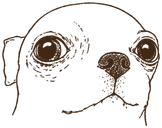

Apple head
AKC & FCI standardRound, domed skull, a sharp stop and a short muzzle. The only head shape the AKC and FCI standards describe.
#0006 Bimba, club member
Officially there are only two varieties: smooth coat and long coat. But head shape, size and color vary a lot, and it pays to know what you're looking at before you bring one home.
One is in the breed standard and the other isn't, but both are 100% Chihuahua. Many apple heads are born with a molera, a soft spot on top of the skull. How they differ, how big each one gets and the health quirks of each profile →
Round, domed skull, a sharp stop and a short muzzle. The only head shape the AKC and FCI standards describe.
#0006 Bimba, club member

Longer muzzle, flatter skull, often longer legs. Not in the show standard, but every bit a Chihuahua.
#0007 Blue, club member
The only two official varieties. Same breed, same genes, different brushing routine, and both can turn up in the same litter. If a fluffy one has you wondering, here's how to tell a long-haired Chihuahua from a Pomeranian.
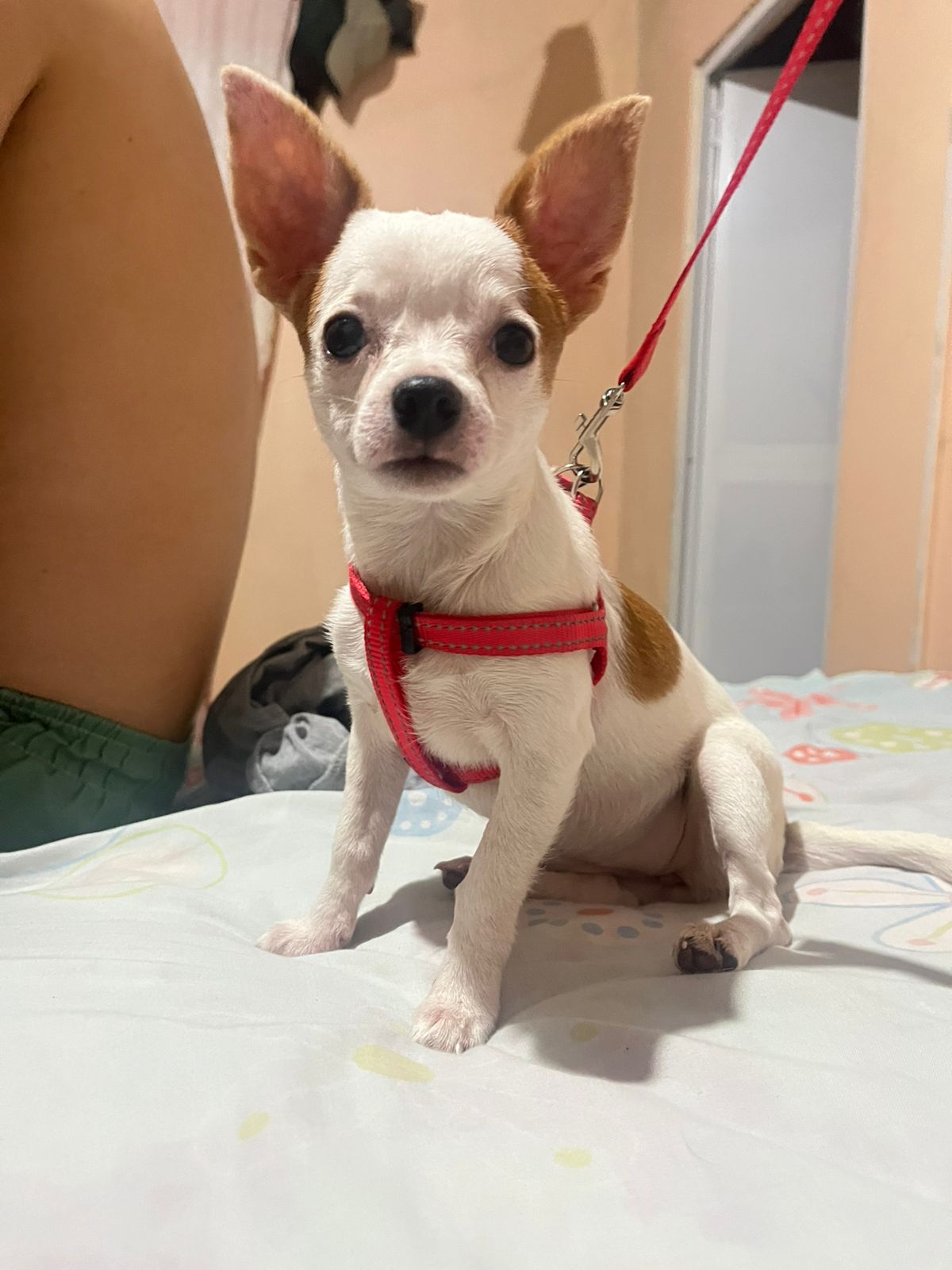
Short, glossy and close to the body. A weekly brushing is plenty. Feels the cold more, so a sweater earns its keep in winter.
#0005 Mia Mackliff, club member

Soft and flat or slightly wavy, with feathering on the ears, legs and tail. Brush 3 to 4 times a week. Handles cold a little better.
#0003 Pedro, club member
There's one Chihuahua size, not a "mini" and a "standard." Anything well outside this range isn't a special type: it's outside the standard.
| Weight | Height at shoulder | Note |
|---|---|---|
| 3.3 lb (1.5 kg) | 6 to 6.5 in | Lower end of a healthy adult |
| 4.4 lb (2 kg) | 6.5 to 7.5 in | Very common adult weight |
| 5.5 lb (2.5 kg) | 7 to 8 in | The sweet spot for most adults |
| 6 lb (2.7 kg) | 8 to 9 in | AKC upper limit (FCI allows up to 6.6 lb) |
AKC standard: not to exceed 6 pounds. FCI standard: 3.3 to 6.6 pounds (1.5 to 3 kg). Height is a rough guide; neither club sets one.
Romeo weighs 5.3 pounds and Lorenzo about 5, right in the middle of the table. Want to know where yours will land? Our Chihuahua weight calculator estimates adult size from a puppy's weight, and the body condition test tells you whether an adult is lean, ideal or carrying extra.
Almost any color is allowed. These are the ones you'll see most, and many of the dogs pictured are members of our club. The full list, with the genetics behind each one, is in our guide to Chihuahua colors.

Pale beige, almost white, with warm undertones.
#0001 Romeo Carlitos

The classic. Light tan to reddish gold, the color most people picture.
#0002 Lorenzo Pablito

Deep brown. The nose and eye rims are usually brown instead of black.
Solid black, or black with white or tan markings on the chest and legs.
#0003 Pedro
A white base with patches of fawn, brown or gray.
#0005 Mia Mackliff

White paired with black. Common in purebreds and mixes alike.
#0008 Drako
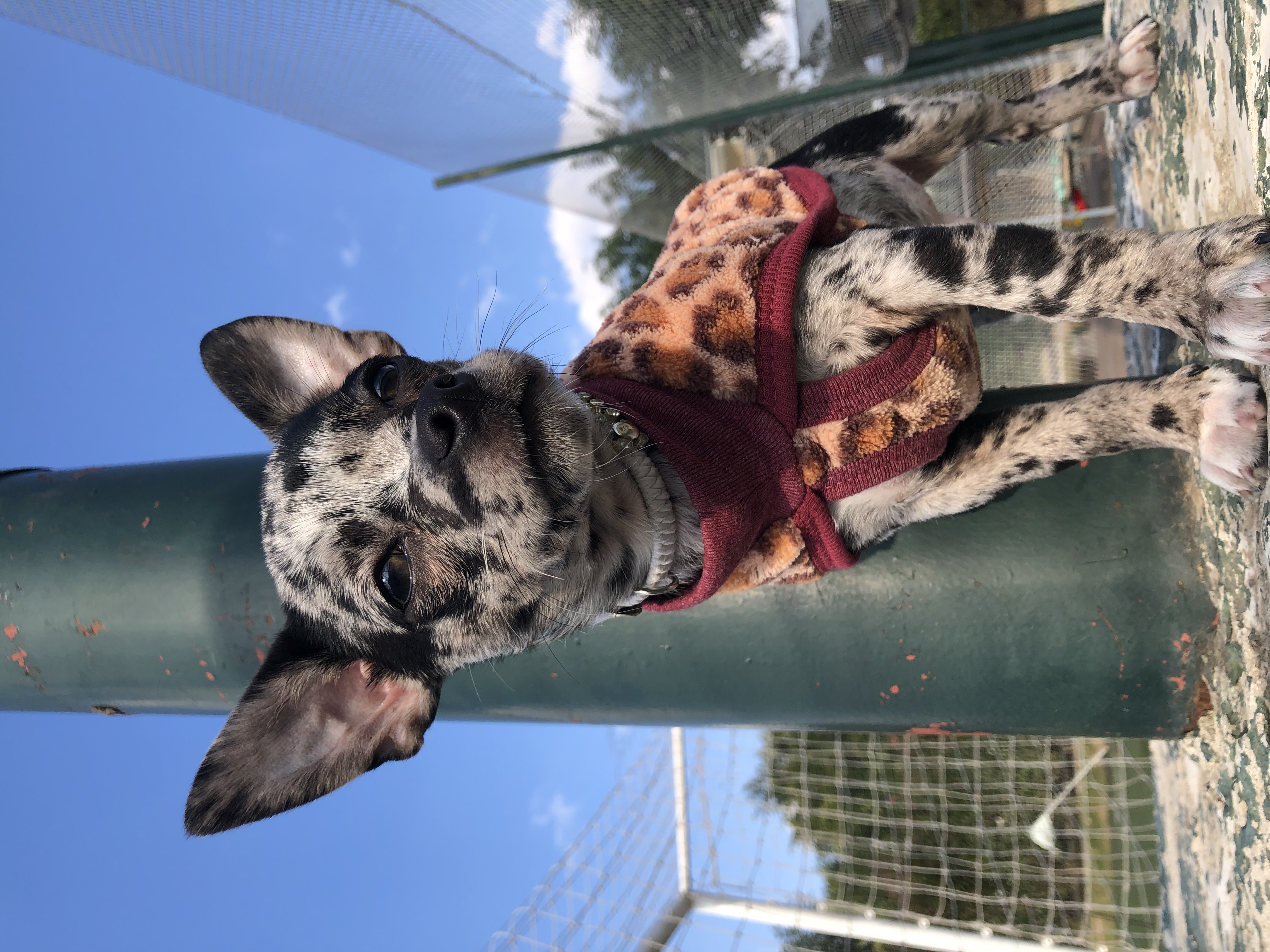
A marbled pattern of irregular patches over a solid base. No two merles look alike.
#0014 Scar
Linked to color dilution alopecia, a gradual thinning of the coat in some dogs. Fully accepted in the breed, but worth regular skin checks with your vet.
A single copy of the gene is harmless. Breeding merle to merle can produce "double merles," with a high risk of deafness and blindness. The FCI has dropped the pattern from its standard; ask for both parents' genetic tests.
More on the pattern, and what to ask a breeder, in our guide to the merle Chihuahua.
Sales labels, not types. Too often they hide risky breeding.
Every Chihuahua belongs to the AKC Toy Group. Putting "toy" on a listing adds nothing except a higher price.
An adult under about 3 pounds is smaller than the breed is built to be, and often comes with low blood sugar, an open soft spot on the skull and fragile bones.
Puppies bred for the smallest possible size. They tend to live shorter lives, with heart, liver and neurological problems showing up far more often.
Why "teacup" sells so well, and what it really costs the dog: teacup Chihuahua sizes, explained.
The Chihuahua is small, popular and easy to breed in volume, which makes it a favorite of puppy mills that wear females out litter after litter. Your money is your vote: every puppy bought from a place that mistreats its dogs tells the seller "this is fine, keep going."
Always. If the answer is no, leave. A thin, scared mother who lives in a crate with no real human contact is a red flag: she is probably having litter after litter.
Responsible breeders cap it at about one a year, with long rests in between. More than that is exploitation, no matter how friendly the pitch.
Don't "rescue" a puppy by buying it from a place that gave you a bad feeling. Buying keeps the business running. What doesn't sell stops being bred.
Every Chihuahua bought from a puppy mill tells the seller to keep going. Your money keeps that chain alive, or breaks it.
We say it because we believe it. The best way to protect the breed is to stop funding the people who mistreat it. If a seller won't open the door or let you see the mother, you already have your answer: turn around and keep looking.
If you're still deciding, start with what to know before getting a Chihuahua, then what one really costs.
Photos of real Chihuahuas, most of them members of our club.