
Shichi: The Chihuahua Shih Tzu Mix, Explained
The Shichi is a Chihuahua Shih Tzu mix: typical size, coat and grooming, temperament, the eye and breathing risks it can inherit, and where to adopt.
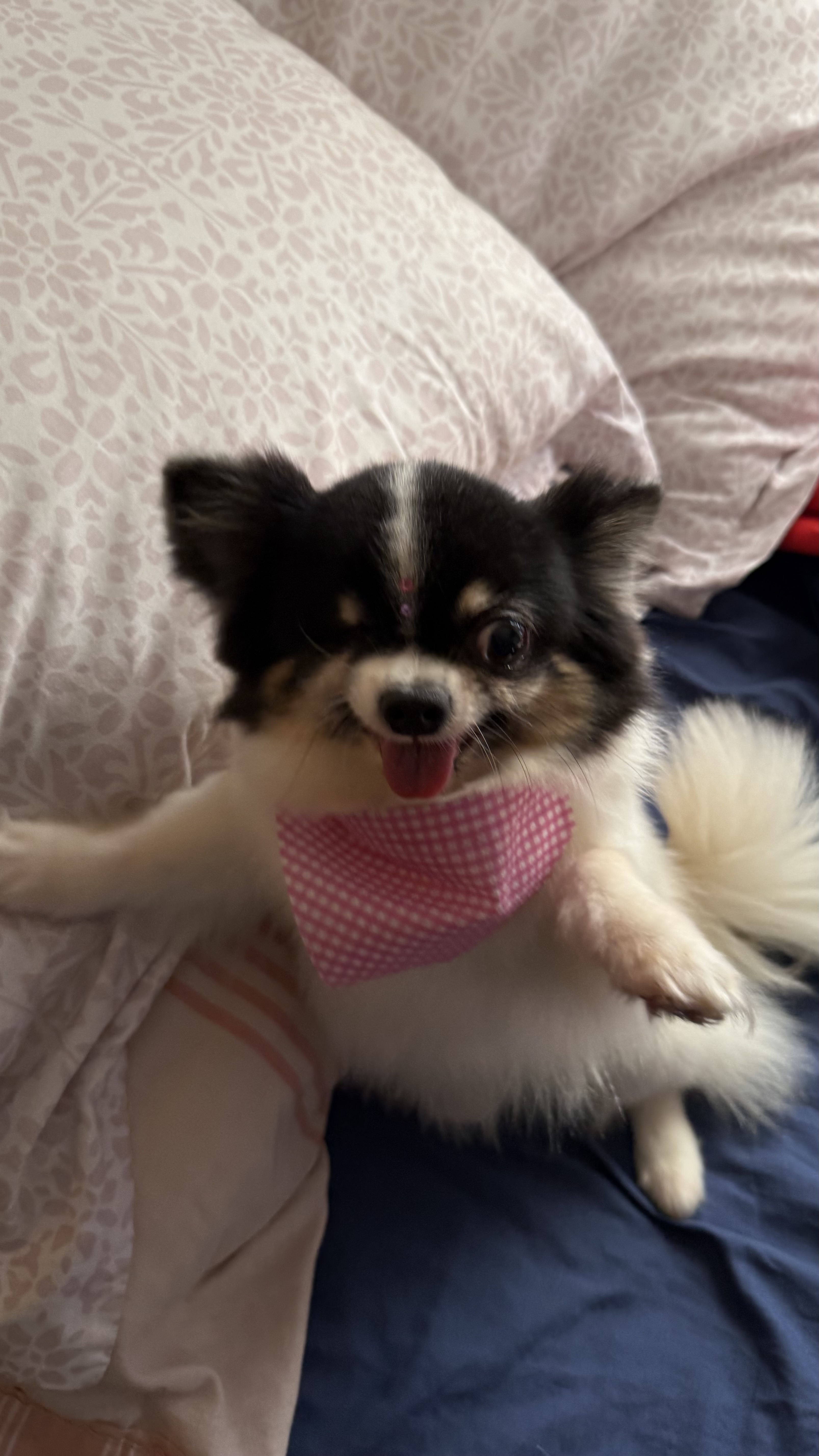
The Shichi is a cross between a Chihuahua and a Shih Tzu: two companion breeds, one small dog with a big soft face and a coat that can go almost any direction. This Chihuahua Shih Tzu mix tends to be calmer than many Chihuahua crosses, which makes it popular with families and first-time owners. It also inherits a couple of care needs, mostly around the eyes, the airway and the coat, that are worth understanding before you fall for a puppy photo.
Two companion breeds in one dog
A Shichi is not a breed. There is no standard, no registry and no way to predict exactly how a puppy will turn out. Littermates can range from a smooth-coated, Chihuahua-looking dog to a fluffy little lion with a short Shih Tzu nose.
You will also see it called:
- Chi-Tzu
- Shih Tzu Chihuahua mix or Chihuahua Shih Tzu mix
Both parents were bred to be companions, and that is the clearest thing you can expect from the mix. The AKC’s Shih Tzu profile calls the breed the “Lion Dog,” notes that owners have treasured it for about a thousand years, and lists it at 9 to 10.5 inches tall, 9 to 16 pounds, with a life expectancy of 10 to 18 years. The AKC’s Chihuahua profile lists 5 to 8 inches, no more than 6 pounds and 14 to 16 years.
How big does a Shichi get?
These are typical ranges, not a standard. Crossbreeds vary, and many pet Chihuahuas and Shih Tzus are themselves outside their breed standards.
| Trait | Chihuahua (AKC) | Shichi (typical) | Shih Tzu (AKC) |
|---|---|---|---|
| Adult weight | Up to 6 lb | 6 - 13 lb (2.7 - 5.9 kg) | 9 - 16 lb |
| Height | 5 - 8 in | 6 - 10 in | 9 - 10.5 in |
| Life expectancy | 14 - 16 years | 12 - 16 years | 10 - 18 years |
| Coat | Smooth or long | Short to long, often soft and wavy | Long, flowing double coat |
| Muzzle | Short to medium | Short to medium | Very short |
| Build | Fine, compact | Sturdy, low to the ground | Sturdy, low to the ground |
What does a Shichi look like?
The face is the part that varies most, and it matters more than looks:
- Chihuahua-type face: a slightly longer muzzle, large upright ears, more open nostrils.
- Shih Tzu-type face: a short, flat muzzle, prominent round eyes, ears that fold or hang.
- In between: the most common result, often with one ear up and one down.
Coat colors cover almost everything both parents carry: gold, cream, white, black, brindle, black and white, and multicolor combinations. If you want to see the whole Chihuahua side of the palette, our guide to Chihuahua colors shows them.
What is a Shichi’s temperament like?
The Shichi is usually the mellowest of the common Chihuahua crosses. Typical traits:
- Affectionate and people-focused. Happiest on a lap or right next to you on the sofa.
- Playful in short bursts, then content to nap.
- More easygoing with visitors than many Chihuahuas, though a Chihuahua-leaning dog can still be wary.
- Can be vocal, especially when someone comes to the door.
- Prone to separation anxiety, like most companion breeds that bond deeply.
- A bit stubborn about house-training, a common trait in toy breeds. Consistency and patience pay off.
Health risks inherited from both parents
Both parents are small, long-lived breeds, but their weak spots add up in specific places. Interestingly, the AKC’s toy group health testing list shows no recommended tests from the Shih Tzu national club, while the Chihuahua club recommends patella, cardiac and eye exams. That does not mean the Shih Tzu side is risk-free; it means you should ask your vet to check eyes, knees and breathing early.
| Condition | Linked to | What to watch for |
|---|---|---|
| Eye injuries and eye prolapse | Prominent eyes, Shih Tzu side | Squinting, redness, a bulging eye |
| Dry eye | Mostly the Shih Tzu side | Thick discharge, dull-looking eye |
| Breathing problems with a short muzzle | Shih Tzu side | Loud snoring, struggling in heat |
| Luxating patella | Both | Skipping steps, holding up a back leg |
| Collapsing trachea | Toy breeds | Honking cough, worse with excitement |
| Periodontal disease | Both | Bad breath, tartar, loose teeth |
| Hypoglycemia in puppies | Chihuahua | Weakness, trembling, lethargy |
The eyes come first
Those big, round eyes sit in shallow sockets, which makes them easier to scratch and, in a hard knock, can even let the eyeball slip forward. The MSD Veterinary Manual’s page on eye prolapse in dogs treats it as an emergency and notes that the outcome depends partly on breed and socket depth. Dry eye is also worth knowing about; the MSD overview of eye disorders in dogs covers it in its section on tear system disorders. Practical habits:
- Keep face hair trimmed away from the eyes.
- Wipe the eye corners daily with a clean, damp pad.
- Avoid rough play with bigger dogs.
- Any squinting or redness means a vet call that day, not next week.
Reddish-brown staining under the eyes is common in both parents; our guide to Chihuahua tear stains explains what is normal and what is not.
Breathing and heat
A Shichi with a short Shih Tzu muzzle may snore, snort and tire quickly in warm weather. Keep walks to the cool parts of the day in summer and never leave the dog in a car. The Chug deals with the same flat-face issues, and that guide goes into more detail.
Always walk a Shichi on a harness, not a collar. Both toy breeds and short-faced dogs benefit from keeping pressure off the neck, and the reasons are covered in our guide to collapsed trachea in Chihuahuas.
This article is informational and does not replace veterinary advice. Eye and breathing problems in small dogs can change quickly; when in doubt, call your vet the same day.
How long do Shichis live?
A healthy Shichi typically lives 12 to 16 years. Weight control, daily dental care, good eye hygiene and yearly checkups are the habits that make the difference.
Exercise needs
Moderate. Plan on 20 to 40 minutes of walking a day plus some indoor play. Most Shichis are happy with that and do not need long runs. In hot or humid weather, shorten the walks and favor indoor games.
Grooming: where the real work is
If your Shichi inherits the Shih Tzu coat, grooming becomes the main time commitment:
- Brushing: several times a week, daily for long coats, to prevent mats.
- Professional grooming: many owners keep a short “puppy cut” with a trim every 6 to 8 weeks.
- Face: trim around the eyes and wipe the folds and corners daily.
- Teeth: brush every day.
- Nails: every two to three weeks.
A Chihuahua-type coat is easier: a weekly brush and the usual nail and tooth care. Just remember that a soft, low-shedding coat is not the same as a hypoallergenic dog.
Who is a Shichi right for?
A good fit if you:
- Want an affectionate companion with moderate energy.
- Are home a lot, or can arrange company for the dog.
- Have time and budget for regular grooming.
- Live in an apartment or a quiet home.
A poor fit if you:
- Want a jogging or hiking partner.
- Live somewhere very hot without good air conditioning.
- Have young children who play rough around a small dog’s face.
- Do not want to deal with brushing and trims.
Shichi price and where to find one
The Shichi is marketed as a cuddly “designer” dog, and that makes it a favorite of puppy mills and online sellers. Avoid anyone who will not show you the mother, ships puppies unseen, has no vet records or always has several trendy mixes available. Labels like “teacup” or “imperial” Shichi are sales language, not a type.
Leela, the long-coated dog at the top of this page, shows why this matters. She is a club member from Morón, in Buenos Aires, registered with us as a Chihuahua, not a Shichi, and she came to her family after being rescued from an illegal breeding operation.
Shelters and small-breed rescues regularly have Shih Tzu and Chihuahua mixes. Adoption fees are usually much lower than breeder prices, and an adult dog shows you its real coat, face shape and personality from day one.
At home I have two purebred apple head Chihuahuas with short coats: Romeo, 11 years old and 5.3 pounds, and Lorenzo, 2 years old and 5.1 pounds. I have never had to book a groomer for either of them, so I will not pretend to know the Shichi coat from the inside. I do know the Chihuahua half well, and it asks for the same things in any mix: gentle handling, clean teeth and someone who is home.
If a fluffy small dog is what draws you in, compare the Shichi with the Pomchi: similar size, very different coat, and a livelier personality.
Frequently asked questions
What is a Shichi?
How big does a Shichi get?
Do Shichis shed?
How long do Shichis live?
Are Shichis good for first-time owners?
Written by Belen Salto, who shares her life with Romeo and Lorenzo, two Chihuahuas. · Ver en español