How Big Do Chihuahuas Get? Full-Grown Weight and Height
How big do Chihuahuas get? The full-grown size by AKC and FCI standards, why many pet Chihuahuas are bigger, how to predict adult size and the teacup myth.

How big do Chihuahuas get? Not very: a full-grown Chihuahua usually stands about 5 to 8 inches tall at the shoulder, and the American Kennel Club’s breed standard says it should weigh no more than 6 pounds. That makes the Chihuahua one of the smallest dog breeds in the world. Still, plenty of healthy family Chihuahuas end up a bit bigger than the standard, and that’s worth understanding before you worry about the number on the scale.
Here’s what the official standards say, why real-life Chihuahuas vary, how to estimate your puppy’s adult size and how to tell a big frame from extra weight.
Full-grown size at a glance
Two standards matter most. The AKC governs show dogs in the United States, while the FCI standard is used by kennel clubs in much of Europe and Latin America.
| AKC (United States) | FCI (international) | |
|---|---|---|
| Weight | Not to exceed 6 pounds | 2.2 to 6.6 pounds (1 to 3 kg) |
| Ideal weight | Not specified beyond the 6-lb limit | 3.3 to 5.5 pounds (1.5 to 2.5 kg) |
| Disqualified in the show ring | Over 6 pounds | Under 2.2 lb or over 6.6 lb (1 or 3 kg) |
| Height | About 5 to 8 inches (breed profile) | Not considered; only weight counts |
| Coats | Smooth and long | Smooth and long |
The AKC’s numbers come from its Chihuahua breed profile and the official standard, which describes “a well balanced little dog not to exceed 6 pounds.” The FCI figures come from the FCI breed standard, which says that in this breed only weight is taken into consideration, not height.
How tall and how long is a Chihuahua?
At the shoulder, most adults measure about 5 to 8 inches. But height is the least important number for this breed. Neither standard judges it, and two Chihuahuas of the same weight can look quite different depending on leg length and build.
A couple of things shape how big a Chihuahua looks:
- Body proportion. The AKC standard describes the body as “off-square”: slightly longer from shoulder to rump than it is tall.
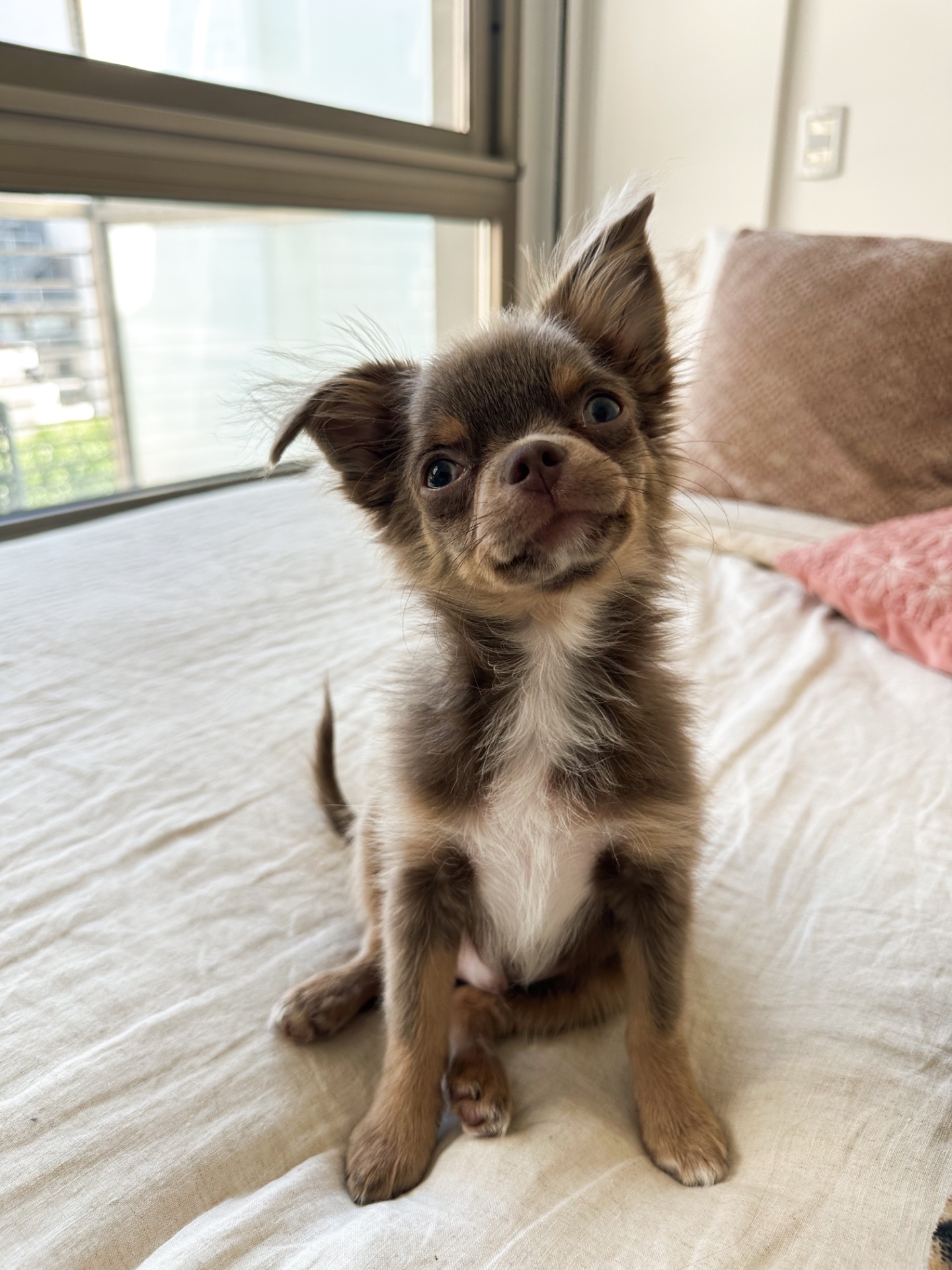
- Coat. A long-haired Chihuahua often looks larger than a smooth-coated one of the same weight, simply because of the fluff. Both coats are the same breed and share the same size standard.
- Head shape. Dogs often called “deer head” tend to look leggier and longer in the muzzle than the classic “apple head.” That’s a difference in type, not a separate size category.
How does a Chihuahua compare with other toy breeds?
Next to its toy-group neighbors, the Chihuahua is the shortest and has the lowest weight limit. These are the figures the AKC lists on each breed’s profile:
| Breed (AKC) | Height at the shoulder | Weight |
|---|---|---|
| Chihuahua | 5 to 8 inches | Not exceeding 6 pounds |
| Pomeranian | 6 to 7 inches | 3 to 7 pounds |
| Yorkshire Terrier | 7 to 8 inches | 7 pounds |
| Maltese | 7 to 9 inches | Under 7 pounds |
| Toy Poodle | No more than 10 inches | 4 to 6 pounds |
| Papillon | 8 to 11 inches | 5 to 10 pounds |
On paper the differences look small, a pound here and an inch there. In your arms they’re obvious: a Chihuahua is compact and fine-boned, and many people are surprised by how light a healthy adult feels.
Why are so many pet Chihuahuas bigger than the standard?
If your Chihuahua weighs 7 or 8 pounds, you’re far from alone. There’s no official survey of pet weights, but it’s common to meet family Chihuahuas anywhere from about 6 to 10 pounds. Think of that as what you see at the dog park, not as a second standard. The breed standard describes the ideal show dog. It isn’t a description of every Chihuahua living on a couch. Several things push pet Chihuahuas above the line:
- Breeding lines. Many pet Chihuahuas come from parents that were never bred with the show ring in mind. Bigger parents usually mean bigger puppies.
- Mixed ancestry. Some dogs sold as purebred carry genes from other small breeds, which can add height, length or bone.
- Extra weight. Chihuahuas gain fat easily. A few extra treats a day are a big deal for a dog this size.
- Health conditions. Less often, a medical issue such as a thyroid problem can cause weight gain. Sudden weight gain without a change in food or activity is a reason to see your vet.
Here’s how to read a “bigger” Chihuahua:
| What you see | What it likely means |
|---|---|
| Over 6 lb, lean, ribs easy to feel, visible waist | A larger frame; not a problem |
| Over 6 lb, ribs hard to feel, no waist | Likely overweight; talk to your vet |
| Tall, long-legged and well over the standard | Possibly a bigger line or mixed ancestry |
| Under 3 lb as an adult | Very small; ask your vet about specific risks |
The point isn’t to hit a show weight. A lean, healthy 7-pound Chihuahua is in better shape than a 6-pound one carrying fat over its ribs.
How can I predict my puppy’s adult size?
No method is perfect, but you can get close.
- Look at the parents. Their adult weight is one of the most useful clues you have. If you can, ask the breeder or shelter what the mother and father weigh.
- Weigh your puppy at 3 to 4 months. By then a puppy has put on a predictable share of its adult weight, so today’s number says a lot about tomorrow’s. Our Chihuahua weight calculator applies the breed’s growth curve to your puppy’s age and weight.
- Expect most growth to finish around 9 to 12 months. Height usually settles first, and some dogs fill out a little after that. For what happens along the way and the signs your puppy has reached its adult size, see our guide to Chihuahua growth stages and when they stop growing.
- Watch paws and bone, loosely. A puppy with sturdy legs and big paws for its age often grows into a slightly larger adult, though it’s a hint, not a rule.
Treat every estimate as a range. If the prediction says “about 5 pounds,” your adult dog may land a little above or below that, and that’s normal.
What about teacup Chihuahuas?
You’ll see puppies advertised as teacup, micro, mini or pocket Chihuahuas, often at a higher price. None of these is an official size. The AKC and FCI recognize one Chihuahua breed, with two coat varieties, and one size standard.
Some sellers use “teacup” for puppies from the smallest parents, or for puppies that are simply young. Dogs bred to be extremely tiny can be more prone to problems such as low blood sugar and fragile bones, so a very small size isn’t something to pay extra for. We cover the myth and the warning signs in detail in our guide to teacup Chihuahua sizes.
Is my Chihuahua the right size?
The scale tells you how much your dog weighs. It doesn’t tell you whether that weight is healthy. For that, vets look at body condition, which you can check at home:
- Ribs: run your hands along the sides. You should feel the ribs easily under a thin layer, without pressing hard.
- Waist: looking down from above, there should be a visible narrowing behind the ribs.
- Tummy tuck: from the side, the belly should rise slightly from the chest toward the hind legs.
- Fat pads: soft padding at the base of the tail or over the hips suggests extra weight.
If you’re unsure, our is my Chihuahua overweight? tool walks you through the check step by step. Bring the result to your vet, who can tell you what a healthy weight looks like for your dog’s frame.
Two Chihuahuas, both inside the lines
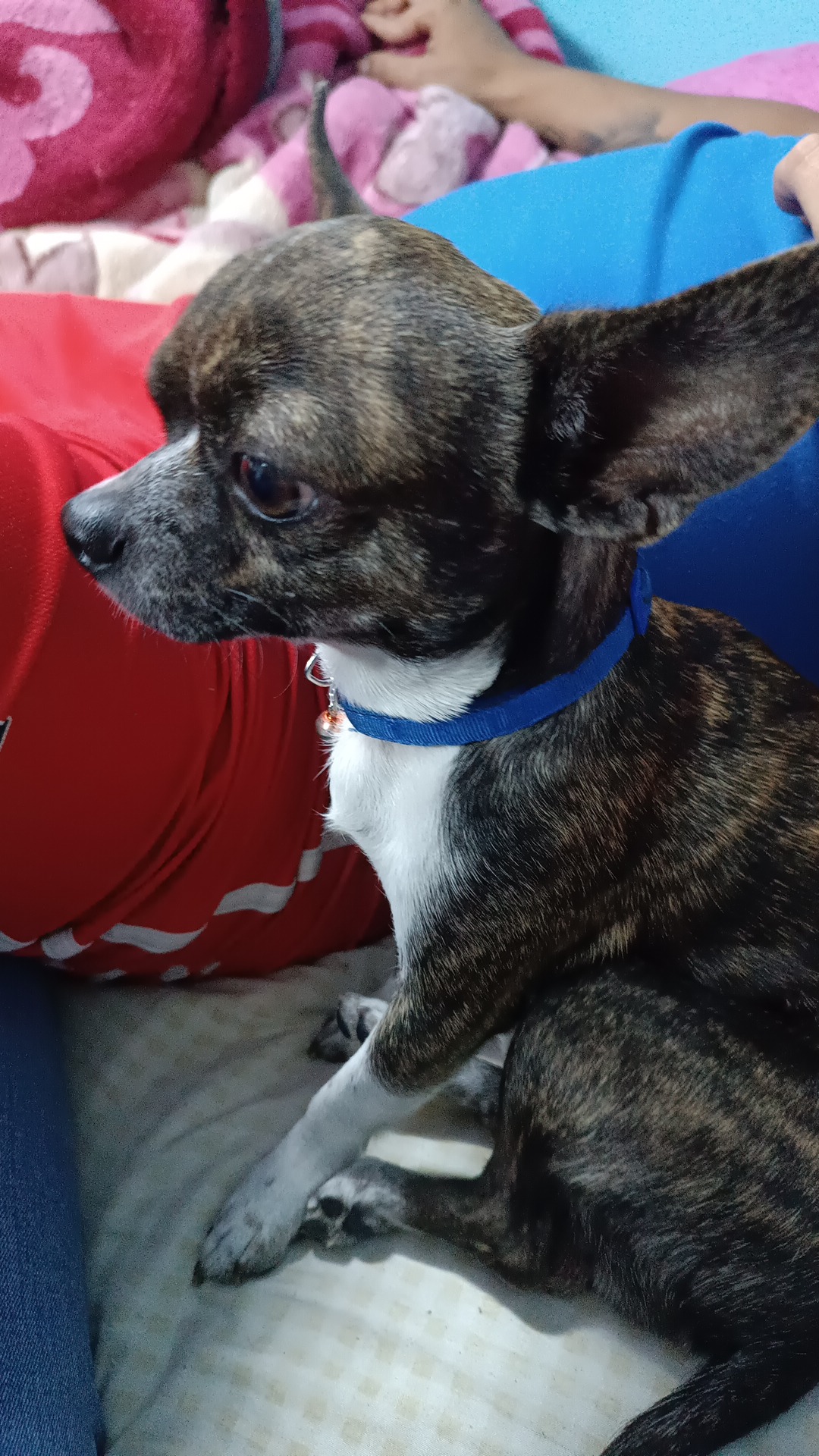
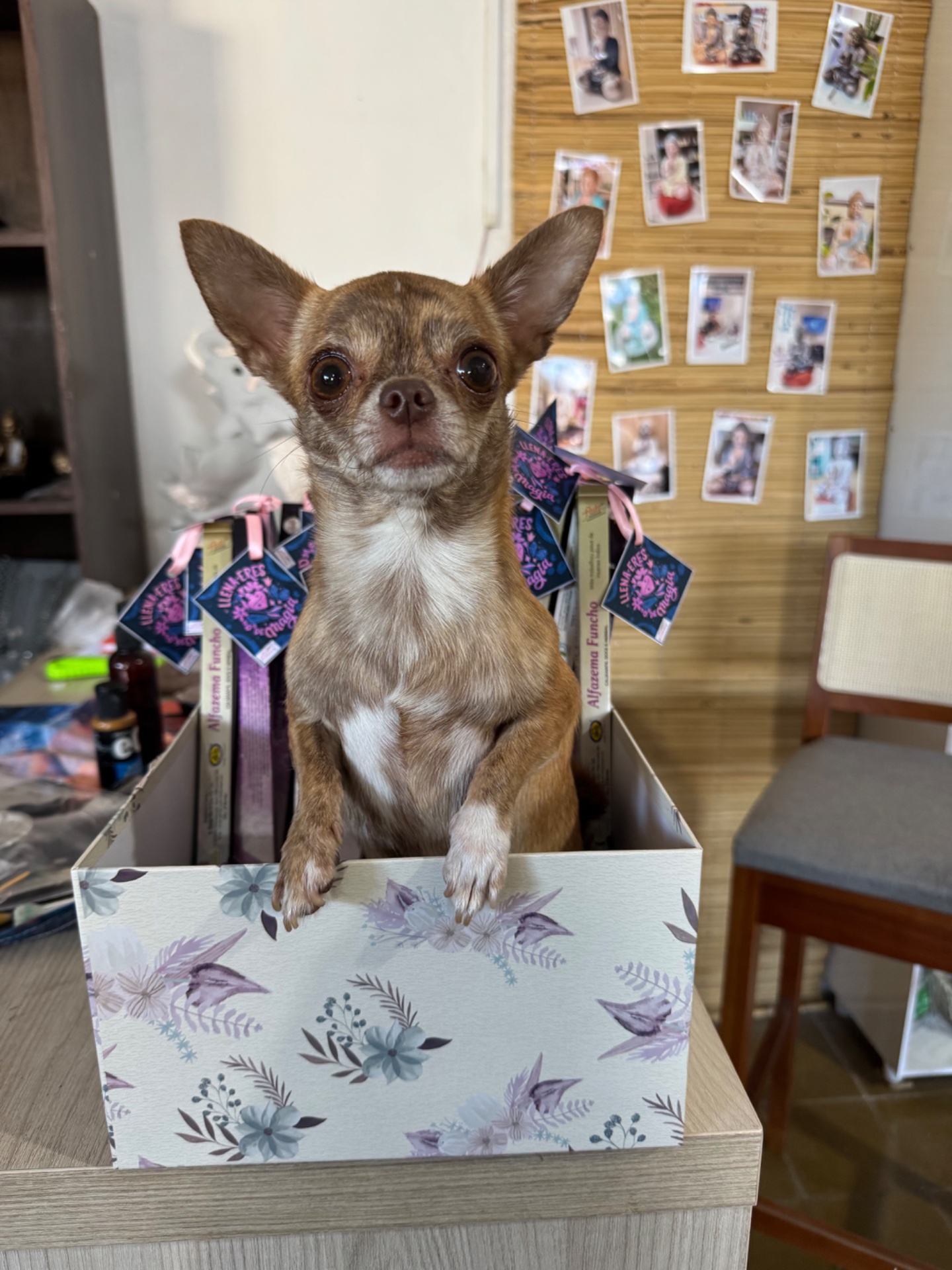
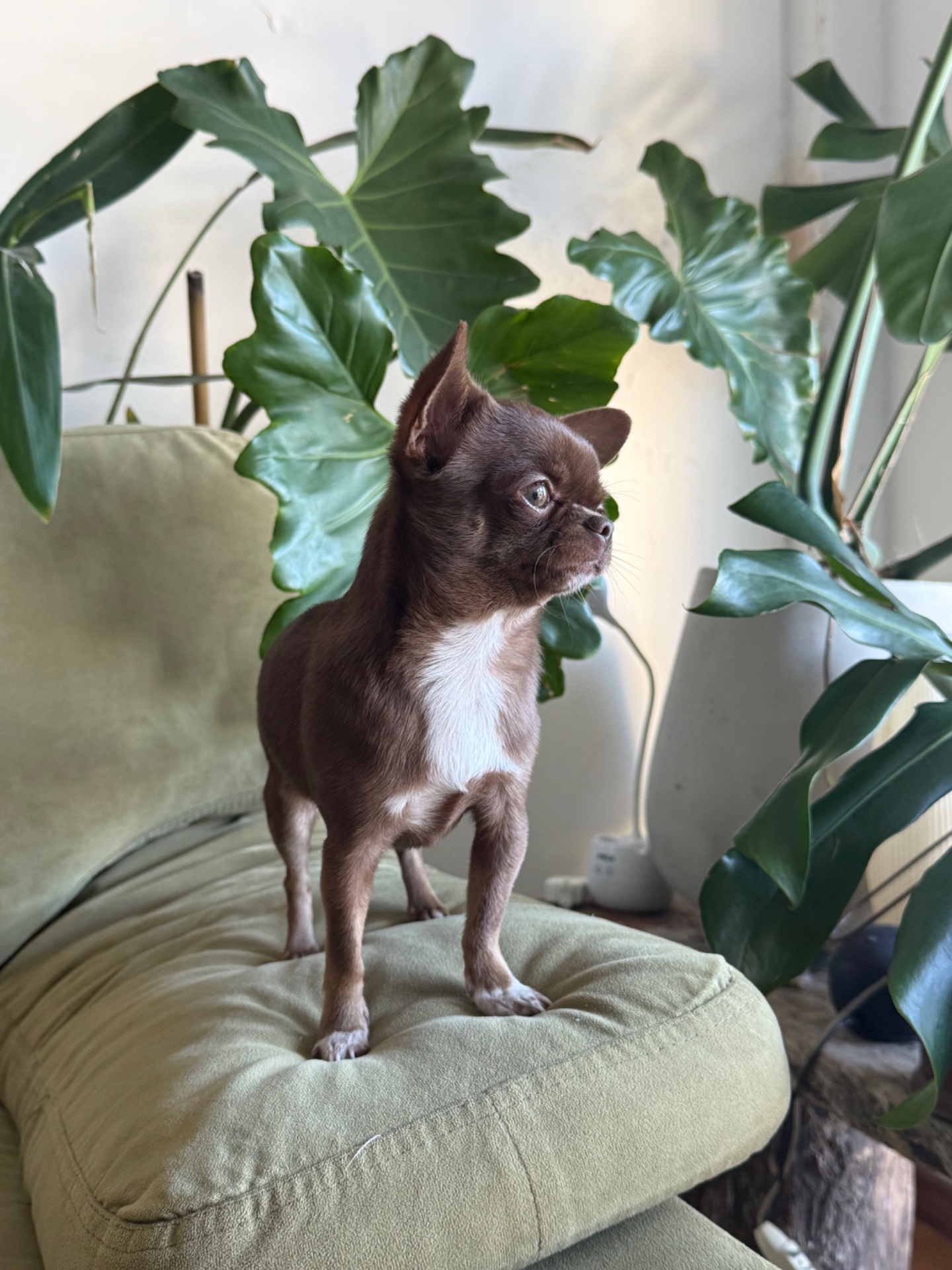
Romeo is 4 and weighs about 5.3 pounds; Lorenzo is 2 and weighs about 5.1 pounds. Both are smooth-coated apple heads, and both happen to sit within the AKC’s 6-pound limit and the FCI’s ideal range. I mention it not because it makes them better dogs, but because it shows what “full grown” looks like for a typical Chihuahua: small enough to fit in your arms, and a lot more dog than the number suggests.
If yours ends up at 7 pounds, or 4, what matters is the same: a lean body, a good appetite, plenty of energy and a vet who knows your dog. The standard is a guide for the show ring. Your Chihuahua only needs to be the right size for its own frame.