Chocolate Chihuahua: The Brown Gene, Nose Color, AKC Status and Price
What makes a chocolate Chihuahua: the recessive b gene, the brown nose test vs fawn and red, chocolate and tan, chocolate merle, eye color, AKC status and price.
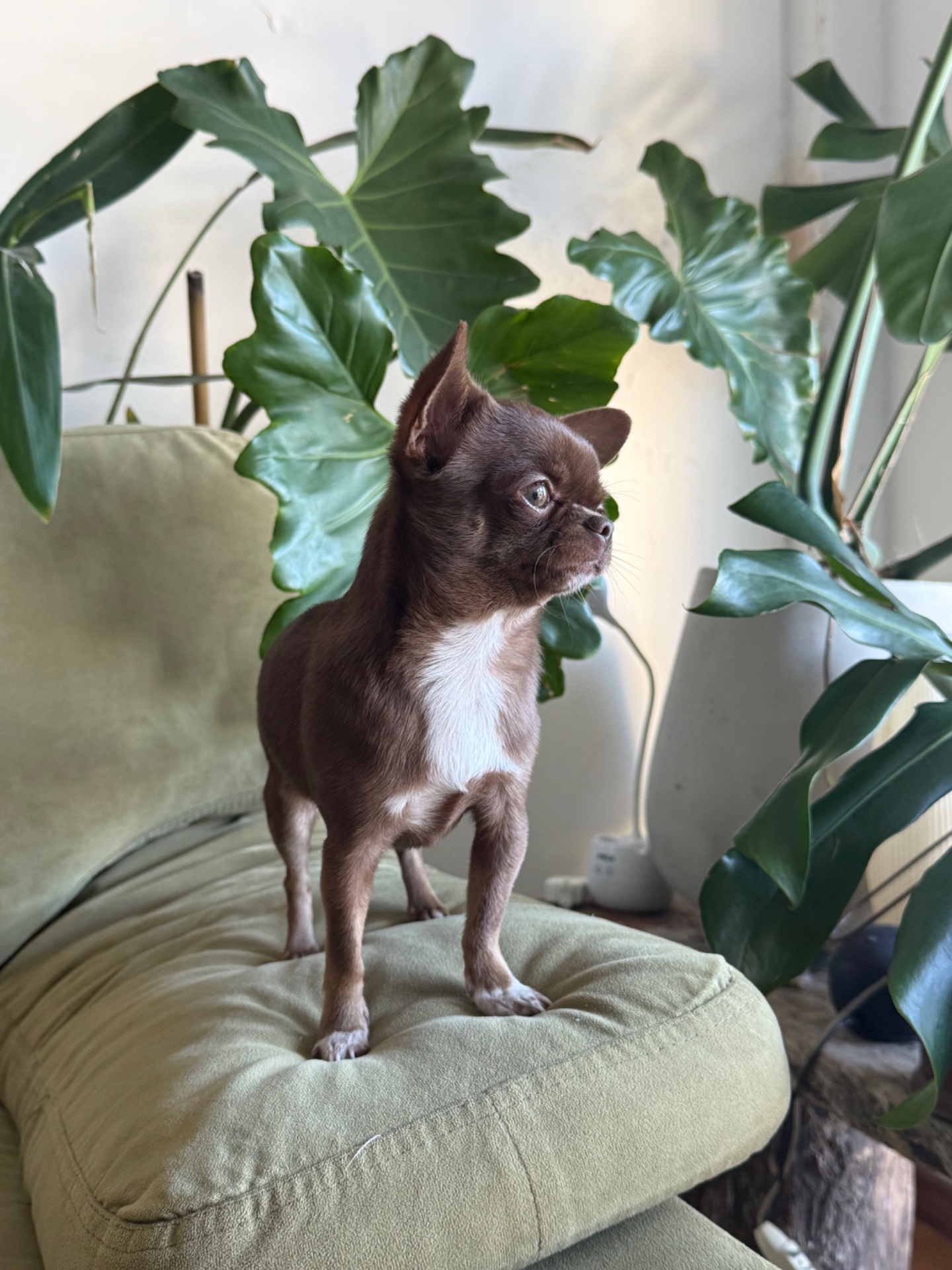
A chocolate Chihuahua is easy to love and surprisingly easy to misidentify. A rich brown coat might be chocolate, or it might be a deep red or a dark fawn. The way to tell is not the coat at all: it’s the nose. Every true chocolate has a brown nose, brown eye rims and brown paw pads, because the gene that makes the coat brown changes all of the dog’s dark pigment.
This guide explains that gene, how to tell chocolate from fawn and red at a glance, the main chocolate combinations (including chocolate and tan and chocolate merle), what the AKC says about eye and nose color, how common the color is and what it should cost. For the full list of coats, see our hub on Chihuahua colors.
What is a chocolate Chihuahua?
A chocolate Chihuahua is a dog whose black pigment has been turned brown by two copies of a recessive gene at the B (brown) locus. The coat is a cocoa or liver brown, and the nose, lips, eye rims and paw pads are brown too. Chocolate is a standard AKC color, and it appears in smooth and long coats, apple heads and deer heads.
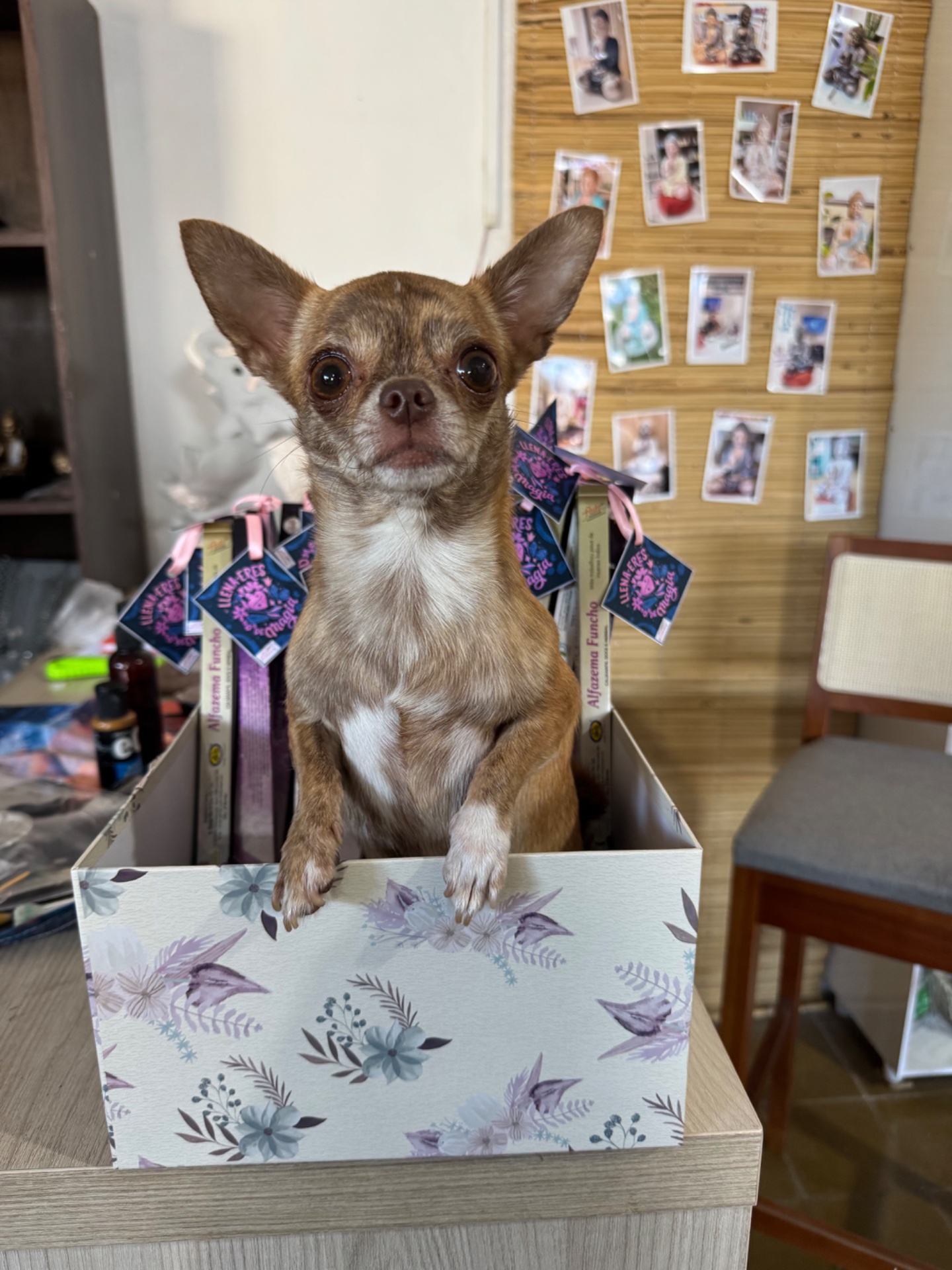
The dog at the top of this page is Nogal, a club member from Argentina. Look at her nose: it matches her coat. That single detail is what separates a chocolate from every other brown-looking Chihuahua.
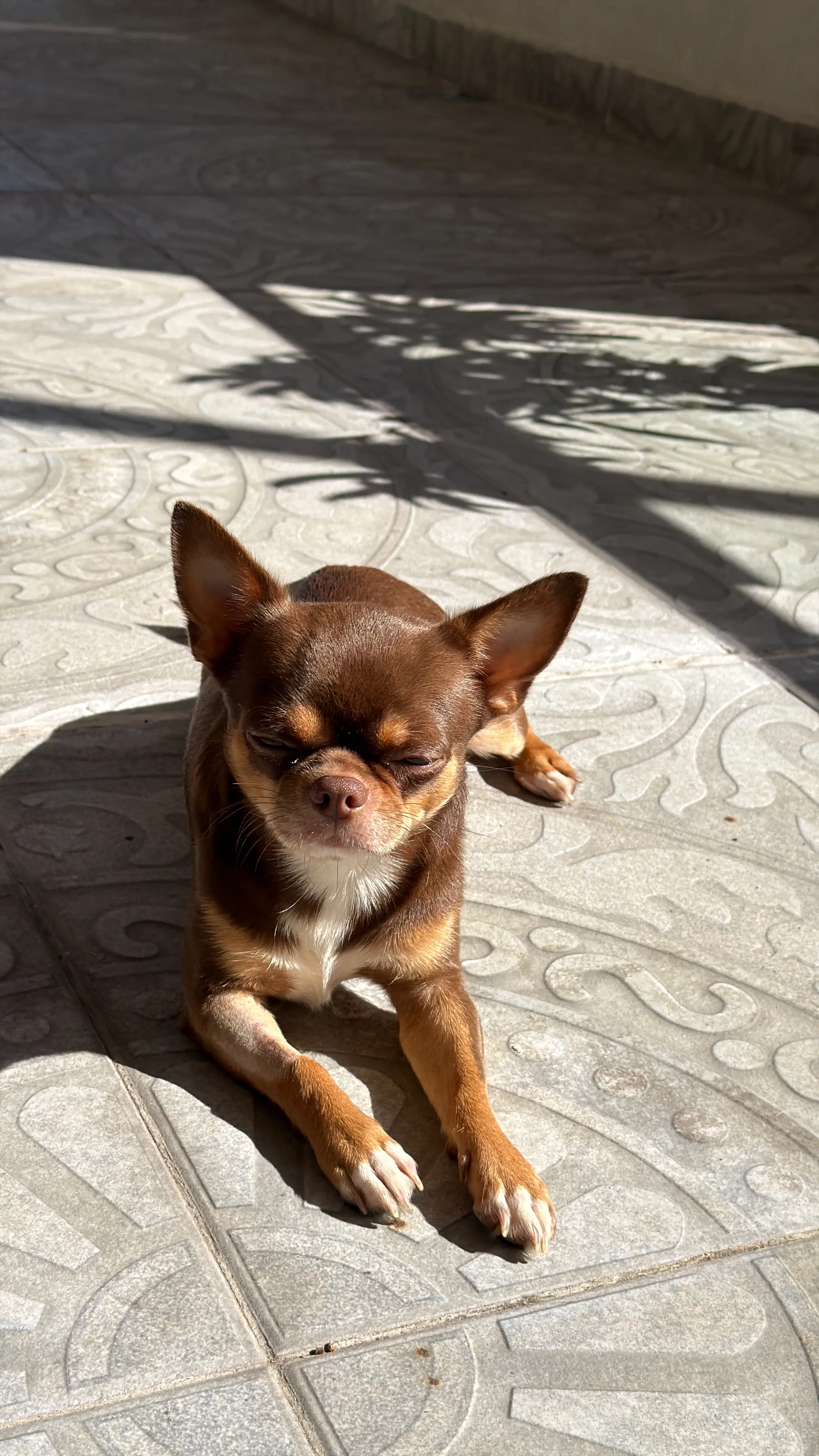
That’s Milo, another member, a chocolate deer head. In strong sunlight the coat looks almost red, but the brown nose gives him away.
How does the chocolate gene work?
The short version comes from VCA Animal Hospitals: the B locus “is linked to brown, chocolate, and liver,” and “it takes two recessives (bb) to dilute black pigment to brown.” Here’s what that means for a litter:
| What the dog inherits | What you see | What it passes on |
|---|---|---|
| B/B (no brown) | Black pigment: black nose, and black wherever the coat is dark | Never a brown copy |
| B/b (one brown) | Still looks black-pigmented, but is a hidden carrier | A brown copy to about half its puppies |
| b/b (two brown) | Chocolate: brown coat where it would be black, brown nose and pads | A brown copy to every puppy |
Three consequences follow:
- Two black-nosed parents can produce chocolate puppies if both are hidden carriers. On average, about one puppy in four from two carriers will be chocolate.
- Two chocolate parents can only produce chocolate-pigmented puppies, since neither has a black copy to give. The coats can still differ, with tan points, white or sable on top.
- The brown gene affects red dogs too. VCA notes that in red or yellow dogs, “the brown allele can change the color of the nose and foot pads to brown.” So a red Chihuahua with a brown nose is genetically chocolate, even though no brown shows in the coat.
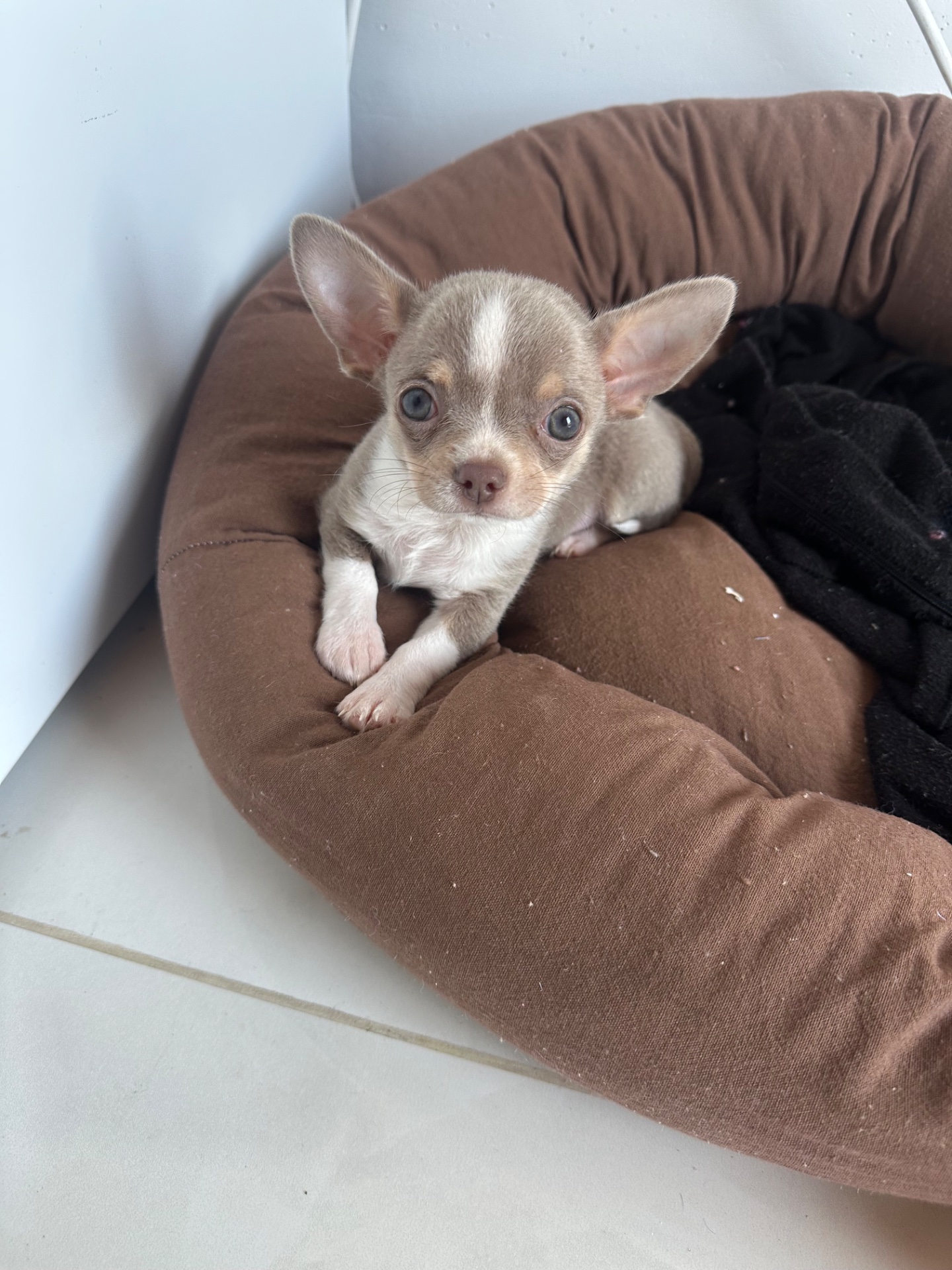
Add the separate dilution gene (two copies of d) to a chocolate, and you get lilac, also called isabella: a pale, lavender-tinged brown. Dilution works the same way on a black dog to produce blue, which our guide to the blue Chihuahua explains along with the hair-loss condition linked to both colors.
Chocolate vs fawn vs red: how do you tell them apart?
This is the most common mix-up, and the nose settles it nearly every time.
| Chocolate | Red | Fawn | |
|---|---|---|---|
| Coat | Cocoa or liver brown, cool-toned | Deep coppery red | Warm tan to light gold |
| Nose | Brown | Usually black (brown if the dog is b/b) | Usually black (brown if the dog is b/b) |
| Eye rims and lips | Brown | Black | Black |
| Paw pads | Brown | Usually black | Usually black |
| AKC color | Standard | Standard | Standard |
One trap to avoid: puppy coats change. A young chocolate can look lighter or redder than the adult will be. Judge by the pigment of the nose, eye rims, lips and pads, not by the shade of the coat, and check all of them rather than the nose alone.
Which chocolate combinations exist?
Chocolate is a base color, so any marking can sit on top of it. These are the ones the AKC lists by name, plus the two you’ll hear about most in listings:
| Combination | What it looks like | AKC status |
|---|---|---|
| Chocolate | Solid brown, sometimes a little white on the chest | Standard color |
| Chocolate and tan | Brown body with tan eyebrows, cheeks, chest and legs | Standard color |
| Chocolate and white | Brown patches with white markings, or white with brown patches | Alternate color |
| Chocolate sabled fawn | Fawn dog with brown-tipped hairs and a brown nose | Alternate color |
| Chocolate brindled fawn | Brown stripes over fawn | Alternate color |
| Chocolate blue | Diluted chocolate, close to what sellers call lilac | Alternate color |
| Chocolate merle | Brown base broken into lighter marbled patches | Merle is registered as a marking |
Chocolate and tan is the one you’ll meet most often: the classic tan-points pattern of a black and tan dog, on a brown base. Chocolate merle is a different story, because merle is a separate pattern gene with its own breeding risks. If a chocolate puppy has marbled patches or blue eyes, read our merle Chihuahua guide first, especially the section on why two merles should never be bred together. And if you’re looking at a brown dog with tiger stripes, that’s chocolate brindle, which we cover in our guide to the brindle Chihuahua.

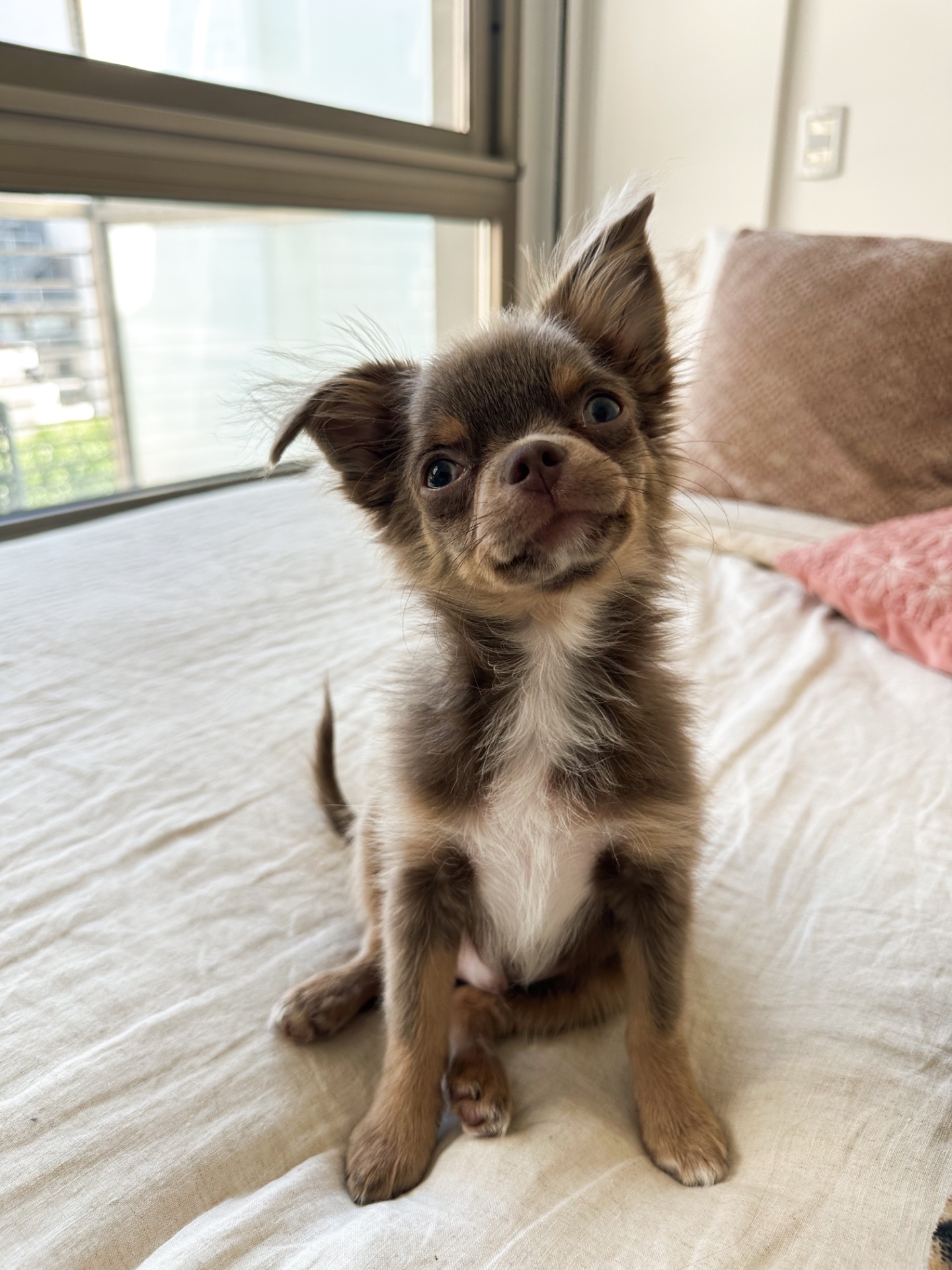
On a long coat, chocolate tends to look softer and warmer. Taco, a club member from Maldonado, Uruguay, is a good example: same brown nose, much fluffier frame.
What eye and nose color should a chocolate Chihuahua have?
The official AKC breed standard is specific: the nose should be “self-colored in blond types, or black,” and “in moles, blues, and chocolates, they are self-colored.” In plain English, a brown nose on a chocolate is exactly right, not a fault. The same standard adds that “in blond types, pink noses permissible,” which is why a pale cream or white Chihuahua with a pinkish nose isn’t a chocolate either; our guide to the white Chihuahua covers those coats.
Eyes are a separate question. The AKC asks for eyes that are “luminous dark or luminous ruby,” and permits light eyes only in blond or white dogs. Because the brown gene affects all dark pigment, a chocolate’s eyes can be a shade lighter than a black dog’s. That matters only in the show ring. Blue eyes, on the other hand, are a serious fault in the AKC standard and, in a chocolate, often point to merle in the background.
The FCI standard, used in most of Europe and Latin America, is more relaxed on the nose (“any colour permitted”) and asks for “perfectly dark” eyes, with light eyes “permissible, but not desired.” It admits all colors except merle, so a chocolate is fine; a chocolate merle is not.
Is chocolate a rare Chihuahua color?
No. Chocolate is fairly common, sitting fourth in the rough ranking in our colors guide, after fawn, cream and black and tan. No kennel club publishes counts by color, so treat any precise “rarity” figure online with suspicion.
Our club gives a useful reality check. Of 162 member dogs, 11 are described by their owners as chocolate in some form: solid chocolate, chocolate and tan, chocolate and white, a chocolate merle and one owner’s lovely “mocca with chocolate tips.” Fawn and cream are still more common, but chocolate is far from unusual.
How much does a chocolate Chihuahua cost?
About the same as any well-bred Chihuahua. In the US, a puppy from a responsible breeder typically costs $500 to $2,000, and rescue adoption runs about $100 to $400, the typical ranges for the breed.
Because chocolate isn’t rare, a large “rare color” premium for a plain chocolate is hard to justify. Prices do climb for lilac and chocolate merle, where you should pay for genetic testing of both parents rather than for the color itself. Whatever the coat, what’s worth paying for is the same: registered, health-checked parents, a vet exam for the puppy and a breeder who answers questions openly.
Is a chocolate Chihuahua less healthy?
Not because of the chocolate gene, as far as the evidence we found goes. The brown variant changes pigment; we found no health condition tied to solid chocolate in Chihuahuas. A chocolate faces the same breed-wide issues as any other Chihuahua.
The exceptions come from genes that can travel with chocolate:
- Lilac (chocolate plus dilution) is linked to color dilution alopecia, a patchy hair loss that usually starts in the first year.
- Chocolate merle carries the merle gene and the double merle risk if two merles are bred.
Chocolate the color vs chocolate the food
One last point, because it comes up every holiday season: the color is harmless, the treat is not. Chocolate contains theobromine and caffeine, and a dog this small needs very little to get into trouble. If your Chihuahua eats any, our dog chocolate toxicity calculator estimates the risk from the type and amount, and the ASPCA Animal Poison Control Center is available at (888) 426-4435 (a consultation fee may apply). When in doubt, call your vet right away rather than waiting for symptoms.
A closing note
Neither of my boys is chocolate: Romeo, 4 years old and 5.3 pounds, is a cream apple head, and Lorenzo, 2 years old and 5.1 pounds, is a fawn apple head. Between them they cover the two most common colors in the breed, and they still manage to be complete opposites, Romeo calm and sleepy, Lorenzo electric and alert.
If you have a chocolate at home, check the nose, the eye rims and the paw pads next time he curls up on your lap. If they all match the coat, you’ve got the real thing.