
Chipin: The Chihuahua Min Pin Mix, Explained
The Chipin is a Chihuahua Min Pin mix: typical size, temperament, health risks from both parents, lifespan, exercise needs and where to adopt one.
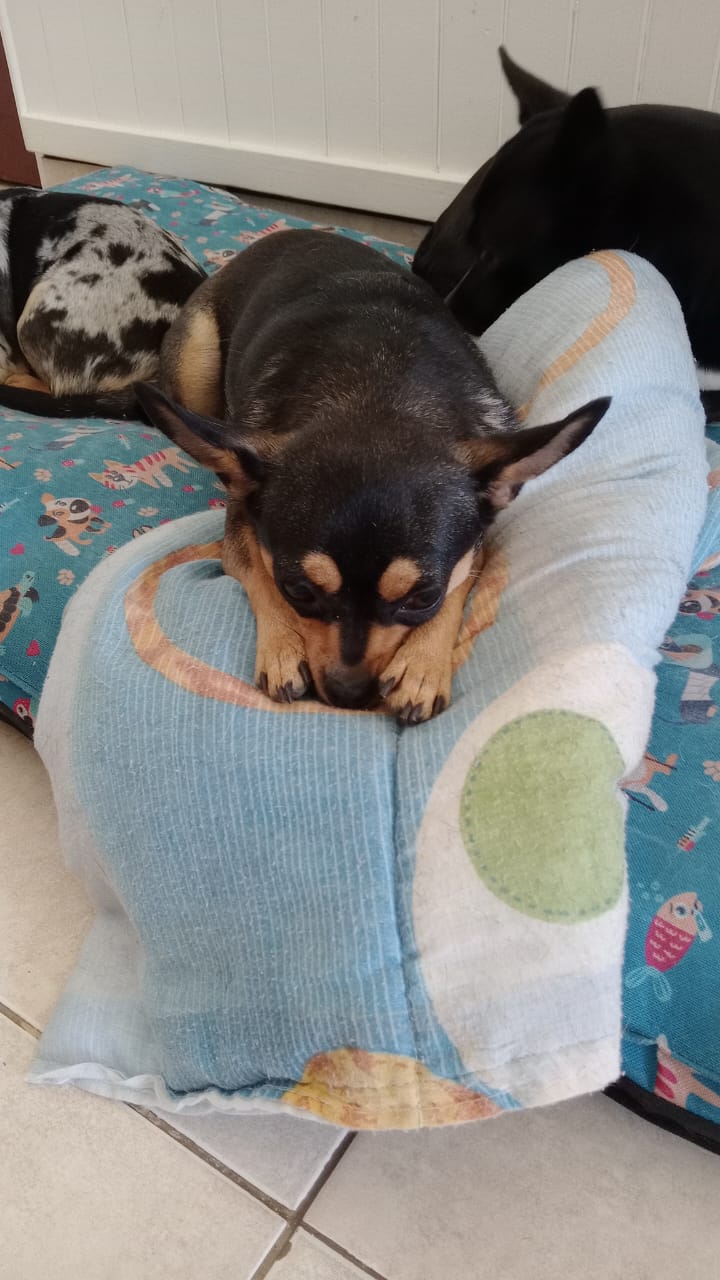
The Chipin is a cross between a Chihuahua and a Miniature Pinscher, and if you have ever met a sleek little black and tan dog with long legs, big ears and opinions about everything, there is a fair chance it was one. This Chihuahua Min Pin mix is also one of the easiest crosses to mistake for a purebred Chihuahua, which is exactly why it deserves an honest guide: what to expect in size, energy and health, and where to look before paying for a “designer” puppy.
Chihuahua plus Min Pin: what you actually get
A Chipin is not a breed. No kennel club recognizes it, there is no written standard, and every litter is a genetic coin toss. Two puppies from the same litter can look like different dogs: one leggy and refined like a Min Pin, the other rounder, with a domed Chihuahua head.
You will also see it listed as:
- Pinhuahua
- Chi-Pin
- Min Pin Chihuahua mix or Miniature Pinscher Chihuahua mix
None of these names are official. What is solid is what we know about the parents. The American Kennel Club’s Miniature Pinscher profile lists the breed at 10 to 12.5 inches tall and 8 to 10 pounds, with a life expectancy of 12 to 16 years, and calls it “proud, fearless, fun-loving.” The AKC’s Chihuahua profile describes a dog of 5 to 8 inches that should not exceed 6 pounds, with a life expectancy of 14 to 16 years.
Because the two parents are already close in size and build, the Chipin is one of the more predictable Chihuahua crosses. Predictable, not identical.
How big does a Chipin get?
Here is how the mix usually compares with its parents. Treat the middle column as a typical range, not a promise: crossbreeds are not standardized, and plenty of pet Chihuahuas and Min Pins are themselves outside their breed standard.
| Trait | Chihuahua (AKC) | Chipin (typical) | Miniature Pinscher (AKC) |
|---|---|---|---|
| Adult weight | Up to 6 lb | 5 - 11 lb (2.3 - 5 kg) | 8 - 10 lb |
| Height | 5 - 8 in | 8 - 12 in | 10 - 12.5 in |
| Life expectancy | 14 - 16 years | 12 - 16 years | 12 - 16 years |
| Coat | Smooth or long | Short and smooth | Short and smooth |
| Build | Compact | Slim, leggy, deep chest | Leggy, compact, wedge-shaped |
| Ears | Large, erect | Large, usually erect | Erect |
Like most small dogs, Chipins usually reach adult size before their first birthday. If you adopt an adult, you skip the guessing entirely.
Coat, colors and that face
The Chipin coat is short, close and glossy, with almost no undercoat. Common colors include:
- Black and tan (black with rust markings), the classic Min Pin look
- Chocolate and tan
- Red or deep fawn
- Cream or fawn with a black mask, from the Chihuahua side
- White patches on the chest or toes, also from the Chihuahua side
The head can go either way. Some Chipins have a round, apple-shaped skull with a short muzzle; others get a longer, finer muzzle that looks a lot like what people call a deer head Chihuahua. If you are not sure which side your dog’s face takes after, our guide to the types of Chihuahua shows the differences clearly.
That thin coat has one practical consequence: Chipins feel the cold. A sweater on chilly mornings is not a fashion statement for this mix; it is basic comfort. The same logic applies as for any short-coated toy dog, explained in do Chihuahuas get cold.
What is a Chipin’s temperament like?
Both parents are alert, confident little dogs, so the personality is fairly consistent. Expect:
- A lot of energy. The Min Pin brings a busy, curious, always-moving streak. A Chipin is usually more active than a purebred Chihuahua.
- A built-in alarm system. Doorbells, footsteps in the hallway, a leaf blowing past the window: all of it gets announced.
- Strong loyalty to one or two people. Like most Chihuahua mixes, it tends to pick favorites.
- Wariness with strangers. Early, gentle socialization makes a real difference.
- A chase instinct. Many Chipins take off after squirrels, cats or anything small that runs, so off-leash time belongs in a fenced area only.
- Escape talent. Min Pins have a reputation for slipping through small gaps, and the mix often inherits it. Check fences, gates and balcony railings.
With patience and short, upbeat sessions, most Chipins learn quickly. They simply prefer to learn when it is their idea.
Health risks inherited from both parents
Mixed breeding does not cancel out inherited problems. When both parents share a weak spot, the puppy is still at risk. These are the issues worth knowing:
| Condition | Linked to | What to watch for |
|---|---|---|
| Luxating patella | Both parents | Skipping steps, holding up a back leg |
| Legg-Calvé-Perthes disease | Small breeds, both parents | Rear-leg limp in a young dog |
| Periodontal disease | Both, especially the Chihuahua | Bad breath, tartar, red gums |
| Eye problems | Both | Cloudiness, bumping into things |
| Heart conditions | Both | Murmur found at checkups, tiring easily |
| Hypoglycemia in puppies | Chihuahua | Weakness, trembling, lethargy |
The kneecap is the big one. The AKC’s toy group health testing list shows that the Miniature Pinscher’s national breed club recommends a patella evaluation for breeding dogs, and the Chihuahua club recommends patella, cardiac and eye exams. A responsible breeder of either parent can show you those results. Our guide to luxating patella in Chihuahuas explains the grades and what each one means for daily life.
The second condition to have on your radar is Legg-Calvé-Perthes disease. The MSD Veterinary Manual’s chapter on joint disorders in dogs describes it as a loss of blood supply to the top of the thigh bone, seen in young miniature and small breeds. If your Chipin puppy starts limping on a back leg and it does not clear up in a day or two, get it checked rather than waiting.
This article is informational and does not replace veterinary advice. In a dog under 10 pounds, symptoms can escalate quickly, so call your vet the same day if something seems off.
How long do Chipins live?
A healthy Chipin typically lives 12 to 16 years. Both parent breeds are long-lived, which is good news, but a long life in a toy dog depends on a few unglamorous habits:
- Daily tooth brushing from puppyhood.
- A lean body. One extra pound on an 8-pound dog is a lot of extra load on those kneecaps.
- Yearly checkups, twice a year once your dog is a senior.
- No jumping off high furniture, especially during the growth months.
How much exercise does a Chipin need?
More than the size suggests. Plan on roughly 30 to 60 minutes of activity a day, split into a couple of walks plus play at home. Games that use the nose and the brain (hide the treat, puzzle feeders, short training sessions) tire a Chipin out as much as a long walk does.
Always walk with a harness rather than a collar. Toy breeds have delicate necks and windpipes, and a determined Chipin pulling after a squirrel puts real pressure on both. Our guide to the best Chihuahua harness covers fit and styles that work for small, slim dogs.
Grooming: the easy part
This is where the Chipin shines. Grooming is simple:
- Brushing: once a week with a rubber mitt or soft brush.
- Baths: only when needed, roughly every month or two.
- Nails: every two to three weeks; small dogs rarely wear them down on their own.
- Teeth: daily. This is the one grooming task you cannot skip.
- Ears: a quick check each week, since those big upright ears collect dust.
Who is a Chipin right for?
A good fit if you:
- Want a small dog with real energy for walks and games.
- Can commit to daily dental care for 15 years.
- Have a secure home with no easy escape routes.
- Live with adults or older, calm children.
A poor fit if you:
- Want a quiet lap dog that is content with minimal exercise.
- Have toddlers who might grab or drop a small dog.
- Live with pet rodents or birds and cannot keep them fully separate.
- Are away for long hours most days.
Chipin price and where to find one
Because “Chipin” sounds like a branded product, these puppies are a staple of designer-dog mills and online sellers. Breeder prices vary widely and say very little about quality. Red flags to walk away from:
- The seller will not let you meet the mother or see where the puppies live.
- Puppies are offered “ready to ship” with no visit.
- No vet records, or no health results for either parent.
- Several “designer” mixes available at the same time.
- Labels like “teacup Chipin” or “micro Chipin,” which simply mean a puppy bred to be undersized.
The better route is a shelter or rescue. Chihuahua and Min Pin rescues regularly take in mixes, and adoption fees are usually far lower than breeder prices, often including vaccines and spay or neuter. Adopting an adult also means you see the final size, the coat, the energy level and the personality before you commit.
Haru, the black and tan dog in the photo at the top of this page, is a club member from Neuquén, Argentina. She is registered with us as a Chihuahua, not a Chipin, but she is a good example of how much the two parent breeds can look alike, and her family adopted her in 2021.
At home I live with two purebred apple head Chihuahuas: Romeo, who is 11, cream and weighs 5.3 pounds, and Lorenzo, who is 2, fawn and weighs 5.1 pounds. Neither has a drop of Min Pin in him, so I write about the Chipin as a Chihuahua person, not a Chipin owner. What I can tell you is that the Chihuahua half of this mix comes with the same small-dog checklist our community talks about every week: knees, teeth, cold and a harness.
If you are comparing crosses, the Chipin is the athletic, low-grooming option. The Chiweenie trades those long legs for a long back that needs protecting, which is a very different set of daily habits.
Frequently asked questions
What is a Chipin?
How big does a Chipin get?
How long do Chipins live?
Are Chipins good apartment dogs?
Do Chipins shed?
Written by Belen Salto, who shares her life with Romeo and Lorenzo, two Chihuahuas. · Ver en español