
Chorkie: The Yorkie Chihuahua Mix Explained
The Chorkie is a Chihuahua + Yorkshire Terrier mix: size, coat, temperament, health and price of this tiny, loyal crossbreed.
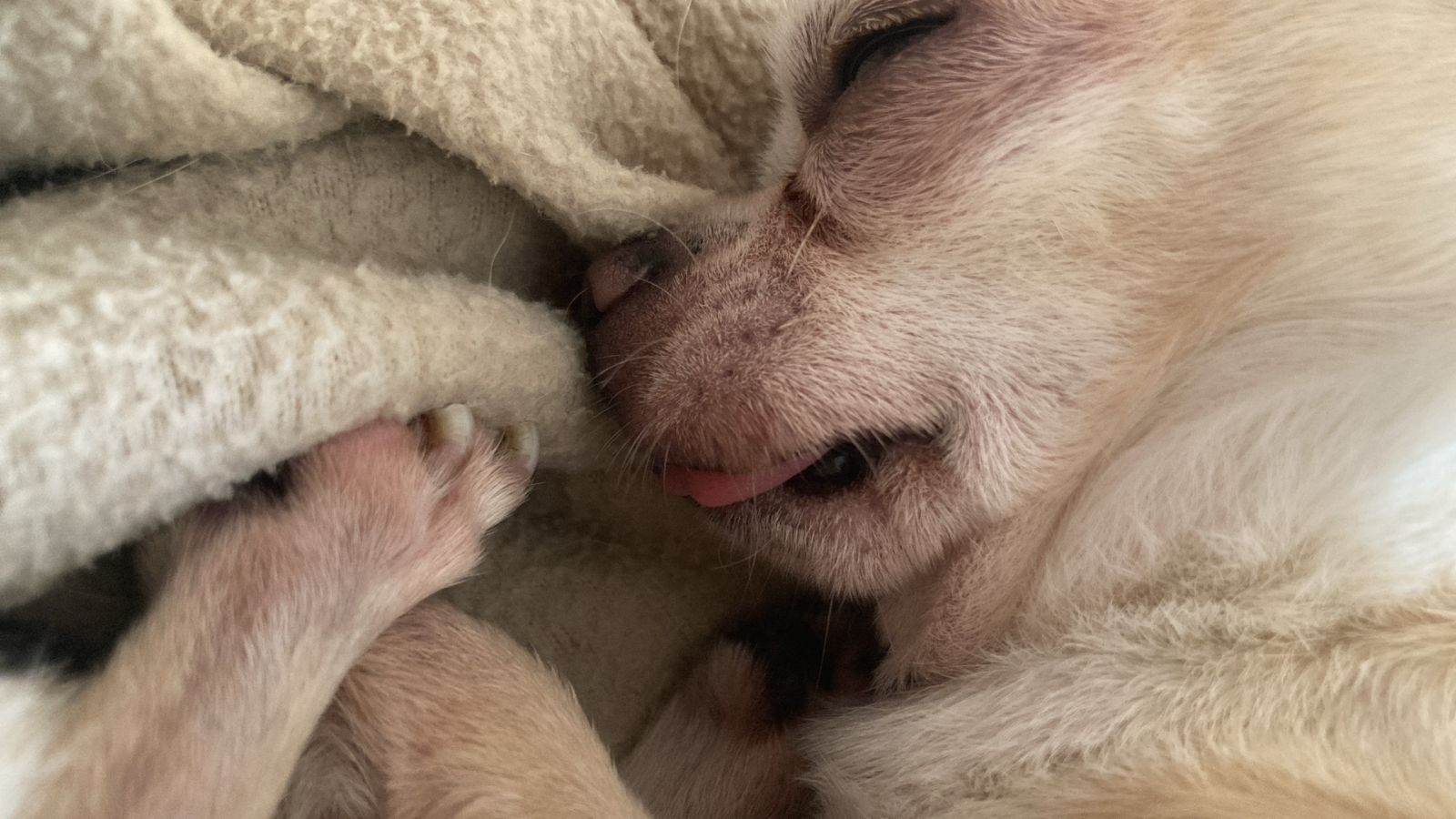
Is the Chorkie real? Yes, and it’s one of the most common Chihuahua crosses on the planet. The Chorkie is a Yorkie Chihuahua mix, a blend of a Chihuahua and a Yorkshire Terrier, also known as a Chiyorkie, Yorkichi, or simply “Chorkie dog.” Unlike the rarer crosses, the Chorkie happens naturally and often. Both parent breeds are tiny, have similar energy, and get along well, which is exactly why there are thousands of Chorkies on social media and, sadly, thousands more in shelters waiting for homes.
In this article we’ll explain what a Chorkie actually is, how it looks, how much it weighs, its temperament, the specific coat care it needs, the health issues it inherits from each parent, and why adopting one is always the better choice.
This article is informational and does not replace veterinary advice. Both Chihuahuas and Yorkshire Terriers have serious dental problems, and the cross inherits them almost every time, so if you notice bad breath, tartar, or trouble chewing in your Chorkie, don’t wait for the next checkup.
What exactly is a Chorkie?
A Chorkie is the cross between a Chihuahua and a Yorkshire Terrier. It’s one of the oldest and most common small-dog crosses, alongside the Chug, the Pug Chihuahua mix and the Pithuahua, the Chihuahua Pitbull mix. It goes by several names:
- Chorkie — the most common, especially in English and online
- Yorkie Chihuahua mix — the literal description, very frequent in searches
- Chiyorkie — the variant with “chi” in front
- Yorkichi — the reversed version
Unlike the Pithuahua, the Chorkie happens naturally and easily: Chihuahua and Yorkie are similar in size, which makes the cross physically possible without assistance. That’s why so many turn up in shelters. Most are the product of unplanned litters between dogs that share a home.
It isn’t a breed recognized by any official kennel club. It’s what’s called a designer dog or a mixed breed, depending on how you look at it. It has no fixed standard, which means every Chorkie is genetically different from the next.
How big does a Chorkie get, and what does an adult look like?
A Chorkie’s build depends on which genes come through strongest, but in general it’s a tiny dog with a light frame and an alert, bright-eyed expression. The good news is that neither parent breed is brachycephalic, so there are no inherited breathing problems like the Chug has.
| Trait | Typical Chorkie |
|---|---|
| Adult weight | 4–9 lb (2–4 kg) |
| Height at shoulder | 6–10 in (15–25 cm) |
| Life expectancy | 13–16 years |
| Coat type | Short, semi-long, or long (highly variable) |
| Common colors | Black and tan, fawn, gold, steel blue, tricolor |
| Ears | Erect (most common) or semi-folded |
| Muzzle | Fine, normal length |
| Head | Rounded (apple type) or slightly elongated |
Three “types” of Chorkie you’ll see online:
- Yorkie-type Chorkie: long silky blue-and-tan coat, fine muzzle, compact body. The most “elegant” of the mix.
- Chihuahua-type Chorkie: big erect ears, fine muzzle, light body, short coat. The easiest to brush.
- Intermediate Chorkie: semi-long coat, mixed color, erect ears with a little fringe. The most common.
The coat is the single most important maintenance factor. If your Chorkie inherits the Yorkie’s coat, you’ll need to brush it several times a week and visit a groomer every 6–8 weeks to prevent matting. If it inherits the Chihuahua’s short coat, shedding is seasonal and daily care is minimal. Before adopting, touch its coat, the texture already tells you a lot about the work ahead.
What is a Chorkie’s temperament like?
The Chorkie’s temperament blends two very similar personalities. The Yorkshire is famous for being brave, lively, and vocal. The Chihuahua is alert, territorial, and one-person devoted. The result? An energetic, sharp, big-personality little dog that absolutely needs early socialization.
What you’ll notice most often in a Chorkie:
- High energy. Much more than a Chug. They need short but frequent walks and daily play.
- Plenty of barking. Both breeds are alert, and the Chorkie inherits this nearly every time. Any noise at the door is reason to announce it.
- Brave, sometimes too brave. They’ll stand up to much bigger dogs without measuring the consequences. You have to protect them from their own personality.
- Smart and stubborn. They learn basic commands fast, but they also learn fast how to manipulate you if you let them.
- They need company. They don’t handle being alone well. If you work 10 hours away from home, the Chorkie isn’t the best fit.
- Social if socialized early. Without the work, they tend to become selective and wary of strangers.
Good for apartments? Yes, perfectly. They’re tiny, need no yard, and adapt well to small spaces. The main issue is barking, so if you have sensitive neighbors, work on the alert behavior from puppyhood.
Good with kids? Better with children over 6 or 7 who understand they’re handling a small, delicate dog. Both Chihuahuas and Yorkies are physically fragile, and a Chorkie can hurt itself just falling off the couch. For more on the personality side, see our deep dive into Chihuahua temperament.
Chorkie health: what to watch for
In the Chorkie’s favor is one big fact: neither parent is brachycephalic, so it doesn’t inherit the breathing problems the Chug does. That gives it a longer life expectancy (13–16 years) and a generally better health profile. But there are other things to watch that get inherited almost every time.
Dental problems (the most serious):
Both Chihuahuas and Yorkies are among the worst dental breeds in the dog world. They build tartar quickly, lose teeth young, and are prone to periodontal disease. The Chorkie inherits this almost without a filter. You’ll need:
- Home brushing every day from puppyhood.
- Professional cleaning under anesthesia once a year from age 3–4.
- Kibble sized for a fine muzzle (oversized pieces cause trouble).
Hypoglycemia in puppies:
Both breeds are prone to blood sugar drops in puppies and tiny adults. A Chorkie under 3 pounds can suffer hypoglycemia if it goes many hours without eating or gets overly stressed. Symptoms to know: trembling, sudden weakness, pale gums, disorientation. Immediate action: a little honey on the gums and straight to the vet.
Luxating patella:
Typical of small breeds, and the Chorkie inherits it often. If you notice limping, hopping on three legs, or a “skip” in the gait, get it checked. Mild grades are managed with supplements and weight control; severe ones need surgery.
Other frequent issues:
- Collapsing trachea: especially if it inherits from the Yorkie. Classic symptom: a dry “goose-honk” cough. Manageable, but better caught early.
- Eye problems: chronic tearing, sensitive eyes. Daily cleaning with gauze and saline.
- Easy weight gain: they’re tiny and pack on pounds with little extra food.
Life expectancy: between 13 and 16 years, with cases reaching 18. It’s one of the longest-lived Chihuahua crosses, precisely because it doesn’t inherit major structural problems.
Why adopting a Chorkie is the better choice
If you want a Chorkie, adopt one. Don’t buy one. Most Chorkies for sale come from breeders who cross small breeds to produce “trendy” dogs with no genetic screening, no health testing, and no regard for the mother’s welfare. Every Chorkie bought funds more puppies being born without control.
The good news: there are thousands of Chorkies up for adoption right now. For the same reason they’re sold so much, they’re also abandoned so much. People buy on a whim, don’t anticipate the grooming costs, don’t expect the barking, and surrender or abandon the dog. Those Chorkies are waiting for homes.
Where to look:
- Local shelters and rescuers. Search “Chorkie adoption + your city” or “Yorkie Chihuahua mix rescue.”
- Instagram and TikTok rescue accounts for small breeds.
- Local Facebook adoption groups.
- Vets and groomers in your neighborhood often have direct contacts with rescuers.
In shelters they almost never appear under “Chorkie.” They show up as “Yorkie-Chihuahua mix” or “small breed mix,” so search with those broader terms. It’s the same point we made about how much a Chihuahua costs: the upfront price is the least of it; what weighs is the chain you fund when you buy.
What is the Chihuahua and Yorkshire mix called?
The cross has several unofficial names (no kennel club recognizes it):
- Chorkie — the most used, especially in English and on social media
- Chiyorkie — the variant with “chi” in front
- Yorkichi — the reversed version
- Yorkie Chihuahua mix — the most searched description
In shelters it rarely appears under any of these. It usually shows up as a “Yorkie-Chihuahua mix” or “small breed mix,” so search broadly to find more.
Chorkie vs Chihuahua vs Yorkshire: who suits whom
| Trait | Purebred Chihuahua | Chorkie | Purebred Yorkshire |
|---|---|---|---|
| Size | 3–7 lb | 4–9 lb | 4–7 lb |
| Life expectancy | 15–18 years | 13–16 years | 13–16 years |
| Energy | High in bursts | High, sustained | High, sustained |
| Barking | A lot | A lot | A lot |
| Coat | Short or long | Variable | Long, silky |
| Coat maintenance | Low to medium | Variable | High (regular grooming) |
| Dental problems | Frequent | Very frequent | Very frequent |
| Tolerance for being alone | Low | Low | Low |
| Apartment-friendly | Yes | Yes | Yes |
If you care about low-maintenance coats, the short-coat purebred Chihuahua wins. If you want the silky Yorkie look, go for a Yorkie-type Chorkie but accept the grooming time and cost. If you want a long-lived, alert, loyal, energetic little dog, the Chorkie is a great choice. To learn about the different Chihuahuas that might be behind a Chorkie, see our guide to the types of Chihuahua.
What we learned with Romeo and Lorenzo
With Romeo Carlitos and Lorenzo Pablito we discovered something that holds true for Chihuahuas and Chorkies alike: personality matters more than genetics. Romeo is calm, sleepy, social; Lorenzo is electric, alert, intense. Both are apple-head Chihuahuas, both share similar genes, and yet they couldn’t be more different.
With a Chorkie it’s the same, but amplified by the cross: each puppy is a genetic surprise. If you decide on one, do it knowing you don’t know exactly what you’ll get, not in looks, not in temperament, not in health. And that, far from scaring you off, should give you the respect any dog deserves before it walks into your home.
This article is informational and does not replace veterinary advice.
If you are exploring Chihuahua crossbreeds, we also cover the Chiweenie, the Dachshund mix.
And if fluffy Chihuahuas are your thing, we also cover the Pomchi, the Pomeranian mix.
Written by Belen Salto, who shares her life with Romeo and Lorenzo, two Chihuahuas. · Ver en español