
Chug: The Pug Chihuahua Mix (Plus the Risks Nobody Mentions)
The Chug is a Pug Chihuahua mix. Discover its looks, size and temperament, plus the breathing and health risks almost nobody warns owners about.
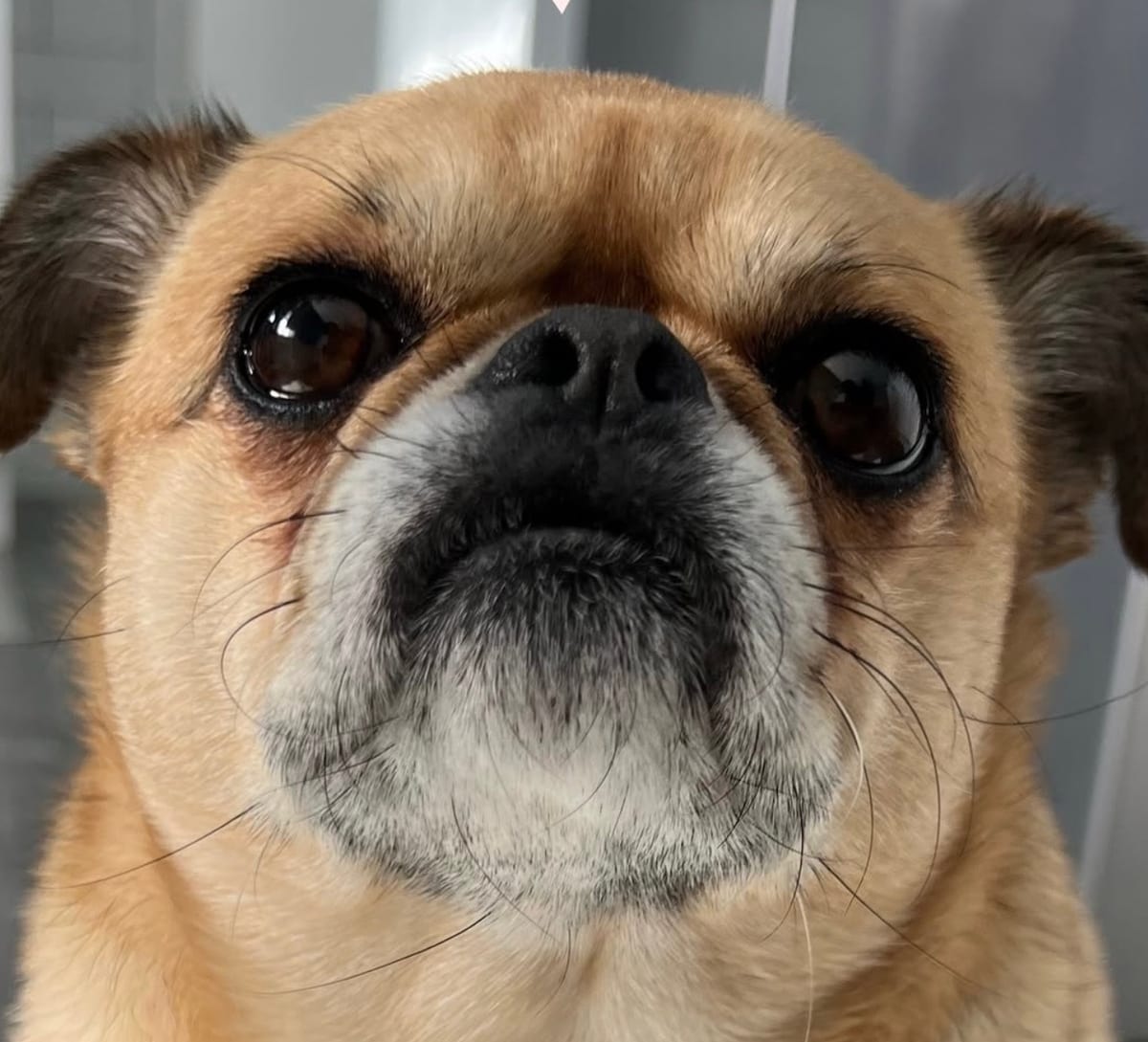
Is the Chug real? Yes, and as much as it sounds like a meme, there are thousands of real dogs like this: the Pug Chihuahua mix, a cross between a Chihuahua and a Pug. The idea sparks plenty of curiosity, and plenty of adorable photos, but behind it is a conversation almost nobody has head-on: the Chug inherits serious health problems from both breeds, and the best way to bring one into your home is to adopt, not buy. There are Chugs in shelters waiting for homes right now.
In this article we’ll explain what a Chug actually is (also called a Pughuahua, Pug-chi, or Chugwawa), how it looks, how much it weighs, its temperament, the breathing and eye risks inherited from the Pug, and why adopting is the only responsible route.
This article is informational and does not replace veterinary advice. If your Chug has breathing symptoms, eye problems, or any sign that worries you, don’t hesitate. The Pug is a brachycephalic breed with serious health conditions, and many of them carry into the Chihuahua cross.
What exactly is a Chug?
A Chug is the cross between a Chihuahua and a Pug. It’s one of the most common Chihuahua crosses on social media, alongside the Pithuahua, the Chihuahua Pitbull mix, because both are small dogs, which makes the combination work physically without veterinary assistance. It goes by several names:
- Chug — the most used, especially in English and online
- Pughuahua — a common longer form
- Pug-chi — the abbreviated version
- Chugwawa — a blend of the two names
Unlike the Pithuahua, where the huge size gap makes natural mating nearly impossible, the Chug happens naturally and often: Pug and Chihuahua are similar in size. This is why there are so many Chug puppies in shelters and rescues. Most are the product of unplanned litters between dogs that share a home.
It isn’t a breed recognized by any official kennel club. It’s what’s called a designer dog or a mixed breed, depending on how you look at it. It has no fixed standard, which means every Chug is genetically different from the next.
What does a Chug look like? Size, weight, and build
A Chug’s build depends on which genes come through strongest. In general, Chugs are small, compact dogs, with the Pug’s broad torso and slightly finer Chihuahua legs. But the variability is enormous.
| Trait | Typical Chug |
|---|---|
| Adult weight | 9–18 lb (4–8 kg) |
| Height at shoulder | 10–14 in (25–35 cm) |
| Life expectancy | 10–13 years |
| Coat type | Short (most common) or long |
| Common colors | Beige, black, brown, brindle, white with patches |
| Eyes | Bulging (inherited from the Pug) |
| Muzzle | Short to semi-short (brachycephalic) |
| Head | Round, broad forehead |
Three “types” of Chug you’ll see online:
- Pug-type Chug: flat face, very bulging eyes, compact body, curled tail. Inherits more brachycephaly, so more breathing problems.
- Chihuahua-type Chug: erect ears, longer muzzle, lighter body, less flattened face. Inherits fewer breathing problems.
- Intermediate Chug: the most common. Semi-flat face, bulging but less pronounced eyes, ears sometimes erect and sometimes folded.
The coat is almost always short and dense, though a long-coat Chihuahua in the line can produce a fluffy Chug. They tend to have a double coat, so they shed more than people expect from such a small dog.
What is a Chug’s temperament like?
The Chug’s temperament blends two very different personalities. The Pug is famous for being clownish, social, and glued to its human. The Chihuahua is alert, territorial, and one-person devoted. The result of the cross? An affectionate but headstrong dog that needs firm guidance from puppyhood.
What you’ll notice most often in a Chug:
- Very attached. They inherit the Pug’s extreme “velcro” tendency. If you go to the bathroom, they come with you.
- Plenty of barking. They inherit the Chihuahua’s alertness. Any noise outside is reason for alarm.
- Not always good with strangers. A strange mix: the Pug is social, the Chihuahua wary. The Chihuahua usually wins. They need early socialization without fail.
- Smart and stubborn. They learn basic commands fast, but also learn fast how to manipulate you if you let them.
- They love to sleep. More than a purebred Chihuahua, much more. Inherited from the Pug.
- They tire of play quickly. The Chihuahua has short bursts of energy; the Pug, almost none. A Chug does 5 minutes of intense play, then lies down.
Good for apartments? Yes, better than many breeds. They don’t need much exercise (in fact, you should not exercise them intensely because of the brachycephaly) and they’re small. The main issue is barking.
Good with kids? Depends on the individual, but generally better with children over 6 or 7 who understand they’re handling a small, delicate dog. Both the Pug and the Chihuahua are physically fragile. For more on that side, see our deep dive on Chihuahua temperament.
Chug health: what you need to know before adopting one
Here’s the point almost nobody tells you when they show you cute Chug puppy photos: they inherit serious health problems from both breeds. Not to scare you, but so you’re prepared and know what to watch for.
Breathing problems (the most serious):
The Pug is a brachycephalic breed, with a shorter-than-normal skull that compresses the airways. This is called brachycephalic syndrome and it causes:
- Noisy breathing, snoring, excessive panting
- Heat intolerance (real risk of heatstroke)
- Difficulty exercising
- Trouble eating quickly or swallowing
The Chug inherits this to a greater or lesser degree depending on how short the muzzle ends up. The most “Pug-type” Chugs may need corrective surgery. The more “Chihuahua-type” ones suffer less. Before adopting one, watch how it breathes at rest and while walking, that’s the best thermometer.
Eye problems:
The bulging eyes (proptosis) are characteristic of the Pug and highly heritable. There can be:
- Corneal ulcers from contact and dryness
- Risk of the eye popping out of the socket from trauma (it sounds incredible, but it happens with light blows)
- Chronic tearing
Other frequent issues:
- Dental problems (from the Chihuahua, worsened by the Pug’s short jaw): start cleaning early.
- Luxating patella: typical of small breeds.
- Easy weight gain: the Pug is prone to obesity, and a fat Chug worsens every problem above.
- Skin folds (if it’s very Pug-like): clean frequently to avoid moisture infections.
Life expectancy: between 10 and 13 years. Less than a purebred Chihuahua (which can live 15–18 years) and similar to a Pug (12–15). The brachycephaly is what shortens life the most.
Why adopting a Chug is the only option we recommend
If you want a Chug, adopt one. Don’t buy one. Most Chugs for sale come from breeders who cross small breeds to produce “trendy” dogs with no genetic screening, ignoring the inherited health problems we covered above. Every Chug bought funds more puppies born with severe brachycephaly, at-risk eyes, and shorter lives.
The good news: there are thousands of Chugs up for adoption right now. For the same reason they’re sold so much, they’re also abandoned so much. People buy on a whim, don’t anticipate the vet bills, and surrender or abandon the dog. Those Chugs are waiting for homes.
Where to look:
- Local shelters and rescuers. Search “Chug adoption + your city” or “Pug Chihuahua mix rescue.”
- Instagram and TikTok rescue accounts for small breeds. They often post urgent cases.
- Local Facebook adoption groups.
- Vets and groomers in your neighborhood often have direct contacts with rescuers.
The search takes more time than walking into a store, true. But you find the right dog, you change its life, and you don’t fund irresponsible breeders. It’s the same point we made about how much a Chihuahua costs: buying carries an invisible cost beyond the money. In shelters the Chug rarely appears under its trendy name; it shows up as a “Pug-Chihuahua mix” or “small breed mix,” so search with those broader terms to find more.
Chug vs Pug vs purebred Chihuahua: who suits whom
| Trait | Purebred Chihuahua | Chug (Pughuahua) | Purebred Pug |
|---|---|---|---|
| Size | 3–7 lb | 9–18 lb | 13–22 lb |
| Life expectancy | 15–18 years | 10–13 years | 12–15 years |
| Energy | High in bursts | Medium-low | Low |
| Barking | A lot | Quite a bit | Little |
| Breathing problems | Low | Medium-high | High |
| Sociability | Selective | Variable | Very high |
| Apartment-friendly | Yes | Yes | Yes |
| Heat sensitivity | Normal | High | Very high |
| Annual vet cost | Low-medium | Medium-high | High |
If you live somewhere hot, avoid the Chug and the Pug. Brachycephaly plus heat is a seriously bad combination, with real risk of heatstroke. If you want a quiet apartment dog, the purebred Pug is the calmest of the three, but also the one with the most health problems. If you want a dog that lives many years on basic care, the purebred Chihuahua wins by far. It’s the healthiest of the three. See our guide to the types of Chihuahua to find the one that suits your life.
Is a Chug worth it?
If you adopt one and have access to regular vet care: yes, totally worth it. They’re affectionate dogs, ideal for apartments, perfect for people who don’t want to walk two hours a day and who understand their dog will snore and need extra care in summer. The Pug’s velcro affection plus the Chihuahua’s alertness make a unique companion.
If you’re considering buying one: please reconsider. Not because of the Chug itself, they’re lovely dogs, but because of the chain behind it. Every Chug bought is an incentive for a breeder to keep crossing brachycephalic dogs without genetic screening, which perpetuates the health problems above. The same logic applies to any brachycephalic breed (Pug, French Bulldog, Boxer, Boston Terrier): the market only changes when we stop buying them.
The simple rule: if you adopt, you’re changing the life of a dog already waiting. If you buy, you’re paying for more to be born with the same inherited problems. Adopting is the only option we recommend.
What we learned with Romeo and Lorenzo
With Romeo Carlitos and Lorenzo Pablito we discovered something that holds true for Chihuahuas and Chugs alike: every dog is its own world. Romeo is calm, sleepy, social; Lorenzo is electric, alert, intense. Both are apple-head Chihuahuas, both share similar genes, and yet they couldn’t be more different.
With a Chug it’s the same, but amplified: the cross makes each puppy a genetic surprise. If you decide on one, do it knowing you don’t know exactly what you’ll get, not in looks, not in temperament, not in health. And that, far from scaring you off, should give you the respect any dog deserves before it walks into your home.
This article is informational and does not replace veterinary advice.
If you’re weighing up several crosses, the Chug is the flat-faced one, and that single detail drives everything else. The Chorkie is a similar size but breathes fine and asks for grooming instead. The Pomchi trades the breathing problem for a coat problem, and the Chiweenie trades it for a spine problem. None of them is the easy one — each asks something different of you for fifteen years.
Written by Belen Salto, who shares her life with Romeo and Lorenzo, two Chihuahuas. · Ver en español