Deer Head Chihuahua: Size, Health, Price and Is It Purebred?
A deer head Chihuahua is a purebred Chihuahua with a longer muzzle and flatter skull. Real photos, full-grown size, AKC status, health and US price.
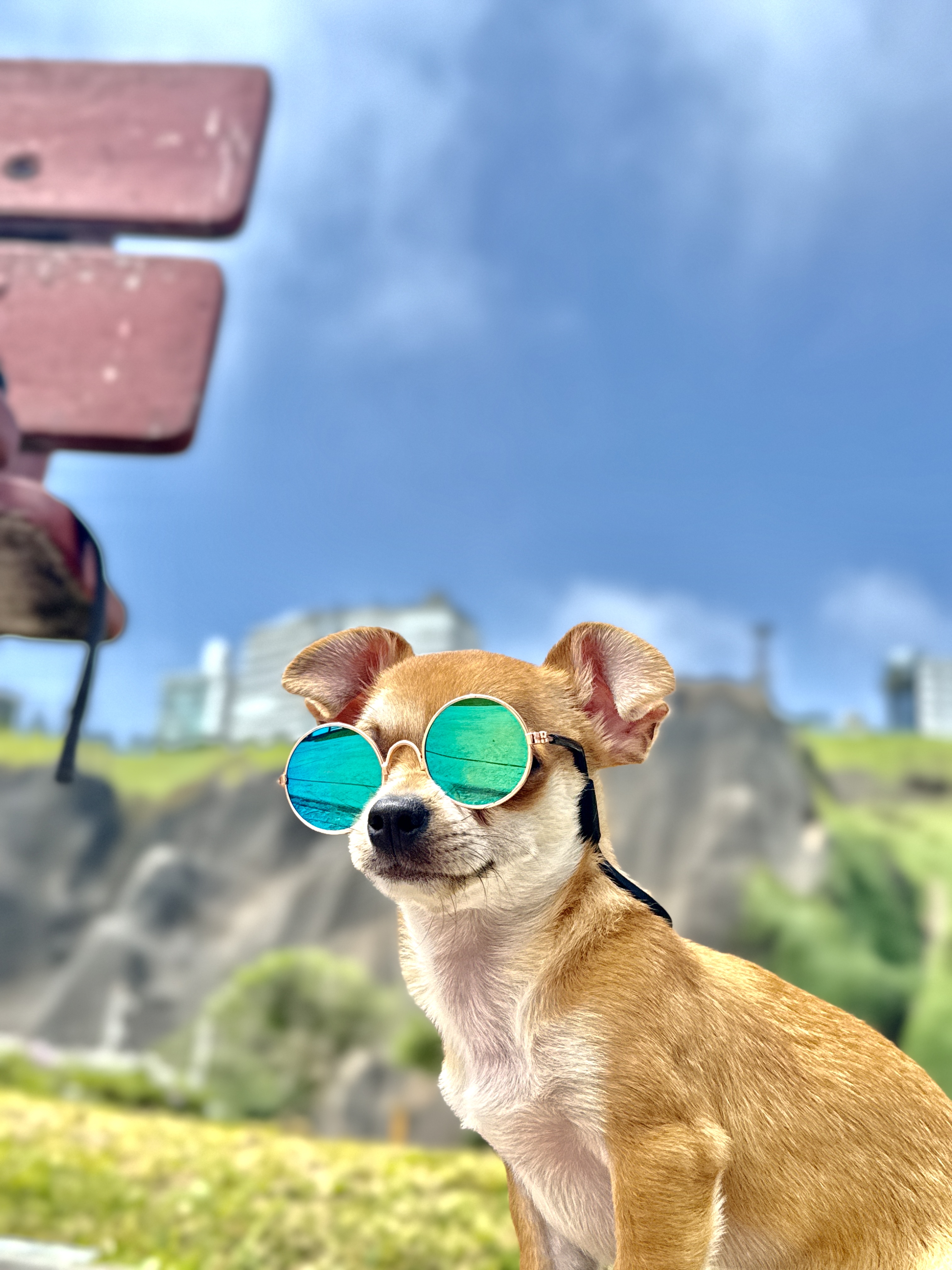
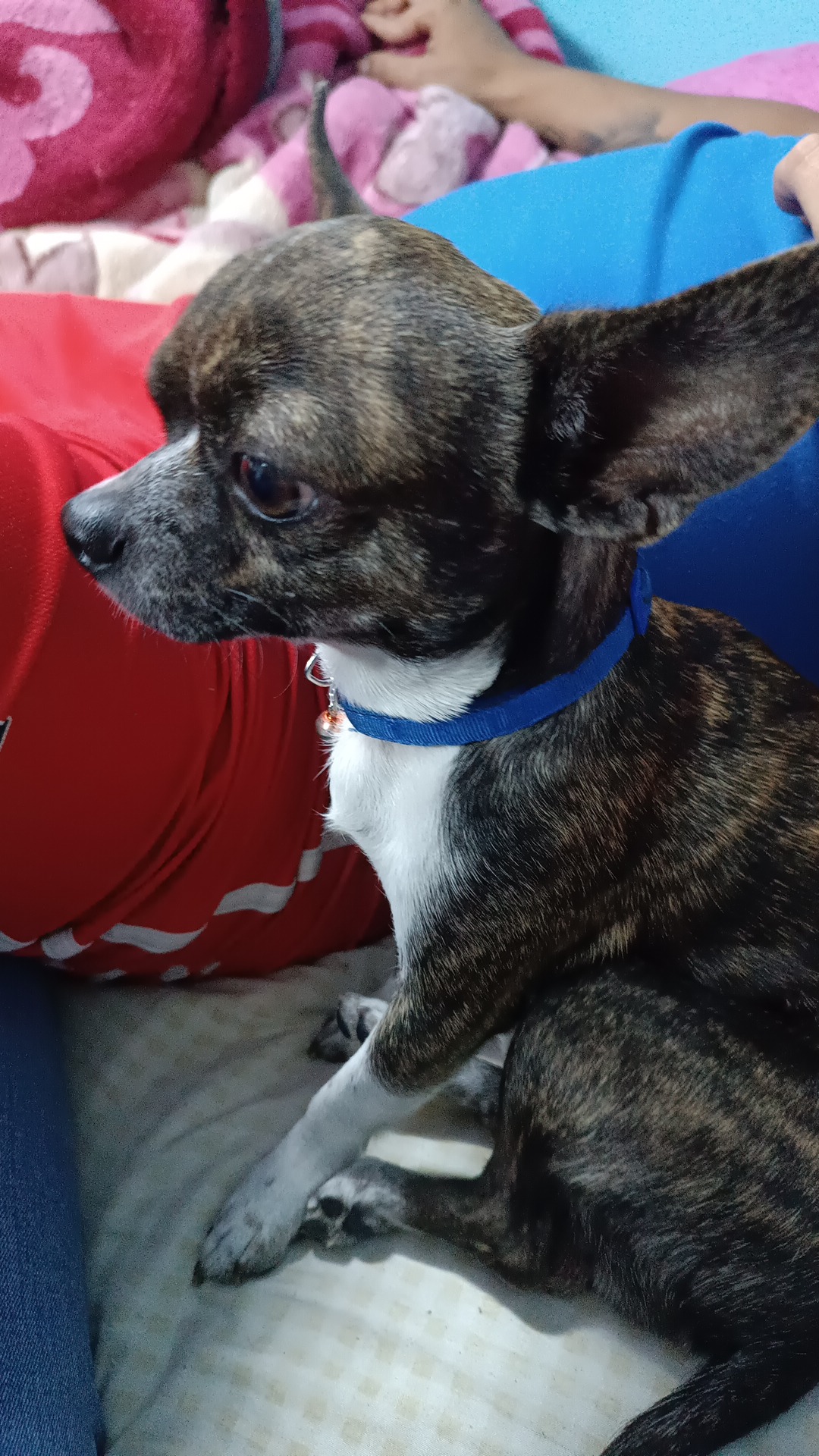
A deer head Chihuahua is a purebred Chihuahua whose head looks a little like a young deer’s: a flatter, longer skull, a gentle slope where the forehead meets the muzzle, and a longer, finer nose. It isn’t a mix, a separate breed or a defect. It’s simply the head shape the show standard leaves out, and it’s far more common in family homes than the photos on breed websites would suggest.
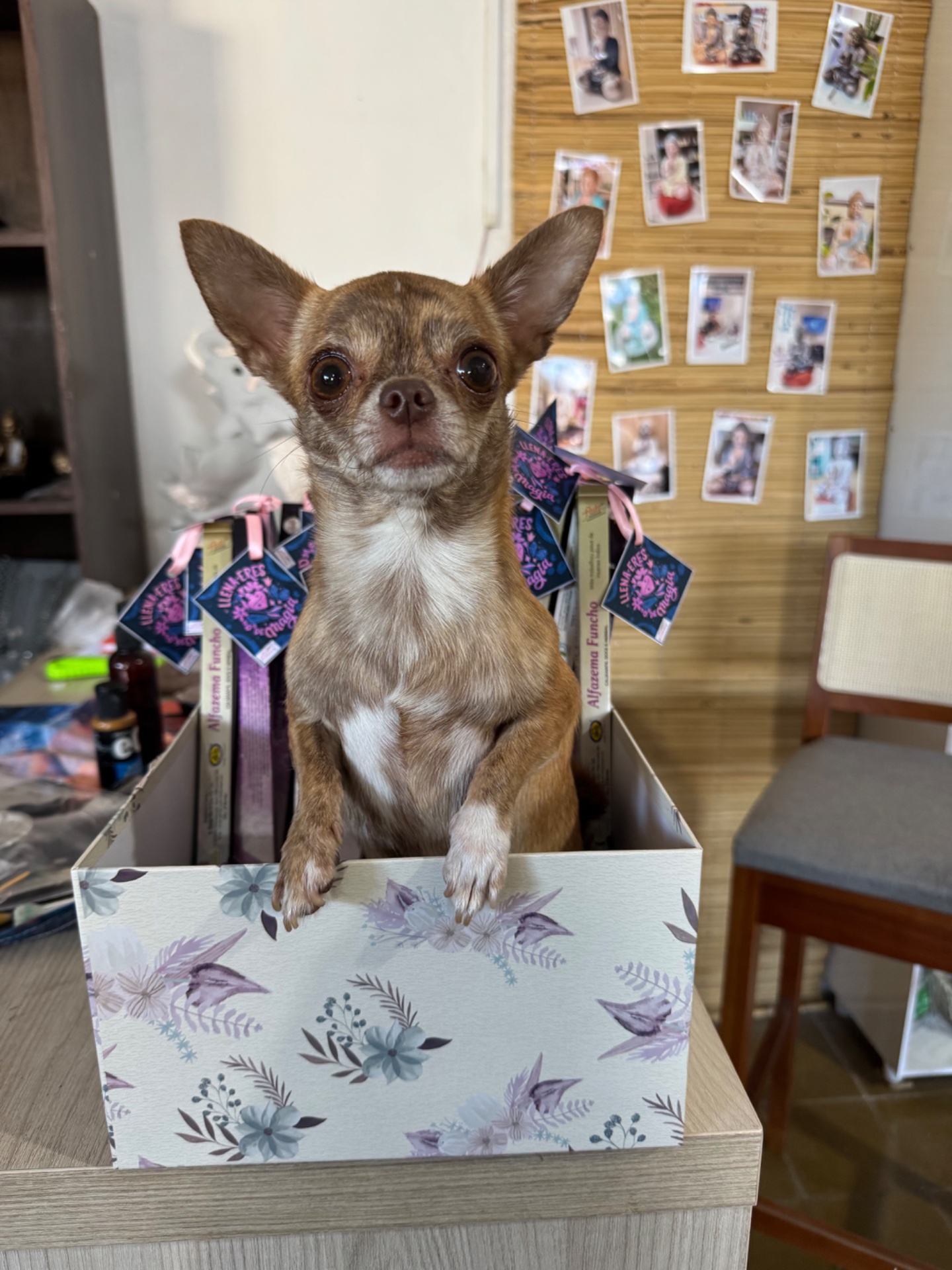
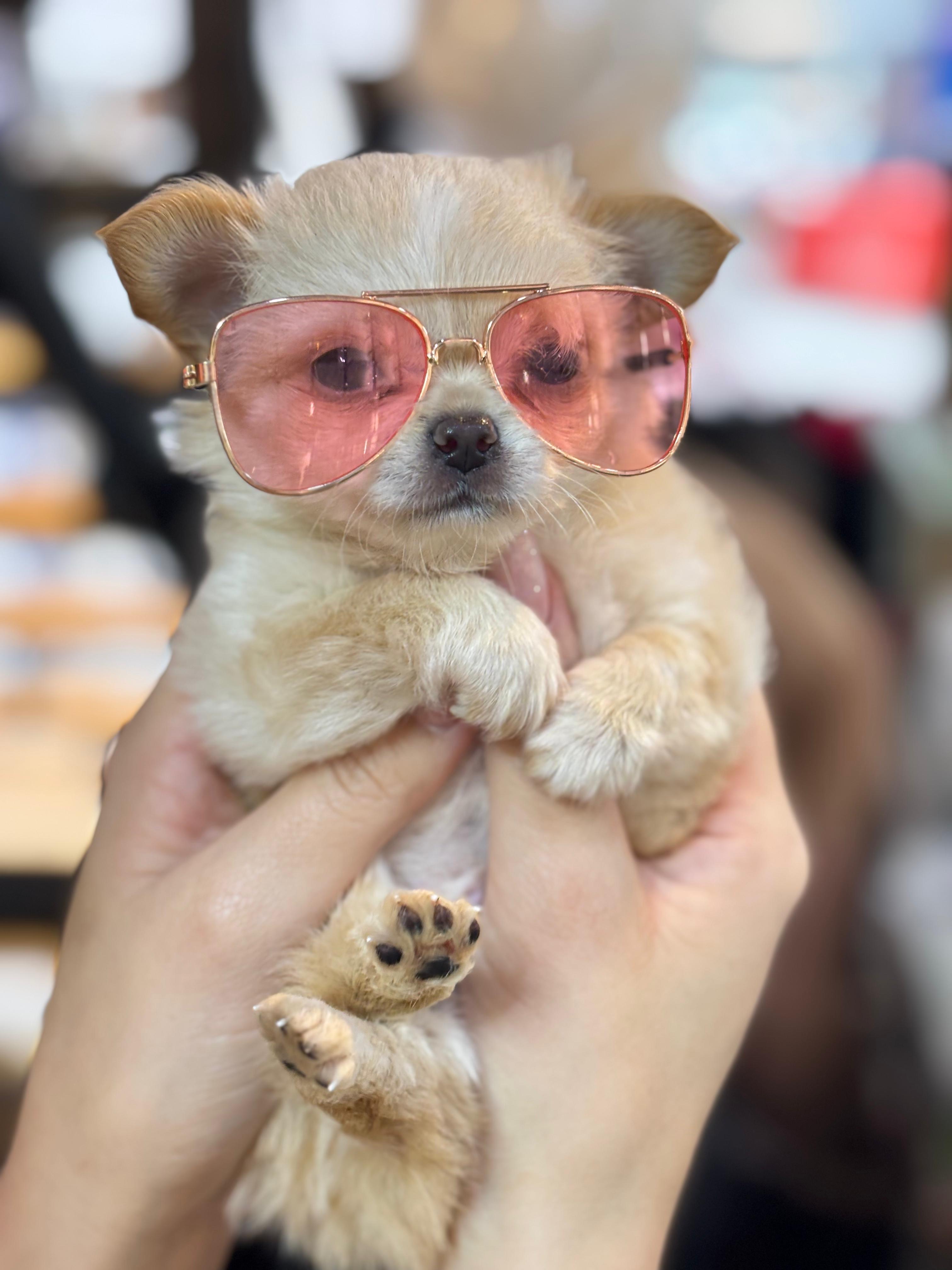
In our club, 49 of the 161 published members are deer heads, close to one in three. The dog on the cover is one of them: Lockie, a caramel short coat from Lima, Peru, who came home at 3 months and whose family sums him up in one word, jumper.
This guide covers the deer head on its own terms: what he looks like, how big he gets, whether he’s purebred, his health and what he costs. If you’re weighing the two head shapes against each other, our side-by-side guide to apple head vs deer head Chihuahua is the place for that.
What is a deer head Chihuahua, in short?
A deer head Chihuahua is a purebred Chihuahua with a flatter, longer skull, a gentle slope between forehead and muzzle, and a longer nose, which gives the face a young-deer look. It isn’t a separate breed or a mix. A deer head can be AKC registered like any Chihuahua, but the show standard favors the rounder apple head.
The name is informal. You’ll also see deer headed Chihuahua, deer type and, less often, deer neck Chihuahua. All of them describe the same dog.
Deer head vs apple head at a glance
Here’s the quick side-by-side most people want before anything else:
| Deer head | Apple head | |
|---|---|---|
| Skull | Flatter, longer | Round, domed |
| Stop (forehead to muzzle) | Gentle slope | Well defined, near 90 degrees |
| Muzzle | Longer, finer | Moderately short |
| Eyes | Large, often look less prominent | Large, round, full |
| Ears | Large, erect | Large, erect |
| Molera (soft spot) | Less often seen | Accepted by the AKC standard |
| Neck and legs | Often longer, more leggy look | Usually more compact |
| Show ring | Not to standard | Standard type |
None of this changes the coat or the color. A deer head can be smooth or long coated, and any color the breed comes in.
What does a deer head Chihuahua look like?
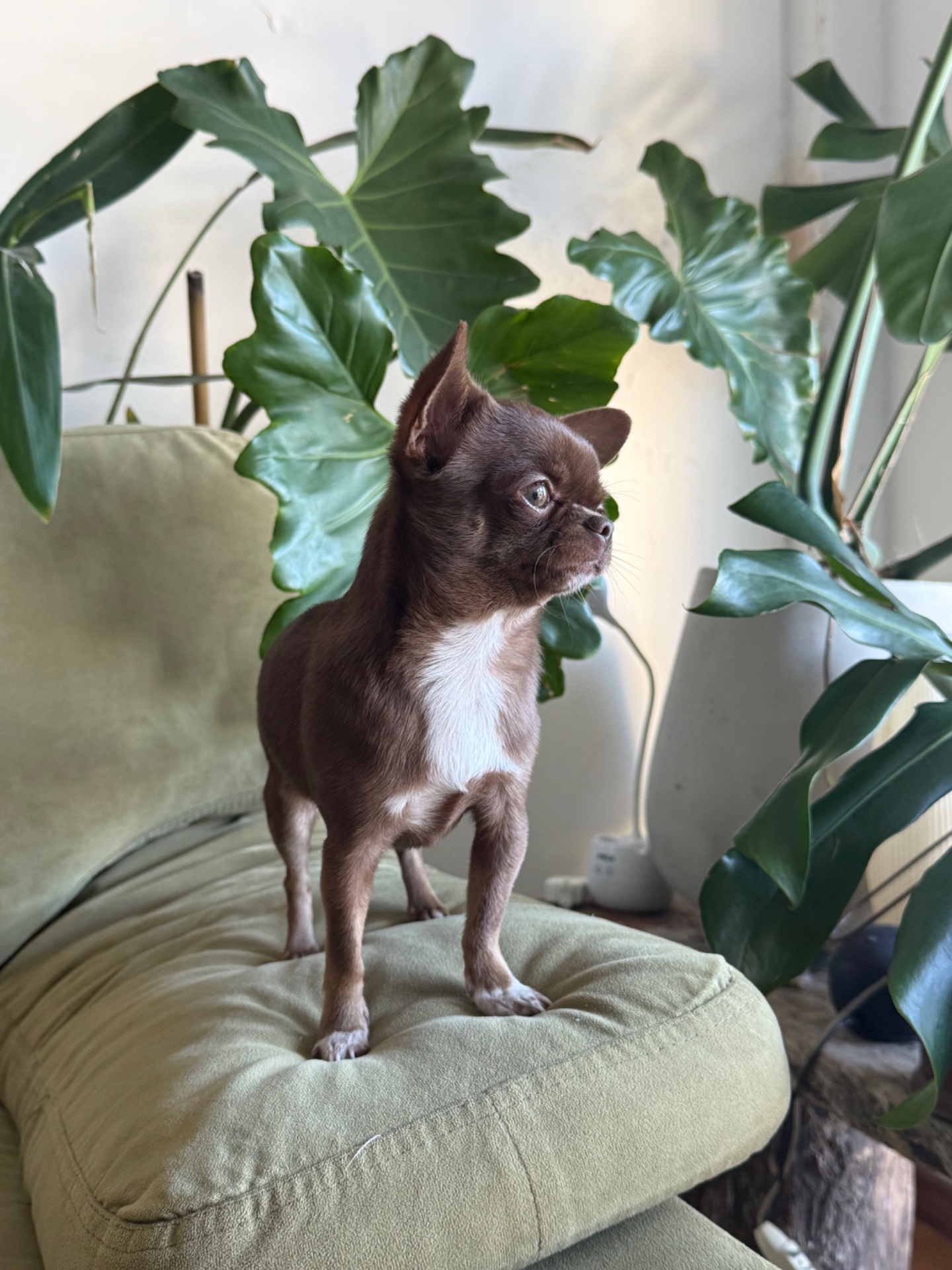
Picture a Chihuahua drawn with slightly longer lines. The forehead rises less, so the top of the head looks flatter. The muzzle is longer and narrower, which makes the eyes look a bit less bulging and the whole face more slender. Many deer heads also carry a longer neck and stand higher on their legs, which gives them that fine, fawn-like outline. That long neck is where the nickname “deer neck” comes from.
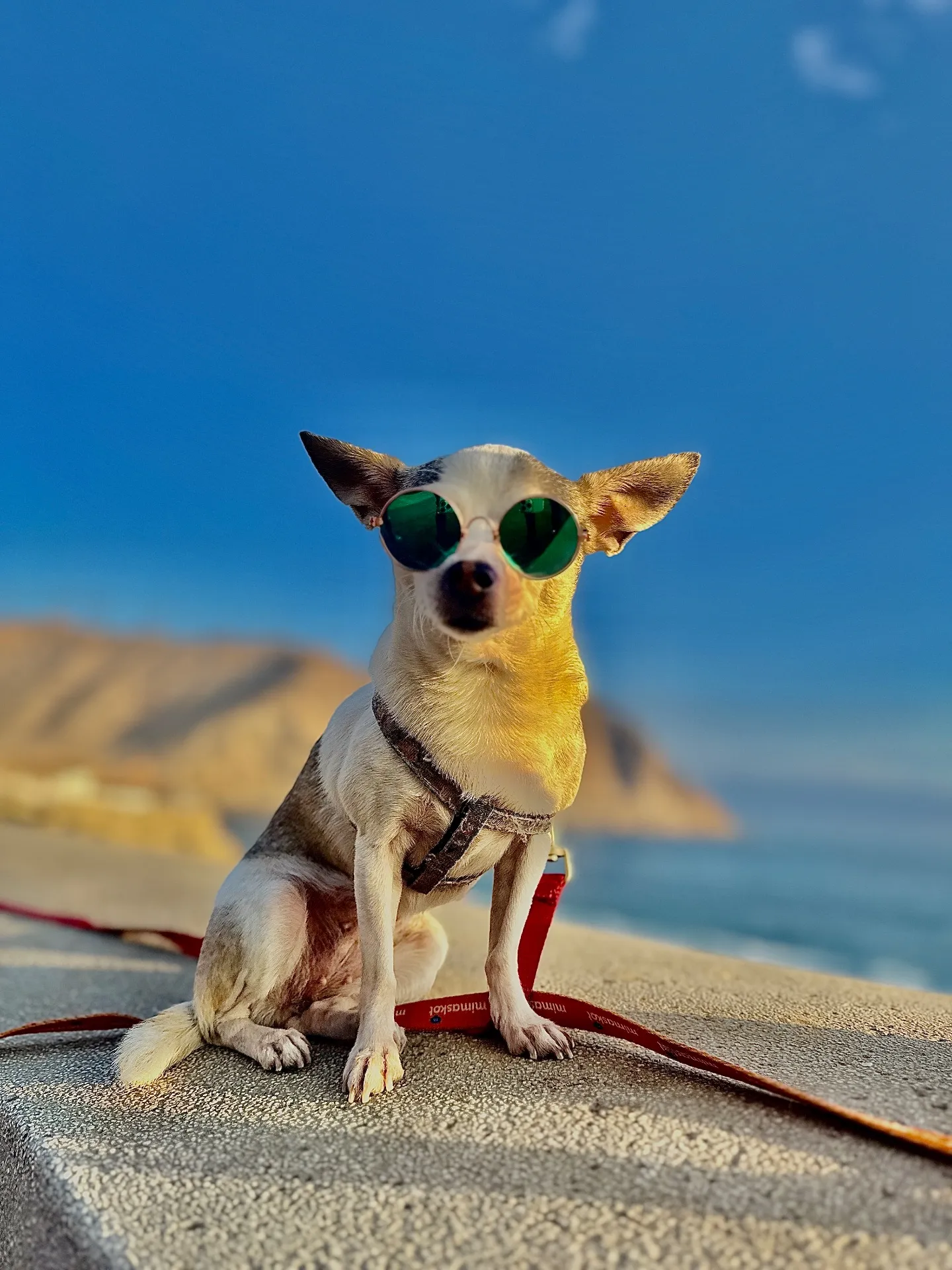
Cookie, a club member from Peru born in 2018, shows the full-grown version well: long legs, a slender neck and a muzzle that runs well past the eyes. Her family describes her as playful and very protective, the kind of dog who won’t let a stranger near her person.
The ears are as big as any Chihuahua’s, and on a narrower head they can look even bigger. That fine, alert outline is exactly where the name comes from.
Is a deer head Chihuahua purebred?
Yes. Deer head is a head shape inside the breed, not a breed of its own. Here’s how the two big registries treat it.
AKC (United States). Registration follows the paperwork, not the profile. A puppy born to two AKC-registered Chihuahuas can be registered whatever his head looks like. Head shape only matters in the show ring. The AKC’s official Chihuahua standard asks for “a well rounded ‘apple dome’ skull, with or without molera,” a well-defined stop that forms “a near 90 degree angle where muzzle joins skull” in profile, and a moderately short muzzle. A deer head, by definition, doesn’t fit that picture, so he’d be faulted by a judge. The standard also disqualifies any dog over 6 pounds, which rules out some pet deer heads on weight alone.
FCI (Europe and Latin America). The FCI standard is stricter. It lists a long muzzle as a severe fault and names “deer type” dogs, with a refined head, long neck, slender body and long limbs, among its disqualifying faults.
Two things are worth keeping apart:
- Standard is not the same as purebred. A deer head born to registered Chihuahua parents is as much a Chihuahua as any champion. The standard decides who wins a ribbon, not who belongs to the breed.
- Deer heads aren’t “the original” either. You’ll hear that claim from sellers. Both head shapes appear in the breed, and both can turn up in the same litter, because skull shape depends on several genes at once.
If someone says your leggy dog “must be a mix,” a mix can look like a deer head, but a deer head isn’t a mix. Only the parents’ papers, or a DNA breed test, settle that question. We compare all three kinds of evidence in how to tell if a Chihuahua is purebred.
Are deer head Chihuahuas rare?
No. They’re one of the most common Chihuahuas you’ll meet in real homes. They only look rare online because show dogs, breed standards and most stock photos favor the apple head.
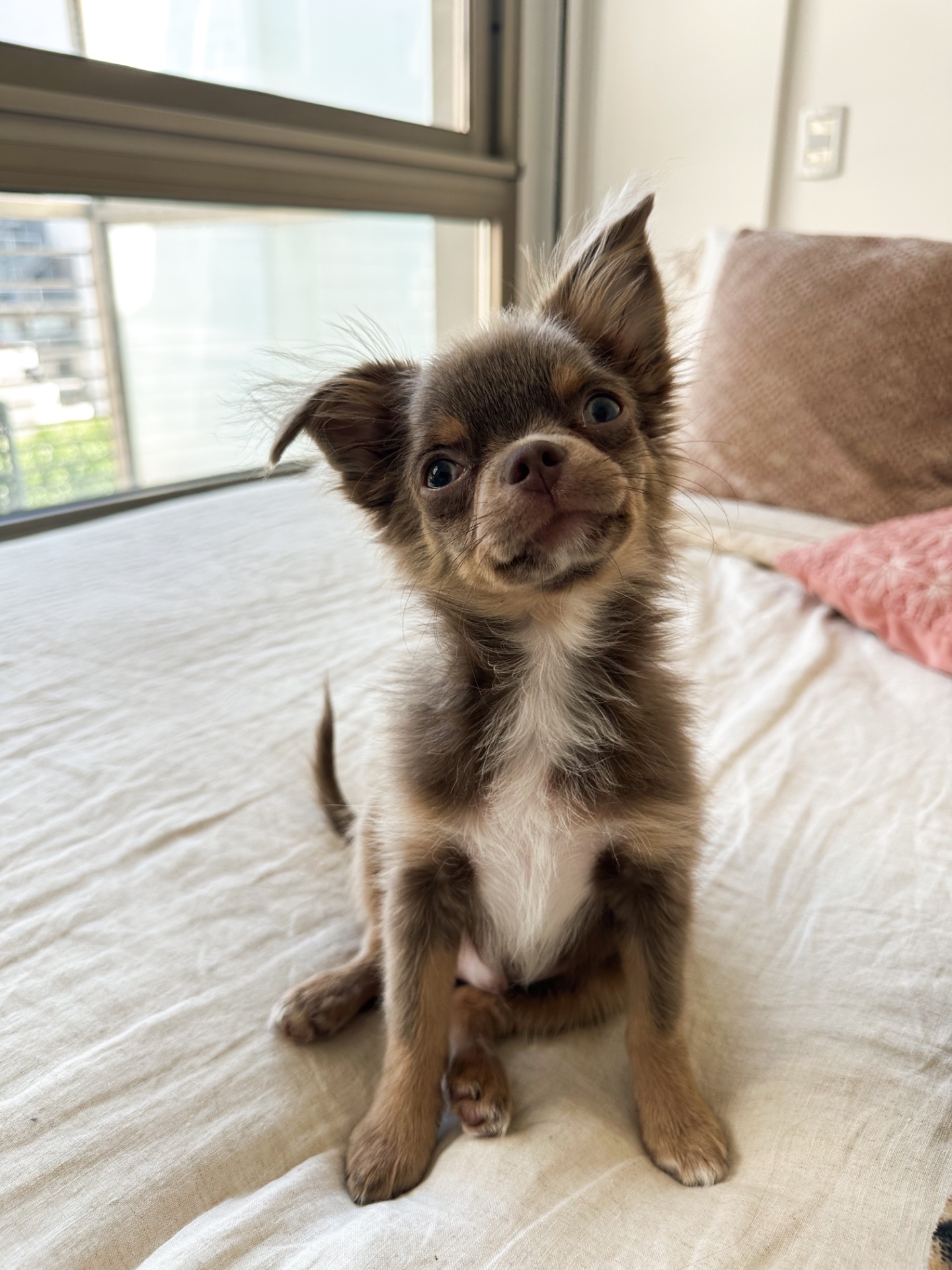
Our club directory gives a fair picture of pet Chihuahuas: 49 of 161 published members are deer heads, and 112 are apple heads. Among the deer heads you’ll find almost every color, from cream and caramel to black, chocolate and particolors, and 6 of the 49 are long coats.
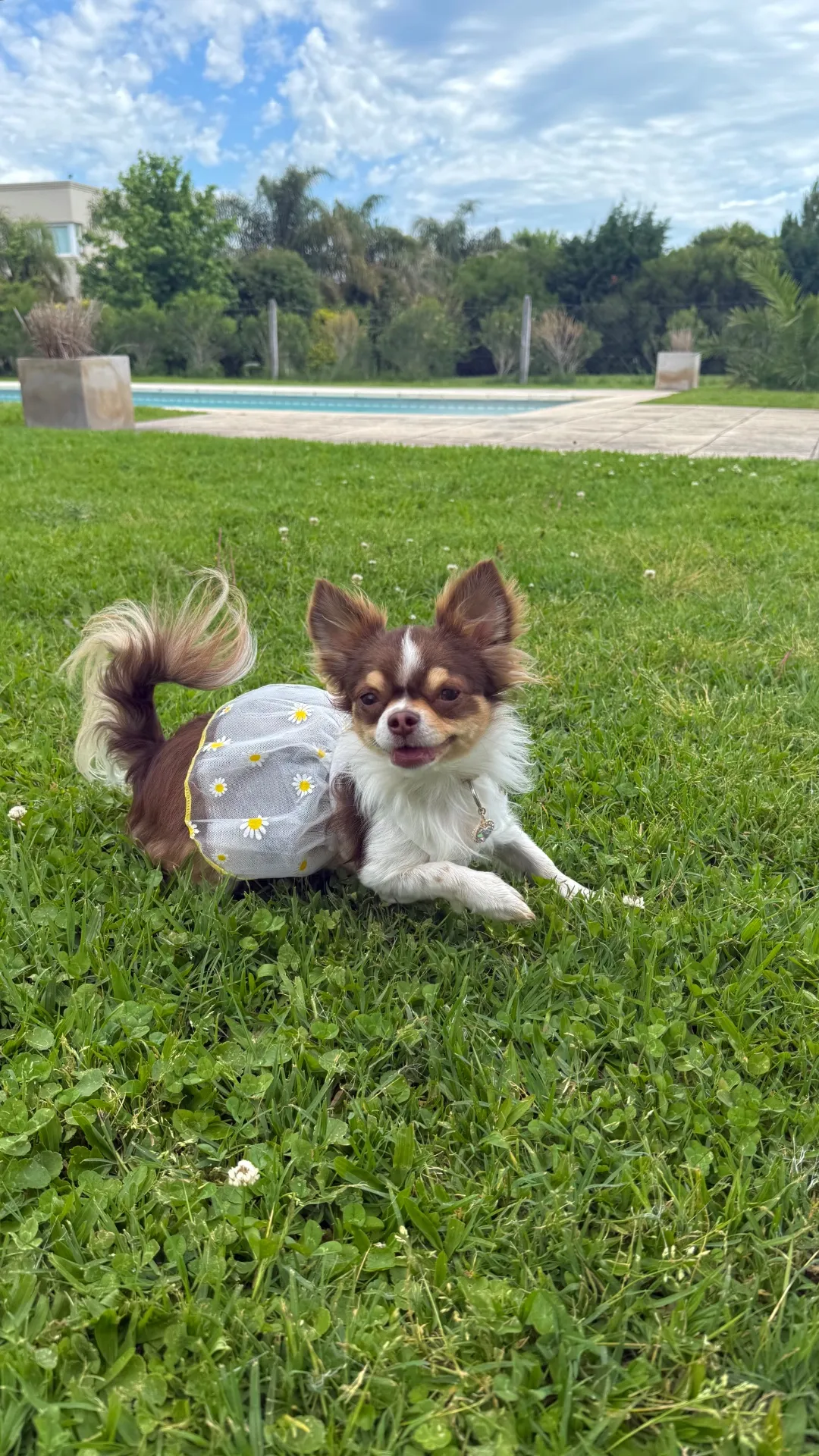
Prada, from Buenos Aires, is one of those long-coated deer heads. Her fringed ears and plumed tail are pure long coat; the muzzle and the flatter forehead are pure deer head. Our guide to the types of Chihuahua shows how coat and head shape combine.
How big is a full grown deer head Chihuahua?
Head shape has no size rule of its own. These are the numbers that apply to every Chihuahua:
| Deer head (and every Chihuahua) | |
|---|---|
| AKC weight | Not over 6 pounds (2.7 kg); over 6 is a show disqualification |
| AKC height | 5 to 8 inches at the shoulder (AKC breed profile) |
| FCI weight | 2.2 to 6.6 pounds (1 to 3 kg), ideal 3.3 to 5.5 pounds (1.5 to 2.5 kg) |
| Full grown at | Most reach adult size around 9 to 12 months |
| Typical pet deer head | Often looks taller and leggier; many weigh a little over 6 pounds |
In practice, deer heads tend to look taller and leggier, and many pet deer heads weigh more than the 6-pound show limit. Treat that as a tendency, not a forecast: size comes from the parents, and you’ll meet tiny deer heads and sturdy apple heads. A heavier Chihuahua is not a problem in itself as long as he’s lean and his frame carries the weight well. You should be able to feel his ribs under a thin layer of fat, and see a waist from above.
Are deer head Chihuahuas healthier?
This is where the internet gets loud, so let’s be precise. I haven’t found a study that compares the health of apple head and deer head Chihuahuas directly. What we can say is narrower.
Where head shape may matter:
- Dental crowding. A Chihuahua has a full set of 42 adult teeth in a very small mouth. A slightly longer muzzle gives those teeth a little more room, which may help. It doesn’t make a deer head immune to tartar and tooth loss, which are common across the breed.
- The molera. The soft spot on top of the skull goes with the domed head the AKC standard describes, and it’s seen less often in deer heads. VCA Hospitals explains that open fontanelles are common in Chihuahuas and that most cases are genetic and not linked to hydrocephalus. The Chihuahua Club of America’s molera statement makes the same point: a molera by itself is not a medical problem. You’ll find more in our article on the Chihuahua molera.
- Hydrocephalus. It’s a recognized problem in toy breeds, and a large, dome-shaped skull can be one of its signs. A flatter skull doesn’t rule it out, though. Any puppy, deer or apple, with a soft spot that keeps growing, unusual behavior, wobbly walking or eyes that drift downward needs a vet.
What deer heads share with every Chihuahua:
- Luxating patella, the breed’s most common orthopedic problem; our luxating patella in Chihuahuas guide covers the grades and treatment.
- Dental disease, whatever the muzzle length.
- Heart disease as they age, especially mitral valve disease.
- Tracheal collapse, which is why a harness beats a collar.
- Hypoglycemia in very small puppies.
So the honest summary is this: a deer head may skip a few of the problems tied to the extreme apple dome, but he isn’t “healthier” as a rule. A deer head from untested parents can have worse luck than a well-bred apple head. Ask any breeder for patella, heart and eye screening on both parents, whatever the head shape. For the full picture of what to watch for at each age, see our hub on Chihuahua health problems.
Lifespan follows the same logic. The AKC lists 14 to 16 years for the breed, and nothing suggests a deer head lives shorter or longer because of his skull. The two oldest deer heads in our directory were born in 2008 and 2012.
This article is informational and doesn’t replace a consultation with your vet.
How much does a deer head Chihuahua cost?
There’s no separate price list for deer heads. In the US, a Chihuahua puppy from a responsible breeder typically runs $500 to $2,000, and adoption from a rescue $100 to $400, as we lay out in our guide to how much a Chihuahua costs. Where a deer head lands in that range depends on who’s selling:
- Show-focused breeders often price deer heads at the “pet quality” end, because they can’t compete. That label is about the ring, not about health or temperament.
- Some sellers do the opposite and charge more for a “rare” or “original” deer head. They aren’t rare, and that premium buys you nothing.
What’s worth paying for is the same for every Chihuahua: health testing on both parents, a written contract, and puppies raised in a home with real socialization. Deer heads also turn up in shelters and Chihuahua rescues all the time, and adoption is a wonderful way to meet one.
How to tell if your Chihuahua is a deer head: a checklist
Look at your dog in profile, at eye level, with his head relaxed. Check each point:
- The stop. Rest a finger on his forehead and slide it down toward the nose. A sharp step means apple head; a gentle ramp points to deer head.
- The dome. Seen from the side, does the top of the skull rise in a round curve, or run fairly flat?
- The muzzle. Compare its length to the skull. A muzzle that looks long relative to the head is a deer head trait.
- The eyes. Very full, round eyes go with the apple head; slightly less prominent eyes with the deer head.
- Neck and legs. A longer neck and higher stance often come with the deer head.
- Age. Puppies change. A round baby face can lengthen over the first months, so wait until the puppy is several months old before deciding.
Many pet Chihuahuas land in between, with a medium stop and a medium muzzle. That’s normal, and some people call that middle ground a “pear head,” which isn’t an official term either.
A note from home
Romeo, my 4-year-old cream, and Lorenzo, my 2-year-old fawn, are both apple heads, so I have no deer head on my couch. What I do have is a club full of them, and the more profiles I read, the less the head seems to matter for daily life. Their families describe the deer heads in our directory as sleepy, clingy, possessive of their toys, guardians of the house, or “small, loud and full of attitude,” which is exactly the range you find among the apple heads too.
If you love your deer head and someone tells you he “isn’t a real Chihuahua,” you can smile and tell them the standard decides ribbons, not breeds. Then go back to whatever he was doing on your lap.