
Pomchi: The Chihuahua Pomeranian Mix, Explained
The Pomchi mixes Chihuahua and Pomeranian: size, coat, temperament and the grooming and dental care nobody mentions before you buy one.
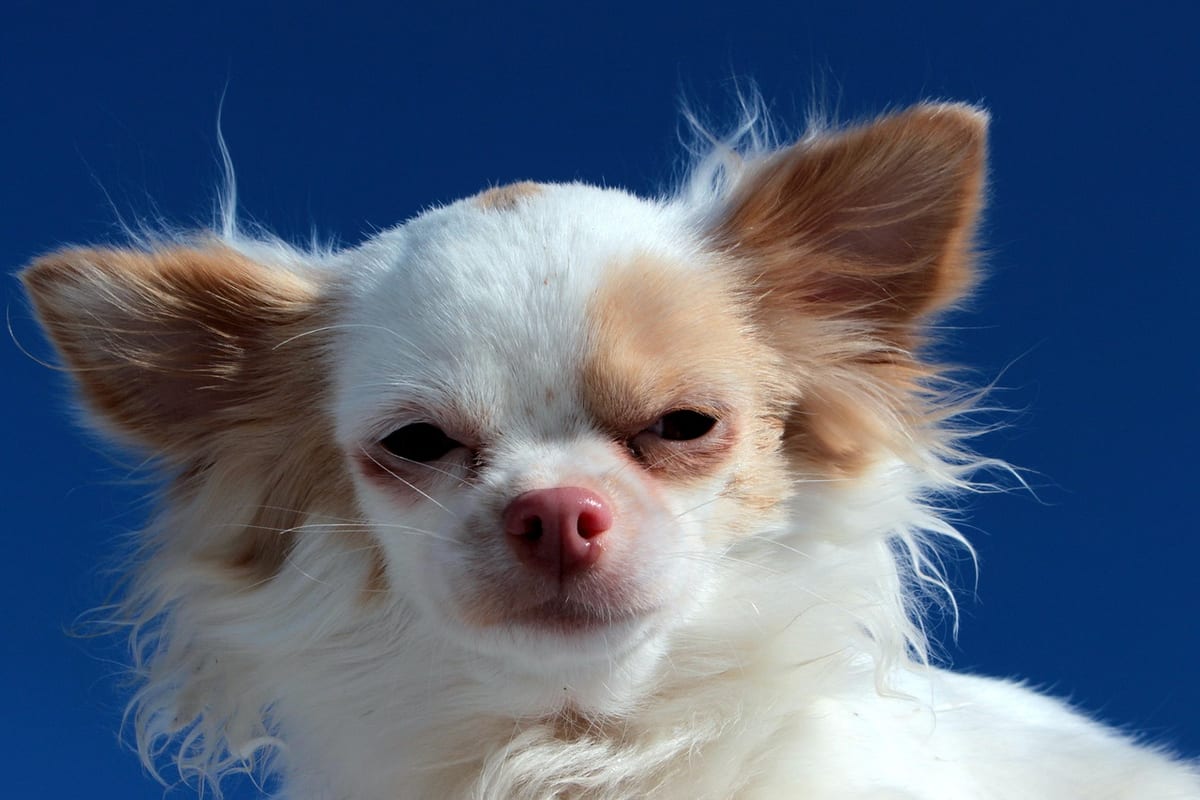
The Pomchi is a cross between a Chihuahua and a Pomeranian, and probably the smallest mix you’ll come across: two tiny breeds that together produce a dog of 3 to 9 pounds carrying a surprising amount of coat. It’s adorable, it’s hugely popular online, and it comes with two care requirements almost nobody mentions before the sale: the teeth and the brush.
Two small breeds, one even smaller dog
A Pomchi is not a recognized breed. It’s a mixed breed between a Chihuahua and a Pomeranian (also called a Zwergspitz or Dwarf Spitz in parts of Europe). Like any first-generation cross, there’s no standard and no predictable outcome: every puppy turns out differently, and one litter can produce a dog that looks almost Pomeranian next to one that looks almost Chihuahua.
You’ll also see it called:
- Pomahuahua
- Chiranian
- Pomachi or Chi-Pom
Oddly enough, plenty of owners don’t even know their dog is a Pomchi: they bought it believing it was a long haired Chihuahua, which is the single most common confusion in this corner of the dog world.
What does a Pomchi look like?
The most common outcome is a Chihuahua face wearing a Pomeranian coat. Here are the real ranges:
| Trait | Pomchi |
|---|---|
| Adult weight | 3 - 9 lb |
| Height | 6 - 10 in |
| Coat | Double, medium to long |
| Tail | Curled over the back (Pomeranian) or low (Chihuahua) |
| Ears | Erect, small and triangular |
| Head | Rounded, somewhere between apple and fox |
| Colors | Cream, orange, sable, black and tan, chocolate, white, merle |
| Lifespan | 12 - 16 years |
The face is what varies most. A Pomeranian has a fox-like expression with a tapered muzzle; a Chihuahua has a domed skull, a sharp stop and large eyes. A Pomchi can land on either, or somewhere in between that resembles neither parent exactly.
Temperament: bold, loud and extremely clingy
Here the two breeds pull in the same direction, which makes the Pomchi fairly predictable:
- Convinced it is enormous. Both parents share that mismatch between size and attitude. A Pomchi will bark at a German Shepherd without blinking.
- Very vocal. Pomeranians were alarm dogs and Chihuahuas are watchful by design. Together they narrate everything happening in the building.
- Deeply attached, sometimes too much. It picks a person and follows them, which makes separation anxiety especially common in this mix.
- Smart and trainable. The Pomeranian brings more biddability than a purebred Chihuahua, so they tend to pick up tricks easily.
- Wary of strangers. Needs early socialization or it turns reactive with visitors.
If you already know Chihuahuas, a Pomchi will feel familiar in personality, with a little more sociability and considerably more hair.
What nobody tells you: the coat and the teeth
These two things are why a Pomchi is not a low-maintenance dog, despite what its size suggests.
That double coat sheds more than you expect
From the Pomeranian it inherits a double coat: a dense woolly undercoat and a longer outer layer. That means:
- Brushing 3 to 4 times a week minimum, daily during shedding season.
- Two heavy blowouts a year (spring and fall) when hair appears literally everywhere.
- Never shave it. The double coat regulates both heat and cold, and shaving can permanently ruin the coat texture, a problem known as post-clipping alopecia. The MSD Veterinary Manual’s overview of skin disorders in dogs is a good reference for telling that kind of coat damage apart from a real skin disease.
If the shedding surprises you, our guide on why Chihuahuas shed explains the same hair cycle, multiplied.
The mouth is the weakest point
Both parent breeds rank among the worst for dental disease. Tiny jaw, crowded teeth, tartar that builds fast, and the MSD Veterinary Manual’s section on mouth disorders in dogs names periodontal disease as the most common dental problem in dogs overall. In a Pomchi those risks stack:
- Daily brushing with canine toothpaste from puppyhood.
- Annual exams and professional cleanings when your vet advises them.
- Watch for retained baby teeth, very common in toy breeds: if adult canines come in while the baby ones are still there at 7 months, get it checked.
Bad breath is usually the first sign something is going wrong in there.
Other health issues worth watching
| Issue | Inherited from | What to do |
|---|---|---|
| Periodontal disease | Both | Daily brushing |
| Luxating patella | Both | Avoid jumping from heights |
| Collapsing trachea | Both | Harness, never a collar |
| Hypoglycemia in puppies | Chihuahua | Frequent meals in the early months |
| Open fontanelle (molera) | Chihuahua | Vet monitoring of the skull |
| Alopecia X (coat loss) | Pomeranian | Dermatology consult if bald patches appear |
This article is informational and does not replace veterinary advice. In dogs under 7 pounds, any symptom escalates faster than in a large dog. When in doubt, call the same day.
How much does a Pomchi cost?
Private breeders charge $400 to $1,200, and prices climb for unusual colors or when a puppy is marketed as “mini.” The same warning applies here as in our guide to teacup Chihuahua sizes: “mini Pomchi” and “teacup Pomchi” are not real categories, just marketing labels stuck on dogs below a healthy weight.
And as with every crossbreed: there are Pomchis waiting in shelters. Adopting an adult means you see the final size, the formed personality and the actual state of that mouth.
Who is a Pomchi right for?
A good fit if you:
- Want a tiny dog with a big personality and do not mind hair.
- Have time to brush several times a week.
- Live in a calm home without very young children.
- Can keep a daily dental routine going for 15 years.
A poor fit if you:
- Are looking for a low-shedding dog.
- Live somewhere barking is a serious problem.
- Have small kids who pick dogs up carelessly. A 4-pound dog gets hurt falling off a sofa.
- Are away from home for long stretches.
At home I have Romeo and Lorenzo Pablito, both smooth-coated, so the brush was never part of my routine. But we have long-coated members in the community and the story repeats itself: nobody regrets the dog, plenty of people underestimate the hair.
If you’re choosing between crosses, the Pomchi is the coat one: nobody who arrives via a fluffy photo has priced in the daily brushing. The Chorkie swaps the brush for a groomer every couple of months, the Chiweenie swaps the coat problem for a spine problem, the Chug for a breathing one, and the Pithuahua for a dog whose adult size you can’t predict.
If you’re scrolling Pomchi photos and thinking about it, keep this in mind: it’s a 4-pound dog with the grooming needs of a much bigger one. Brush, teeth, harness (never a collar, because of the collapsing trachea the MSD Veterinary Manual describes among the lung and airway disorders of small breeds) and patience with the barking. If those four things fit your life, you get a fiercely loyal companion for fifteen years.
Frequently asked questions
What is a Pomchi?
How big does a Pomchi get?
How long do Pomchis live?
Do Pomchis shed a lot?
Written by Belen Salto, who shares her life with Romeo and Lorenzo, two Chihuahuas. · Ver en español