Brindle Chihuahua: AKC Status, Genetics, Rarity and Price
A brindle Chihuahua has dark tiger stripes over a fawn or red base. How the AKC registers it, the K locus genetics, brindle vs merle vs sable, rarity and price.
A brindle Chihuahua is one of those dogs people stop to look at twice: a tiny body with dark tiger stripes running over a warm fawn, red or brown base. It’s completely legitimate in the breed, the AKC registers it, and yet it’s unusual enough that many owners, and even some sellers, aren’t sure what to call it.
This guide covers what brindle actually is, how the AKC and FCI treat it, the genetics in plain English (only the parts the science supports), how to tell brindle from merle and sable, how rare it is, and what it should and shouldn’t cost. For the full family of coats, our hub on Chihuahua colors lists every color the AKC registers.
What does a brindle Chihuahua look like?
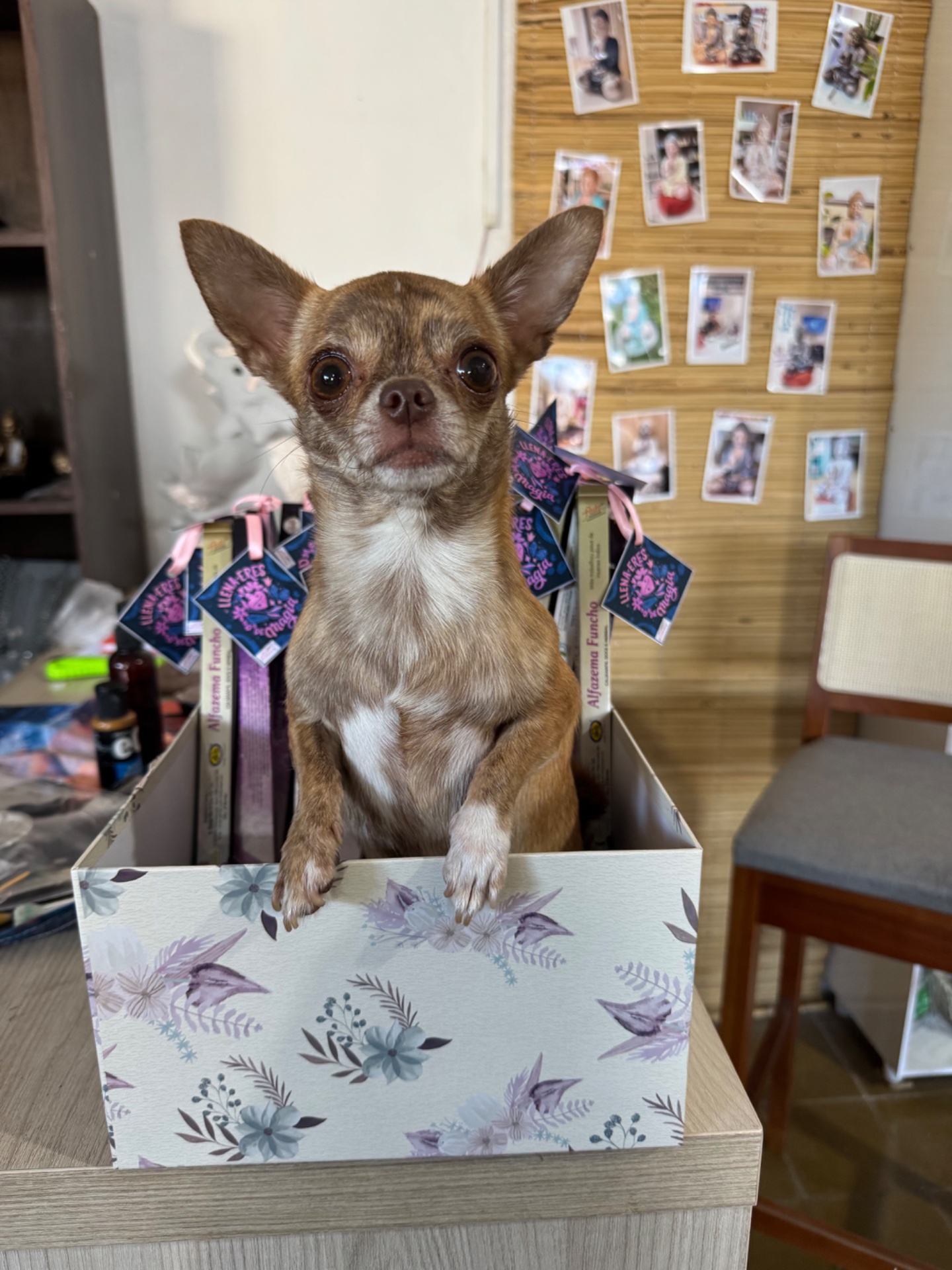
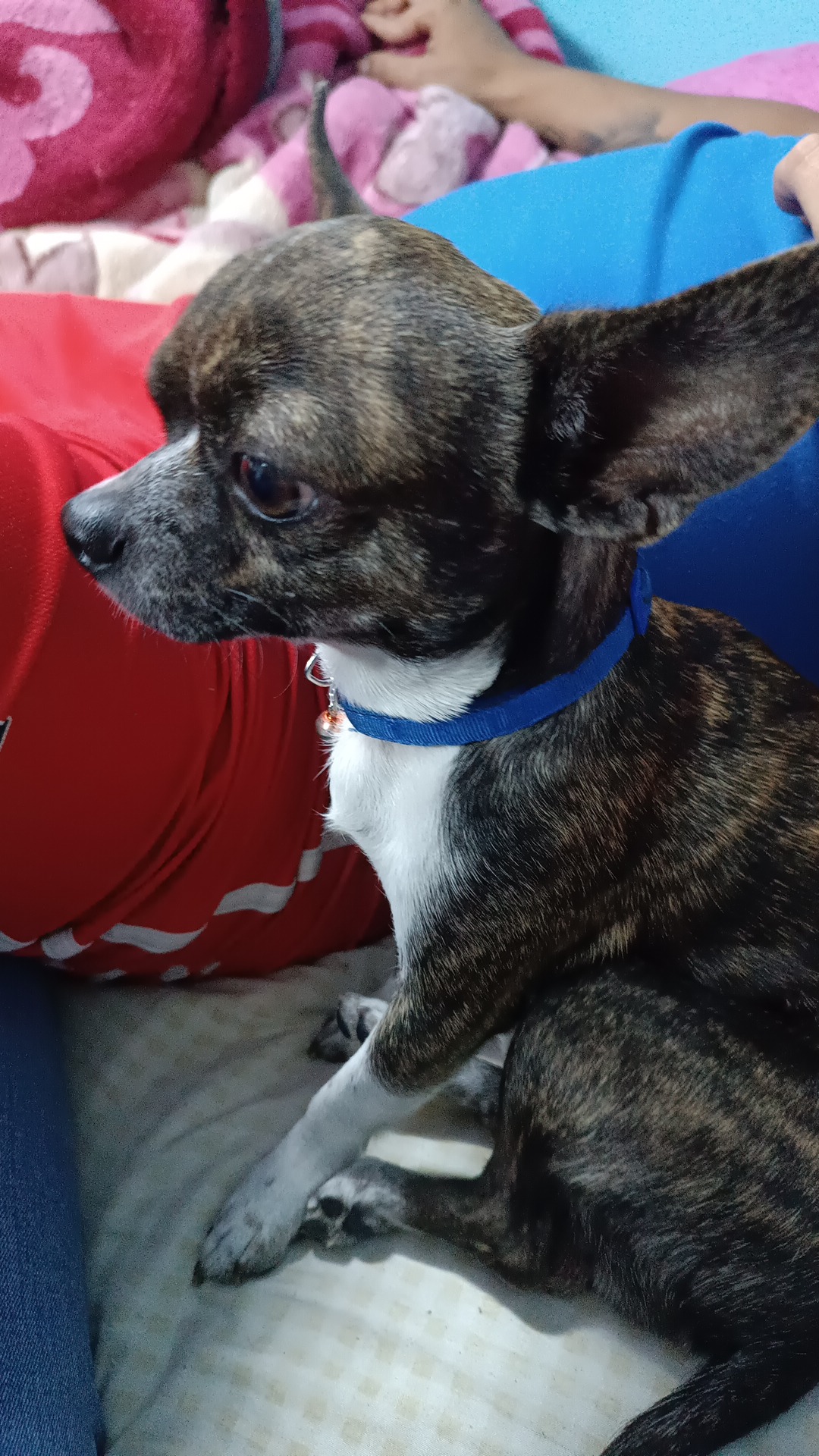
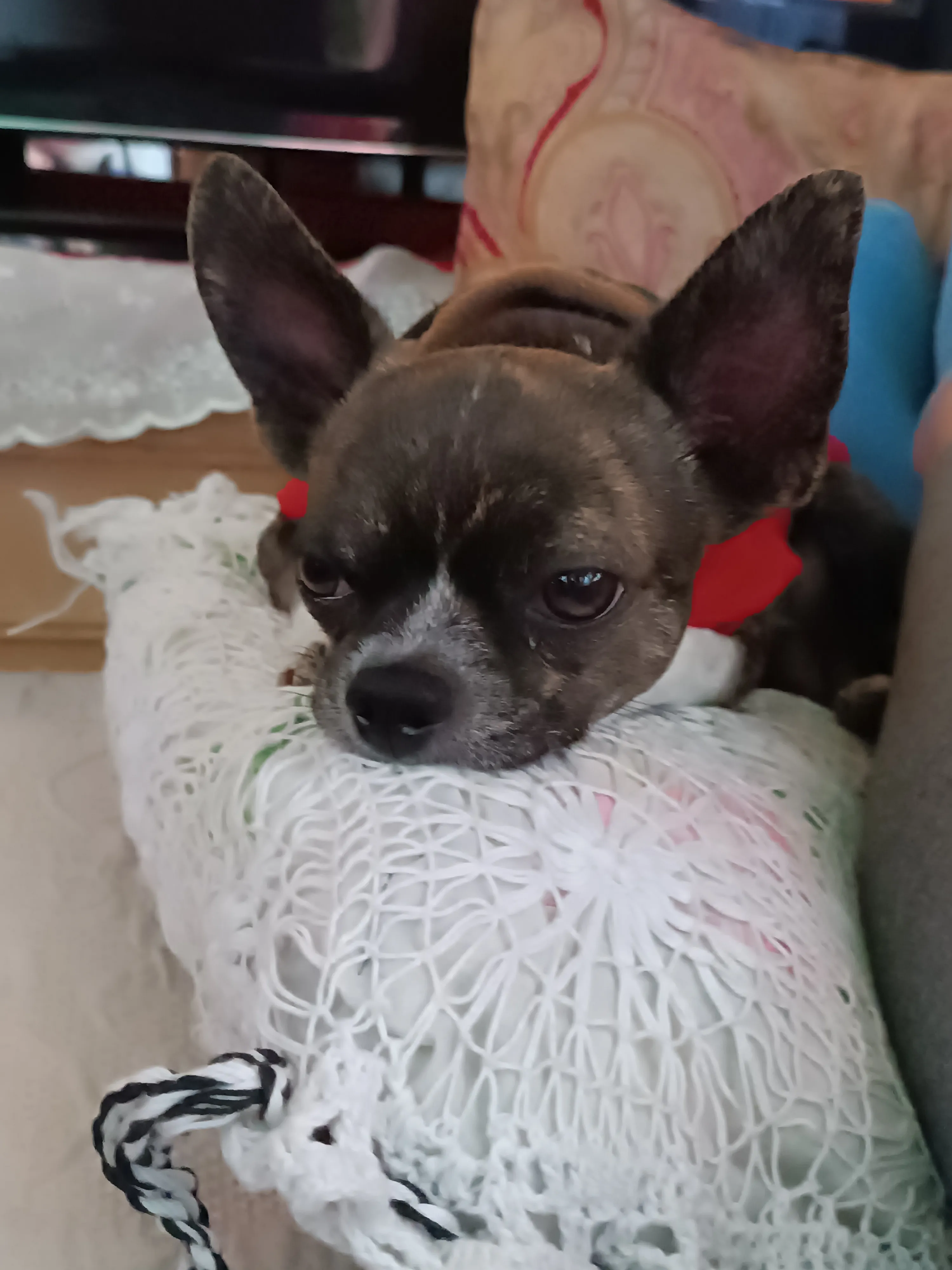
A brindle Chihuahua has dark stripes, usually black, layered over a lighter base color such as fawn, red, gold or cream. The stripes can be faint and fine or bold and dense, and they often run at an angle along the ribs and legs. Brindle is a coat pattern, not a separate type, so it appears on smooth and long coats alike.
The dog at the top of this page is YAYO, the only brindle among the 162 dogs in our club so far. He lives in Encarnación, Paraguay, and his coat shows the classic look: black striping over a brown base, with a white chest that comes from a separate white-spotting gene.
Brindle comes in a few recognizable versions:
| Version | What you see |
|---|---|
| Classic brindle | Clear black stripes over fawn or red |
| Light or “tiger” brindle | Sparse stripes, lots of base color showing |
| Reverse brindle | Stripes so dense the dog looks dark with lighter streaks; the AKC calls it fawn brindled black |
| Chocolate brindle | Brown stripes instead of black, with a brown nose |
| Blue brindle | Gray stripes over fawn, with a gray nose |
| Brindle with white | Any of the above plus white markings |
On a long coat, the stripes soften and blur because the hair is longer, so a long-haired brindle can read almost like a dark sable from across the room. Look at the short hair on the legs and face to see the pattern clearly.
Is a brindle Chihuahua AKC registered?
Yes. The written AKC breed standard doesn’t single out any color: “Any color - Solid, marked or splashed.” Brindle is never a fault or a disqualification.
The AKC’s registration list, which we reproduce in full in our Chihuahua colors guide, names brindle in four places:
| AKC listing | Type | What it describes |
|---|---|---|
| Black brindling | Marking | Black stripes over the base color |
| Fawn brindled black | Alternate color | Reverse brindle: mostly dark with fawn streaks |
| Chocolate brindled fawn | Alternate color | Chocolate stripes over fawn |
| Blue brindled fawn | Alternate color | Gray stripes over fawn |
“Alternate” doesn’t mean second class. It just means a color that’s less typical for the breed; a brindle puppy from registered parents is registered like any other.
The FCI, which governs the breed in most of Europe and Latin America, is just as open. Its Chihuahua standard admits “all colours in all possible shades and combinations,” with merle as the only exception. Brindle is fine under both systems.
How does the brindle gene work?
You don’t need a genetics degree, and we’ll stick to what the established research supports.
1. Brindle lives at the K locus. According to VCA Animal Hospitals, this gene “controls dominant black, brindle, and fawn colors.” The UC Davis Veterinary Genetics Laboratory describes three main variants in a simple order of dominance: dominant black over brindle over yellow (fawn).
2. What that order means in practice:
| What the dog inherits at the K locus | What you usually see |
|---|---|
| At least one dominant black | A black dog in the colored areas; brindle can hide underneath |
| No dominant black, at least one brindle | Brindle stripes on the fawn or red parts of the coat |
| Neither | A fawn, red or cream dog, or tan points, depending on other genes |
3. Brindle can hide. A solid black Chihuahua can carry brindle without showing a single stripe, because dominant black sits above it. That’s how a brindle puppy can appear in a litter where neither parent looks brindle.
4. Stripes need a light canvas. Brindle shows only where the coat would otherwise be fawn or red. VCA explains that the separate E locus decides whether dark pigment shows in the coat at all; a dog with two copies of its red/cream variant is cream or red all over, and any brindle it carries stays invisible.
5. Two brindles don’t guarantee brindle puppies. Each parent can also pass on a hidden fawn variant, so fawn puppies in a brindle litter are normal.
If you’re curious about your own dog, the UC Davis lab and several commercial companies offer cheek-swab color panels. The black side of the same gene is explained in our guide to the black Chihuahua.
Brindle vs merle vs sable: what’s the difference?
These three get mixed up constantly in listings, and the difference matters, because only one of them comes with a breeding warning.
| Brindle | Merle | Sable | |
|---|---|---|---|
| Looks like | Dark stripes over a light base | Irregular patches of diluted color over a darker base | Light base with dark-tipped hairs, darkest along the back |
| Gene | K locus | Merle gene (a separate gene) | Agouti (A locus) |
| Eyes | Normal dark eyes | Often blue or partly blue | Normal dark eyes |
| AKC | Registered | Registered as a marking | Registered (black sabled fawn and others) |
| FCI | Accepted | Disqualified | Accepted |
| Health note | None specific | Double merle risk of deafness and blindness | None specific |
A quick way to tell them apart: brindle runs in lines, merle runs in blotches, sable runs in shading. If the dark areas are broken into torn-looking patches, or a puppy has a blue eye, you’re probably looking at merle, and our merle Chihuahua guide explains why two merles should never be bred together. A dog can, rarely, be both brindle and merle, which is one more reason to ask for the parents’ color and DNA information.
How rare is a brindle Chihuahua?
Uncommon, but not one in a million. No kennel club publishes registrations by color, so any “rarest color” ranking you read online is an estimate. Ours is too: in our colors guide we place brindle eighth of twelve, behind fawn, cream, black and tan, chocolate, tricolor, sable and solid black, and ahead of blue, solid white, merle and lilac.
Our own club roughly agrees. Among the 162 member dogs, exactly one is brindle, YAYO, against 21 creams and 20 fawns or caramels.
Why isn’t it more common? Partly because dominant black hides it and red/cream genes mask it, and partly because fewer Chihuahuas carry the brindle variant in the first place. In breeds such as Boxers and Greyhounds, by contrast, brindle is an everyday coat.
How much does a brindle Chihuahua cost?
There’s no reliable price survey for brindles specifically. As a reference point, a Chihuahua puppy from a responsible US breeder typically costs $500 to $2,000, and adoption from a rescue runs about $100 to $400, as we explain in how much a Chihuahua costs.
Some sellers add a “rare color” premium for brindle. Before paying it, keep three things in mind:
- Brindle has no special health or quality value. A higher price should buy health-tested, registered parents, a vet check and a written contract, not stripes.
- Brindle is far more common in some other breeds. If a “purebred brindle Chihuahua” comes without registration papers for both parents, a mixed background is possible. That doesn’t make the puppy any less lovable, but it should change the price.
- “Brindle merle” or “rare blue brindle” in a listing deserves extra questions about the parents’ genetic tests.
Does brindle affect a Chihuahua’s health?
Not that we could find. We found no health condition linked to the brindle pattern itself, and it doesn’t involve the genes behind the known color-related problems in the breed. A brindle Chihuahua faces the same breed-wide issues as any other: dental disease, luxating patella, low blood sugar in puppies and heart valve disease with age.
Two nuances:
- A blue brindle also carries two copies of the dilution gene, the one linked to color dilution alopecia, a patchy hair loss our colors guide describes.
- A brindle merle carries the merle gene, with all the breeding rules that come with it.
Can a brindle puppy change color?
The pattern itself doesn’t disappear, because it’s genetic. What changes is how it reads. Puppy coats are softer and sometimes duller, and the contrast between stripes and base often shifts as the adult coat comes in during the first year. Many dogs also gray around the muzzle with age, which softens the face striping. If you’re unsure whether a young puppy is brindle, look at the legs and flanks in good daylight; the stripes are usually easiest to see there.
Our take
Neither of my own dogs is brindle: Romeo, who is 4 and weighs 5.3 pounds, is a cream apple head, and Lorenzo, 2 years old and 5.1 pounds, is a fawn apple head. Both are on the most common end of the color ranking, and both are proof that a coat color says nothing about character, since Romeo is calm and sleepy and Lorenzo is electric.
If a brindle Chihuahua finds its way into your home, you’ve got a dog that’s a little unusual and entirely within the standard. Choose it for the temperament and the health of its parents, and let the stripes be a bonus.