
Before Getting a Chihuahua: 12 Things You Must Know
Thinking of getting a Chihuahua? 12 honest truths about temperament, health, cost and commitment to decide with no regrets.
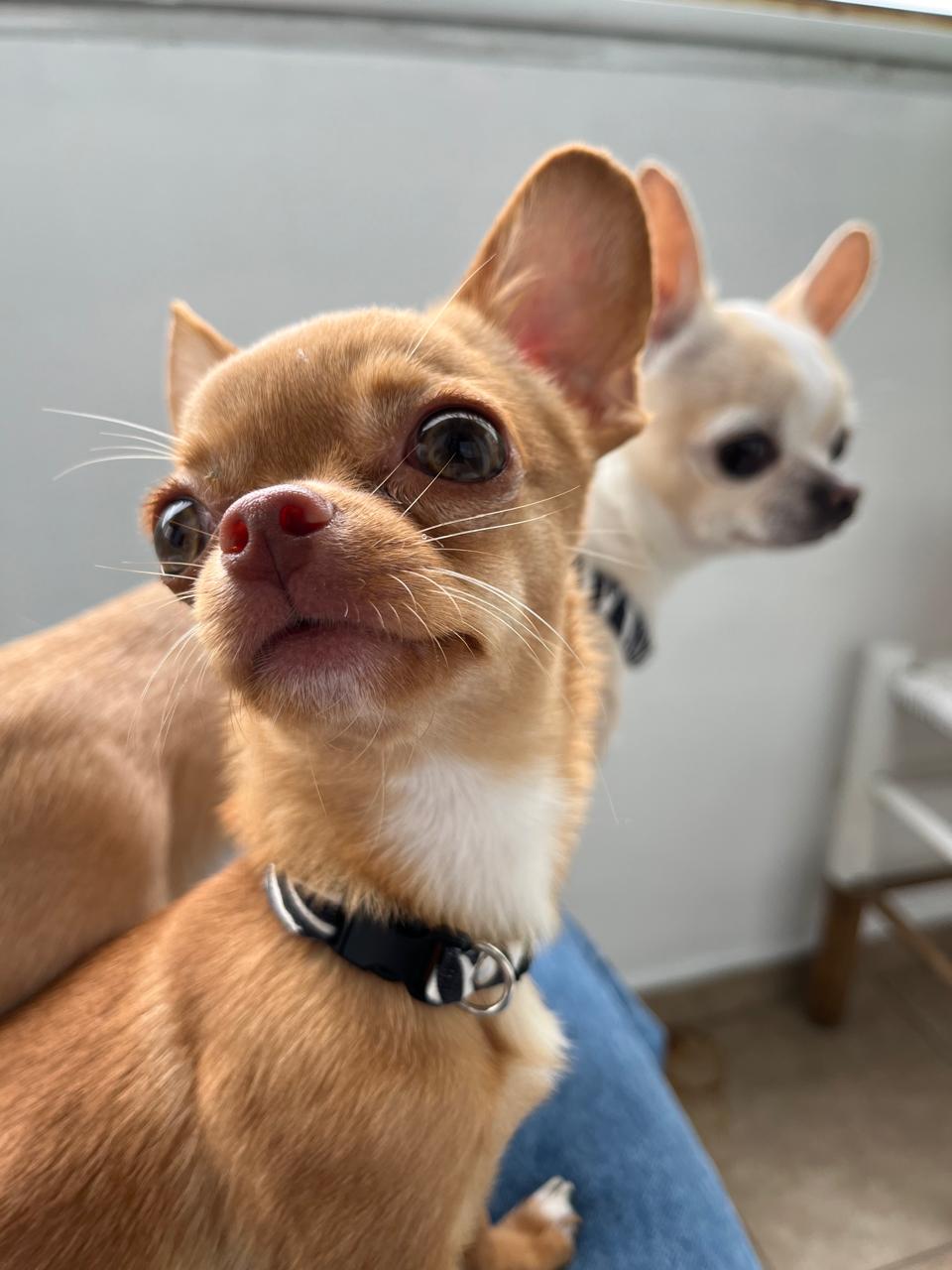
There’s one thing I repeat every time someone messages me saying “I’m about to bring one home”: the most important decision with this breed is the one you make before. The things to know before getting a Chihuahua are the ones that matter before you sign anything, before you scroll through puppy photos that melt you. Because once that animal crosses your door, it stops being a pretty idea and becomes a life that depends on yours for fifteen years or more.
This article is not here to talk you into anything. It’s here to give you the tools to decide with your head, not just your heart. I’ve lived with Romeo (my cream apple head senior, calm to the core) for years, and not long ago Lorenzo joined us (fawn, young, apple head, all energy). And even with that experience, each decision took a lot of thinking. Let’s get into it.
Why a Chihuahua doesn’t fit just any home
Before the twelve concrete points, an uncomfortable truth: the Chihuahua is not an “easy” little dog. It is a dog with an enormous personality packed into two kilos of body, with emotional hypersensitivity, real physical fragility, and a lifespan of 14 to 17 years that turns adoption into a very long commitment.
If you’ve already read my article on Chihuahua temperament, you know what I mean. If not, do it before going any further. That’s exactly where most people who later return a dog to a shelter with the line “it wasn’t what I expected” fall down.
The 12 things you must know before bringing one home
Here’s the list. Read it slowly. If after reading it you still feel it’s for you, you’re on the right track.
-
Their lifespan is long. A healthy Chihuahua lives 14 to 17 years. Reaching 18 is not rare. That means thinking about where you will be in fifteen years: jobs, moves, kids, partners, travel. If your life is about to change a lot, ask yourself whether this is the best moment.
-
They need more early socialization than other breeds. The first 16 weeks are sacred. If that puppy doesn’t meet different people, noises, surfaces, balanced dogs, and varied routines, you will end up with a fearful or reactive adult. It is not optional.
-
The physical fragility is real. A fall from the sofa can break a leg. A jump from your arms, a luxating patella. Another big dog playing “nicely” can kill them in seconds. You will have to redesign your home and habits: ramps, safety gates, non-slip rugs.
-
They cost money every month. Many people think “it’s tiny, it’ll eat little.” True, but the total bill doesn’t drop: appropriate premium food, annual vaccines, parasite control, annual dental cleaning under anesthesia, winter clothes, a harness, a carrier. Plan for a steady monthly cost, and a lot more if something serious shows up. If the budget squeezes you, think twice. Our breakdown of how much a Chihuahua costs lays out the real numbers.
-
They are not dogs for small children without supervision. A 3-year-old can crush a Chihuahua by accident. And a Chihuahua, defending itself, can bite. The combination is dangerous for both. Not impossible to manage, but it demands adults paying attention 100% of the time.
-
Mixes are Chihuahuas too, with nuances. If you are considering a Chihuahua mix, know that Chihuahua genetics are very dominant: the character, the bark, the attachment, and many physical traits tend to show up even when crossed with another breed. The mix can bring advantages (more sturdiness, hybrid vigor) while keeping the breed’s essence.
-
“Teacup” is not a type: it is a red flag. If someone offers you a “teacup,” “mini,” or “super mini” puppy as a variety, run. It doesn’t officially exist and usually hides serious health problems. I cover it in depth in teacup Chihuahua sizes.
-
You will have to say NO to the collar and YES to the harness. A Chihuahua’s neck is extremely delicate. A bad tug on a collar can collapse the trachea. An H-style harness, fitted to the chest, from day one. No debate. If you want help choosing, see our guide to the best Chihuahua harness.
-
Dental problems are frequent. It’s the dog breed with the most periodontal disease in the world. You will need daily brushing at home and professional cleanings under anesthesia every 1 to 2 years. Budget for it now.
-
Puppy hypoglycemia is serious. A Chihuahua puppy can drop into a dangerous blood-sugar low if it goes many hours without eating, gets stressed, or is pushed into too much exercise. Learn to recognize the signs (trembling, weakness, pale gums) before bringing one home.
-
They bark. A lot. It’s genetic. You won’t have a silent dog. You can modulate the barking with early training, redirection, and clear routines, but the Chihuahua is a watchdog by design. If you live in an apartment with noise-sensitive neighbors, be clear-eyed about it.
-
They will choose ONE person. That’s the nature of the breed. You’ll live with a dog deeply attached to you, indifferent or reserved with everyone else. If you expected a dog “for the whole family equally,” you may be disappointed. If you want an intimate companion, you’ve chosen right.
Should you adopt from a shelter or buy from a breeder?
This is the question that always comes up before the words “buy a Chihuahua.” There is no single answer, but there are clear differences worth looking at coldly.
| Option | Pros | Cons | Approximate cost |
|---|---|---|---|
| Adopting from a shelter | You save a life; they usually arrive checked, vaccinated, and neutered; a team that knows the dog and advises on fit | Few puppies available; sometimes a difficult past; possible traumas that need patience | A symbolic fee with a vet kit |
| Buying from an ethical breeder | A puppy from 8-10 weeks; known parents; genetic testing; controlled early socialization | High price; requires a lot of research to avoid puppy mills; does not solve a social problem | High, plus initial vet costs |
My honest opinion: unless you have a very specific need for a pedigree puppy, adoption is the more coherent choice. There are Chihuahuas and mixes waiting for a home in nearly every city. But if you go the breeder route, pay the price of ethics: a good breeder is transparent, shows you the parents, shows you the environment, and signs health guarantees.
What about Chihuahua mixes?
Here comes another very common doubt: if I am going to adopt a Chihuahua cross, what can I expect?
First, good news: Chihuahua genetics are dominant in most crosses. That means a Chihuahua mix usually inherits the key traits, contained size, watchful character, intense attachment, a head with a marked stop. The essence changes very little and, depending on the cross, it may gain physical resilience.
Second, good practice: ask the shelter what is known about the other parent. A cross with a hound is not the same as one with a Yorkshire or a Pinscher. It gives you clues about expected adult size, energy, and possible specific care needs. And third: hybrid health is not magic. It lowers the odds of some inherited problems, but it does not erase the joint, dental, or emotional fragility of the Chihuahua line.
Signs of a good breeder (or shelter)
Here they are in short form so you can keep them handy:
- They open the door to their home or facility, no objections.
- They show you the puppy’s mother and, if present, the father.
- They have a maximum of 1-2 litters a year per female.
- They do not hand over puppies before 8 real weeks.
- They give you the health record, microchip, and up-to-date deworming.
- They ask questions about you: if they do not care who takes the dog, bad sign.
- They never use the word “teacup.”
A serious shelter, on top of that, asks for prior visits, an interview, and sometimes a trial period. That is good. It means they care that the fit is real.
Questions you really must ask yourself first
- How many hours a day will I be out of the house?
- Do I have a stable budget for 15 years of care?
- Does my home allow a dog, and will my neighbors tolerate occasional barking?
- Can I take a canceled trip or a change of plans if the dog gets sick?
- Is there someone around me who could keep him if I can’t?
- Am I willing to do training through the first 8-12 months, no matter what?
If any answer is “no” or “I’m not sure,” maybe it’s not the moment. And that doesn’t make you a bad person: it makes you responsible.
Where everything else connects
Once you’re clear that yes, I recommend reading two more articles before the arrival: the Chihuahua puppy care guide, because the first weeks shape the entire dog, and what Chihuahuas eat, because the right food prevents half the health problems you’ll see with this breed.
This article is informational and does not replace veterinary advice. Each dog and each home is unique; always talk to professionals before deciding.
Romeo and Lorenzo: how I lived it
When I chose Romeo, many years ago, I knew nothing. I happened upon a breeder who did meet everything I now recommend, but by pure luck. Romeo chose me from the first minute, curled around my neck, and hasn’t moved from that symbolic spot since. He’s my shadow, my emotional thermometer, my teacher. The cream of his coat has lightened with age and his apple head has more wrinkles now, but he’s still the same firm, loyal dog he always was.
Adding Lorenzo was a very different story. It was already an informed decision, thought through for months, discussed with my trusted vet and trainer, and reviewed coldly even after I fell for his little face. He came from a shelter in the south, with his apple head, his fawn coat shining in the sun, and an energy that nearly knocked Romeo off the bed on day one. It took them three months to accept each other, another three to love each other, and six to find their shared routine and their spot on the sofa. Today they sleep pressed together, share naps, bark at the mail carrier, and live with the same intensity that only Chihuahuas give when they decide to love you. And every time I look at one and then the other, I remember the same thing: with this breed, the real difference between getting it right and regretting it is always in what you did before the dog ever came home.
Written by Belen Salto, who shares her life with Romeo and Lorenzo, two Chihuahuas. · Ver en español