Chihuahua Sleeping Positions: What Each One Can Tell You
Chihuahua sleeping positions explained: curled up, on the side, belly up or under the covers, what each may suggest, sleeping in your bed and when to call the vet.
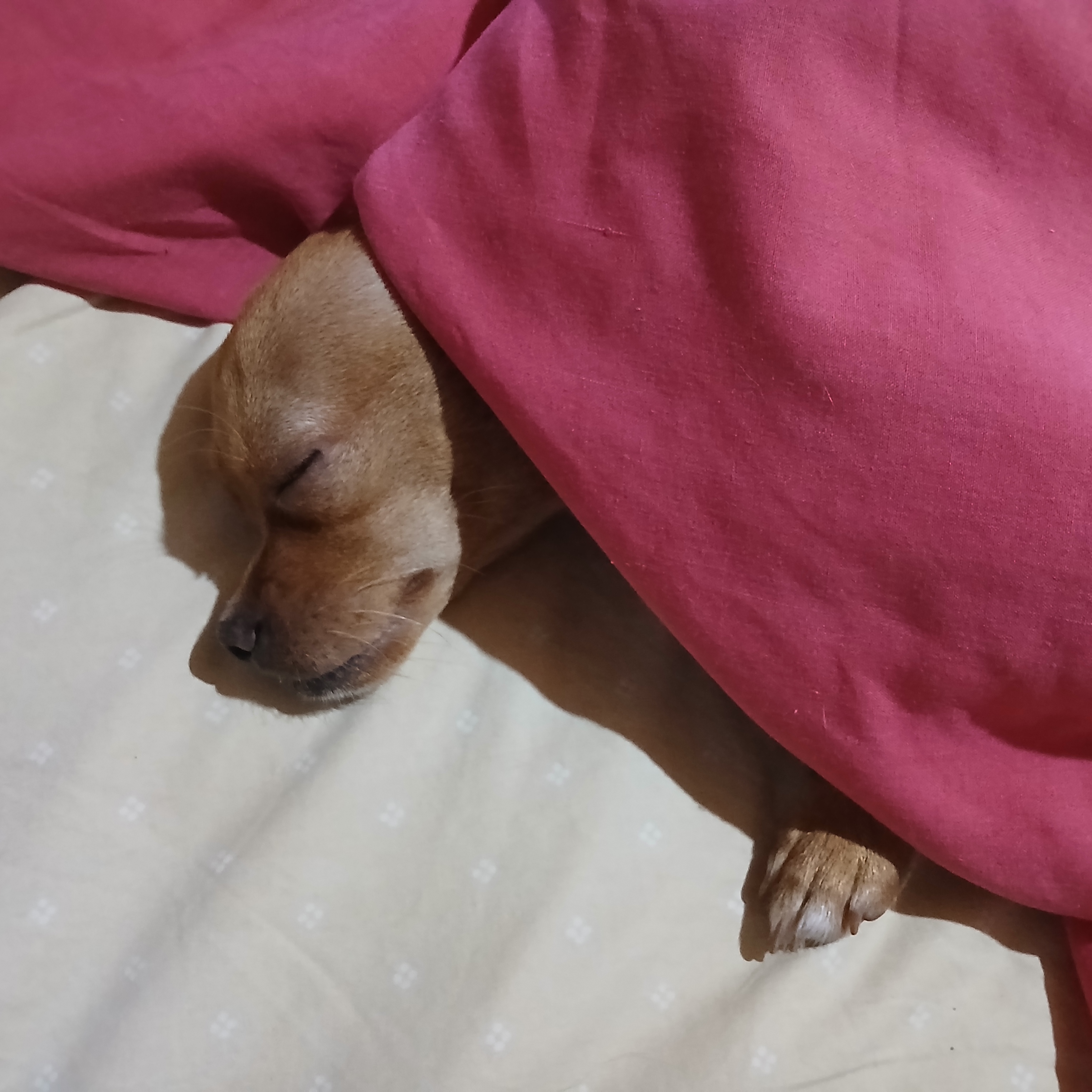
If you share your home with one, you’ve probably found it in every possible shape: a tight little donut, a sprawled starfish, a lump under the comforter. Chihuahua sleeping positions are endlessly photogenic, and many owners wonder whether each one means something.
Some do, up to a point. Sleeping postures mostly tell you about temperature and comfort. They aren’t a window into personality, and the internet tends to read far too much into them. Here’s what the common positions can reasonably suggest, what’s just a cute photo, and the changes that are worth a call to the vet.
The common positions at a glance
| Position | What it looks like | What it often suggests |
|---|---|---|
| Curled in a ball | Body in a circle, nose tucked toward the tail | Keeping warm, conserving heat |
| On the side | Lying flat, legs stretched out | Relaxed, comfortable, often deeper sleep |
| Belly up | On the back, legs in the air | Warm, relaxed; cooling off |
| Belly down, legs out | Flat on the tummy, back legs stretched behind | Cooling on a cool floor, or resting lightly |
| Burrowed | Under a blanket, often with just the nose out | Warmth and a feeling of security |
| Pressed against you | Back or side touching your body | Warmth and closeness |
| Head up, half lying | Chin on paws or on the edge of the bed | Dozing, ready to react |
Read the table loosely. The same dog will use several positions in one night, depending on the room, the bed and how deeply it’s sleeping.
Why do Chihuahuas sleep curled up?
The ball is the classic Chihuahua position, and the explanation is mostly physical. In its article on why dogs sleep on their backs, the AKC notes that when dogs curl into a tight ball with their stomach against the ground, they’re often conserving heat and energy.
For a dog that weighs 3 to 6 pounds, that matters. A small body loses heat faster than a large one, and many Chihuahuas have thin coats with little undercoat. If your dog curls up tightly every night, the room may simply be on the cool side. Our guide to whether Chihuahuas get cold explains the signs and the temperatures to watch.
On the side: comfortable and deeply asleep
A Chihuahua stretched out on its side, legs loose, is usually a dog that feels warm enough and settled enough to let go. This is often when you’ll notice twitching paws, little yips or rapid eye movements, which are normal signs of active sleep.
Trembling during sleep can have several causes, most of them harmless. If you’re unsure, our guide to Chihuahua shaking while sleeping explains the difference between dream twitches, cold and something that needs a vet.
What does sleeping belly up mean?
The belly-up sprawl is the position that makes people laugh, and it usually has two simple explanations.
- Cooling off. The AKC explains that dogs perspire through their paw pads, and lying on the back lets air reach the belly and pads, which have less fur.
- Comfort. Sleeping that exposed is something dogs tend to do when they feel relaxed where they are. Dr. Jerry Klein, the AKC’s chief veterinary officer, notes in the same article that the main practical risk is a deeply relaxed dog rolling off furniture.
You’ll often see it on warm nights or after a busy day. That’s worth remembering for a Chihuahua that normally sleeps curled up: a sudden switch to belly up may just mean the heating is on.
Burrowing under blankets
Plenty of Chihuahuas don’t sleep on top of anything. They sleep inside it. Tunneling under a blanket combines warmth with the security of an enclosed, den-like space, and many dogs dig and circle before settling in. We go into the reasons and the safety rules in our guide on why Chihuahuas burrow.
Pressed against you
Back to your leg, head on your arm, wedged into the curve of your knees: a Chihuahua that sleeps touching you is choosing your warmth and your company. It’s one of the most common habits in the breed and, for most households, a lovely one. If it disturbs your own sleep, a bed of its own right next to yours is a kind compromise.
What sleeping positions don’t tell you
It’s tempting to assign meanings like “dominant,” “anxious” or “loyal” to each posture. There’s little evidence behind those labels. A position reflects the temperature, the surface and how deeply your dog is sleeping at that moment far more than its character. Use positions as small clues, alongside appetite, energy and behavior, never as a diagnosis.
Should your Chihuahua sleep in your bed?
That’s a personal choice, and many owners love it. With a dog this small, though, a few precautions matter:
- Falls and jumps. A bed is several times your Chihuahua’s height. Repeated jumps down are hard on small knees and backs, especially in a dog with a luxating patella, and a fall in the dark can cause injuries. Add pet steps or a ramp, or lift your dog up and down.
- Being rolled on. A Chihuahua under a comforter is nearly invisible. Pat the bed before you sit or lie down, and keep your dog near the edge of the pillow rather than in the middle of the mattress.
- Heavy covers. A light throw is safer than a thick duvet tucked in tight, especially for puppies, seniors and dogs with breathing problems.
- Other pets and young children in the same bed raise the risk of accidents.
- Puppies do better in their own crate or bed next to yours until they’re reliably house-trained and big enough to be noticed.
If your Chihuahua sleeps better in its own bed, that’s fine too. A small cave bed or donut bed with a blanket placed beside your bed gives closeness without the risks.
How much sleep is normal?
A lot. Chihuahuas sleep many hours a day, and the amount changes with age, from very young puppies who sleep most of the day to seniors who nap more and sleep more lightly. Our guide on how much Chihuahuas sleep has a full table of hours by age and stage.
When sleep changes signal illness
A single position rarely means anything is wrong. A change is what deserves your attention. Call your vet if you notice:
- A sudden increase or decrease in sleep that lasts several days with no obvious reason.
- Restlessness: getting up, circling and lying down again and again, as if your dog can’t get comfortable. This can be a sign of pain.
- Fast or labored breathing while resting or asleep, especially in an older dog. It can point to heart or airway problems and deserves a prompt vet visit.
- Sleeping sitting up or with the neck stretched out, which some dogs do when breathing is difficult.
- Hiding to sleep in unusual places, along with poor appetite, vomiting or lethargy.
- Confusion at night or waking disoriented, which in seniors can be linked to cognitive changes.
- Yelping when lying down or getting up, or a new reluctance to curl up.
This article is general information and does not replace a visit to your veterinarian.
Our two sleepers
At home, sleep looks very different depending on who you’re watching. Romeo is four, calm and a champion sleeper, the kind of dog who goes looking for warmth and soft bedding. Lorenzo is two and so alert that his rest tends to come in bursts between whatever caught his attention.
Whatever shape your own Chihuahua sleeps in, the best thing you can do is learn what’s normal for your dog. Then the day something changes, you’ll notice it first.