How Long Can a Chihuahua Be Left Alone? Hours by Age and Setup
How long can a Chihuahua be left alone? Realistic hours by age, why tiny puppies can't wait, how to set up a safe space, and US options for long workdays.
How long can a Chihuahua be left alone? Shorter than most people hope, and longer than a nervous new owner fears. A healthy adult Chihuahua can handle a normal errand-length absence, and with the right setup, part of a workday. A young puppy can’t. The difference comes down to three things: bladder size, blood sugar and how your dog feels about being on its own.
This guide gives you realistic numbers by age, explains why tiny puppies are a special case, and walks through the setup and US services that make a long day workable.
This article is general information and not a substitute for advice from your veterinarian or a qualified behavior professional.
Hours alone by age
There’s no official limit for Chihuahuas specifically. The numbers below come from the AKC’s general guidance for dogs; for a breed this small, I’d treat them as an upper limit, not a goal.
| Age | Roughly how long alone | Source |
|---|---|---|
| Under 10 weeks | About 1 hour | AKC puppy guidance |
| 10 to 12 weeks | About 2 hours | AKC puppy guidance |
| 3 to 6 months | About 1 hour per month of age | AKC puppy guidance |
| Over 6 months | 6 to 8 hours at most | AKC puppy guidance |
| Healthy adult | No more than 6 to 8 hours without a chance to relieve themselves | Dr. Vint Virga, veterinary behaviorist, via the AKC |
| Senior or unwell | Shorter; ask your vet | Depends on bladder, kidneys and medication |
The puppy numbers come from the AKC’s article on how long a puppy can be left alone, which explains that from about three months, puppies can usually hold it for an hour for each month they’ve been alive. The adult limit comes from the AKC’s piece on alone time for dogs, quoting Dr. Virga.
Why aim lower with a Chihuahua? A 5-pound dog has a very small bladder and very small reserves. A pee pad in the pen solves the first problem. Only meals solve the second.
Why can’t a Chihuahua puppy be left alone for long?
Two reasons, and the second one is the reason this is a health question, not just a training question.
The bladder. A young puppy simply can’t hold it. Leaving one too long doesn’t teach patience; it teaches the puppy to go wherever it is, which undoes your Chihuahua potty training.
Blood sugar. Toy breed puppies have tiny energy stores, and a missed meal can tip them into low blood sugar. Up to about three months, a Chihuahua puppy usually needs four to five small meals a day, without long gaps in daytime. That schedule doesn’t fit an eight-hour absence. If your puppy is ever weak, wobbly or staring blankly when you come home, read our guide to hypoglycemia in Chihuahua puppies and call your vet right away.
So for the first months, plan for someone to be home or to drop in every couple of hours. It’s a season, not forever.
Is my Chihuahua just bored, or anxious?
Some Chihuahuas nap the whole time you’re gone. Others start barking, scratching at the door or having accidents within minutes. The ASPCA’s page on separation anxiety describes the classic pattern: distress that starts a short time after you leave and doesn’t seem to be triggered by anything except being alone.
| What you see | More likely | What helps |
|---|---|---|
| Chewed shoes, a few barks, tired when you’re back | Boredom | A walk before you leave, a food puzzle, a sniffing game |
| Constant howling, scratching at the door, drooling, accidents only when alone | Separation anxiety | Short, gradual absences; professional help if it’s severe |
| Accidents only on long days | The bladder | A pee pad, a midday visit |
The ASPCA’s core rule for anxious dogs is to plan absences shorter than the time it takes your dog to get upset, and never to punish them for it. Our full plan is in Chihuahua separation anxiety. For moderate or severe cases, the ASPCA recommends a certified applied animal behaviorist or a board-certified veterinary behaviorist.
How to set up a safe space for a Chihuahua home alone
Free run of the house sounds generous, but for a tiny dog it often means more chances to get stuck, chew a cord or jump off something. A defined space is calmer and safer.
- A playpen or a small, dog-proofed room. Big enough for a bed at one end and a pee pad at the other. The AKC also mentions an exercise pen or crate as a safe area for alone time.
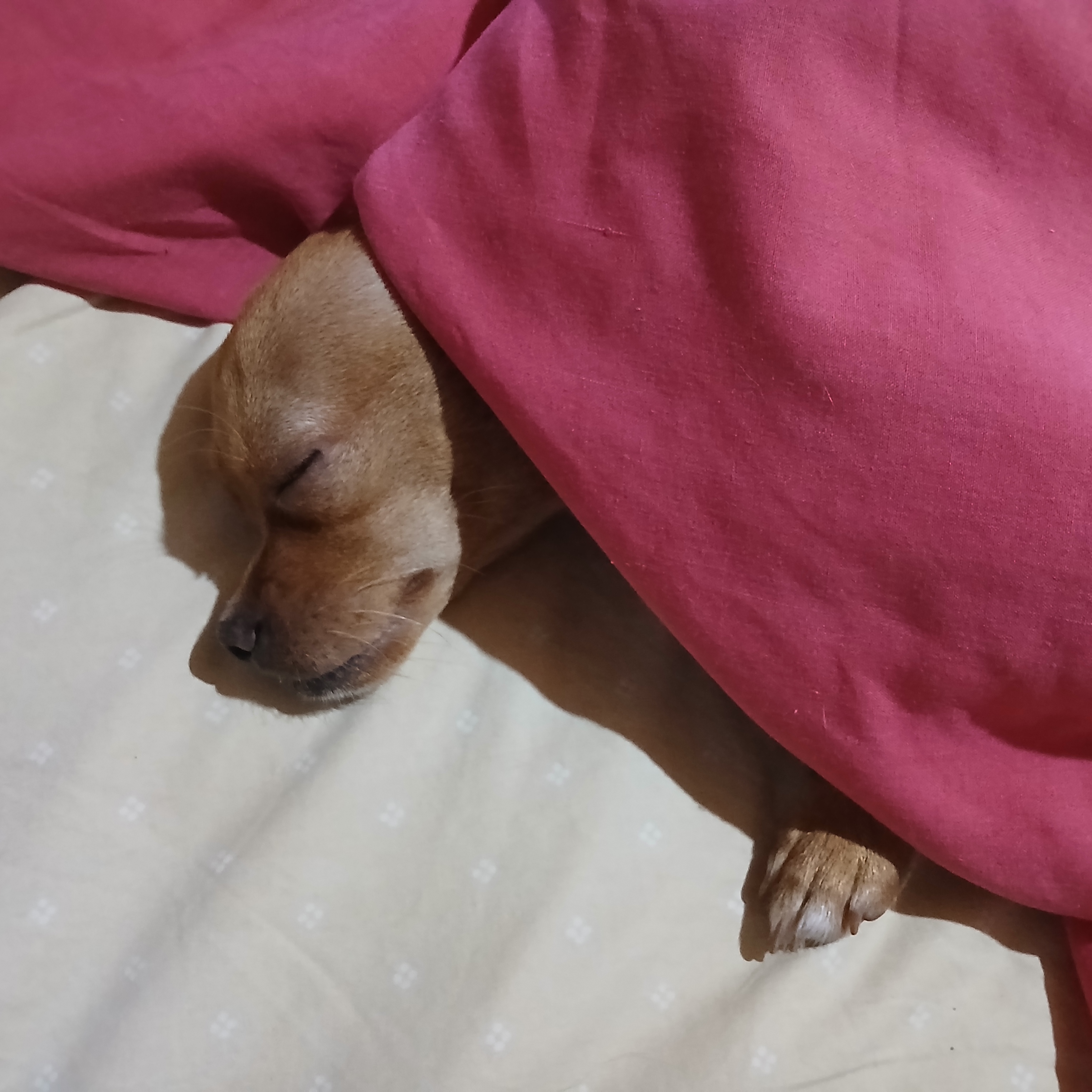
- A covered bed or a blanket to burrow into. Chihuahuas like a den.
- Water in a bowl that can’t tip, or a bottle clipped to the pen.
- A pee pad on the far side from the bed, even for a house-trained adult on a long day.
- One or two safe chews or a food puzzle. No toys small enough to swallow, and nothing with stuffing they can pull out.
- Temperature. Chihuahuas lose heat fast. The comfortable indoor range in our guide on whether Chihuahuas get cold is about 68 to 75°F. Keep the pen out of drafts, away from heaters and out of direct afternoon sun.
- Nothing that can snag. Take the harness off, and make sure a collar isn’t loose enough to catch on the pen.
Before you leave, a short walk and a few minutes of sniffing take the edge off. Keep goodbyes and hellos low-key.
Do pet cameras help?
A camera won’t keep your dog company, but it answers the question you can’t answer any other way: what actually happens after you close the door. Record the first 20 to 30 minutes of a normal absence. You’ll learn whether your dog settles or spirals, and that changes what you do next.
Things to look for:
- How long it takes to lie down and rest
- Barking or howling that keeps going
- Scratching at the door or the pen
- Pacing, panting or drooling
Two-way audio is a mixed bag. Some dogs relax hearing a familiar voice; others get more frantic looking for you. Try it once and watch the result.
Long workdays: dog walkers, sitters and daycare in the US
If you’re out for a full workday, plan a break in the middle. The AKC suggests a visiting dog walker, a neighbor or friend who drops by, or doggy daycare.
| Option | Good for | Watch for |
|---|---|---|
| Dog walker or drop-in visit | A potty break, a short walk, a meal for a puppy | Ask for a walker who’s used to toy breeds and will use a harness |
| Neighbor, friend or family | Low cost, familiar faces | Reliability on busy days |
| Pet sitter (apps like Rover and Wag list them) | Longer visits, flexible timing | Meet first; check reviews and references |
| Doggy daycare | Social adults who enjoy other dogs | Ask whether small dogs are kept separate from big ones |
For a Chihuahua, the daycare question about size groups matters. A friendly 70-pound dog can injure a 5-pound one in play without meaning to.
Our take
Romeo is 4 and Lorenzo is 2, both young adults, so for now they sit in the easiest row of the table. Still, the answer to this question changes over a dog’s life. The puppy months need someone close by, the adult years are the easiest, and the senior years can shorten the clock again as bathroom needs and health change.
The goal isn’t to never leave your Chihuahua. It’s to make sure every absence is one your dog can handle: a safe pen, a warm bed, water, a pad and a plan for the middle of the day.