
Why Does My Chihuahua Shake in Their Sleep?
Chihuahua shaking while sleeping? Twitching, trembling and soft growls are usually normal REM sleep, but here's when it is actually worth worrying.
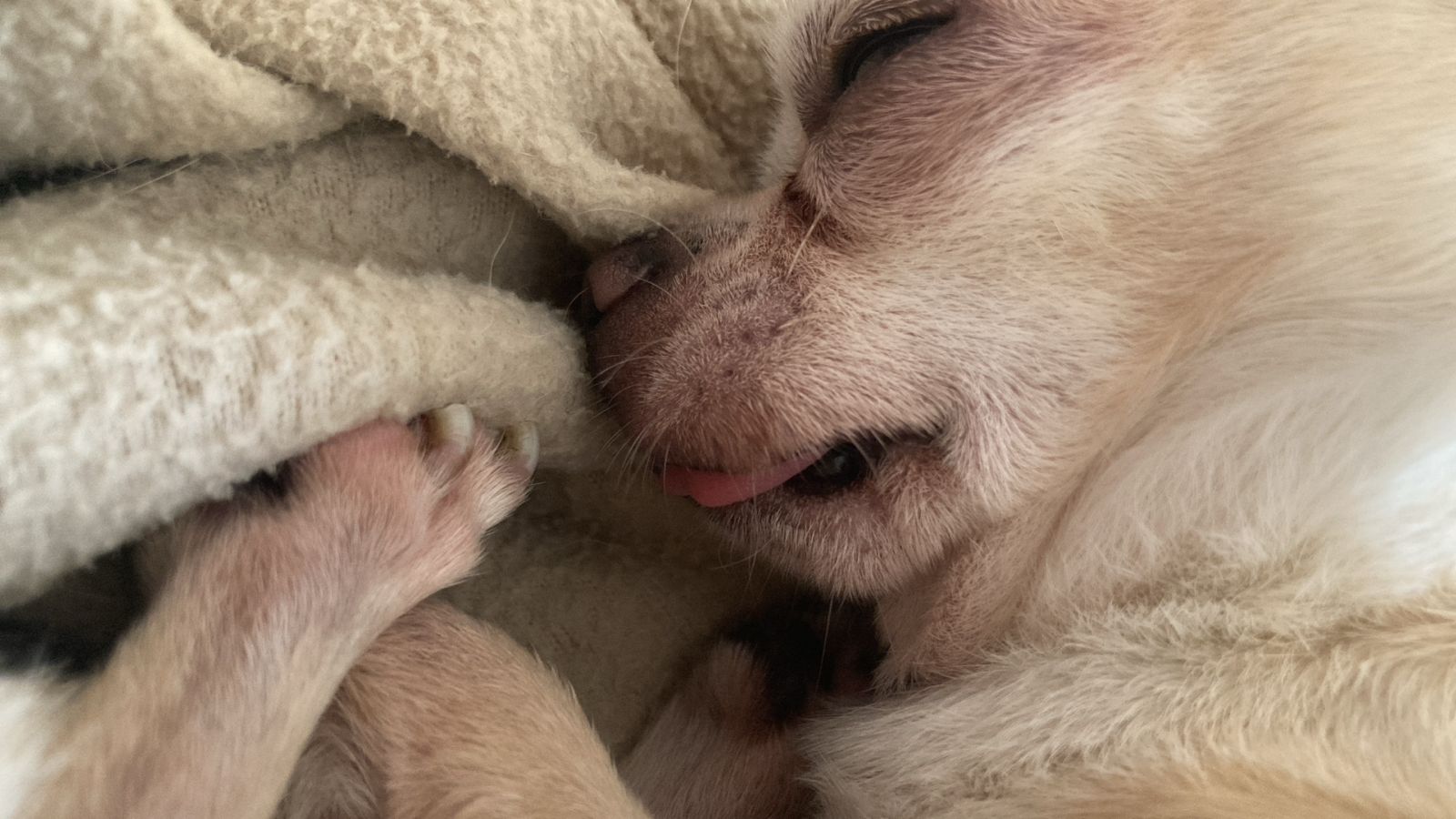
If you’ve caught your Chihuahua shaking while sleeping and stood there wondering whether they’re dreaming, cold, or something worse, take a breath. Most of the time a Chihuahua shaking while sleeping is nothing to worry about, but it’s worth learning to tell the normal twitch from the kind that earns a call to the vet. That’s exactly what this guide is for.
What Happens When Your Chihuahua Closes Their Eyes
A dog’s sleep is divided into stages, just like ours, and each stage does something different to the body. The one that matters here is REM sleep (rapid eye movement), also called the paradoxical phase because the brain is intensely active while the body stays in deep rest.
REM is when dogs dream. And dreaming, in a Chihuahua, has visible consequences: legs that run in the air, twitching ears, trembling lips, soft vocalizations, and full-body jerks. If you’ve ever seen your dog “bark in their sleep” or “run lying down,” you were watching REM live.
In small breeds like Chihuahuas, these sleep contractions stand out because their tiny body transmits every movement. Romeo, with his 2.4 kilos and apple head, looks like a small earthquake when he dreams on the couch. Lorenzo Pablito, young and also apple-headed, flat-out runs imaginary races with all four paws while he snores.
So far, all normal.
Is Shaking From Cold the Same as Shaking From Dreaming?
No, and the difference matters. Shivering from cold appears while the dog is awake or half-awake, affects the whole body, is rhythmic, and stops the moment you warm them up. If your Chihuahua trembles in the cold a lot, our guide on whether Chihuahuas get cold goes deeper into it.
Dream shaking, on the other hand, happens in deep rest, tends to be intermittent, comes with specific movements (a paw, the whiskers, the tail), and fades on its own when the sleep phase changes. If your Chihuahua twitches in their sleep now and then, then stretches, sighs, and keeps sleeping, they’re almost certainly in REM.
Normal Reasons a Chihuahua Shakes in Their Sleep
Let’s start with the reassuring part. These are the most common reasons, and none of them should keep you up at night.
They Are Dreaming (and Probably a Lot)
Research on canine sleep suggests dogs dream about fragments of their day: people, smells, walks, other dogs, food. Small dogs cycle in and out of REM more often than large ones, so a Chihuahua dreams and shakes more times per night than a Labrador. It’s not an anomaly, it’s biology.
During a vivid dream you will see:
- Leg movements as if running.
- Eyelids fluttering, eyes seeming to look beneath the lid.
- Whiskers and lips vibrating.
- Small growls, whimpers, or soft howls.
- A tail thumping rhythmically against the bed.
Mid-Night Temperature Regulation
A Chihuahua has very little body fat, a fast metabolism, and a lot of skin in proportion to their size. That makes them vulnerable to nighttime cold if the room cools off in the early hours. Sometimes the shaking starts during sleep because the temperature dropped two degrees without you noticing, and the body generates heat through micro-contractions before the dog even wakes up.
If they shake in their sleep and feel cold to the touch on the ears, paw pads, or belly, the problem is temperature, not a crisis.
Puppies and “Myoclonic” Sleep
In puppies just a few weeks old it is normal to see gentle jerks called sleep myoclonus. They are part of neurological development and disappear as the puppy grows, which fits the wider picture of newborn development the MSD Veterinary Manual lays out in its guide to routine care and breeding of dogs. If you’re at that stage, I recommend my Chihuahua puppy care guide.
Awkward Positions
Sometimes they shake because they fell asleep in a position that pinched a leg. They reposition and carry on.
When Is Shaking in Their Sleep a Red Flag?
This is the important part. Some nighttime tremors are not dreams and do deserve attention. The signs that should put you on alert are:
- The shaking does not stop when you change their position or when they wake.
- On waking, the Chihuahua seems disoriented, weak, or stiff.
- There is jaw rigidity, eyes rolling back, or excessive drooling.
- The shaking comes with vomiting, loss of urine or stool.
- After the episode the dog is exhausted, listless, or unresponsive for several minutes.
- It repeats several times in the same night with no rest between episodes.
In that case we’re not talking about dreams: it could be a seizure, a neurological emergency, or an episode of hypoglycemia during sleep (common in puppies and very small adults who went to bed without eating well). The MSD Veterinary Manual is a good place to read what separates a seizure from ordinary muscle twitching before you talk to your vet.
Normal Dream Twitch or Worrying Tremor: Quick Table
| Sign | Normal twitch (REM) | Worrying tremor |
|---|---|---|
| Duration | Seconds, 1-2 minutes max | More than 2-3 sustained minutes |
| Recovery | Goes back to sleep calmly | Wakes confused, or won’t wake well |
| Movements | Paws, whiskers, tail, subtle | Whole body rigid or violent jerks |
| Breathing | Normal, rhythmic | Choppy, panting, or held |
| Gaze | Eyes closed or relaxed half-open | Eyes rolled back, fixed, unresponsive |
| Bladder control | Intact | Possible loss of urine or stool |
| State afterward | Keeps sleeping | Disorientation, extreme fatigue, apathy |
| Frequency | Several times a night, brief | Long, repeated episodes with no rest |
If you have any doubt, film it on your phone. A twenty-second video gives your vet far more information than the best description.
What to Do (and Not Do) When You See Them Shaking Asleep
The question I get asked most is: “Belen, do I wake them up or not?” My honest answer is: almost never.
What NOT to Do
- Do not wake them abruptly. A Chihuahua jolted out of REM can be disoriented and, in rare cases, snap by reflex. It’s not aggression: their brain hasn’t landed yet.
- Do not shake them or shout their name. No “Romeo, Romeo!” two centimeters from the ear.
- Do not scoop them up mid-tremor. Wait until it ends.
- Do not assume it is cold without checking. If the room is a comfortable 73°F and their bed is warm, it’s not temperature.
What TO Do
- Watch for a minute. Count in your head. A REM twitch is short.
- Check the breathing. It should be rhythmic. If it is choppy or the dog pants for no reason, go to step 5.
- Place your hand nearby, without touching. Your presence and scent already reassure them.
- If you must wake them, talk softly from a distance. Let them recognize your voice before they feel your hand.
- If the episode drags on, the dog loses body control, or stiffens, call the vet. If it is the middle of the night, go to emergency.
How to Improve Your Chihuahua’s Sleep
Many nighttime tremors disappear once you fine-tune the resting environment. It’s not magic, just common sense applied to a tiny dog that loses heat and stresses easily. Adjustments that have worked at home:
- A cave-style or walled bed that traps body heat and gives a sense of shelter.
- A fleece or sherpa blanket on top, where they can burrow. Chihuahuas love tucking themselves in.
- A stable room temperature, ideally between 68 and 73°F. If you lower the heating at night, make up for it with blankets.
- A quiet spot, away from drafty windows and busy doors.
- A pre-sleep routine: last potty break, a light dinner, cuddles, and dim lights. A Chihuahua that goes to bed nervous sleeps worse and shakes more.
- An adequate dinner (especially in puppies and small adults) to prevent overnight glucose drops.
- No intense exercise right before bed. It spikes their adrenaline and delays deep sleep.
If your Chihuahua tends toward anxiety, working on their temperament during the day improves their rest too. I leave you my article on Chihuahua temperament, because a dog who lives calmly awake sleeps calmly asleep.
Should I See the Vet If They Only Shake When Sleeping?
If it happens now and then, is brief, comes with moving paws or soft whimpers, and your dog is fine the rest of the day, no visit is needed. You’re simply watching your Chihuahua dream.
A vet visit is worth it if:
- The nighttime shaking appears suddenly in a dog that never did it.
- It is daily and prolonged.
- It comes with awake symptoms: limping, apathy, loss of appetite, weight loss, disorientation.
- Your Chihuahua is a puppy and shakes a lot, since nighttime hypoglycemia is a real risk in the first months.
- Your Chihuahua is senior and you notice new tremors, especially with stiffness on rising.
- You suspect a seizure, even if it happened only once.
In all these cases the vet will want to rule out epilepsy, hypoglycemia, thyroid issues, chronic pain, neurological disorders, or medication side effects, and may refer you to a specialist certified by the American College of Veterinary Internal Medicine if the picture stays unclear. Do not let the list scare you: most resolve with a diet or routine adjustment. But it needs looking at.
What We Have Learned With Romeo and Lorenzo
Romeo has slept with me since he was a baby. He’s a classic cream apple-head, calm as they come, and for years he has put on nightly shows: moving his paws, sighing, sometimes whimpering low, and occasionally giving a jerk that makes me open one eye. I’ve watched him so much that I can tell his dreams (short, with little purrs) from when he’s cold (he burrows under the duvet) or something bothers him (he gets up and changes spot).
Lorenzo Pablito, my young fawn apple-head, is another story. He sleeps as if mid-race: paws in the air, little growls, eyelids fluttering, and on waking the same “what’s going on?” face. With him the sleep shaking is pure young-dog REM, a lot of life to process. They have never worried me, but I watch them all the same.
Learning to watch how your Chihuahua sleeps is part of knowing them. Seeing a soft tremor in the middle of the night is, most of the time, a good sign: it means their brain is working, consolidating memory, processing the day.
Sleep well, because your Chihuahua is probably just dreaming about treats and their favorite walk.
This article is informational and does not replace veterinary advice. If something tells you “this is not normal,” trust that instinct and book a visit.
Written by Belen Salto, who shares her life with Romeo and Lorenzo, two Chihuahuas. · Ver en español