
Do Chihuahuas Get Cold? Signs and How to Help
Chihuahuas lose heat fast and shiver more than other breeds. How to tell if yours is cold and which clothes actually help.
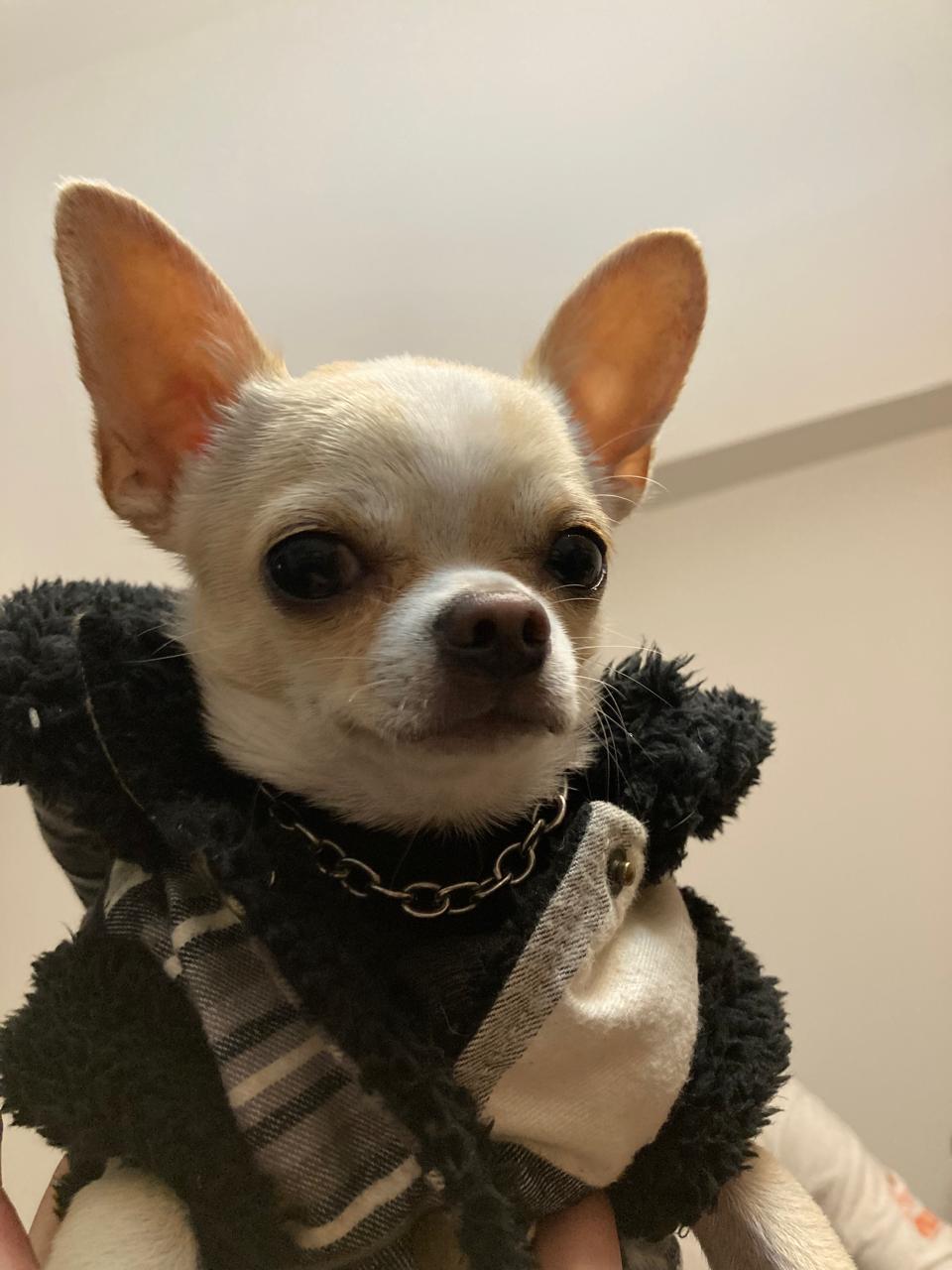
So, do Chihuahuas get cold? Yes, and far more easily than almost any other dog. They lose body heat fast, shiver sooner, and will tell you in very clear ways: they tremble, curl up in any blanket they can find, climb into your lap and flat-out refuse to step into the yard. It’s not drama. This breed feels the cold before any other, and most owners underestimate just how real that sensitivity is. Here’s how to read the signs and which clothing actually works.
This article is informational and does not replace veterinary advice.
Why this breed feels the cold before others
A Chihuahua weighs roughly 3 to 6.5 pounds. That tiny body has three problems holding onto warmth:
- Fast metabolism: they burn energy quickly, including the energy used to stay warm. After hours without food, the margin gets thin.
- Thin coat: almost all of them are short-coated, with no dense undercoat to insulate. Long-coated dogs cope a little better, but they are not arctic either.
- Very little body fat: fat works as insulation. On a 4-pound body, there are barely any reserves.
On top of that, small mammals have a very high surface-to-volume ratio: the smaller the body, the more skin you have relative to mass, and heat escapes through that skin. A Chihuahua loses warmth far faster than a Labrador sitting in the same room. That’s the whole reason behind the “always-cold Chihuahua” you’ve probably noticed.
What are the signs a Chihuahua is cold?
These are ordered from mild to serious. The first few are manageable discomforts; the last is an emergency.
- Seeking warmth: burrowing under blankets, pressing against the radiator, climbing into your lap and refusing to move.
- Curling into a ball: tucking the paws under the body and hiding the nose in the tail.
- Rhythmic shivering: the body’s way of generating heat. It is the clearest cold signal, though not the only one. (Shivering has other causes too, which I cover in why do Chihuahuas shake.)
- Cold ears and paws: to conserve heat, the body cuts blood flow to the extremities. Icy paw pads are a warning.
- Refusing to walk: stopping at the door, freezing at the corner, asking to go back after five minutes.
- Apathy and stiffness: stops playing, walks slowly, stares without moving. It has been cold too long.
- Disorientation or slow breathing: early hypothermia. This is a veterinary emergency.
At what temperature do Chihuahuas get cold?
There is no single threshold, because humidity, wind, whether the dog is wet, and its age all matter. But here are the working ranges I use with Romeo and Lorenzo, converted to Fahrenheit.
| Outdoor temperature | What to do |
|---|---|
| 77 F or above | Free, no clothing. Watch for heatstroke, not cold. |
| 68 to 75 F | Ideal range. No clothing needed indoors. |
| 59 to 66 F | Fine indoors. On long or windy walks, a light sweater. |
| 50 to 57 F | A coat is a must outdoors. Normal-length walks. |
| 41 to 48 F | Thick coat or padded vest. Short walks only. |
| Below 41 F | Real risk of hypothermia. Bathroom breaks only. Raincoat if there is snow. |
| Below freezing with wind | Do not take it out except for emergencies. Use pads indoors if needed. |
If your dog is a puppy, a senior, or has health issues, move every recommendation up one step. Puppies are especially vulnerable, which I cover in the Chihuahua puppy care guide.
Does a Chihuahua need clothes all winter?
Almost always yes, with nuance. Indoors with the heating at around 70 to 72 F, no sweater is needed. Putting one on without reason just makes the dog overheat and feel stuck. Clothing is a tool, not a permanent costume.
Outdoors, any winter day below about 57 F justifies a layer. If it is raining or windy, even milder temperatures count, because damp cold cuts through a short coat in seconds.
If you want the specific sizes, the sweater-versus-coat distinction and three picks with their drawbacks, that’s in best Chihuahua sweaters and coats.
How to choose clothing that actually works
- Material: wool or a cotton blend on the inside, technical nylon outside if you want waterproof.
- Fit: it should cover from the base of the neck to the start of the tail, leaving the legs, lower belly and genitals free.
- Easy to put on: Velcro or side snaps work better than pulling something tight over the head. Romeo hates anything that has to go past his ears.
- Machine washable: he will dirty an outfit in three walks. If it’s not washable, it’s useless.
- No cords or appliqués: he will pull them off and swallow them.
A coat and a harness do not have to clash: put the sweater underneath and the harness on top, or look for coats with a dorsal opening for the leash clip.
Beds and warm spots at home
Cold exists indoors too. A tile floor in January can sit at 54 F even when the room reads 68 F, and your dog sleeps pressed against it. Two things that work:
- Igloo or cave-style beds: walls that wrap around the dog and a roof that traps body heat. They are Lorenzo’s favorite.
- Safe heated mats: self-warming, or low-power electric pet mats with a thermostat and auto cutoff. Never use a human heating pad.
Avoid letting the dog sleep under old windows or in drafty spots.
When does cold become a hypothermia emergency?
Hypothermia begins when body temperature drops below about 98.6 F (normal is 100.4 to 102.5 F). Signs:
- Strong shivering at first that later stops (a sign of worsening, not improvement).
- Apathy, blank stare, disorientation.
- Slow breathing and pulse.
- Pale or bluish gums.
- Muscle stiffness.
What to do: wrap the dog in a blanket, hold it against your body and call an emergency vet. Do not use direct hot water or a hairdryer on full power, because reheating too fast is also dangerous. This is a genuine emergency, not something that resolves on its own.
Cold myths worth dropping
- “If it shivers, it’s nerves”: sometimes, sometimes not. If it is 46 F and the dog trembles, suspect cold before nerves.
- “Dogs don’t feel cold, they have fur”: Chihuahuas barely have insulating coat. Comparing them to your neighbor’s Labrador does not hold.
- “Dressing it makes it soft”: there’s no such mechanism. They don’t grow a denser coat from suffering; they just suffer more.
- “A sweater is enough”: in rain or hard wind, a knit sweater soaks through. It needs a raincoat or to stay home.
What we do at home with Romeo and Lorenzo
Romeo, cream, senior and apple head, is the official cold one. The moment we drop below about 59 F you can see him hunting for a warm spot. He has two fine wool sweaters for indoors and a padded fleece-lined vest for winter walks. Lorenzo, fawn, younger and also apple head, holds up a little better, but he still wears a sweater below 54 F and a thin raincoat on wet days.
My routine: check the thermometer before going out, touch ears and paws when we come back, and if either of them comes home cold, I add a layer for the next walk. When one of them shivers indoors at 72 F, I stop looking at the thermometer and start looking for another cause; if it lasts, we go to the vet. Dressing a Chihuahua isn’t pampering. It’s recognizing how their little body is built and giving it what it needs. Learn to read the signs and winter becomes just another season of blankets, sweaters and very long naps on the couch.
Written by Belen Salto, who shares her life with Romeo and Lorenzo, two Chihuahuas. · Ver en español