Crate Training a Chihuahua: Crate Size, Schedule and Mistakes
Crate training a Chihuahua, step by step: the right crate size in inches, a daily schedule, time limits by age, pee pad setups and the mistakes to avoid.
Crate training a Chihuahua has a reputation problem. Some people picture a small dog locked in a cage; others swear it’s the best thing they ever did for their puppy. The truth sits in the middle. A crate is a tool, and with a dog this small, the details decide whether it becomes a cozy den or a source of stress: the size in inches, the hours, where the pee pad goes, and what you never do with it.
This guide walks through all of it, step by step, with time limits by age and the situations where a crate is simply the wrong answer.
Why a crate can work so well for a tiny dog
Chihuahuas love enclosed, covered spaces. It’s the same instinct that sends them under blankets and into the back of the sofa. A crate that feels like a den gives a puppy a place to rest away from noise, and it helps with three practical jobs:
- Potty training. Most dogs avoid soiling the spot where they sleep, so a correctly sized crate helps a puppy learn bladder control.
- Safety. A Chihuahua loose in the house at night can chew a cable, fall off furniture or get stepped on. A crate keeps a small puppy out of trouble while you sleep.
- Travel and vet visits. A dog that already relaxes in a crate handles car rides, boarding and recovery after surgery with far less stress.
None of that works if the crate feels like a punishment. Everything below is about building the opposite feeling.
What size crate does a Chihuahua need?
This is where most owners go wrong, and usually by buying too big. The AKC’s guide to choosing a dog crate gives a simple method: measure your dog standing, from the top of the head to the floor for height and from the tip of the nose to the tip of the tail for length, then add 3 to 4 inches to each number.
| Your Chihuahua measures | Look for a crate about | Why |
|---|---|---|
| 7 in tall, 13 in long | 10 to 11 in tall, 16 to 17 in long | Room to stand, turn and stretch out |
| 8 in tall, 15 in long | 11 to 12 in tall, 18 to 19 in long | Same rule, slightly bigger dog |
| 9 in tall, 16 in long | 12 to 13 in tall, 19 to 20 in long | A larger Chihuahua or a mix |
The numbers above are examples of the arithmetic, not a size chart. Measure your own dog, because Chihuahuas vary a lot in leg length and body shape. Then compare your result with the actual inside dimensions the brand lists, not the “toy breed” label on the box.
For a puppy, the AKC suggests buying a crate sized for the adult dog and using a divider to shrink the space while the puppy grows. The adult breed standard caps weight at 6 pounds (2.7 kg), so the adult crate is small anyway, and a divider keeps it snug for a puppy who weighs a pound or two.
A crate that’s too large lets your dog sleep at one end and use the other end as a bathroom, which undoes the whole point.
Choosing the type of crate
| Type | Good for | Watch out for |
|---|---|---|
| Wire crate | Ventilation, seeing the family, easy to clean | Feels exposed; add a breathable cover on top and sides |
| Plastic travel crate | A natural den feel, car trips, flights | Check ventilation in warm rooms |
| Soft-sided crate | Light travel with an already trained dog | Easy to chew or claw through; not for puppies |
| Playpen | Longer stretches with a pad zone | Not a crate; some Chihuahuas can climb low pens |
For most Chihuahua puppies, a small wire or plastic crate plus a playpen covers every need.
How to crate train a Chihuahua, step by step
The AKC’s step-by-step crate training guide breaks the process into stages: awareness, exploration, getting used to the closed door, building time, entering on cue, and making the crate a happy place. Here’s how that looks with a Chihuahua:
- Make it inviting. Put the crate in a room where the family spends time, away from drafts and direct sun. Add a soft bed and a small blanket the dog can burrow into. Leave the door open.
- Let your dog explore. Toss a treat near the door, then just inside, then at the back. Don’t push or carry the dog in. Curiosity does the work.
- Feed meals in the crate. Put the bowl inside with the door open. If the dog is nervous, start with the bowl at the entrance and move it back over several meals.
- Close the door for a few seconds. While your dog eats, close the door, then open it before the meal ends. Lengthen this slowly over several days.
- Add short absences. Once your dog stays relaxed with the door closed for 10 minutes or so, step out of sight for a minute, come back calmly, and build from there.
- Teach a cue. Say a word like “bed” as you toss a treat inside. Soon your Chihuahua will walk in on cue.
- Use it for naps and nights. After play and a potty break, a tired puppy settles faster.
- Keep exits boring. Let the dog out when it’s calm, not in the middle of a crying fit, and without a big celebration.
A sample daily crate schedule for a Chihuahua puppy
This is a starting point for a 3-month-old puppy. Adjust it to your dog and to your vet’s advice.
| Time | What happens |
|---|---|
| 7:00 am | Potty break right out of the crate, then breakfast |
| 7:30 am | Potty again, play and some handling |
| 8:30 am | Nap in the crate (door closed) |
| 10:30 am | Potty, play, short training session |
| 11:30 am | Nap in the crate |
| 1:00 pm | Potty, lunch, potty |
| 2:00 pm | Free time in a playpen with a pad zone |
| 4:00 pm | Potty, play, a short calm outing if vaccinations allow |
| 5:30 pm | Dinner, potty, quiet time |
| 7:00 pm | Nap in the crate |
| 9:00 pm | Potty, cuddles |
| 10:30 pm | Last potty, bedtime in the crate |
| Overnight | One or two quiet potty breaks for young puppies |
A printable version helps more than you’d think. Our free Chihuahua printables include a potty training schedule you can stick on the fridge and fill in as you go.
How long can a Chihuahua stay in a crate?
The honest answer: no longer than it can hold its bladder. The AKC’s article on how long a puppy can be left alone gives a conservative guide, and it makes a sensible ceiling for crate time too:
| Age | Maximum stretch in the crate (daytime) |
|---|---|
| Under 10 weeks | About 1 hour |
| 10 to 12 weeks | About 2 hours |
| 3 months | About 3 hours |
| 4 months | About 4 hours |
| 5 months | About 5 hours |
| 6 months | About 6 hours |
| Over 6 months | 6 to 8 hours at most |
Treat these as limits, not goals. Chihuahua puppies have very small bladders, and many need breaks sooner. Adults also need time out for play, water, walks and company. A crate is a bedroom, not a place to spend the workday.
Crate plus pee pad: setups that work
If you’re out longer than your puppy can hold it, don’t solve the problem by putting a pad inside a closed crate. The dog learns that the bedroom is also the bathroom. Try one of these instead:
- Playpen with an open crate. Put the crate, door open or removed, at one end of a playpen and a pee pad at the far end. The dog has a den to sleep in and a clear bathroom spot away from it.
- Small gated room. A bathroom or laundry room with the crate open in one corner and the pad in the opposite corner works the same way.
- Crate for nights, pen for days. Many owners crate overnight, when puppies sleep longer, and use the pen setup for longer daytime absences.
If your Chihuahua is learning to go on pads or outdoors, our guide on how to potty train a Chihuahua covers schedules by age and how to move from pads to outside.
Crate training mistakes to avoid
- Using the crate as punishment. The AKC is clear on this: never use the crate for punishment. A dog sent to the crate after an accident or a chewed shoe learns to fear it.
- Buying too big. It invites accidents and doesn’t feel like a den.
- Rushing the closed door. Closing the door on day one, before the dog trusts the space, is the fastest way to create panic.
- Letting the dog out when it cries. If you open the door during a crying fit, your puppy learns that crying works. Wait for a few seconds of quiet, unless you think it truly needs a potty break.
- Too many hours. Long stretches lead to accidents, frustration and a dog that dreads the crate.
- Leaving a harness on. Straps and tags can snag on wire. Take the harness off inside the crate.
- Putting the crate in a cold or hot spot. Chihuahuas lose heat fast. Keep the crate away from drafty doors, air conditioning vents and sunny windows.
When should you NOT crate a Chihuahua?
A crate isn’t right for every dog or every moment. Skip it, or stop and rethink, in these cases:
- The dog panics. Constant crying, drooling, frantic scratching at the door or trying to bite the bars are not stubbornness. The AKC advises stopping crate training and getting help from a professional trainer. This can be a sign of separation anxiety, which we explain in our guide to Chihuahua separation anxiety.
- The dog is sick. Vomiting, diarrhea or a vet-prescribed need to drink a lot all mean frequent breaks and close watching, not long crate stretches.
- It’s hot. Never leave a crated dog in a hot room, a sunny spot or a parked car.
- You’ll be gone too long. If the absence is longer than the limits above, use a pen setup, a dog walker or a sitter instead.
- As a fix for boredom. A Chihuahua that’s restless all day needs more exercise, play and company, not more crate time.
This article is general information and does not replace advice from your veterinarian or a qualified trainer, especially if your dog shows signs of fear or anxiety.
How Romeo and Lorenzo fit the picture
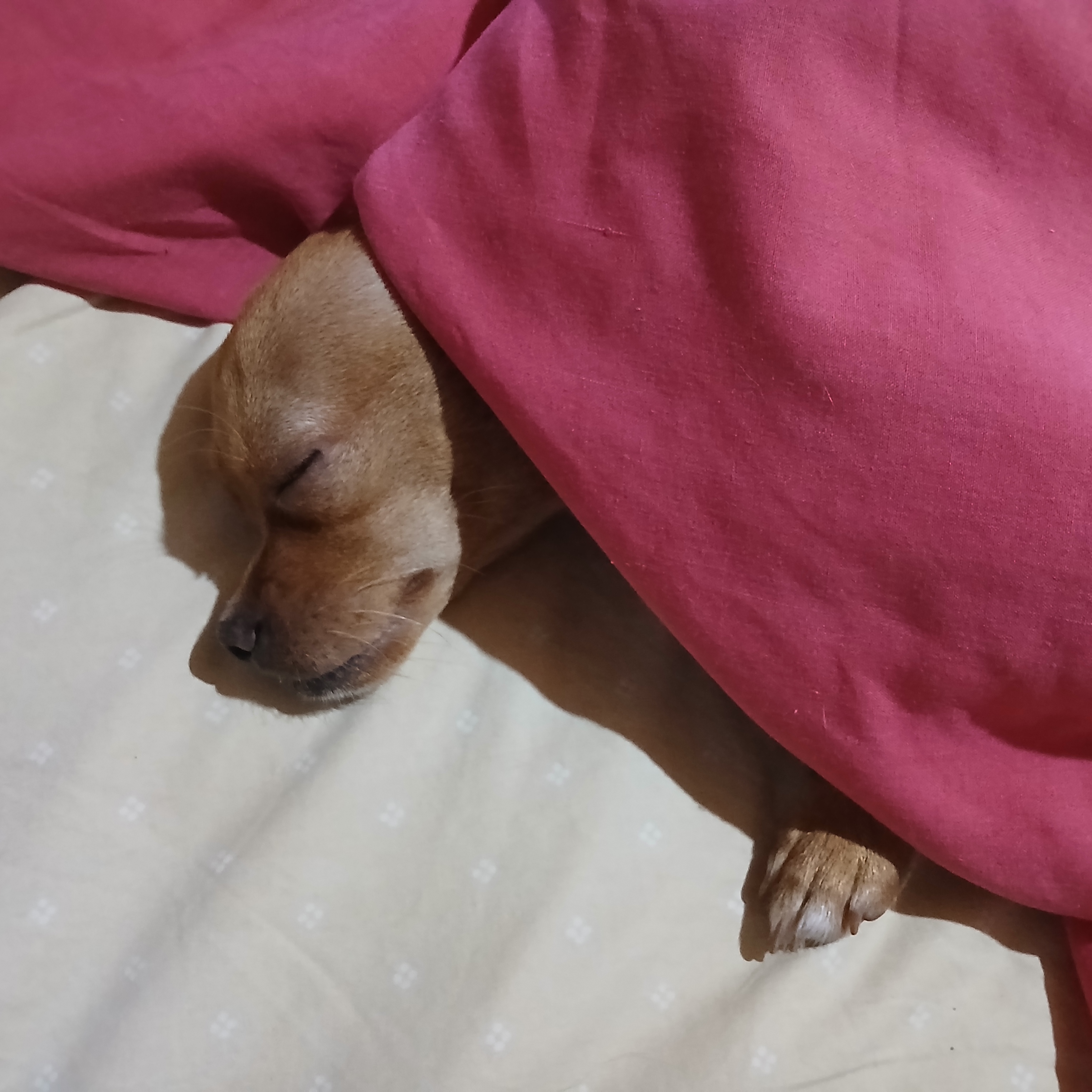
At home, our two show how differently the same breed can need rest. Romeo is four, calm and a big sleeper, the kind of dog who seeks out a soft, covered bed on his own. Lorenzo is two and electric, and dogs with that much energy often need help learning to switch off between bursts of play.
That’s really what a crate is for: a quiet place your Chihuahua chooses, not one it’s sent to. Go slowly, size it right, respect the hours, and it can become one of your dog’s favorite spots in the house.