Best Puppy Pads and Indoor Potty Options for Chihuahuas
The best puppy pads and indoor potty setup for a Chihuahua: disposable vs washable pads, pad holders, grass patches and the enzyme cleaner that stops repeats.
The best puppy pads for a Chihuahua aren’t the biggest or the most absorbent. They’re the ones that stay put, match the size of a 3 to 6 pound dog, and come with a cleanup plan for the accidents that happen anyway. Most Chihuahua owners end up keeping some kind of indoor potty for years, not weeks, so it’s worth setting it up properly once.
We may earn a commission from qualifying purchases, at no cost to you.
This guide covers disposable and washable pee pads, pad holders, indoor grass, and the enzyme cleaner that keeps your dog from returning to the same rug. It’s a product guide, not a training plan; for the step-by-step method, see our guide on how to potty train a Chihuahua.
This article is general information and not a substitute for veterinary advice. Sudden accidents in a previously trained dog are a reason to call your vet.
Why tiny dogs need an indoor potty plan
A Chihuahua has a very small bladder, feels the cold quickly and, as a puppy, shouldn’t walk on public sidewalks until the vet says the vaccines are done. Put those together and almost every Chihuahua needs an indoor spot for at least the first few months. Many keep one for life for rainy days, snow, long workdays and old age.
That’s not a failure of training. It’s a realistic setup for a dog this size. The goal is to make the indoor spot clear, consistent and easy to clean, so your dog always knows where it is and your floors survive the learning curve.
Indoor potty options compared
| Option | Best for | Upside | Downside |
|---|---|---|---|
| Disposable pads | Puppies, early training | Cheap per use, fast to change, built-in attractant on many | Ongoing cost and trash; loose pads get shredded |
| Washable pads | Adults with few accidents | Lower cost over time, less waste | Need two or more; frequent laundry |
| Pad holder (tray) | Any dog using disposable pads | Stops sliding and chewing; rim marks the spot | Fits one pad size only |
| Artificial grass patch | Dogs moving to outdoor potty later | Grass-like texture, reusable | Needs rinsing and deodorizing |
| Real grass patch | Balconies and apartments | Feels like outdoors | Has to be replaced as it wears out |
| Enzyme cleaner | Every home with a puppy | Removes the odor that draws dogs back | Needs time to work; blot, don’t scrub |
For a Chihuahua, the combination most owners settle on is simple: disposable pads in a holder while training, then either washable pads or grass once the habit is solid.
What size puppy pad does a Chihuahua need?
Smaller than you’d think. A regular 22 x 22 inch pad gives a 5-pound dog plenty of target. Extra-large pads (around 28 x 34 inches) are designed for bigger dogs or for lining a playpen floor. For a Chihuahua they mostly add surface to bunch up, tear and drag across the room.
Two more things matter more than size:
- One spot, always. Moving the pad around or putting three in different rooms makes the target harder to learn.
- A clear edge. A tray rim, or the border of a grass patch, tells your dog “in here” without words.
The picks
Disposable pads: Amazon Basics
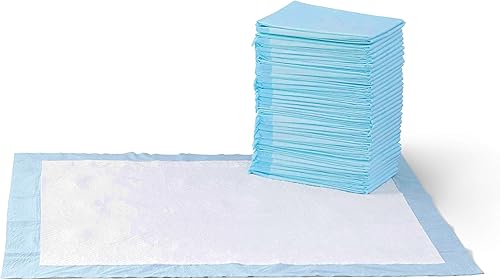
Amazon Basics dog and puppy potty training pads
★4.4 · 220,886ratings
With more than 220,000 ratings, these are among the most reviewed pads on Amazon. They have a 5-layer design that turns liquid into gel, a plastic backing and border to keep leaks off the floor, and a built-in attractant to help with training. The listing comes in several sizes; for a Chihuahua, pick the Regular 22 x 22 inch pack, which also fits the holder below.
Heads-up:The link opens on the X-Large 28 x 34 inch pack, which is more pad than a Chihuahua needs, so switch the size on the page. Used loose on the floor, any disposable pad can become a chew toy for a bored puppy.
See the pads on Amazon →Washable pads: PUPIBOO

PUPIBOO washable pee pads
★4.5 · 5,781ratings
Multi-layer reusable pads with a waterproof TPU backing and a non-slip underside, designed to look more like a rug than a medical pad. The maker says they hold their absorbency after more than 500 washes. Once your dog uses the spot reliably, they cut the weekly pad bill and the trash.
Heads-up:The 36 x 36 inch size is large for a Chihuahua corner, and with no rim, a playful dog can drag or bunch it. You'll want at least two so one is always clean, and they need washing often to keep odor down.
See the PUPIBOO pads on Amazon →Pad holder: IRIS USA
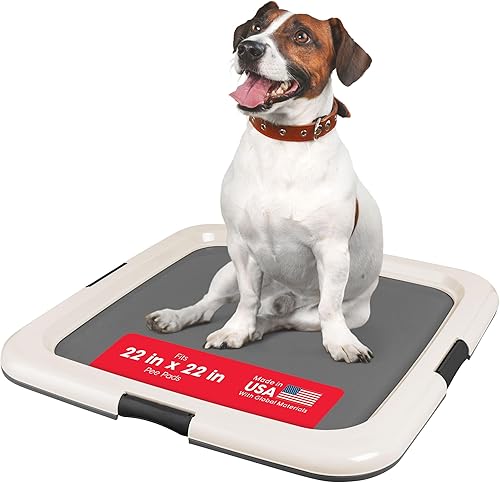
IRIS USA pee pad holder (fits 22 x 22 in pads)
★4.2 · 19,737ratings
A rigid tray with latches that lock the pad's edges in place, non-skid feet and a wipe-clean surface. It solves the two classic puppy problems at once: the pad doesn't slide, and it can't be pulled out and shredded. About 23 x 22.75 inches and 1.4 inches high, so a small dog can step in easily.
Heads-up:It only takes 22 x 22 inch pads, so don't pair it with X-Large ones. Its 4.2 rating is the lowest of our picks, and a tray doesn't help a dog who stands with its back legs over the edge; for that, you'll still need to wipe the floor around it.
See the IRIS holder on Amazon →Enzyme cleaner: Rocco & Roxie

Rocco & Roxie enzyme stain and odor eliminator (32 fl oz)
★4.4 · 128,854ratings
An enzyme cleaner that breaks down urine odor rather than covering it, which is what stops a Chihuahua from returning to the same spot. It's labeled for carpets, floors, furniture, bedding, crates and cars, and carries the Carpet and Rug Institute seal. With well over 100,000 ratings, it's one of the most reviewed pet cleaners on Amazon.
Heads-up:Enzymes need time: soak the spot, let it sit, then blot. Don't follow it with bleach or ammonia cleaners, which can smell like urine to a dog. Test it first on a hidden patch of carpet or fabric.
See the cleaner on Amazon →Grass patches: real or artificial?
Grass deserves a mention even though we haven’t picked a specific product. Indoor grass can be a good bridge for a Chihuahua who will eventually go outside, because the texture underfoot is the same. The trade-offs:
- Artificial grass sits on a tray that catches liquid. It’s reusable but needs regular rinsing, and odor builds up if you skip it.
- Real grass patches feel and smell like a lawn. They wear out and have to be replaced, which turns them into a recurring cost.
If you try grass, put it in the same spot where the pad used to be, so your dog doesn’t have to learn a new location and a new surface at the same time.
How to set up the indoor potty spot
- Choose a quiet, easy-to-clean corner away from food, water and the bed.
- Keep it close at first. For a puppy, a pad within sight of the play area beats one at the far end of the house.
- Use a holder or a grass tray so the spot has a clear edge.
- Change disposable pads as soon as they’re used. Many dogs won’t step on a soiled pad.
- Clean every accident with an enzyme product, not just the visible ones.
- Track the timing. Our free printables include a one-week potty training schedule you can stick on the fridge.
A crate can help too, since most dogs avoid soiling where they sleep. Our guide to crate training a Chihuahua covers how to set one up so it feels like a den, not a punishment.
When should you call the vet about accidents?
Pads and cleaners fix habits, not medical problems. Talk to your vet if:
- An adult who was reliably trained suddenly starts having accidents.
- Your dog pees very often in small amounts, strains, or the urine looks bloody or unusually dark.
- Your dog is drinking much more water than usual.
- Accidents start alongside other changes, like lethargy or loss of appetite.
These can point to a urinary tract problem or another condition that needs a diagnosis, and no cleaner will fix them.
Our take
Romeo is 4 and Lorenzo is 2, so neither is learning potty manners from scratch anymore, and the senior years, when an indoor option often comes back, are still ahead of us. Both weigh just over 5 pounds, so a regular pad and a small tray suit either one.
If I were setting up from scratch, I’d start with disposable pads in a holder, keep a bottle of enzyme cleaner within reach, and only experiment with washable pads or grass once the spot is a habit. It’s the least glamorous gear you’ll buy for a Chihuahua, and some of the most used.