
How Much Do Chihuahuas Sleep? (By Age and Stage)
How much do Chihuahuas sleep? Far more than you think, and it shifts with age. A full guide to Chihuahua sleep hours by puppy, adult and senior stage.
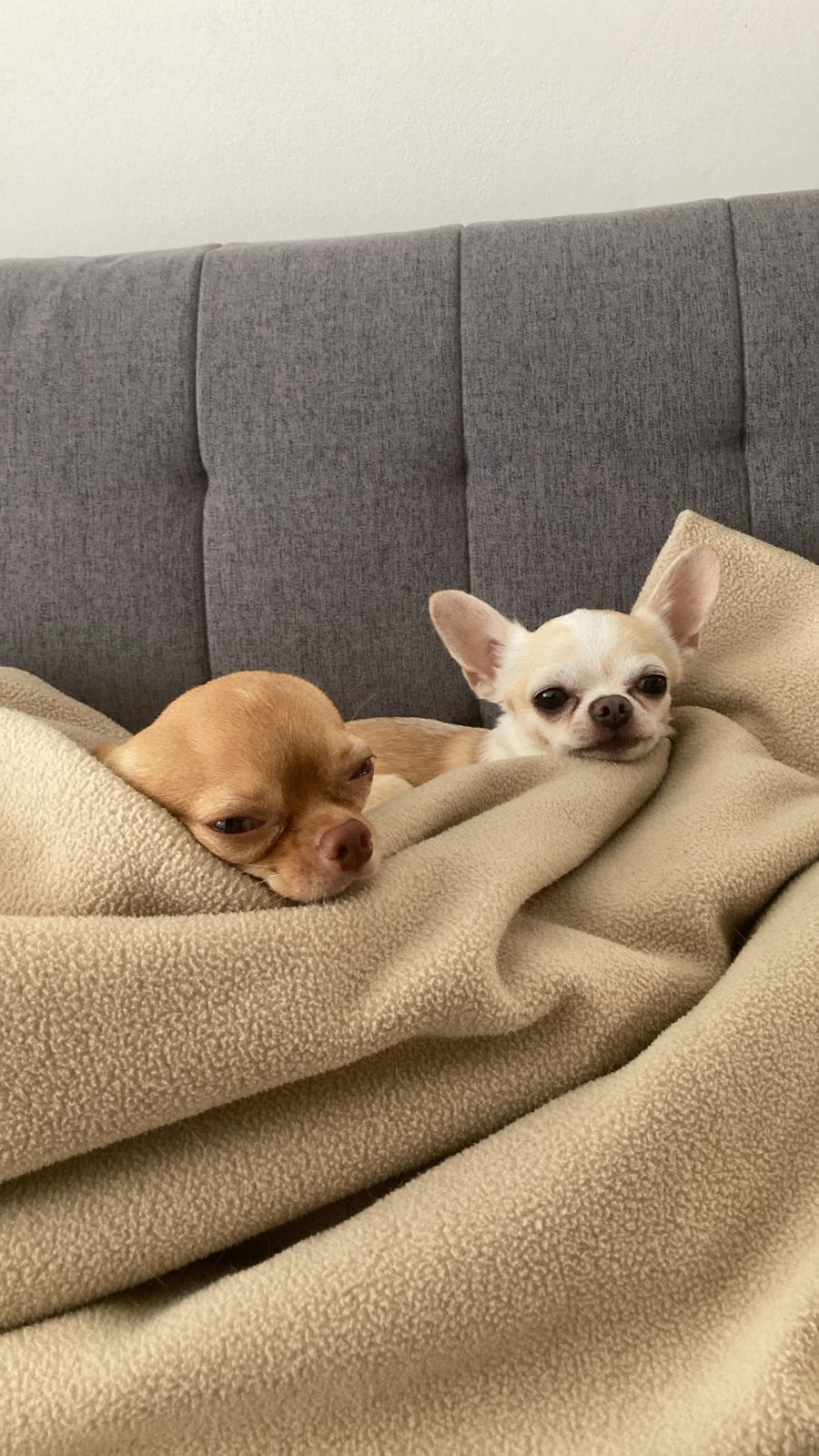
One of the first things that surprises new Chihuahua owners is how many hours their dog spends asleep. “Is it normal that he sleeps this much?” lands in my messages almost every week. So let me answer it plainly: how much do Chihuahuas sleep? Quite a lot, more than most people expect, between fourteen and twenty hours a day depending on their life stage, their health and their routine. It’s not laziness. It’s biology, and it shifts noticeably with age.
This article is informational and does not replace veterinary advice.
A Chihuahua’s rest is a matter of size
Chihuahuas have a fast metabolism and a body that burns energy at a rate that seems disproportionate to how tiny they are. That translates into a much greater need for recovery than a large dog has. An adult Labrador sleeps twelve to fourteen hours; a healthy adult Chihuahua, fourteen to sixteen. Again, not laziness, just biology.
On top of that, being so lightweight, any activity (a twenty-minute walk, playing indoors, receiving visitors) costs them proportionally more effort. That’s why they need to sleep to recover after an intense burst of stimulation.
Sleep hours by age
This is the reference I use at home and recommend keeping in mind as a compass, not an absolute rule.
| Stage | Age | Sleep per day | Notes |
|---|---|---|---|
| Newborn puppy | 0-3 weeks | 20-22 h | Barely wakes except to nurse |
| Puppy | 3 weeks - 6 months | 18-20 h | Short cycles of play, food and naps |
| Junior puppy | 6-12 months | 16-18 h | Night sleep starts to stabilize |
| Young adult | 1-7 years | 14-16 h | Sleeps through the night plus two or three naps |
| Senior | 7-10 years | 15-17 h | Longer naps, less intense activity |
| Older senior | 10 years and up | 16-20 h | Deeper and more fragmented sleep |
This table answers the questions I hear most: how much a Chihuahua puppy sleeps, how much an adult sleeps, and how Chihuahua sleep changes over the years.
Is it normal for my Chihuahua to sleep so much?
Yes, as long as the rest of its behavior is fine. A healthy Chihuahua can spend two thirds of the day asleep with no problem at all. The key is not counting the exact hours but observing how it behaves while awake.
Watch for these points:
- Eats with a normal appetite and drinks water regularly.
- Responds with interest to walks, play, or your arrival home.
- Holds a steady weight with a shiny coat.
- Moves nimbly when getting up, without extreme stiffness.
- Seeks contact with you as usual.
If all of that is in order, sixteen hours of sleep is nothing to monitor. Sleeping a lot doesn’t mean being switched off.
Sleeping a lot versus being apathetic: the difference
This distinction is fundamental and many people confuse it. A Chihuahua that sleeps a lot wakes up with energy, eats well and responds enthusiastically. An apathetic Chihuahua, by contrast, sleeps but doesn’t enjoy being awake: it eats less, withdraws from contact, has a sad look, and does not feel like going out.
Apathy is never a feature of sleep, it’s a symptom. If your dog not only sleeps a lot but is also listless, eating poorly or isolating, do not read it as “just tired.” Book a vet appointment. A Chihuahua refusing food alongside excessive sleep is a combination worth taking seriously.
What is a dog’s sleep cycle like?
A dog’s sleep cycle resembles ours in structure but is shorter. A human cycle lasts about ninety minutes; a Chihuahua’s, between sixteen and twenty. That means they enter deep sleep and REM sleep many more times per day.
REM is the active phase, when they dream. If you’ve ever seen your Chihuahua move its paws, growl softly, tremble or whimper while sleeping, that’s exactly what you’re watching. It is completely normal and part of processing the day. If you want to go deeper, I cover the topic in why Chihuahuas shake, which includes a section on trembling during sleep. And if your dog also snores while it sleeps, I explain when it is normal and when it is not in why your Chihuahua snores.
How to build a good rest routine
A firm rest routine is one of the best gifts you can give a Chihuahua. These dogs are creatures of habit and thrive on predictability. Here is how I set it up:
- Fixed times for food, walks and the nightly wind-down. A Chihuahua’s brain syncs its internal clock very quickly.
- A morning walk to spend energy and reinforce the sleep that follows.
- Short play sessions spread through the day, never marathon ones.
- A calm moment before bed: dim light, soft voice, no strong stimulation.
- A fixed bed in a safe corner, away from drafts and constant foot traffic.
- Never waking it during deep sleep unless there is a real emergency.
Keep this sequence daily and you’ll see your dog retreat to its bed on its own at the same hour within a couple of weeks.
Beds and favorite spots
The Chihuahua seeks warmth and a sense of shelter. That’s why it loves cave-style beds, dog sleeping bags, blankets to burrow under, and corners pressed against a sofa or wall. It’s not a whim: its low body mass loses heat fast, which also explains much of its watchful character, something I explore in the real Chihuahua temperament.
A few practical tips:
- Avoid cold beds of plastic or metal mesh.
- Add an extra blanket in winter, even in a heated home.
- Several rest spots spread around: one with you, one in its nighttime zone, one in the sun.
- A raised bed off the floor if you live somewhere damp or cold.
When should I worry about my Chihuahua’s sleep?
These are the signals that would make me consult the vet without waiting too long:
- A sudden change in sleep hours, with no apparent reason, sustained over several days.
- Difficulty sleeping, nighttime restlessness, constant turning, whining.
- Waking disoriented, not recognizing the surroundings (common in seniors with cognitive decline).
- Sleeping but not resting: panting, trembling continuously, moving nonstop.
- New snoring or noisy breathing with pauses.
- Nighttime incontinence where there was none before.
Any of these deserves a professional assessment. Sleep is a very reliable thermometer of a dog’s overall health, and big changes are never a coincidence.
Romeo and Lorenzo’s routine at home
At home we have two living alarm clocks. Romeo, my cream apple-head Chihuahua, is older now and has settled into about seventeen hours of sleep. He likes his cave bed in the living room in the morning and my bed at night; in between, a window-sun nap without fail. Lorenzo Pablito, fawn, also an apple head and still young, sleeps about fifteen hours, but in bursts. He drops into deep sleep, springs up to play, then collapses again. Both live synced to our schedules and rarely rest badly.
Every Chihuahua finds its own rhythm. Follow it without forcing, offer calm and a good place to sleep, and the rest takes care of itself.
Frequently asked questions
How many hours a day do Chihuahuas sleep?
Why does my Chihuahua sleep so much?
Do Chihuahuas like to sleep under blankets?
Written by Belen Salto, who shares her life with Romeo and Lorenzo, two Chihuahuas. · Ver en español