Are Chihuahuas Smart? What Chihuahua Intelligence Really Looks Like
Are Chihuahuas smart? Yes, just not in the way dog rankings measure it. Where the breed ranks, why training feels hard, and how to teach a Chihuahua faster.

Are Chihuahuas smart? If you’ve ever watched one figure out exactly which drawer the treats live in, or fake a limp to get carried, you already suspect the answer. Chihuahua intelligence is real, but it doesn’t look like the eager, follow-every-command kind that tops the famous rankings, and that mismatch is why the breed gets such an unfair reputation.
This guide explains where Chihuahuas actually land on the smartest dog breeds lists, why those lists undersell them, and how to use a Chihuahua’s brain to make training easier.
This article is for general information and does not replace advice from your veterinarian or a qualified trainer. If a sudden change in behavior worries you, start with a vet visit.
Are Chihuahuas smart dogs, in short?
Yes. Chihuahuas are quick learners with strong adaptive intelligence: they pick up routines fast, read human moods closely and solve small problems to get what they want. They rank low on obedience-based lists because they don’t obey for the sake of obeying. With short, reward-based sessions, most learn cues and tricks easily.
Where do Chihuahuas rank among the smartest dog breeds?
Almost every article on this topic cites the same source: psychologist Stanley Coren and his book The Intelligence of Dogs, first published in 1994. Coren built his famous ranking from surveys of obedience trial judges in the United States and Canada, who rated breeds on how fast they learned new commands and how reliably they obeyed the first time.
The Chihuahua sits in the lower part of that list, far below the Border Collie, Poodle and German Shepherd at the top. You’ll see different websites quote different exact positions for the breed, depending on which edition they use and how they count tied breeds, so we won’t add one more number to the pile. What matters is what the list measures.
Coren himself describes three kinds of dog intelligence, a framework the American Kennel Club also uses when it writes about his work:
| Type of intelligence | What it means | How Chihuahuas do |
|---|---|---|
| Instinctive | What the dog was bred to do | Bred as companions, they excel at bonding, alerting and staying close to their person |
| Adaptive | Learning from experience and solving problems alone | Strong: routines, people, shortcuts and tricks to get attention |
| Working and obedience | Learning commands from humans and obeying them | The only one the famous ranking measures, and where the breed scores low |
So the ranking answers a narrow question: how well does this breed do in a formal obedience ring? It was never meant to say which dogs are clever.
Why the obedience ranking undersells small dogs
A few things work against the Chihuahua on a list built from obedience judges:
- The breed rarely competes in obedience. A judge who has seen few Chihuahuas in the ring has little to go on, and the dogs that do appear may not be typical.
- Obedience rewards a specific personality. Breeds developed to take direction from a handler all day naturally shine. A companion breed that weighs every request before acting doesn’t.
- Size changes how people train. Many owners never formally train a dog they can pick up with one hand, so small breeds often reach adulthood with less practice behind them.
None of that makes the Chihuahua a genius in disguise. It means the ranking is measuring something narrower than “smart.”
Is the Chihuahua one of the dumbest dog breeds?
No. “Dumbest dog breeds” lists are usually just the bottom of Coren’s obedience ranking, relabeled for clicks. The breeds that end up there tend to be independent, sight-driven or bred to work at a distance from people, which is a very different thing from being unintelligent.
There’s also a bigger reason to be skeptical of any breed IQ chart. In 2022, a team from UMass Chan Medical School and the Broad Institute published a study in Science that combined owner surveys with the DNA of more than 2,000 dogs through the Darwin’s Ark project. They found that breed explained only about 9% of the variation in individual dogs’ behavior. Breed nudges the odds; it doesn’t write the script. Your Chihuahua’s own history, socialization and training count for far more than the breed’s average score.
Signs your Chihuahua is smarter than you think
Owners describe the same patterns over and over. Your Chihuahua is using that adaptive intelligence if he:
- Knows the routine better than you do: he’s at the door before you reach for the leash, or at the bowl a minute before dinner.
- Reads your mood, staying close when you’re sad and keeping his distance when you’re tense.
- Has learned what works on each person in the house, and uses different tactics on each.
- Recognizes words you never taught on purpose, like “vet,” “car” or the name of the neighbor’s dog.
- Solves small problems: nosing a toy out from under the couch, or finding the one gap in the baby gate.
- Ignores a cue he knows perfectly well when the reward isn’t worth it, then performs it instantly for chicken.
That last one is the heart of the matter. A dog who chooses not to do something isn’t failing to understand it. We cover the emotional side of this, from loyalty to jealousy, in our guide to Chihuahua temperament.
Are Chihuahuas easy to train?
Some things, yes. Others take real patience. Here’s an honest split:
| Usually easy | Usually harder |
|---|---|
| Sit, down, spin, paw and other tricks | Potty training, especially in cold or rainy weather |
| Learning their name and the daily routine | Coming when called outdoors |
| Going into a carrier or crate with practice | Staying calm with strangers and big dogs |
| Walking on a harness | Not barking at every sound |
| Food puzzles and nose games | Being handled for nail trims or teeth brushing |
The hard column has less to do with intelligence than with biology and history. A tiny bladder fills fast, and a dog that weighs 4 to 6 pounds gets cold quickly and doesn’t want to stand on wet grass. If house training is where you’re stuck, our step-by-step guide on how to potty train a Chihuahua deals with exactly that, and crate training a Chihuahua helps with the schedule side.
How do you train a smart, stubborn Chihuahua?
A bright dog with opinions learns fastest when training feels like a good deal. What works best:
- Keep sessions to 3 to 5 minutes. Two or three short sessions a day beat one long one. Stop while he still wants more.
- Use tiny rewards. Think a piece the size of a pea, or smaller. Treats should stay a small part of the day’s food, which in a 5-pound dog isn’t much, so count training treats as part of meals.
- Train before meals, not after. A slightly hungry Chihuahua is a motivated one.
- Add a marker word like “yes!” at the exact moment he does it right, then reward. It tells a clever dog precisely what earned the treat.
- Lure, don’t push. Pushing a tiny dog into a sit can hurt, and it teaches him to avoid your hands. Guide him with a treat instead.
- Get down to his level. Kneel or sit on the floor. Towering over a dog this small can feel intimidating.
- Skip harsh corrections. Chihuahuas are sensitive and remember bad experiences. Ignoring the wrong answer and rewarding the right one works better.
- Practice in boring places first, then add distractions slowly: living room, then yard, then sidewalk.
Brain games that suit a Chihuahua
Mental work tires a small dog out as well as a walk does, and it’s safe on a cold or rainy day:
- Find it: hide a treat under one of three cups and let him nose out the right one.
- Snuffle mats and food puzzles for part of his daily food.
- Name the toy: teach the names of two toys, then ask for one by name.
- Short scent trails around the living room, ending at a treat.
- New tricks every few weeks, such as touch, bow or “go to bed.”
Does a Chihuahua’s intelligence change with age?
Young Chihuahuas learn fastest, but adults and seniors keep learning new things when training stays short and positive. Late in life, a few dogs develop real cognitive decline: getting lost in familiar rooms, forgetting house training or pacing at night. That’s a medical condition, not stubbornness, and we explain the signs in our guide to Chihuahua dementia.
If you want a lighter take on the breed’s famous attitude, our tongue-in-cheek Chihuahua or Not quiz works on a simple rule: the better behaved your dog, the less Chihuahua it is. And for more on where the breed came from and how it got its reputation, see our list of verified Chihuahua facts.
Two kinds of clever at home
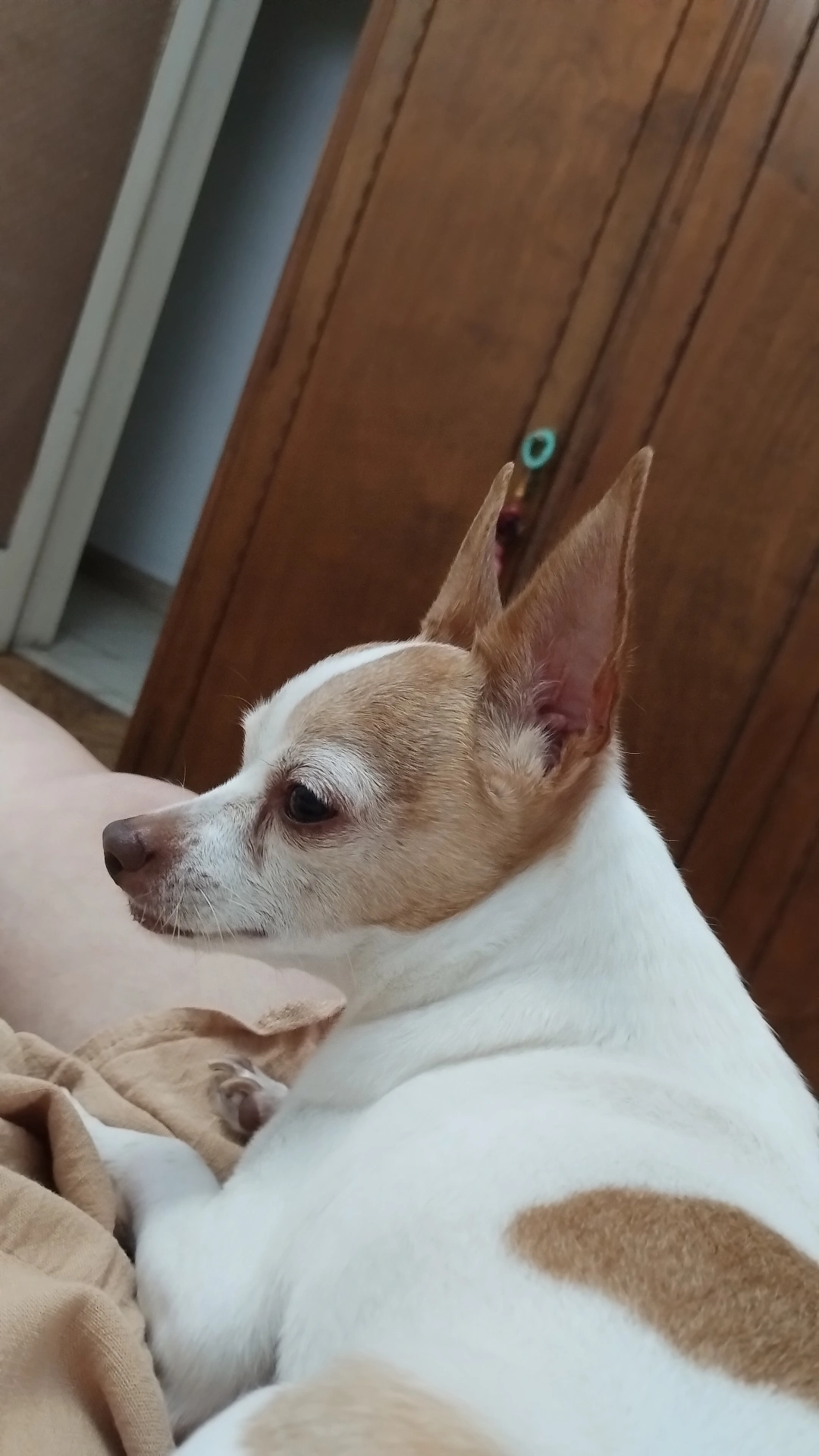
On the cover is Tiffany, a 14-year-old club member from Buenos Aires. The motto on her member card reads “I always get what I want,” which is adaptive intelligence in a single sentence.
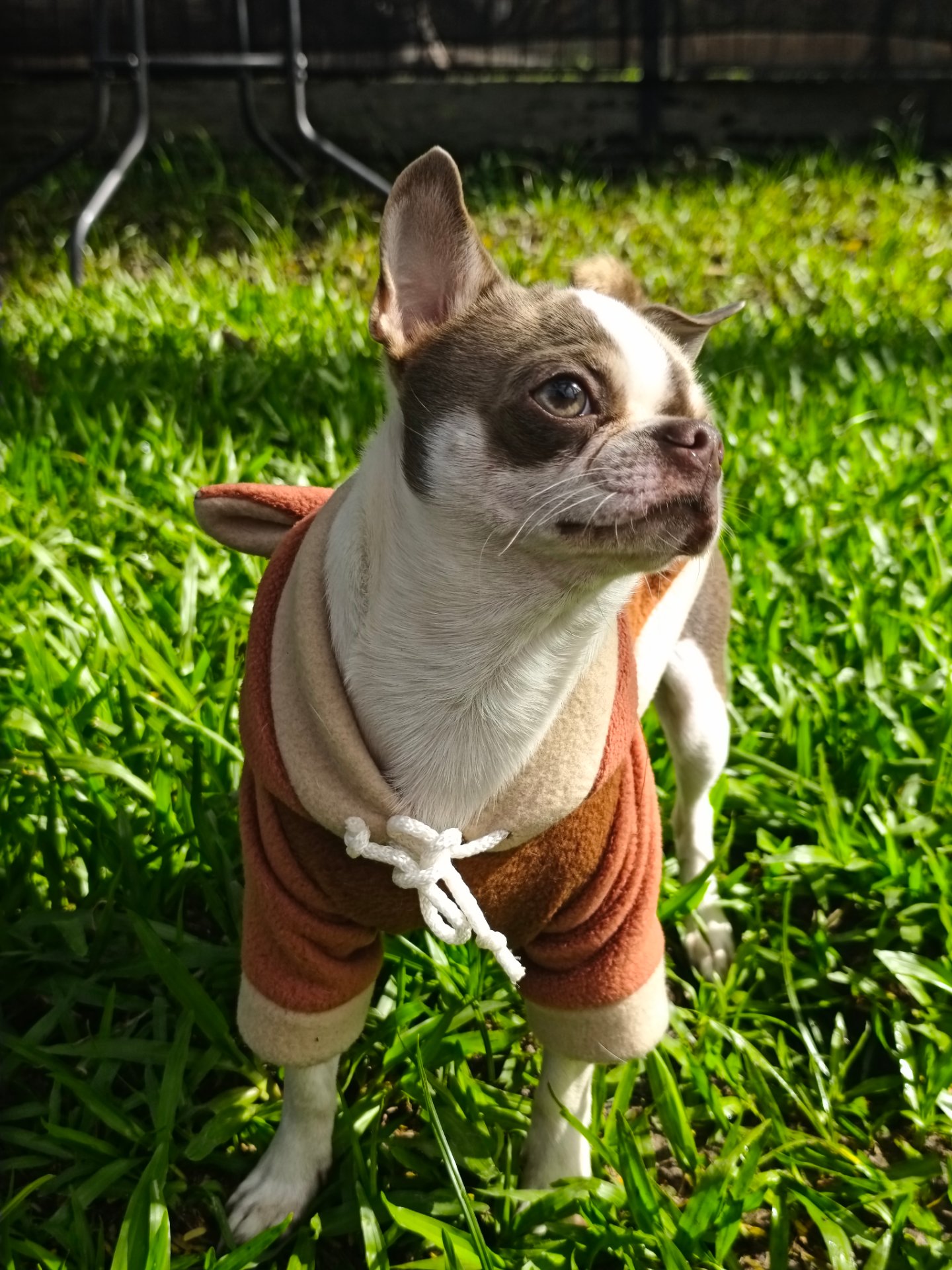
At home we see two very different versions. Romeo, 4, cream and 5.3 pounds, is calm, sleepy and sociable, the kind of dog whose cleverness shows in how easily he settles into any room full of people. Lorenzo, 2, fawn and 5.1 pounds, is electric and alert, and nothing in the building happens without him noticing first. Same breed, two very different minds, which is exactly what that 9% figure would predict. And like most Chihuahuas, both understand far more than any ranking gives them credit for.