
Luxating Patella in Chihuahuas: Grades, Signs and When to Operate
Luxating patella in Chihuahuas: how to spot the skip, what grades 1 to 4 mean, when surgery makes sense, what it costs and how to protect your dog's knees at home.
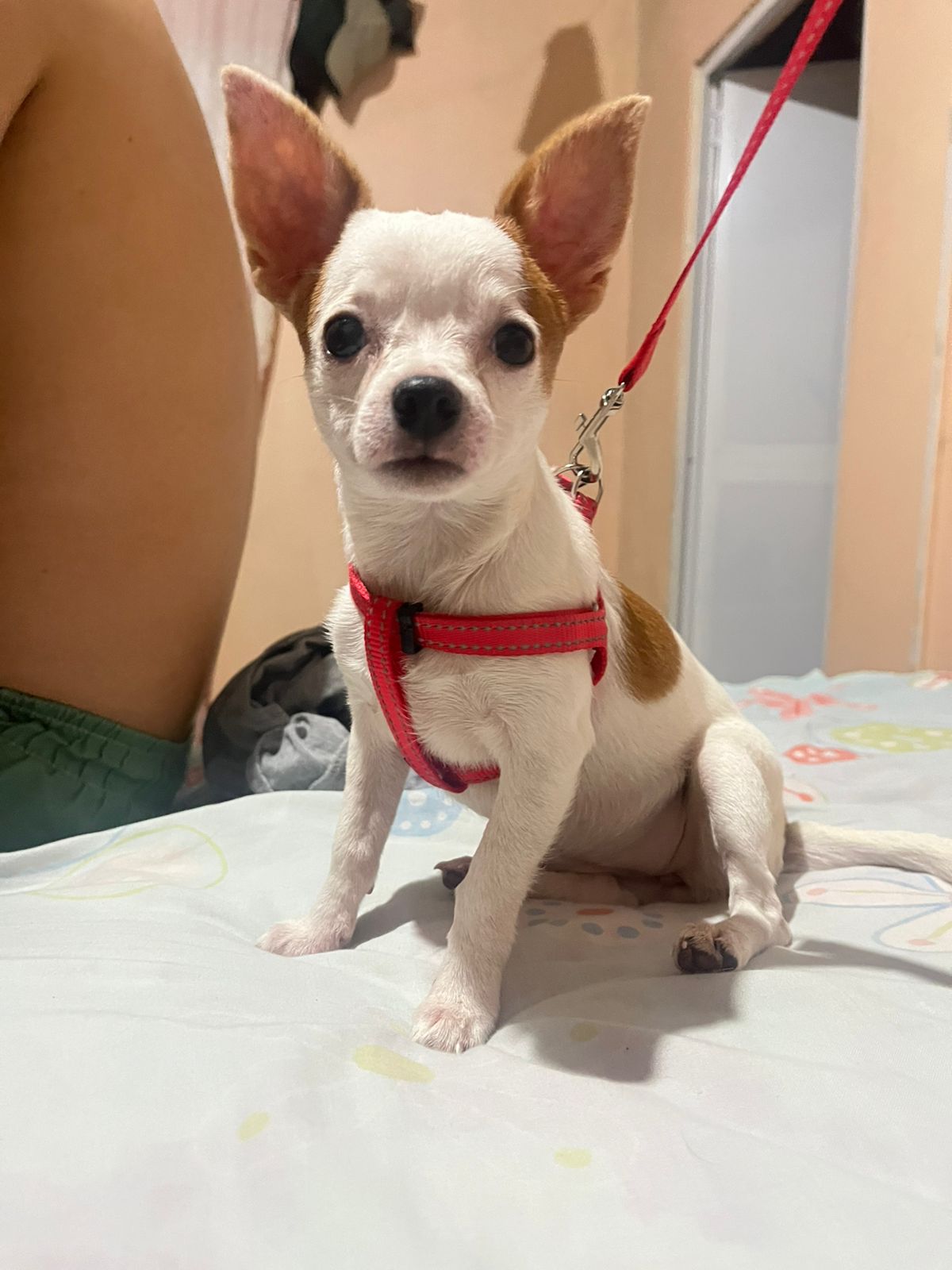
If you’ve ever watched your Chihuahua run across the yard and suddenly hop on three legs for a few strides, one back leg held up, then kick it out behind and carry on like nothing happened, you’ve already met the breed’s most famous orthopedic quirk. It has a name: luxating patella. It’s the most common knee problem in toy breeds, and the Chihuahua is always on the list.
The good news is that most cases are mild and never see an operating room. The less good news is that, left alone, a slipping kneecap can wear the joint down into arthritis. This guide explains how to recognize it, what your vet’s grade actually means, when surgery is worth it, and what you can change at home today.
This article is for information only and is not a substitute for advice from your veterinarian.
What is a luxating patella, exactly?
The patella, or kneecap, is a small flat bone that sits in front of the knee inside the tendon that straightens the leg. In a well-built knee it glides up and down a groove at the end of the thigh bone, like a train on its track.
In a dog with patellar luxation, that groove is too shallow, or the bones and muscles around it are slightly out of line, so the kneecap pops out of the track. The MSD Veterinary Manual describes it as a developmental condition with a hereditary component, and in small and miniature breeds the kneecap almost always slips toward the inside of the leg (medial luxation).
Your Chihuahua didn’t “get” this from jumping off the couch. The predisposition is there from birth. Jumping and extra weight make it worse.
Signs: how to recognize the “skip”
Cornell’s Riney Canine Health Center describes the classic sign the same way owners do: an intermittent, skipping lameness. The dog lifts one hind leg for a few steps, kicks or shakes it, and goes back to walking normally. What happened is the kneecap slipped out, the leg locked, and the kick snapped it back into place.
Other signs worth watching for:
- Sitting with one back leg kicked out to the side, as if it won’t bend all the way.
- Hesitating before jumping onto the couch or bed, or quietly giving up on it.
- Bow-legged or knock-kneed hind legs in more advanced cases.
- A crouched rear end, with the knees always slightly bent.
- Licking a knee, or flinching when you touch it.
Signs usually show up before the first birthday, though some dogs don’t show anything until adulthood. A Chihuahua that skips once a month isn’t an emergency, but it does need a vet visit to have both knees felt and graded.
What do grades 1 to 4 mean?
Your vet grades the luxation by hand, moving the knee through its range. Here is the scale used by the MSD Veterinary Manual, translated into what you’ll see at home:
| Grade | What the kneecap does | What you see | Usual approach |
|---|---|---|---|
| 1 | Can be pushed out by hand but pops back on its own | Little or nothing | Weight control and monitoring |
| 2 | Slips out on its own at times and may stay out for a while | The classic occasional skip | Conservative care; surgery if lameness keeps recurring |
| 3 | Out most of the time; can be pushed back but slips again easily | Frequent lameness, some leg deformity | Surgery in most cases |
| 4 | Permanently out; can’t be pushed back | Marked lameness, crouched walk | Surgery, the sooner the better |
Two things to keep in mind. First, many Chihuahuas have both knees affected, often to different degrees, so each leg can carry a different grade. Second, luxation can progress. A grade 2 at two years old can be a grade 3 at six, especially in a dog that’s overweight or lives on the furniture.
When does a Chihuahua need patella surgery?
Not every case goes to the OR. Cornell puts it plainly: mild cases without signs usually need no treatment, and surgery is recommended for advanced luxation or persistent lameness. It adds a key point: surgery tends to have the best outcomes before arthritis develops.
Conservative management (grade 1 and many grade 2 knees) rests on four legs of its own:
- Ideal weight. A few extra ounces on a 5-pound dog is a big load for those knees. If you’re not sure where your dog stands, the is my Chihuahua overweight? tool gives you a body condition score and a target weight in a minute.
- Muscle. Daily leashed walks on even ground build the thigh muscles that help hold the kneecap in place.
- Anti-inflammatories when there’s pain, prescribed by your vet. Never give ibuprofen, naproxen or acetaminophen from your medicine cabinet: they’re dangerous for dogs.
- Rehab and joint supplements if your vet recommends them.
Surgery usually combines several techniques: deepening the groove so the kneecap has a real track, moving the point where the tendon attaches so it pulls in a straight line, and tightening or releasing the soft tissues that pull it sideways. It goes best in the hands of a surgeon experienced with toy breeds, because a Chihuahua’s bones are tiny.
Cost, recovery and insurance
In the US, typical quotes for luxating patella surgery run from about $1,500 to $4,000 per knee, with board-certified surgeons at the higher end. Ask for an itemized estimate that covers pre-op bloodwork, X-rays, pain medication and rechecks, and ask whether doing both knees in one session (when appropriate) changes the price.
Recovery takes at least eight weeks of restricted activity: short leashed potty walks, no jumping, no stairs, and often a crate or exercise pen when no one is watching. It’s the hardest part for an energetic Chihuahua, and the most important one. Too much activity too soon is the classic reason a repaired kneecap slips out again.
On pet insurance: most accident-and-illness plans cover luxating patella as long as it wasn’t diagnosed or showing signs before enrollment. Some insurers apply a longer waiting period to knee conditions, often several months. Since this is a condition that tends to show up in the first year, insuring a Chihuahua puppy early is what makes the difference.
How to protect your Chihuahua’s knees at home
Diagnosed or not, these habits save any Chihuahua’s knees a lot of wear:
- No jumping off furniture. From couch height, a Chihuahua lands with several times its body weight on its legs. Stairs or a ramp solve this better than any “no!”.
- Non-slip floors. On tile or polished hardwood, their legs splay when they brake. Runners in hallways and a rug where they play make a real difference.
- Short nails. Long nails change how the paw lands and kill traction. If nail trims are a fight, how to trim Chihuahua nails walks you through it.
- No dancing on hind legs for treats. It’s cute, and it’s exactly the posture that loads the knee the most.
- Lift with two hands, one under the chest and one under the rump, never by the front legs.
For the jumping problem, the stairs that work best for a dog this small are firm foam ones:
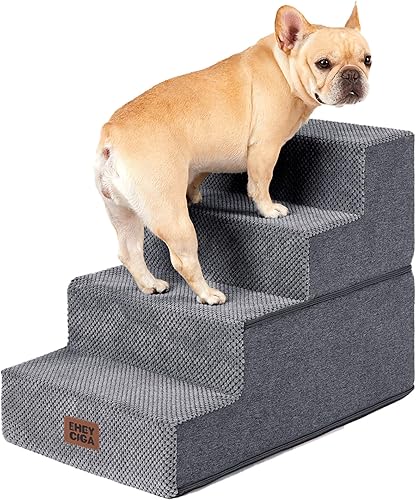
EHEYCIGA foam pet stairs
★4.4 · 11,248 valoraciones
Foam steps with rigid inserts, so they hold shape under a dog's weight instead of sinking, which is the complaint that ruins cheap foam stairs. Non-slip grips keep them from sliding away mid-climb. Sold in several heights and 3 to 5 steps, so you can match a low sofa or a tall bed.
Ojo:Measure your bed or sofa height before ordering; it's the most repeated warning in the reviews and the most common reason for returns. They also arrive vacuum-packed and need a few hours to expand fully, so don't judge them straight out of the bag.
Check the pet stairs on Amazon →Introduce them the boring way: treats on the bottom step, never lift the dog onto the middle, and give it a week. A Chihuahua that doesn’t trust the stairs will just jump beside them.
Can you prevent a luxating patella?
Mostly not, because it comes from how the bones form. What you can do happens at two moments:
Before you bring a puppy home. Ask whether the parents had their knees evaluated. The Orthopedic Foundation for Animals keeps a patella registry for breeding dogs, and a responsible breeder won’t breed dogs with luxating kneecaps. Be wary of “teacup” puppies bred to be as small as possible: smaller usually means more orthopedic trouble, not less.
During your dog’s life. Ideal weight, muscle, no jumping from heights and short nails. They don’t erase the predisposition, but they give a grade 1 knee a much better chance of staying a grade 1.
Luxating patella in senior Chihuahuas
Over the years, a kneecap that slips now and then adds up to wear, and arthritis follows: stiffness getting up, less interest in walks, more hours in bed. An unstable kneecap also raises the risk of injuring the cruciate ligament.
If your Chihuahua is over ten and has a luxating patella, talk to your vet about pain control and rehab before discomfort makes them stop moving. What else changes at that age is in senior Chihuahua care, and the rest of the breed’s typical health problems, with their warning signs, are in common Chihuahua health problems.
The short version
- A skip on one back leg is the classic sign: it calls for a vet visit, not the ER.
- The grade (1 to 4) drives treatment; most Chihuahuas never need surgery.
- Ideal weight, muscle and no jumping off furniture are the best home treatment.
- If surgery is needed, do it before arthritis sets in, and take the eight weeks of rest seriously.
We share our home with an 11-year-old Chihuahua and a 2-year-old, and their knees worry us for opposite reasons. Romeo, at his age, pays more for every jump than he used to. Lorenzo still believes the couch is a trampoline. So the rule is the same for both: up the stairs, and down in someone’s arms.
Frequently asked questions
What is a luxating patella in a Chihuahua?
How do I know if my Chihuahua has a luxating patella?
Does every Chihuahua with a luxating patella need surgery?
How much does luxating patella surgery cost?
Does pet insurance cover luxating patella?
Written by Belen Salto, who shares her life with Romeo and Lorenzo, two Chihuahuas. · Ver en español