Are Chihuahuas Good With Kids, Cats and Other Dogs?
Are Chihuahuas good with kids, cats and other dogs? What the AKC says, the real risks for a 5-pound dog, and step-by-step introductions that keep everyone safe.

So, are Chihuahuas good with kids, cats and other dogs? The short answer: often with cats and other dogs, more carefully with children. It depends a lot on how the Chihuahua was socialized, on the other animal or person, and on how you handle the first weeks together. A Chihuahua isn’t antisocial by nature, but it is a 3- to 6-pound dog living among creatures many times its size, and it knows it.
Below, we go through each pairing with the real risks, what the AKC says where it says something, and step-by-step introductions you can follow at home.
A small dog’s view of the household
Before looking at kids, cats or dogs, it helps to see the world from where the Chihuahua stands, roughly 6 inches off the floor. Hands come from above. Feet move fast and unpredictably. A friendly Labrador’s greeting is the size of a pickup truck.
That’s why many Chihuahuas default to caution, and why caution can turn into growling or snapping when the dog feels it has no way out. Our guide to Chihuahua temperament explains the one-person loyalty and wariness of strangers that sit behind this. None of it means a Chihuahua can’t live happily with others. It means the others have to learn a few rules.
| Housemate | General fit | Main risk | Key to success |
|---|---|---|---|
| Toddlers (under 5 or 6) | Poor | Dog dropped, squeezed or stepped on; dog snaps in self-defense | Constant supervision, or wait until kids are older |
| School-age kids | Good with rules | Kid picks dog up or corners it | Floor-only contact, a kid-free safe zone |
| Cats | Often good | Chasing, swats to the eyes, food guarding | Slow introduction, high escape routes for the cat |
| Other small dogs | Often good | Resource guarding, jealousy | Separate bowls, beds and toys |
| Large dogs | Possible with care | Injury from paws, weight or rough play | Short, supervised play, separation when you’re out |
Are Chihuahuas good with kids?
The American Kennel Club rates the Chihuahua 1 out of 5 for being good with young children, which it labels “not recommended,” and its breed pages add that any dog should be supervised around young children. You can see the rating on the AKC Chihuahua page.
There are two reasons, and they protect both sides.
- The dog is fragile. A Chihuahua dropped from a standing child’s arms can break a leg. A toddler who sits down or trips can land on it.
- The dog defends itself. A Chihuahua who is grabbed, hugged or cornered has only one way to say “stop” that works: its teeth. And because young children lean in close, a warning snap can land near the face.
With school-age children who can follow rules, the picture changes. Plenty of Chihuahuas love their kids, provided the kids respect a few non-negotiables.
House rules for kids and a Chihuahua
- Sit on the floor to cuddle. No carrying the dog around, ever, for kids under about ten.
- Let the dog come to you. Hold out a closed hand, wait, and pet the chest or the side, not the top of the head.
- No hugs and no kisses. Most dogs tolerate hugs at best; a small dog finds them alarming.
- Leave a sleeping or eating dog alone.
- The dog has a safe zone. A crate, a bed behind a baby gate or a room where kids don’t follow.
- Stop when the dog walks away. Leaving is the polite “no thanks”. Ignoring it teaches the dog to escalate.
Introducing a Chihuahua to children, step by step
- Start with the kids seated and calm, with a few treats each.
- Let the dog approach on its own. If it hangs back, that’s fine; let the child toss a treat on the floor.
- Keep the first meeting under ten minutes and end it while everyone is relaxed.
- Repeat daily, adding a little gentle petting as the dog volunteers more contact.
- Watch for stress signals: lip licking, yawning, a tucked tail, turning the head away, freezing. Any of these means the session ends.
Do Chihuahuas get along with cats?
Often, yes. A Chihuahua and an adult cat are surprisingly close in size, so neither can easily overpower the other, and many end up sleeping in the same sunbeam. The usual friction points are the dog chasing the cat, the cat swatting the dog’s face (Chihuahua eyes are large and exposed), and arguments over food.
Introducing a Chihuahua and a cat, step by step
- Separate rooms for the first days. Each animal gets its own space, food, water and, for the cat, a litter box the dog can’t reach.
- Swap scents. Rub a soft cloth on each and leave it in the other’s area. Swap beds for an afternoon.
- Meet through a barrier. A baby gate or a cracked door. Feed both on either side, at a distance where both keep eating.
- Short supervised sessions in the same room, dog on a light leash, cat free to leave. Reward the dog for looking at the cat and then back at you.
- Give the cat the high ground. Shelves, cat trees and furniture the Chihuahua can’t reach make the cat feel safe, and a safe cat is a calmer cat.
- Keep meals and litter separate for good. Cat food is rich for a small dog, and a dog in the litter box is a stressed cat.
If the Chihuahua fixates, stares and lunges at the cat, slow down and go back a step. If the cat hides for days, do the same.
Can Chihuahuas live with other dogs?
The AKC rates the Chihuahua 3 out of 5 for getting along with other dogs, a middle score that matches reality: it depends heavily on the individual and on the other dog. Many Chihuahuas prefer the company of other Chihuahuas or similarly small breeds, and plenty live contentedly with a gentle big dog.
The real risk with big dogs is size, not aggression
A friendly 60-pound dog doesn’t have to mean any harm to hurt a 5-pound one. A paw on the back, a play bow that lands on top, or a chase that ends in a tumble can all injure a Chihuahua. The other common problem runs the other way: a small dog who has been rushed at by big dogs learns that barking and lunging make them back off, and becomes reactive on every walk.
Ground rules for mixed-size households:
- Supervise all play, and keep sessions short with breaks every couple of minutes.
- Interrupt rough play early, before the Chihuahua has to defend itself.
- Separate them when you’re out of the house, at least until you’ve seen months of calm.
- Give the Chihuahua high or enclosed resting spots the big dog can’t reach.
- Feed separately and pick up high-value chews when both are loose.
Introducing two dogs, step by step
- Meet on neutral ground, like a quiet street or a friend’s yard, not your living room.
- Walk side by side at a distance, with a second handler, until both are relaxed and sniffing the ground.
- Let them greet briefly, a few seconds of sniffing with loose leashes, then call them apart and reward.
- Enter the home together, after removing toys, chews and food bowls that could trigger guarding.
- Keep the first days structured: short supervised time together, separate rest.
Socialization in the puppy months makes all of this easier, and it’s never too late to start working on it. Our guide on how to socialize a Chihuahua covers puppies and the rehabilitation approach for adults.
When an introduction isn’t working
Some tension in the first weeks is normal. These signs mean it’s time to pause and get help:
- Growling, snapping or biting that is getting more frequent, not less.
- A Chihuahua that won’t eat, hides constantly or shakes when the other animal is present.
- A cat that stops using the litter box or leaves the room every time the dog enters.
- Any injury, however minor.
If your Chihuahua has already started to growl or bite at people or other animals, the full plan is in our guide to the aggressive Chihuahua, and our article on Chihuahua biting explains the different reasons small dogs bite. A sudden change in behavior is also worth a vet visit, because pain is a common hidden cause. This article is general information and does not replace advice from your veterinarian or a qualified behavior professional.
Our take
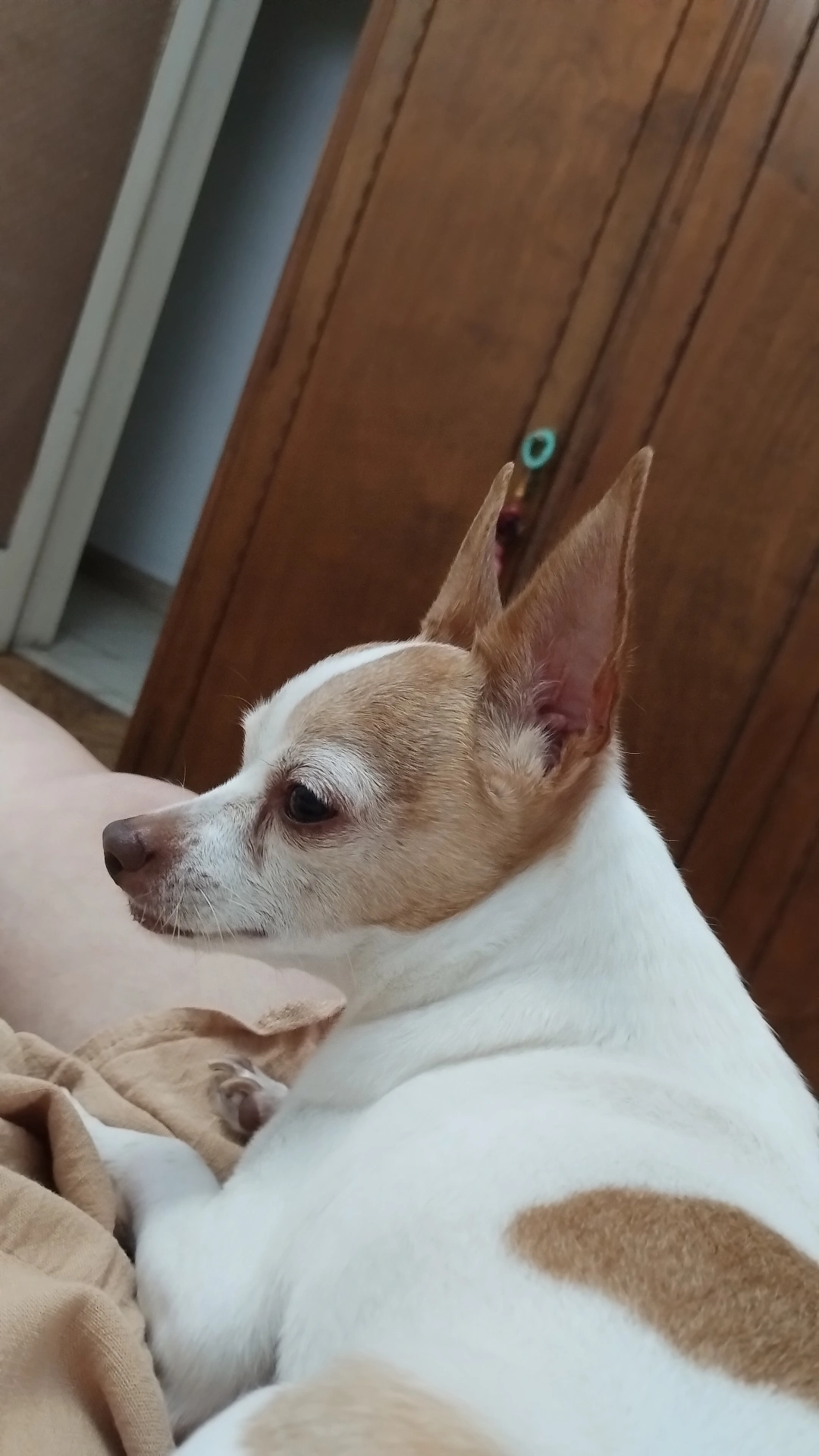
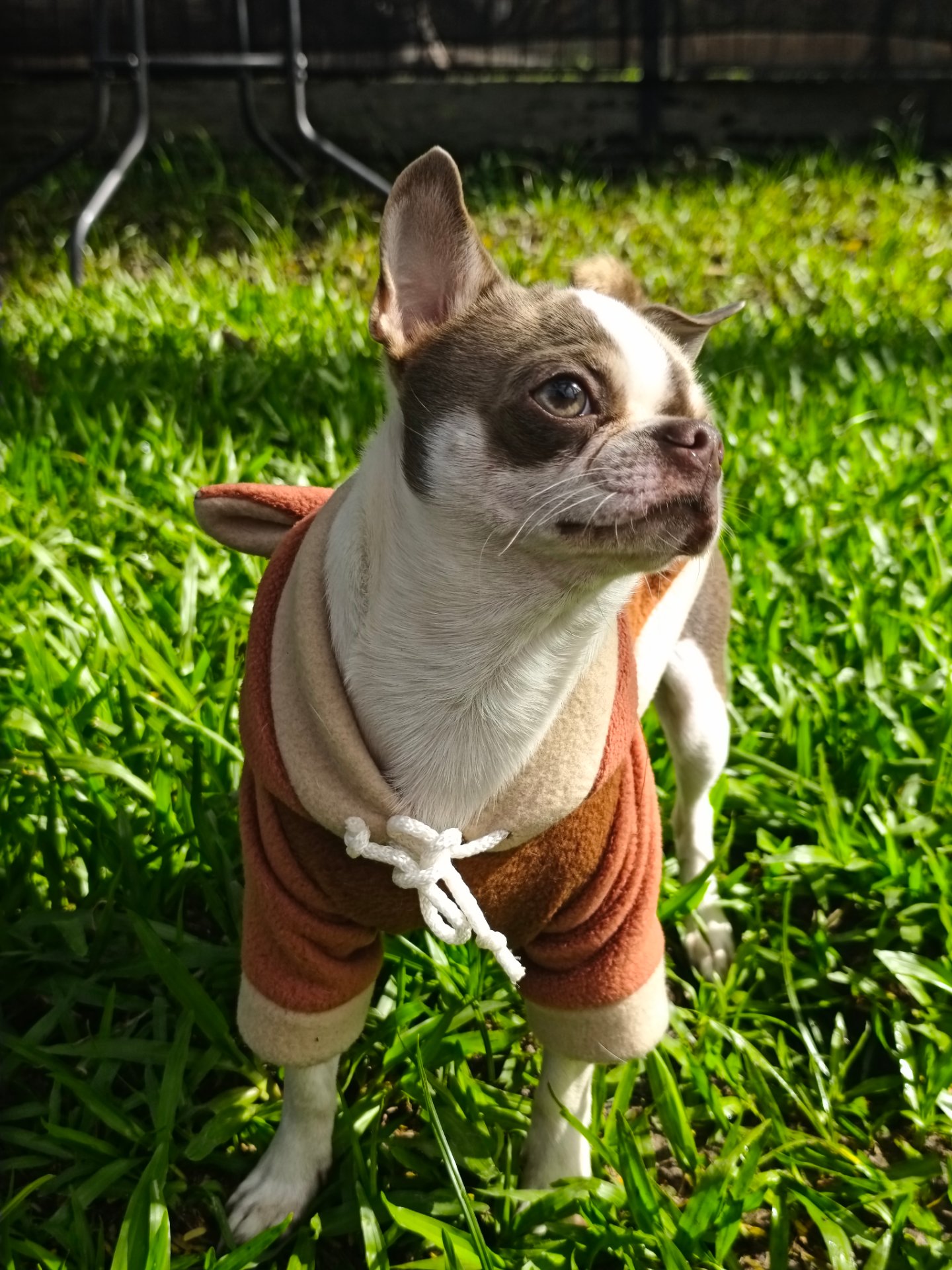
Our two show how much the individual matters. Romeo, our calm 4-year-old, is the sociable one, easygoing with newcomers once he’s had a sniff. Lorenzo, at two, is alert and intense, the kind of dog who needs introductions taken one careful step at a time.
That’s really the whole answer. A Chihuahua can share a home with children, cats and other dogs, as long as the people in charge respect its size, read its signals and give it a place to retreat to. Get those three right and most households find their balance.