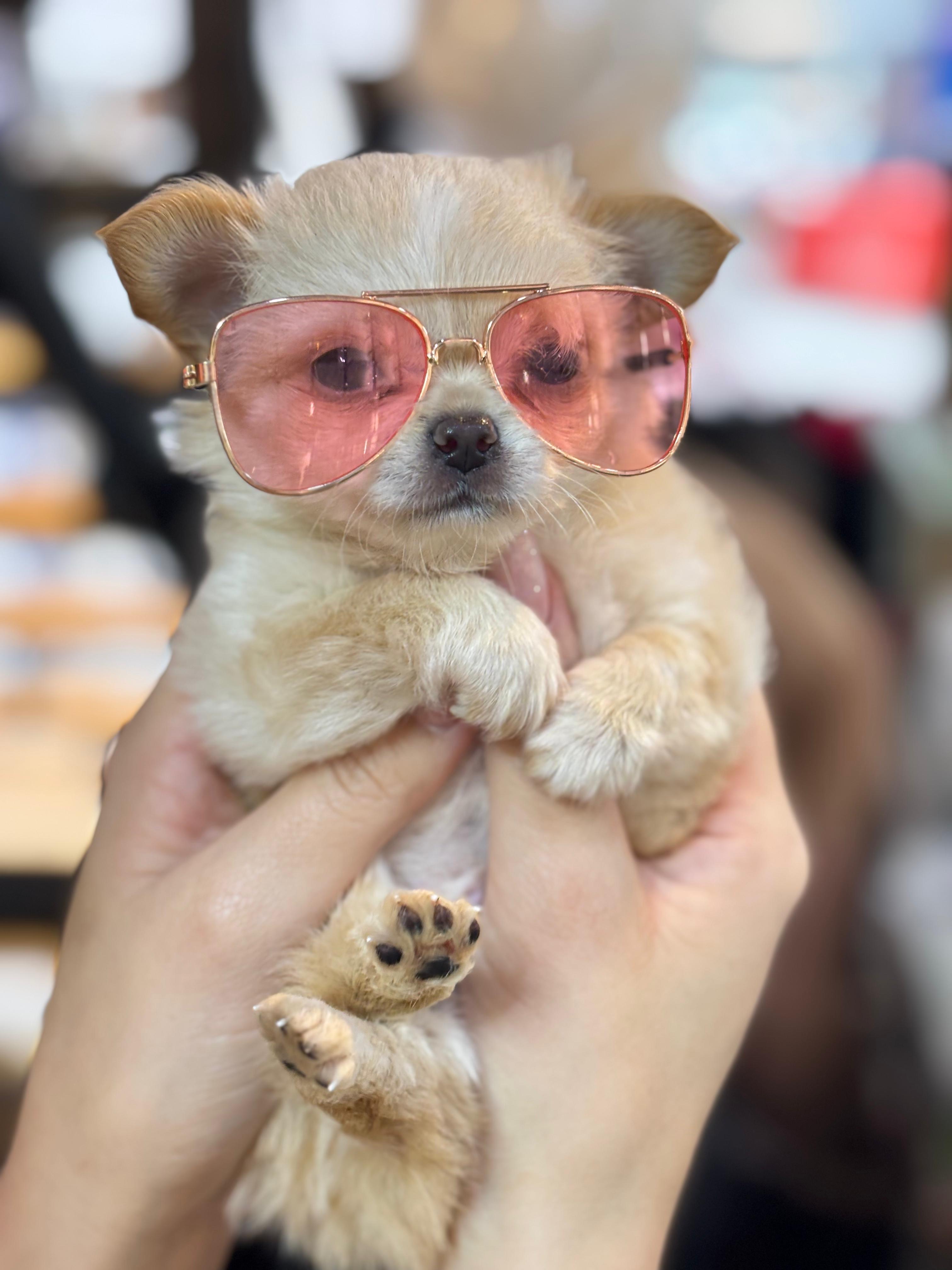
New Chihuahua Puppy: Your First Week Home, Day by Day
Your new Chihuahua puppy's first week home, day by day: the first night, how often to feed, potty basics, the first vet visit and what to know before gifting.
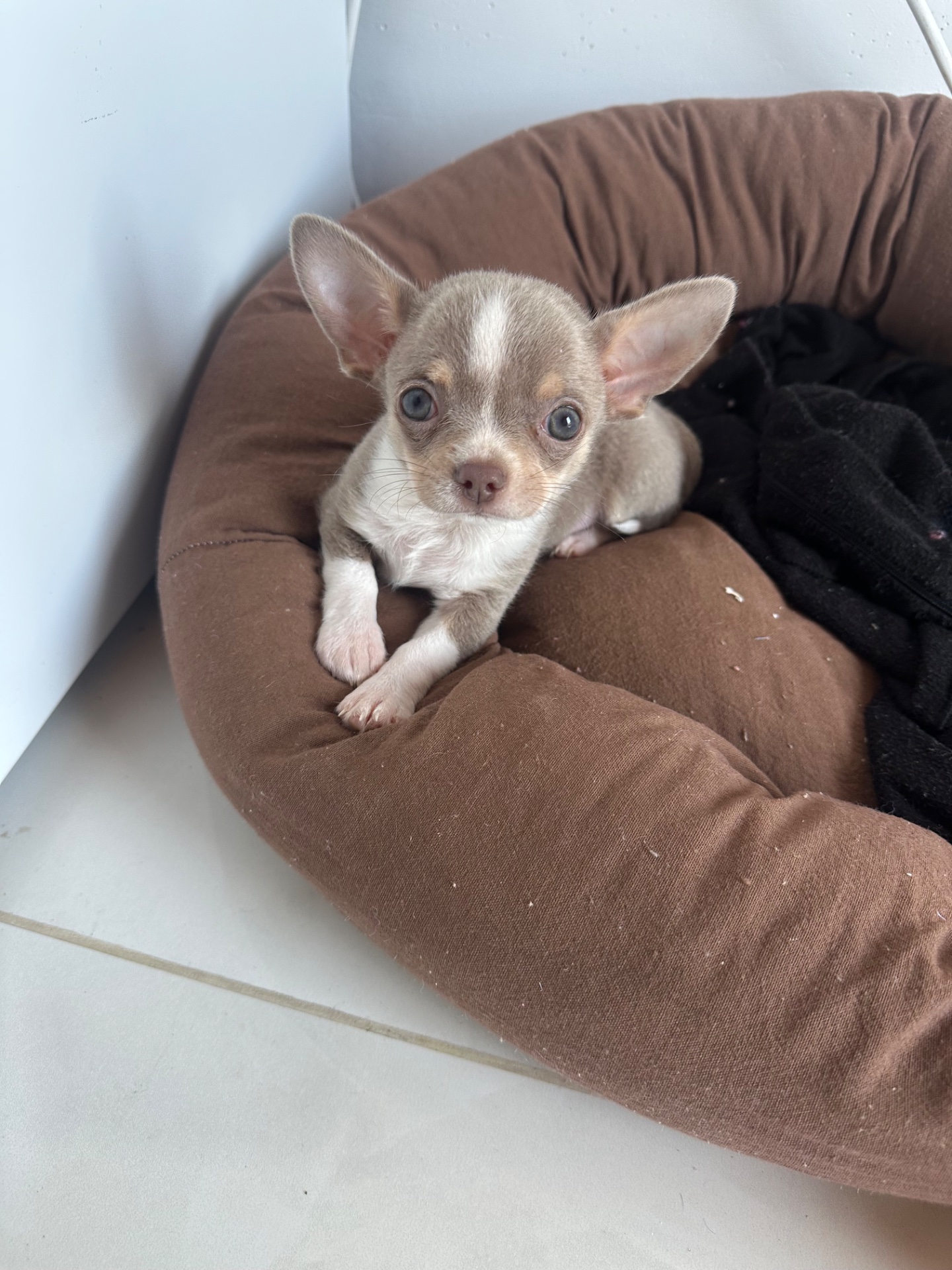
Bringing home a new Chihuahua puppy is pure joy, and also one of the most fragile weeks of that puppy’s life. A baby Chihuahua weighing a pound or two is leaving their mother, littermates and everything familiar, often with a car ride, new food and a house full of excited people thrown in. The first week home doesn’t have to be perfect. It has to be calm, warm and predictable.
This guide is for general information and does not replace your veterinarian’s advice. Any puppy that is weak, cold, not eating or wobbly needs a vet the same day.
Below you’ll find a day-by-day plan for the first seven days, what to expect on the first night, how often to feed, potty basics, the first vet visit, and an honest word about giving a puppy as a Christmas gift.
Before the puppy arrives
The first week goes much more smoothly if the shopping and puppy-proofing are done beforehand. Our Chihuahua puppy checklist covers everything in detail, but the essentials are:
- A small crate or enclosed bed, plus a playpen or a single puppy-proofed room
- The same food the breeder or shelter was feeding, so you don’t change diets in week one (when you do switch later, our Chihuahua feeding guide has the 7-day transition)
- Shallow food and water bowls
- Puppy pads or an indoor potty spot
- A soft harness and lightweight leash
- A few small, safe chew toys
- Blankets, and something warm for the crate
Get down to puppy height and look around. Cords, gaps behind appliances, toxic plants, stairs and the space under the couch all look different from 6 inches off the floor. If you like having it all on paper, our printables include checklists and trackers you can stick on the fridge.
Your new Chihuahua puppy’s first week, day by day
Every puppy is different, so treat this as a framework, not a schedule carved in stone.
| Day | Focus | Key goals |
|---|---|---|
| 1 | Arrival and quiet | Calm homecoming, small first meal, introduce the potty spot, first night in your room |
| 2 | Routine | Set meal times, potty breaks and nap times; keep visitors away |
| 3 | First vet visit | Health check, review vaccine and deworming records, weigh-in |
| 4 | Gentle handling | Touch paws, ears and mouth briefly, with treats |
| 5 | Short alone time | A few minutes in the playpen while you’re nearby |
| 6 | Safe socialization | New sounds at home, carried outings without touching the ground |
| 7 | Review | Weigh-in, adjust the routine, note what’s working |
Day 1: arrival and the first hours
The AKC recommends staying home the first day and taking things slowly rather than letting the puppy explore the whole house and meet everyone at once.
- Go straight to the potty spot when you arrive and give them a few minutes there.
- Let them explore one room or the playpen, not the whole house.
- Offer a small meal of their usual food once they’ve settled a bit.
- Let them sleep. Puppies sleep most of the day, and a new environment is exhausting.
- Keep it to the household. The friends and family can meet the puppy next week.
Day 2: building the routine
Puppies feel safe when life is predictable. Pick meal times, potty times, play times and bedtime, and stick to them. Short play sessions of five to ten minutes are plenty, followed by a nap in the crate or bed.
Day 3: the first vet visit
Book the vet within the first few days, even if the puppy looks perfectly healthy. Bring the records from the breeder or shelter: vaccines given, dates, deworming, and any health guarantee paperwork. More on this visit below.
Day 4: gentle handling
Spend a minute or two a few times a day touching paws, ears, mouth and tail, with a tiny treat after each touch. This makes nail trims, ear checks and vet exams far easier for the rest of the dog’s life.
Day 5: short alone time
Leave the puppy in the playpen with a chew for a few minutes while you’re in the next room, then come back calmly. Don’t make arrivals or departures dramatic. Very short, boring absences now help prevent problems later.
Day 6: safe socialization
Socialization starts now, even before vaccines are complete. Our vaccine schedule tool explains why puppies shouldn’t walk on public ground until about a week after the final puppy shot, but they can go out in your arms or a carrier to hear traffic, see people and smell the world. At home, introduce the vacuum, doorbell and kitchen sounds gently.
Day 7: review
Weigh the puppy on the same scale as day 3. A healthy puppy gains steadily, roughly along the month-by-month weight chart in our Chihuahua growth stages guide. Note how meals, potty breaks and nights are going, and adjust.
What to expect on the first night
The first night is usually the hardest for everyone. The AKC’s tips for a puppy’s first night are a good guide:
- Put the crate in your bedroom, right next to the bed if possible, so you can reach in and reassure the puppy.
- Bring something that smells like the mother or littermates, like a blanket or soft toy.
- Play and take a last potty break right before bed.
- Pick a consistent bedtime and stick to it.
- Expect some crying. Some puppies cry for a few nights. Comfort them calmly from where you are.
- Handle night potty trips quietly: out, potty, back to bed, no play, no lights on full.
For a Chihuahua specifically, warmth matters. A tiny puppy loses heat fast. Make sure the crate is out of drafts and has a blanket to burrow into.
How often does a Chihuahua puppy need to eat?
This is the part of the first week that’s most specific to toy breeds. Young Chihuahua puppies have tiny energy reserves, and stress, cold and missed meals can lead to a dangerous drop in blood sugar. Our guide to hypoglycemia in Chihuahua puppies explains the signs and what to do, and it’s worth reading before the puppy comes home.
As a general guide:
| Age | Meals per day |
|---|---|
| Up to about 3 months | 4 to 5 small meals |
| 3 to 6 months | 3 meals |
| After the first birthday | 2 meals |
A few first-week rules:
- Don’t change the food yet. If you want to switch brands, do it gradually after the puppy has settled.
- Don’t skip meals, and avoid long gaps during the day.
- Watch whether they actually eat. A puppy who refuses several meals in a row, or who seems weak, trembly or wobbly, needs a vet the same day.
Potty basics for the first week
Expect accidents. Real bladder control comes months later. For now, the goal is to set up good habits:
- Take the puppy to the potty spot right after waking up, after eating, after playing and before bed.
- With a two-month-old, also go every couple of hours even if nothing happened.
- Praise and reward the moment they go in the right place.
- Clean accidents with an enzyme cleaner, and never scold. The puppy won’t connect the punishment with the puddle.
- Keep the space small. A playpen with a pad in view works better than the run of the house.
Our step-by-step guide on how to potty train a Chihuahua takes it from there.
The first vet visit: what to expect
The first appointment is a health check and a planning session. Expect your vet to:
- Weigh the puppy and do a full physical exam
- Check the mouth, eyes, ears, heart and joints, including the soft spot on the skull many Chihuahuas have
- Review vaccine and deworming records and give whatever is due
- Ask for or check a stool sample for parasites
- Discuss the rest of the vaccine series, flea and heartworm prevention, and microchipping
According to the MSD Veterinary Manual, puppies typically visit the vet every 3 to 4 weeks until they’re about 4 months old. Bring a list of questions; nobody remembers them in the exam room.
Thinking of giving a puppy as a Christmas gift?
Holiday puppies are a tradition for a reason: the image of a puppy under the tree is hard to resist. But it’s worth an honest look before you wrap anything with a bow.
The ASPCA’s position on pets as gifts supports giving a pet only when the recipient has shown a sustained interest in owning one and the ability to care for it responsibly. It recommends getting the animal from a shelter, rescue, friends, family or a responsible breeder, not from a source you can’t trust. For children under 12, the parents should be ready and eager to take on the pet’s care. The ASPCA also stresses that the recipient’s schedule should leave room for the pet’s transition into the home, especially during the holidays.
In practice, a few things to think about:
- Is it truly wanted? A surprise dog for someone who has never asked for one is a 15-year commitment you’re choosing for them.
- Is the timing right? Christmas Day is loud, busy and full of food on the floor. That’s a hard first week for a 2-pound puppy.
- Is the source responsible? Holiday demand is high, and so is the number of sellers rushing very young puppies out the door.
- Who does the work? Feeding four or five times a day, night potty trips and vet visits all land on someone.
A lovely alternative: wrap the leash, a collar and a photo, or a gift certificate for the shelter or breeder, and bring the puppy home once the decorations are packed away and the house is quiet. The magic is the same. The first week is much calmer.
A word from our house
Romeo is 4 and Lorenzo is 2, both apple-head Chihuahuas who weigh just over 5 pounds as adults. Looking at them, it’s easy to forget that every Chihuahua starts out small enough to fit in two cupped hands. That’s what the first week is really about: protecting someone very small while they learn that this new place is home.
Go slowly, keep them warm and fed, and don’t worry about getting everything right. By the end of the first week, you’ll know their sleepy sounds, their hungry sounds and their “I need to go out” dance. And if your new puppy joins the club, we’d love to meet them.