How to Potty Train a Chihuahua: Pads, Outdoors and Accidents
How to potty train a Chihuahua on pads or outdoors, step by step: schedules by age, why an adult starts peeing in the house, how to clean up and what to avoid.
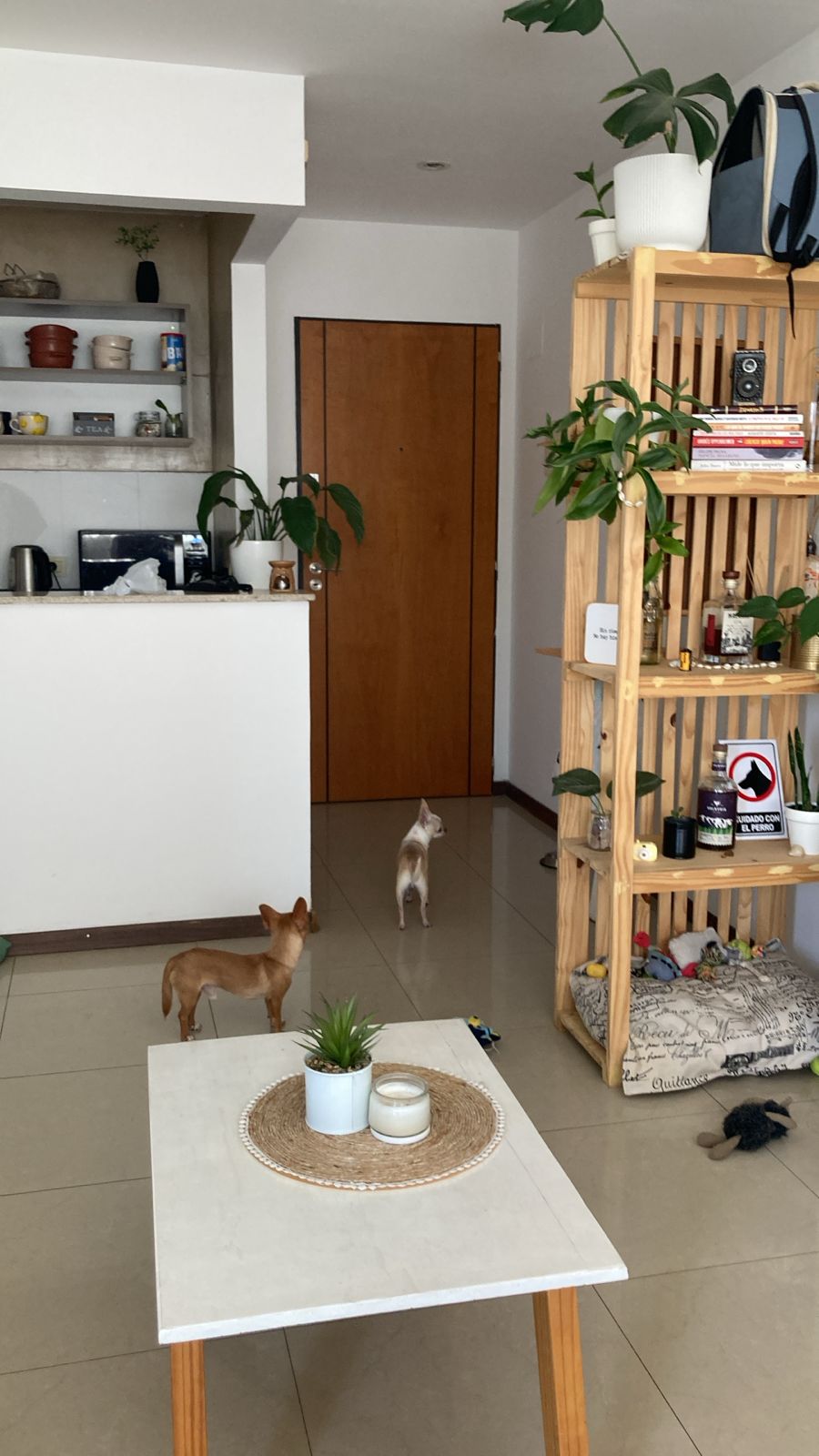
Learning how to potty train a Chihuahua is, according to our club members, the first thing that drives a new owner crazy and the last thing to get solved. It makes sense: this is a dog who fits in a shoe, with a bladder the size of a walnut and a remarkable talent for looking you in the eye while he pees on the rug.
What follows is what we did with Lorenzo, who came home at two months old, and what we learned from Romeo, who started having accidents again at 11 and taught us it isn’t always about training.
This article is for general information and is not a substitute for advice from your veterinarian.
At what age does a Chihuahua get bladder control?
A puppy doesn’t hold it because he can’t, not because he won’t. Real bladder control shows up between 4 and 6 months. Before that, your job isn’t to make him hold it; it’s to help him get it right.
| Age | How long he can hold it (awake) | Potty breaks per day |
|---|---|---|
| 2 months | 1 to 2 hours | 8 to 10 |
| 3 months | 2 to 3 hours | 6 to 8 |
| 4 months | 3 to 4 hours | 5 to 6 |
| 6 months | 4 to 5 hours | 4 to 5 |
| Adult | 5 to 6 hours (no more than 8) | 3 to 4 |
With a Chihuahua, size counts as much as age: a 5-pound adult has a smaller bladder than an 8-week-old Labrador. That’s why so many Chihuahua owners keep a pad in the house for life, and it isn’t a failure. It’s realism.
Potty pads or outdoors: which should I teach first?
Both, in that order. A two-month-old puppy shouldn’t walk on public sidewalks until his vaccines are done, so the pad is his only possible bathroom. Once he can go out, you teach the yard or the sidewalk strip using the same cue word and the same reward, and the pad stays as plan B for rain, cold and long workdays. Using both doesn’t confuse a dog. Having no rules at all does.
What does confuse him: moving the pad around, putting three of them in different rooms, and using old towels or newspaper that smell just like the bath mat you don’t want him to use.
How to potty train a Chihuahua on pads
- One spot, always the same. Away from his bed and his food bowl: no dog wants to pee where he sleeps or eats if he can avoid it. A quiet corner, not a hallway.
- Use a pad holder with a rim, or a patch of artificial grass. A loose pad slides around, gets chewed and turns into a toy. A tray holds it in place, and the rim gives him a physical signal that says “in here.”

Amazon Basics dog and puppy potty training pads
★3.9 · 43,547ratings
The best sellers in their category and the cheapest per pad, which is what matters when you'll go through four or five a day for months. They absorb fast, and the plastic backing keeps leaks off the floor.
Heads-up:Their rating is the lowest of anything we recommend. The recurring complaint is leaking with big dogs; with a 5-pound Chihuahua it doesn't happen, but it's good to know. And put them in a holder: loose, Lorenzo turned them into confetti.
See the pads on Amazon →- Take him at the four key moments: right after waking up (in the morning and after every nap), ten minutes after eating, after playing, and before bed. With a two-month-old, also every two hours even if nothing has happened.
- Say the cue word. “Go potty,” “pee pee,” whatever you like, always the same, in a neutral tone, while he’s going. Within a month, the word itself triggers the behavior.
- Reward at the exact second. The treat comes the moment he finishes, right there on the pad, not when he trots back to the couch. If you reward him when he comes to you, he learns to come to you, not to pee in the right place.
- If he starts somewhere else, interrupt him without drama. A soft “oops,” pick him up, carry him to the pad, and if he finishes there, reward. If he’s already done, there’s nothing to do but clean up.
- Make his world smaller. A puppy loose in an 800-square-foot apartment has 800 square feet of possible bathrooms. For the first two weeks, use a playpen or a single room with the pad in sight. A crate for naps and nights helps too, since most dogs won’t soil where they sleep.
How to switch from pads to going outside
Once his vaccines are done, the first week of walks matters most. Go out at the same four key moments, stand on a patch of grass or dirt, say the cue word and wait. It can take ten minutes the first few times. When he goes, celebrate and reward. If nothing happens in fifteen minutes, head home calmly and try again in half an hour.
A trick that works: bring along a piece of used pad and leave it on the grass for the first week. The smell tells him “this counts too.”
And don’t take the pad away all at once. Over about a month, make it smaller and move it gradually toward the door; if one day he ignores it, perfect. Plenty of Chihuahuas keep using it in winter and on rainy days, and that’s fine. The alternative is a 5-pound dog holding it for eight hours through a storm, and that ends in a urinary infection.
What not to do
- Don’t rub his nose in it or yell over the puddle. He won’t connect the punishment with the pee from half an hour ago; he’ll connect it with you, and with peeing in front of you. The result: he learns to go in secret, behind the couch.
- Don’t clean with bleach or ammonia. They smell similar to urine and draw him back to the same spot. Use an enzymatic cleaner, or water and white vinegar in equal parts.
- Don’t leave unlimited water out at night during the first months. Water until two hours before bed, one last potty break, and that’s it.
- Don’t keep switching foods. Irregular digestion means irregular pee and poop.
- Don’t take an adult out every hour “just in case.” You keep him from learning to hold it. A healthy adult needs three or four potty breaks, not ten.
Why is my Chihuahua peeing in the house when he was already trained?
When an adult Chihuahua who was reliably house-trained starts peeing inside again, he almost never “forgot.” It’s usually one of these:
- Urinary tract infection. The number one cause, especially in females. Frequent, small pees, sometimes with blood. That’s a vet visit, not a training issue.
- Marking. Intact males from 6 to 8 months on, on table legs, curtains, your backpack. Small amounts, always on vertical surfaces. Neutering reduces it in most dogs, and cleaning with an enzymatic product keeps him from re-marking.
- Changes. A move, a new baby, another dog, construction, you working longer hours. Peeing is his way of saying something overwhelmed him.
- Cold and rain. A Chihuahua shivering on the sidewalk is not going to pee there. In winter he needs a coat, and sometimes the pad comes back. We cover it in do Chihuahuas get cold?
- Submissive or excitement peeing. A little dribble when you come home or when you scold him, almost always in young or fearful dogs. Firmness doesn’t fix it; calm greetings and zero scolding do.
- Age. From 10 or 11 years on, control declines and nighttime accidents appear. It happened to Romeo at 11: it was his kidneys working differently, not his head. That’s a topic for senior Chihuahua care.
The vet comes first, always. Training comes after, if it’s still needed.
How long does it take?
With consistency, a puppy gets it right about 80% of the time within two or three weeks, and reaches 100% when his body allows it, between 4 and 6 months. An adopted adult with no training takes about the same: two to four weeks, with the same method and no grudges over what he learned wrong before.
Lorenzo took seventeen days to use the pad on his own, and at five months he was already asking at the door. He still has a pad in the laundry room for stormy days, because he’s a Chihuahua and rain feels like a personal attack. Everything else you need in the first months, from food to vaccines, is in our Chihuahua puppy checklist, and the whole stage is covered in your 2-month-old Chihuahua.
🔗 The product card in this article contains an Amazon affiliate link. If you buy through it, we earn a small commission that keeps the club free. It doesn’t raise your price, and it doesn’t change what we recommend — the drawback in the card is there for exactly that reason. It sends you to your country’s Amazon store.
Frequently asked questions
At what age can a Chihuahua be potty trained?
How often does a Chihuahua puppy need to pee?
Why is my house-trained Chihuahua suddenly peeing inside?
Potty pads or outdoors: which is better for a Chihuahua?
How do I clean up pee so he doesn't go there again?
Written by Belen Salto, who shares her life with Romeo and Lorenzo, two Chihuahuas. · Ver en español