
Chihuahua Growth Stages: 7 Phases + Weight by Month
The 7 Chihuahua growth stages explained, with a month-by-month weight chart and the behavior, energy and care to expect at every age.
Understanding the Chihuahua growth stages is what lets you anticipate what is coming, avoid common mistakes, and actually enjoy each phase of your dog’s life. A two-month-old puppy that chews everything is nothing like a twelve-year-old who sleeps sixteen hours a day. Each stage brings concrete changes in weight, energy, what they eat, how they sleep and what they need from you.
In this guide we walk through the seven main phases of a Chihuahua’s development, with the typical weight expected at each one, the behavioral milestones, and the warning signs worth watching.
This article is informational and does not replace veterinary advice. Every Chihuahua is unique, and the ranges here are guidelines. If something worries you at any stage, always consult your trusted vet.
How does a Chihuahua grow month by month?
Chihuahua growth is fast and compact. Unlike large breeds that can keep growing for two years, a Chihuahua reaches close to its adult size between 8 and 12 months, with most of the physical growth happening in the first six months.
| Age | Typical weight (guideline) | Stage |
|---|---|---|
| Newborn | 2.5 to 5 oz | Nursing |
| 1 month | 7 to 14 oz | Nursing |
| 2 months | 0.8 to 1.5 lb | Weaning and socialization |
| 3 months | 1.1 to 2.2 lb | Puppy |
| 4 months | 1.5 to 2.9 lb | Advanced puppy |
| 6 months | 2.2 to 4.0 lb | Adolescent |
| 9 months | 2.9 to 5.5 lb | Late adolescent |
| 12 months | 3.3 to 6.6 lb | Young adult |
| 1 to 3 years | 3.3 to 6.6 lb | Young adult |
| 3 to 7 years | 3.3 to 6.6 lb | Prime adult |
| 7 to 12 years | Variable, slight gain possible | Senior adult |
| 12+ years | Variable, slight loss possible | Senior |
Ranges vary with genetics, sex, diet and activity. If your dog stays steady within its own range and is in good spirits, there’s no reason to worry. For a more detailed look at the timeline, see when do Chihuahuas stop growing.
Stage 1 — 0 to 2 months: nursing puppy
The most delicate stage. The puppy is born blind, deaf and unable to regulate its temperature, fully dependent on the mother. The eyes open around days 12 to 14, and hearing begins around days 18 to 20.
Typical weight: from about 2.5 oz at birth to 14 oz at one month.
What to expect: sleeps almost constantly (18 to 22 hours a day), nurses every 2 to 3 hours, starts to explore timidly around 4 weeks.
What to do: keep the room warm (around 86 to 90 F the first week, lowering gradually), do not separate the puppies from the mother before 8 weeks, and weigh them daily the first week.
Warning signs: weight loss, constant crying, a cold body, no interest in nursing. Any of these is an urgent vet visit. The most fragile first month is covered in depth in newborn Chihuahua care.
Stage 2 — 2 to 4 months: weaning and socialization
This is the most important stage for future behavior. The puppy leaves mother’s milk and starts solid food (ideally moistened at first). More importantly, this is the socialization window, where it learns which things in the world are safe and which are not.
Typical weight: 0.8 lb to 2.9 lb.
What to expect: lots of play and milk-tooth biting, intense curiosity about sounds and objects, the start of basic habits, sleeping 16 to 20 hours a day.
What to do: socialize heavily (people of all ages, vaccinated dogs, urban noises, car rides, all in small positive doses), start potty training, set feeding and sleeping routines, begin the vaccination plan with your vet.
Warning signs: total refusal of solid food, persistent diarrhea, lethargy, very pale gums, marked trembling (which can signal hypoglycemia, dangerous in tiny pups; see why do Chihuahuas shake).
Stage 3 — 4 to 6 months: advanced puppy
The puppy starts to look more like its adult self, though it keeps baby proportions (big head, huge eyes). It swaps milk teeth for permanent ones, which usually brings more biting and a need to chew everything.
Typical weight: 1.5 lb to 4.0 lb.
What to expect: more forceful chewing, early territory marking (mostly in males), a possible first heat in females (6 to 9 months), more independence and testing of limits, high energy broken up by long naps.
What to do: offer sturdy chew toys, reinforce basic commands, continue outdoor socialization once fully vaccinated, and discuss spay/neuter timing with your vet. Persistent furniture destruction at this age often traces back to teething; our piece on Chihuahua chewing furniture helps you tell teething from stress.
Stage 4 — 6 to 12 months: the adolescent
Here the “sweet little puppy” myth shatters. Welcome to canine adolescence, which in Chihuahuas tends to be intense: they test everything they learned, seem to forget commands, and explore their personality. This is the stage where most dogs end up in shelters, because their owners get frustrated.
Typical weight: 2.2 lb to 5.5 lb.
What to expect: possible regression in potty habits and commands, more reactivity to strangers or noise, jockeying for rank within the family, higher energy, marking in males, first or second heat in females.
What to do: stay calm, this stage passes. Reinforce desired behavior without punishment, keep routines stable, add short walks and mental games. Do not reward reactivity, for example by scooping the dog up to “calm” it when it barks at the doorbell, which only confirms that the situation is scary.
Warning signs: unexplained persistent aggression, extreme fear of going out, major hair loss (see do Chihuahuas shed), limping, repeated vomiting.
Stage 5 — 1 to 3 years: young adult
The Chihuahua is now physically adult. Its character consolidates and stops changing so abruptly. Still full of energy, but with its head more in place. This is the best stage to deepen training, travel and explore new places.
Typical weight: 3.3 lb to 6.6 lb (final adult weight).
What to expect: a stable, recognizable character, manageable high energy, a deep bond with the family, settled habits.
What to do: keep up moderate daily activity, watch the diet (they can start to gain weight if overfed), brush teeth regularly (Chihuahuas are prone to dental problems young), and book yearly vet visits even when all seems fine.
Warning signs: abrupt changes in character, increased thirst or urination, unexplained weight gain or loss.
Stage 6 — 3 to 7 years: prime adult
The golden stage. Physically and mentally at their peak, knowing the house rules, in tune with the family. The ideal moment for shared projects: travel, moves, the arrival of human babies, everything you wanted to do with your dog.
Typical weight: 3.3 lb to 6.6 lb, usually stable.
What to expect: a mature, predictable personality, a deep bond with the main human, a slight energy dip toward 6 or 7 years.
What to do: watch weight (a sedentary life starts to be a risk), keep the dental routine, run an annual blood panel to catch problems early, and protect the joints by avoiding hard jumps and adding steps to high couches.
Stage 7 — 7 years and up: senior
The Chihuahua enters its senior years around 7 to 8: a little more sleep, less rough play, a preference for the familiar. It’s a long-lived breed, and reaching 16 to 18 years in good shape is not rare. From about 12, care becomes more medical, with deeper sleep, possible vision and hearing loss, mild cognitive changes, and a greater need for warmth and contact.
What to do: a softer, warmer bed, senior-appropriate food, checkups every 6 months instead of yearly, and close attention to dental, heart and joint issues. Our full guide to senior Chihuahua care covers this final stage in detail, and if your older dog suddenly goes off its food, Chihuahua not eating explains when that becomes urgent.
In summary
- A Chihuahua passes through seven clear stages from birth to old age.
- Physical growth ends roughly between 8 and 12 months.
- Adolescence (6 to 12 months) is the most challenging stage for the owner.
- Typical adult weight sits between 3.3 and 6.6 pounds.
- A well-cared-for Chihuahua’s life expectancy is 14 to 18 years.
- Each stage has its own care needs and its own warning signs.
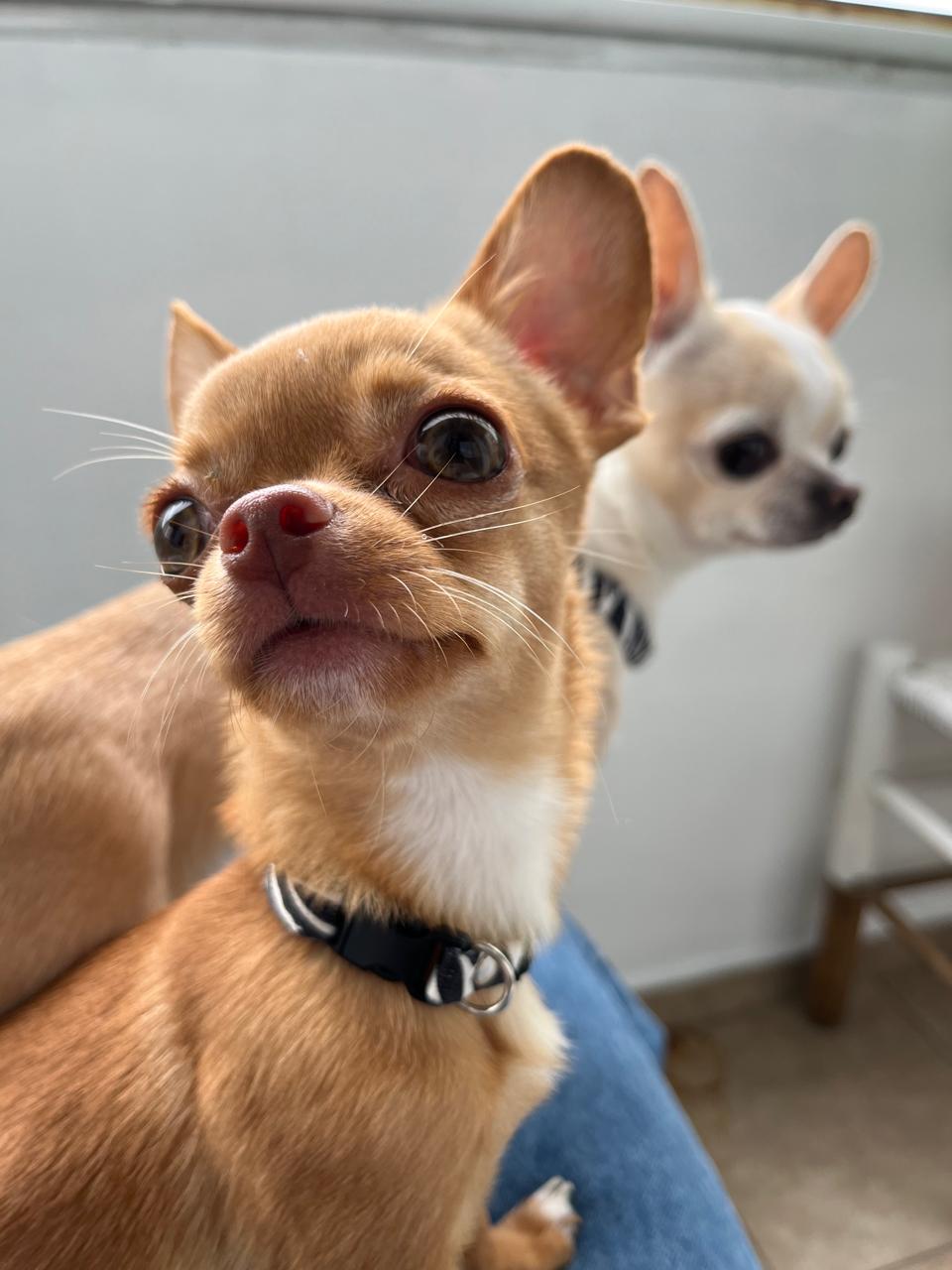
Romeo is eleven, deep in his prime adult phase: calm, wise, absolute owner of the couch. Lorenzo is 2, still bouncing like he has springs in his legs. Seeing them together is seeing the Chihuahua in two life stages at once, and each one needs something different: more naps for Romeo, more play for Lorenzo, and plenty of affection for both. Knowing the stages isn’t just information, it’s the foundation for being there for them the way they deserve, at every moment of their lives.
Written by Belen Salto, who shares her life with Romeo and Lorenzo, two Chihuahuas. · Ver en español