
Chihuahua Separation Anxiety: Why It Happens & How to Fix It
Real symptoms, deep causes and a step-by-step plan for Chihuahua separation anxiety. What actually works and what makes it worse.
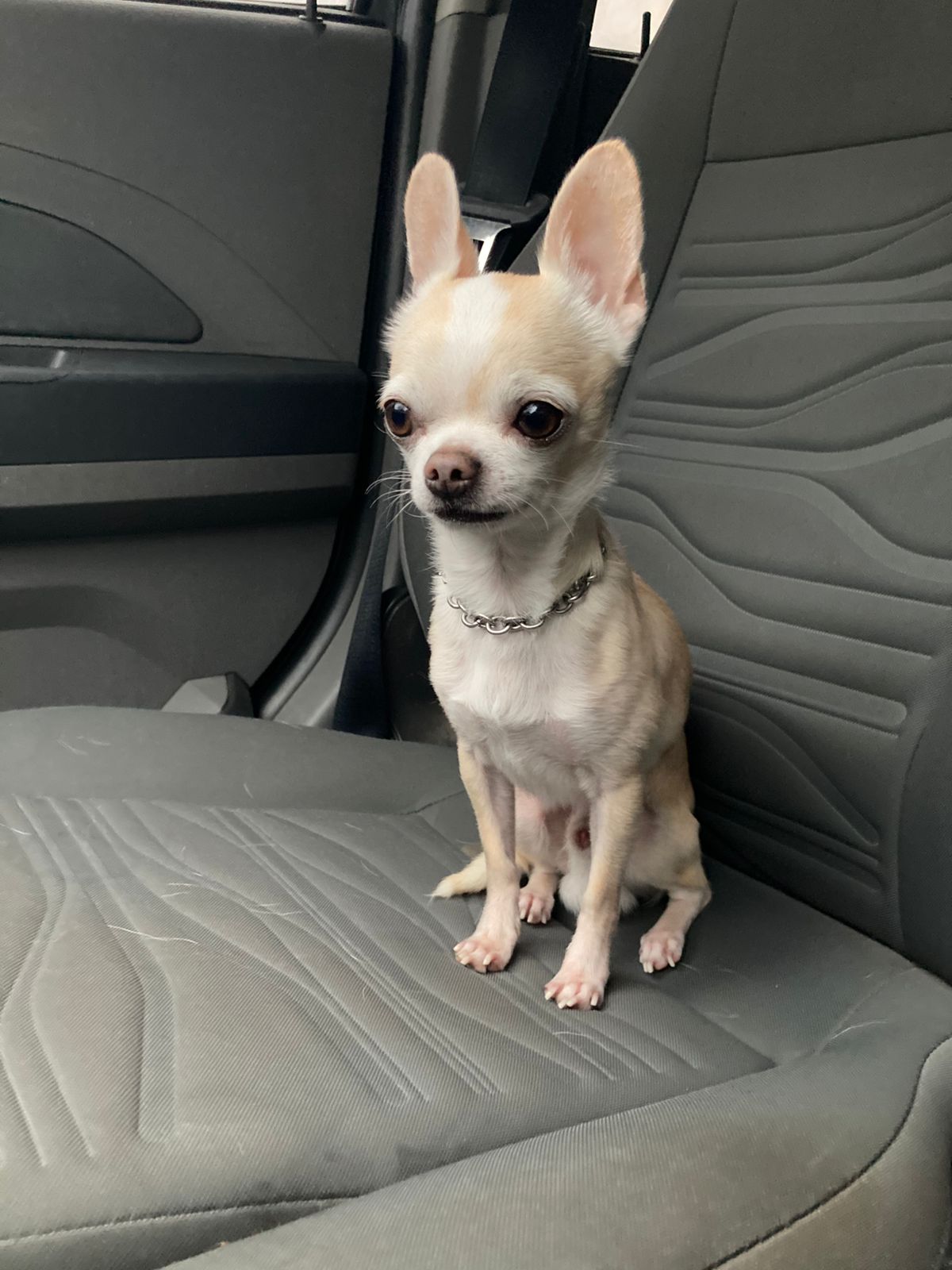
If your Chihuahua cries when you step out to take the trash, if you come home to chewed-up shoes, if the neighbors complain about barking that lasts for hours while you’re away, it’s not that they’re “spoiled” or love you “too much.” It is Chihuahua separation anxiety, a real behavioral disorder, painful for the dog, and far more common in this breed than in any other small dog. The good news: it’s treatable. The less good news: it takes patience, consistency, and understanding what causes it before you try to fix it.
When Absence Turns Into Panic
Separation anxiety is not sadness. It is not “they miss me.” It is a response of physiological panic when the dog senses their reference person is leaving. Cortisol rises, the heart races, the nervous system enters maximum alert. And unlike a bored dog, who may also break things, the Chihuahua with separation anxiety begins to deteriorate before you even close the door: they detect your pre-departure rituals (keys, coat, bag) and are already activated. When you leave, they do not process “they’re gone for a while,” they process “I’ve been abandoned, I don’t know if they’re coming back.”
Recent estimates in canine ethology suggest that between 14% and 20% of dogs suffer from clinical separation anxiety. In small, hyper-attached breeds like the Chihuahua, that number climbs toward 30% in some samples. And after the pandemic, professionals agree the real figure is probably higher, because many dogs adopted between 2020 and 2022 never learned to be alone.
What Does Separation Anxiety Look Like in a Chihuahua?
The symptoms combine vocalization, destruction, inappropriate elimination, and self-injury. They do not all show up together, but there are usually at least two. What sets this apart from “my dog is mischievous” is the pattern: it only happens when you are not there.
Typical signs in a Chihuahua with separation anxiety:
- Intense, prolonged vocalizing: barks, howls, whimpers lasting minutes or hours. The neighbors notice before you do.
- Focused destruction: they chew doors, frames, windows. Not the furniture in the middle of the living room, they target the exit routes, trying to escape and find you.
- Inappropriate elimination even when house-trained: they pee or poop indoors despite knowing to go outside. It is not disobedience, it is nervous loss of control.
- Excessive drooling: continuous slobber, wet patches on the bed or couch.
- Pacing: nervous, back and forth along the same route. A home camera shows it clearly.
- Self-injury: compulsive paw-licking, tail-biting, pulling out fur in specific spots. In severe cases sores appear.
- Loss of appetite: they leave food untouched until you return. They will not eat without you.
- Disproportionate greeting on return: jumping, crying, not calming for 5-10 minutes. They pee from excitement. That’s not “aw, they missed me,” it’s post-panic relief.
If your Chihuahua also follows you all over the house when you’re home (to the bathroom, the kitchen, seeking you out even to sleep), hyper-attachment is likely. I leave you our article on why your Chihuahua follows you everywhere, which goes deeper into that bond.
Is It Anxiety or Something Else?
Before labeling it, you need to rule out three things that look similar but call for different action. This table helps tell them apart:
| Behavior | Separation anxiety | Boredom | Incomplete training |
|---|---|---|---|
| When it happens | Only when you are out | Also when you are home | Only when you are home |
| Destruction focus | Doors, windows (escape routes) | Anything | Accessible things |
| Vocalizing | Sustained, anxious | Brief, intermittent | Asking for attention |
| Indoor pee/poop | Even when trained | After many hours | Hasn’t learned yet |
| Emotional state | Panic (panting, drool, shaking) | Unchanneled energy | Relaxed |
| Greeting on return | Disproportionate, won’t settle | Normal or brief euphoria | Normal |
If you’re still unsure, film your Chihuahua on your phone or a home camera while you leave. Fifteen to twenty minutes of video will tell you whether they’re in panic or simply looking for something to do.
Why Are Chihuahuas So Prone to It?
It’s no coincidence. The breed combines five factors that make it vulnerable:
- Genetic attachment to a single person. The Chihuahua, historically a dog of exclusive companionship, picks one reference human. That powerful bond is what makes owners fall in love, but also what triggers anxiety when that person disappears. I cover it from another angle in Chihuahua temperament.
- Sensory hypersensitivity. Their nervous system registers stimuli more intensely. A slammed door, a doorbell, a shadow in the window, all activate them more than a large dog.
- Small physical size means a more threatening world. An empty couch, a silent hallway, a motionless apartment can feel like a hostile environment when you’re not there to “make them feel safe.”
- A natural tendency toward alarm barking. They are genetically watchful. When left alone, everything is a possible alarm, and no one comes to confirm all is well.
- Human over-protection. The Chihuahua tends to be treated like a baby: carried in arms, sleeping in the bed, taken everywhere. That reinforces attachment to the point where separation becomes unthinkable for the dog. And here is where the vicious cycle appears: we care for them so much they never learn to be alone.
What Causes or Fuels Separation Anxiety?
Some causes come from the dog’s history, others we build without realizing. Most cases combine several.
Causes From the Dog’s History
- Early weaning: puppies separated from the mother before 8 weeks carry a higher risk.
- Abandonment or multiple homes: dogs adopted from shelters, especially if they passed through several caregivers.
- Specific trauma: a fire, a robbery, the owner’s hospitalization. The dog associates “you left, I almost died.”
- Abrupt changes: a move, a divorce, a new baby, the death of another pet, retirement or a return to work.
Causes We Humans Create Unintentionally
- Initial over-presence: during the first weeks the puppy is never alone. When the work routine returns, the change is traumatic.
- Exaggerated goodbyes and greetings: dramatic departures and reunions teach them absence is a giant event worthy of drama.
- Punishment on return: if you find destruction and scold them, the dog does not link the scolding to destruction from four hours ago. They link your return with danger, and the anxiety worsens.
- Crating without prior training: putting the dog in a crate for the first time right as you leave for work is guaranteed anxiety.
- Adopting a second dog as company: sometimes it helps, often it doesn’t. If the anxiety is tied to you specifically, the other dog doesn’t calm it, and sometimes it learns to be anxious too.
The 4 Golden Rules of Treatment
Before diving into the detailed plan, here are four pillars that move the needle more than any other detail. If you could only keep four things, these are them:
1. A Daily Walk, No Exceptions
This is rule number one and the most resisted. “It’s cold” and “they don’t want to go out” don’t count. A Chihuahua that hides when they see the leash, or trembles before the walk, is not asking to stay in, they are showing that the walk itself causes anxiety, and that needs work, not excuses. Going out discharges them, exposes them to the world, regulates their nervous system. Without a daily walk, every other step loses power. If your Chihuahua dreads the walk, bundle them up well (see whether Chihuahuas get cold) and start with tiny five-minute walks, but go out every single day.
2. Departure Drills: Wearing Out the Trigger
Grab your keys fifty times a day without leaving. Ring the doorbell. Put on your shoes. Open the door. The more ordinary you make each of those gestures, the less power they have to trigger your Chihuahua’s panic. When the mental wiring “keys = abandonment” weakens, the real departure stops being an anticipated trauma.
3. Sniffing and Chewing
Sniffing is the most calming system in the canine brain. Snuffle mats, toys with hidden treats, walks where you let them sniff everything they want, search rugs. Add safe chewing (a natural bone sized for them, a sturdy chew toy). Twenty minutes of sniffing or chewing equals, in emotional discharge, an hour of active play.
4. Emotional Detachment: The Hardest
This is the toughest to apply for those of us who love these dogs so much. The over-attachment we celebrate on social media harms them. A Chihuahua sleeping on your neck every night, following you to the bathroom, sitting on your lap while you work, are not proof of mutual love, they are involuntary training that makes your absence catastrophic. Giving them autonomy, leaving them in their bed while you have dinner, keeping your own space, is healthier for them, not less loving. Autonomy is taught; no one is born knowing how to be alone.
Step-by-Step Treatment Plan
The four rules above are the framework. The numbered plan below is the concrete mechanics for putting them into practice, in order, with consistency. If your case is mild to moderate, you can work it at home over 4-8 weeks. If it’s severe (self-injury, dangerous escape attempts, physical harm), jump to point 9.
- Identify the pre-departure triggers. Note what you do in the 30 minutes before leaving: grabbing keys, putting on shoes, opening the closet. Pinpoint which ones activate your Chihuahua.
- Desensitize the triggers. For a week, perform those gestures without leaving. Grab the keys and sit on the couch. Put on your shoes and watch Netflix.
- Practice very short absences, while present. Close a door between you and the dog for 30 seconds. Return without greeting. Then 1 minute. Then 2. Climb in small steps.
- Move to mini real absences. Leave the house, wait 30 seconds outside, return in silence. Do it 3 or 4 times a day. Build up to 2, 5, 10, 20 minutes.
- Boring goodbyes and greetings. Five minutes before leaving, don’t talk to or look at them. Leave without a word. On return, ignore them until they’re calm (1-3 minutes), then greet them with normal affection.
- Tire them out before leaving. 15-20 minutes of active play or a short walk before you go. A tired Chihuahua tolerates solitude better.
- Environmental enrichment for alone time. A frozen stuffed Kong, puzzle feeders, treat-dispensing toys. Reserve those toys only for your departures: they become the reward of your absence.
- Scent and atmosphere. Leave a worn T-shirt on their bed. Soft music or TV with human voices at low volume. A canine appeasing pheromone diffuser can help; it is safe and sold at vet clinics.
- Severe cases: professional help. If your Chihuahua self-injures, tries to escape by destroying doors, vomits from stress, or the behavior does not ease after 4-6 weeks of consistent work, consult a veterinary behaviorist or a trainer specialized in behavior modification. In some cases anti-anxiety medication is prescribed (fluoxetine, clomipramine, sertraline) for 3-6 months, always with a veterinary prescription and combined with behavioral therapy. Medication alone does not cure; alone it is a crutch. Combined, it speeds up learning.
What NOT to Do
This is as important as what you should:
- Do not punish on return when you find destruction. The dog doesn’t understand retroactive punishment and links your return with fear. It worsens the anxiety.
- Do not crate them without prior training. If they need a crate, it must be a safe refuge trained over weeks, not an improvised punishment cell.
- Do not “toughen them up.” “Let them cry, they’ll get used to it” doesn’t work with real anxiety. The dog doesn’t get used to it, they get used to living in panic, and that destroys their emotional and physical health.
- Do not ignore physical symptoms. If they vomit, stop eating for days, hurt their paws, or lose weight, it’s not just “behavior,” it’s chronic stress and needs veterinary evaluation.
- Do not adopt another dog as a magic fix. It may help if the dog needs company, but if their anxiety is toward you, it won’t cure it. And if the new one is anxious too, the problems double.
How Long Does It Take to Improve?
It depends heavily on severity and the consistency of the work. As an honest reference:
- Mild cases (brief barking, some occasional pee): visible improvement in 2 to 4 weeks with desensitization.
- Moderate cases (destruction of accessible objects, sustained vocalizing, inappropriate elimination): 2 to 3 months of daily work.
- Severe cases (self-injury, escape attempts, extreme panic) with medication and a behaviorist: 6 months to a year. The medication is gradually withdrawn as the dog consolidates new patterns.
Consistency matters more than intensity. Better 15 minutes a day for 60 days than one whole weekend followed by nothing.
Romeo, Lorenzo, and the Small Big Lesson of the Beginning
When Romeo Carlitos came home years ago, I did everything wrong the first month. I wouldn’t put him down for a minute, carried him everywhere, let him sleep on my chest. When I went back to work after three weeks, he cried for four straight hours the first day, chewed the base of the door, peed on the bed. And I, trying to “comfort him,” would throw myself on the floor with him in my arms in a twenty-minute emotional greeting. It was love without information: everything I did amplified his anxiety.
It took me six months, with a dog trainer and a lot of desensitization work, to stabilize him. Today Romeo, my cream apple-head senior, can stay six or eight hours calmly in his cave with a stuffed Kong, without a single bark. When I arrive he greets me calmly and goes back to his spot.
With Lorenzo Pablito, the young fawn who joined later, I did everything right from the start: controlled short absences from the first week, calm goodbyes, reinforcing being alone. He never had anxiety. The difference isn’t that one is “stronger,” it’s that the second learned from puppyhood to trust the routine while the first learned to expect disaster. That learning, either way, gets etched into the dog’s nervous system.
If your Chihuahua is suffering when you leave right now, two things. First: you are not alone, and it is not your fault. Second: it can get better, almost always, with patience and consistency. Start today with step one. And above all, when you come home, breathe deep, no drama. Your Chihuahua will learn that your absence and return are normal events, not earthquakes, and that’s the deepest freedom you can give them.
This article is informational and does not replace veterinary advice. It is based on published veterinary behavioral literature and does not substitute consultation with a veterinary behaviorist. Every case is unique. If you doubt the severity, see the vet first.
Written by Belen Salto, who shares her life with Romeo and Lorenzo, two Chihuahuas. · Ver en español