Blue Chihuahua: Genetics, Health and the Rare Color Price Tag
What makes a blue Chihuahua blue: the dilution gene, blue vs blue and tan, nose and eye color, color dilution alopecia and why a rare color upcharge is a red flag.
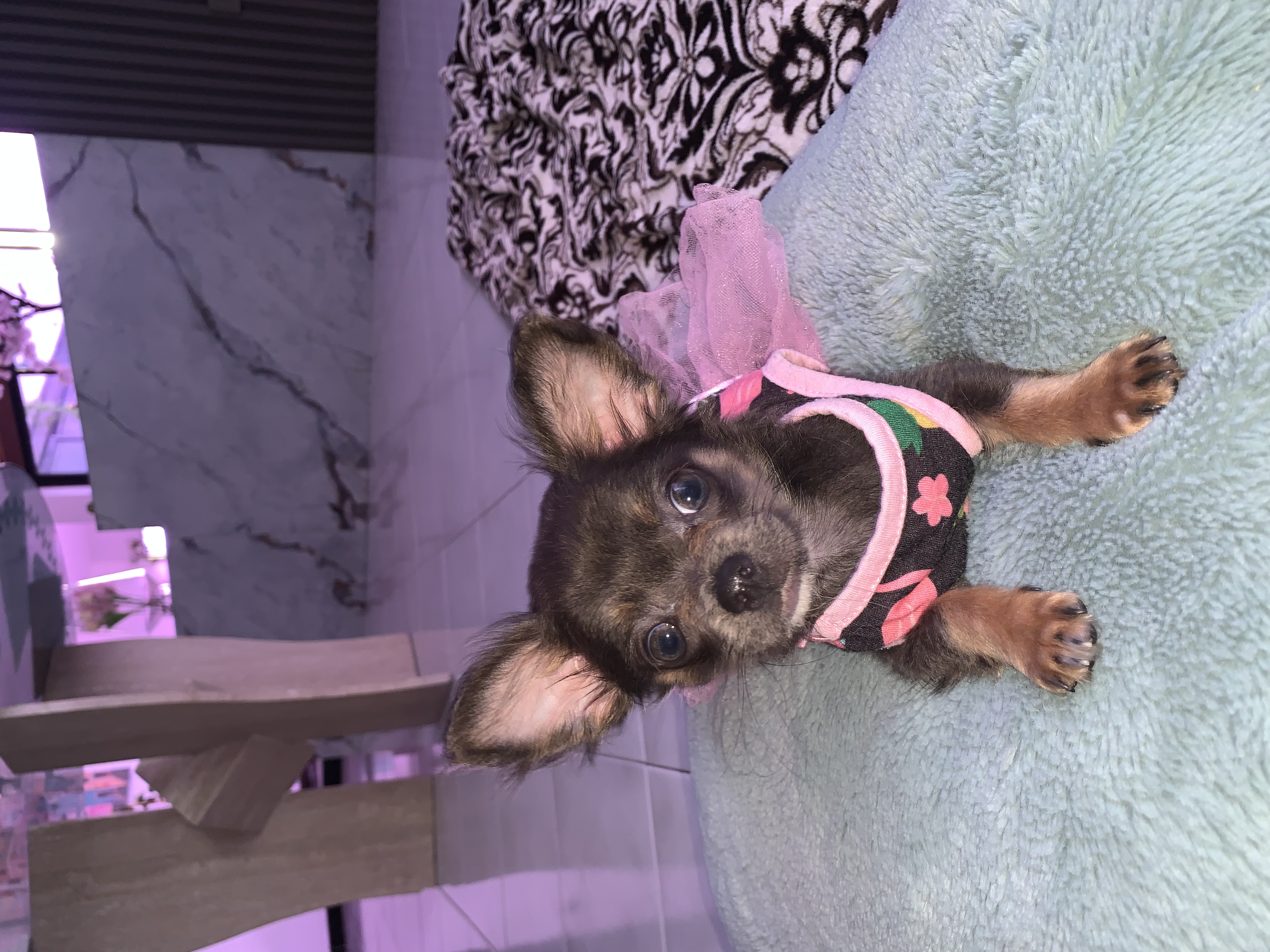
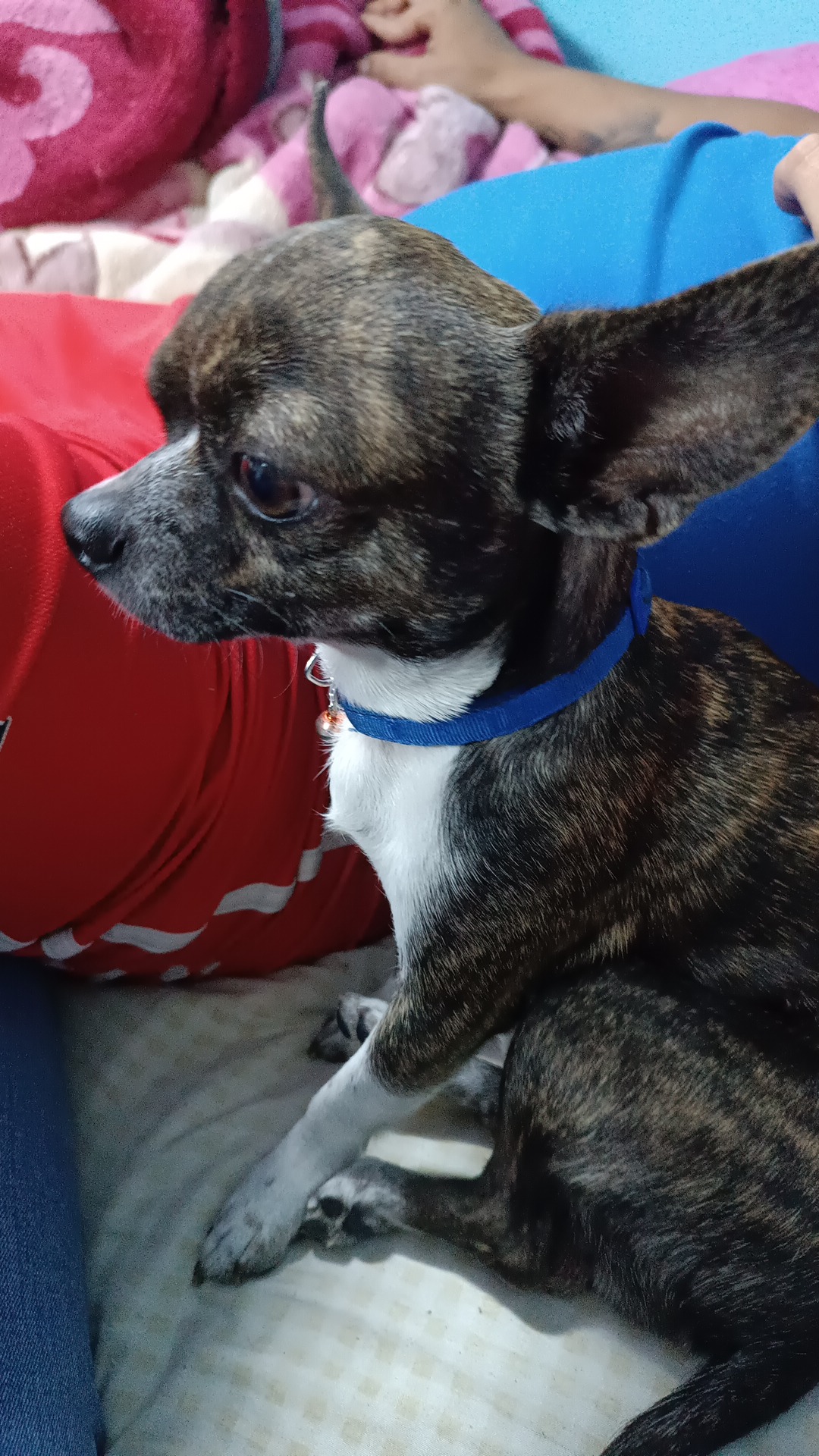
A blue Chihuahua is one of the colors that makes people stop in the street and ask what breed they are looking at. The coat is not blue at all, of course: it is a soft slate gray, sometimes silvery, sometimes closer to charcoal, with a matching gray nose. What creates it is a single recessive gene that lightens black pigment, and that same gene explains both why blue puppies are uncommon and why their coats deserve a little extra attention.
In our big guide to Chihuahua colors blue gets one short section. Here we go deeper: the genetics, how to tell blue from blue and tan, what the nose and eyes should look like, the skin condition linked to dilution, and the sales pitch you should be skeptical of.
A gray coat built on black pigment
Every blue Chihuahua is, underneath, a black dog. Dogs make two kinds of pigment, a dark one (black or brown) and a light one (red, fawn or cream). A blue dog produces the dark pigment normally, but a gene called MLPH changes how the pigment granules are packed into each hair. The granules clump instead of spreading evenly, light bounces off the hair differently, and black reads as gray-blue.
Geneticists call this the D locus, short for dilution, and it works as a classic recessive trait:
- D/D: no dilution. The dog shows full-strength color.
- D/d: no visible dilution, but the dog is a carrier and passes the dilute variant to roughly half its puppies.
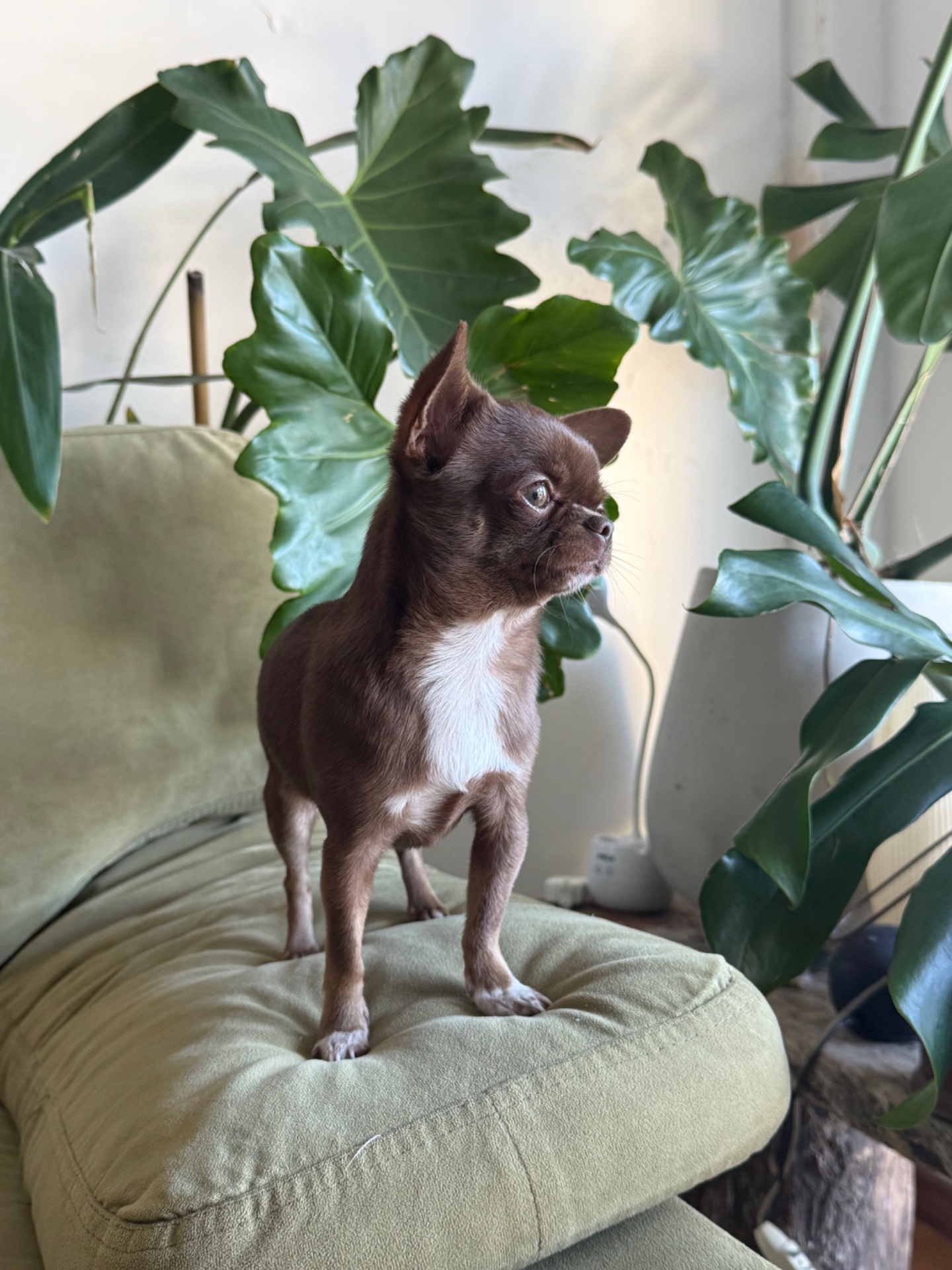
- d/d: diluted. Black becomes blue, and chocolate becomes the paler shade called lilac or isabella.
A 2007 study in the Journal of Heredity traced canine coat dilution to a variant in the MLPH gene, and later work found more than one dilute variant in dogs. The UC Davis Veterinary Genetics Laboratory now offers a cheek-swab test that checks for the known variants, which is useful for breeders and for the merely curious.
The practical upshot: two non-blue parents can have a blue puppy if both happen to carry one hidden copy. On average, about one puppy in four from two carriers will be blue. That is also why blue shows up unexpectedly in litters from cream or fawn parents.
Blue, blue and tan, blue merle: what is the difference?
“Blue” gets stuck on several different coats, and sellers do not always use the word carefully.
| Coat | What it is | How to recognize it |
|---|---|---|
| Solid blue | Diluted black over the whole body | Even gray from nose to tail, sometimes with a little white on the chest |
| Blue and tan | Diluted black and tan | Gray body with tan points on the eyebrows, cheeks, chest and legs |
| Blue and white | Diluted black with white markings | Gray patches on a white base, or white on the chest, feet and face |
| Blue fawn | Fawn dog with a blue mask | Warm fawn body, grayish muzzle and ear tips |
| Blue merle | The merle pattern laid over black | Irregular gray and black patches, often with blue or odd-colored eyes |
| Lilac (isabella) | Diluted chocolate | Pale gray-brown with a lavender tint, lighter nose |
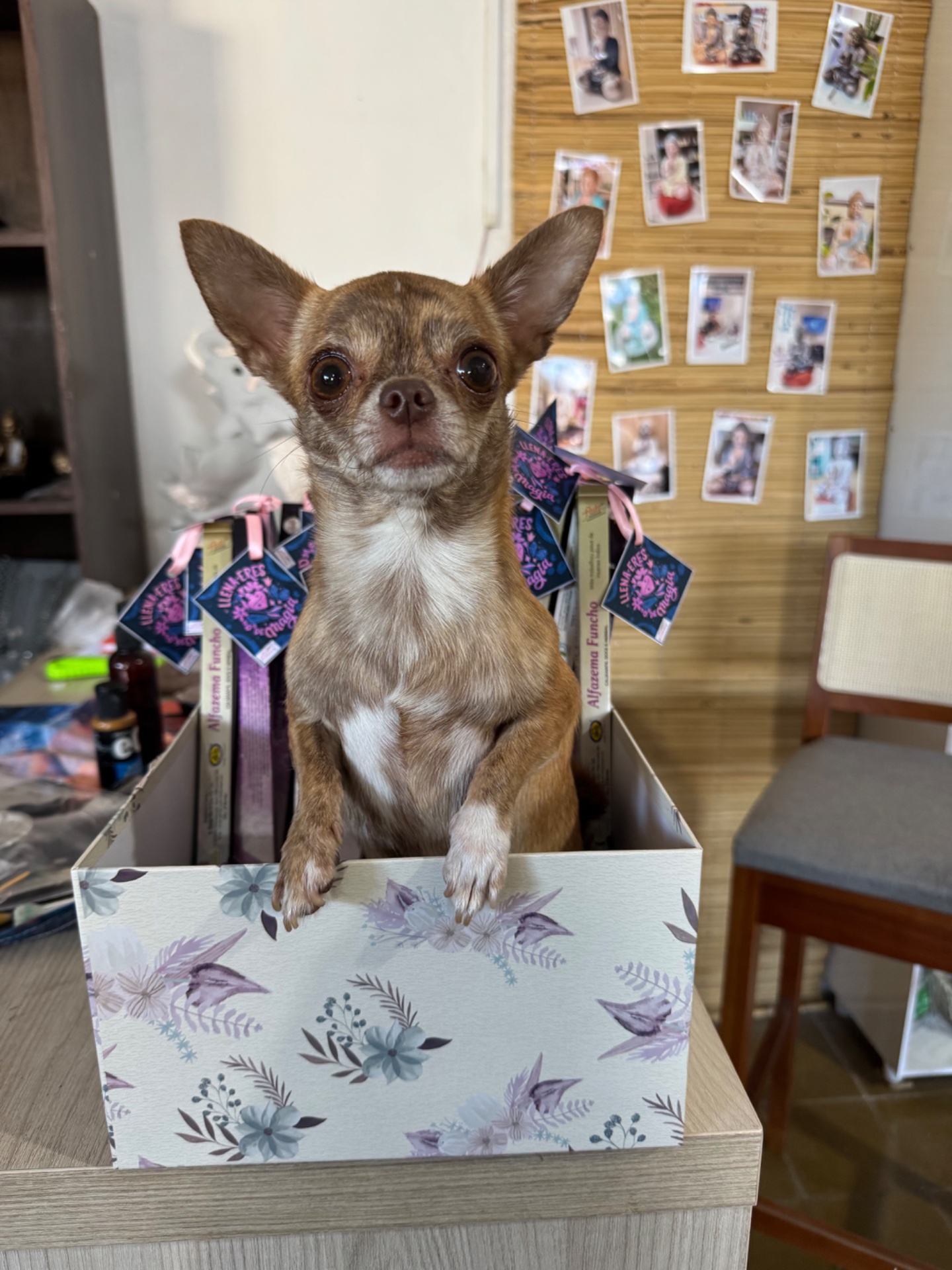
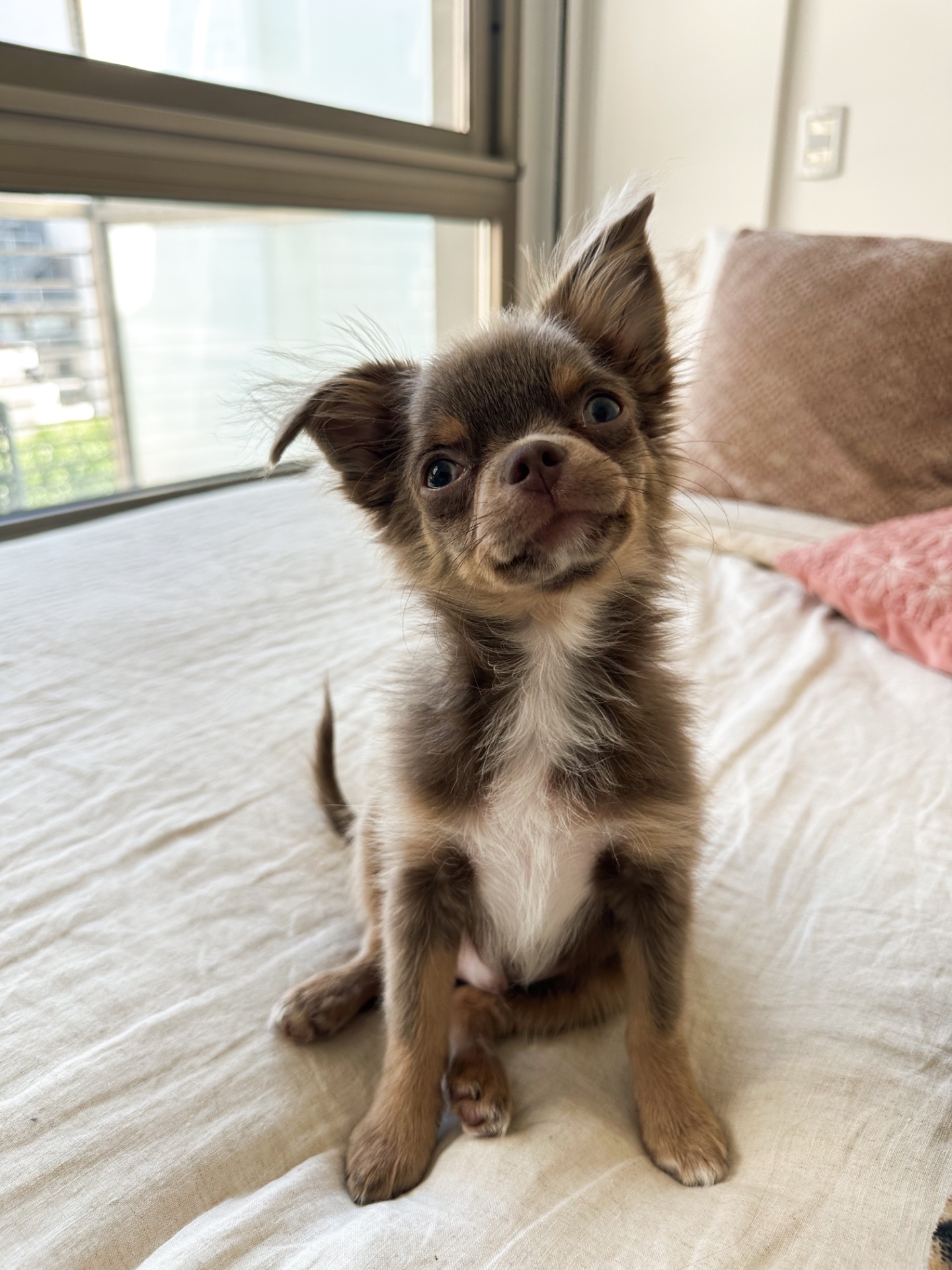
Blue and tan is the one you will meet most often. It is the diluted version of black and tan, the classic pattern of a dark body with rust markings, and the dog in the photo at the top of this page, Chiky, is a lovely long-coated example.
Blue merle is a completely different thing. Merle is a pattern gene with its own health rules, especially around breeding two merles together, and it has nothing to do with the dilution gene. If a “blue” puppy has marbled patches or a blue eye, read our guide to the merle Chihuahua before you go any further.
Nose and eye color: what is normal?
This is where blue dogs confuse people, because the nose is not black. The official AKC breed standard for the Chihuahua says the nose should be black or self-colored, and it specifically names blues, chocolates and moles as dogs whose noses are self-colored. In plain language, a blue dog has a blue-gray nose and blue-gray eye rims and lips, and that is correct.
Eyes are a different matter. The same standard asks for eyes that are “luminous dark or luminous ruby” and treats blue eyes as a serious fault in the show ring. Coat color and eye color are separate traits, so a blue coat does not mean blue eyes. If a puppy has a gray coat and blue eyes, or one blue eye and one brown, it is worth asking whether merle is in the background.
Can the AKC register a blue Chihuahua?
Yes, and the details are a little more interesting than most websites suggest. The written standard is short on this point: “Any color - Solid, marked or splashed.” No color is a disqualification.
The AKC also keeps a registration color list on its Chihuahua breed page, split into “standard” and “alternate” colors. When we checked it:
- Blue and Tan appears among the standard colors, alongside Black, Black and Tan, Chocolate, Cream, Fawn and Red.
- Blue, Blue and White, Blue Brindled Fawn and Chocolate Blue appear among the alternate colors.
- Blue Mask appears among the alternate markings.
“Alternate” does not mean rejected. It is a registry category for less typical shades, and a solid blue Chihuahua can still be registered and can still be the best dog in the room.
Is a blue Chihuahua rare, and is it worth paying more for?
Blue is less common than cream, fawn or black, simply because it needs a recessive gene from both sides. That scarcity is exactly what some sellers use to justify a “rare color” upcharge, sometimes a large one.
Here is the honest view. A color premium buys you a color. It tells you nothing about:
- Whether the parents were screened for the problems that matter in this breed, like kneecaps, heart and eyes.
- Whether the breeder is doubling up on dilution, or worse, mixing merle into the line to produce flashy coats.
- Whether the puppy was raised in a home or in a kennel shed.
Red flags that usually travel with a blue upcharge:
- Ads that lead with the color and say little about health or temperament.
- Words like “teacup,” “micro” or “exotic” next to the color.
- A breeder who always seems to have blue or lilac puppies available.
- No proof of health testing for either parent.
If the budget question is what brought you here, our guide to how much a Chihuahua costs breaks down what a fair price actually covers. And blue Chihuahuas do turn up in shelters and rescues, where nobody charges extra for the color.
Color dilution alopecia: the health question
The one health condition directly tied to blue coats is color dilution alopecia (CDA). The MSD Veterinary Manual’s chapter on hereditary hair loss describes it as a follicle disorder in which dogs are born with a normal coat and then, before they reach a year of age, start to develop progressive hair thinning and inflammation of the hair follicles confined to the diluted areas. The same gene variant that makes the coat blue is the predisposing factor.
A few things worth knowing:
- Not every blue dog develops it. The gene raises the risk; it does not guarantee the condition.
- It is cosmetic. The manual is clear that CDA does not affect the dog’s overall health.
- The skin still needs care. Thinning coats often come with dry skin, scaling and superficial skin infections, which do need managing.
- It is a diagnosis of exclusion. Your vet will rule out allergies, parasites and hormonal causes first, and a skin biopsy is what confirms it.
Signs to watch for in a young blue Chihuahua:
| Sign | What it can look like |
|---|---|
| Thinning coat | Patchy or “moth-eaten” areas on the back and flanks |
| Brittle hair | Hairs that break off short and feel coarse |
| Flaky skin | Dandruff-like scaling in the gray areas |
| Small bumps or crusts | Signs of a superficial skin infection |
| Uneven coat on blue and tan dogs | Gray areas thin while the tan points stay full |
Because CDA is lifelong, care is about comfort rather than cure: gentle shampoos your vet recommends, prompt treatment of any skin infection and protection from cold and sun on the thinner areas. If your dog is itchy as well, our guide to Chihuahua itching and scratching helps sort out the more common causes, and Chihuahua hair loss maps bald spots by where they appear.
This article is informational and does not replace veterinary advice. Any patchy hair loss in a young Chihuahua deserves a vet visit, because several conditions look alike at first.
Caring for a blue coat day to day
Day to day, a blue Chihuahua needs the same basics as any other: daily tooth brushing, a lean weight, a harness instead of a collar and protection from the cold. A few small adjustments help the coat:
- Brush gently with a soft brush or rubber mitt, especially on smooth coats where the hair is fine.
- Bathe only when needed, with a mild dog shampoo, and rinse well. Over-washing dries the skin.
- Use a sweater on cold days. A thin gray coat offers even less insulation than usual, and our guide on whether Chihuahuas get cold explains why that matters for small dogs.
- Check the coat monthly during the first year, in good light, so any thinning is caught early.
If you are still deciding which kind of Chihuahua suits you, color is the last thing to choose. Our page on the types of Chihuahua covers head shape and coat length, which shape daily life far more than shade does.
At home neither of my dogs is blue: Romeo is a 4-year-old cream apple head and Lorenzo is a 2-year-old fawn, the two most ordinary colors in the breed. What I see through the club, though, is that blue Chihuahuas like Chiky are loved for exactly the same reasons as every other Chihuahua: the attitude, the loyalty and the way they choose their person.
So if a blue puppy catches your eye, enjoy the color, and then ask the boring questions about health, parents and temperament anyway. The coat will be gray for life; the rest is what you will actually live with.