Chihuahua Dementia: Signs, Sundowning and How to Help a Senior Dog
Chihuahua dementia, or canine cognitive dysfunction: the DISHAA signs, when it starts, sundowning at night, treatments to ask your vet about and quality of life.
Chihuahua dementia usually starts so quietly that owners only recognize it in hindsight. The dog who once ran to the door now stands in the hallway as if he’s forgotten why he came. He sleeps all afternoon, then paces and whimpers at 2 a.m. He has an accident on the rug after years of perfect house training. Vets call it canine cognitive dysfunction, and while it can’t be cured, there’s a lot you can do once you know what you’re looking at.
This article is for information only and does not replace a veterinary consultation. Many conditions look like dementia in an old dog, so any change in behavior deserves a checkup.
What is dementia in a Chihuahua?
Canine cognitive dysfunction syndrome (CDS) is an age-related brain disease similar in some ways to Alzheimer’s in people. It causes gradual confusion, changes in sleep and social behavior, and lost house training. It usually appears from about age 9 onward. There’s no cure, but diet, enrichment and medication can slow it down.
According to Cornell University’s Riney Canine Health Center, the disease comes from degenerative changes in the aging brain, including a buildup of a protein called beta-amyloid that damages nerve cells. Cornell also notes that it’s probably underdiagnosed, because owners tend to accept the changes as normal aging.
Why Chihuahua owners should know about it
We haven’t found evidence that Chihuahuas are more prone to cognitive dysfunction than other breeds. What sets them apart is time. The AKC lists a lifespan of 14 to 16 years for the breed, so a typical Chihuahua spends five years or more in the age range where CDS shows up. If you’re not sure where your dog falls, our Chihuahua age calculator converts his age into human years on the small-breed scale.
What are the signs of dementia in a Chihuahua?
Vets often organize the signs with the acronym DISHAA. The version recommended by Cornell, developed by veterinary behaviorist Gary Landsberg, scores each behavior on its checklist from 0 (no signs) to 3 (severe). Here’s what each letter can look like in a small senior dog:
| Letter | Category | What it can look like in a Chihuahua |
|---|---|---|
| D | Disorientation | Getting stuck behind the couch or in a corner, staring at walls, waiting at the wrong side of a door, not recognizing familiar people |
| I | Interactions | No longer greeting you, ignoring the other dog, or becoming suddenly clingy and following you from room to room |
| S | Sleep and wake cycle | Sleeping all day, then pacing, whining or barking at night |
| H | House soiling | Peeing or pooping indoors, sometimes right after coming in from outside |
| A | Activity | Aimless wandering or circling, or the opposite: less interest in toys, walks and food puzzles |
| A | Anxiety | New fear of being alone, of noises or of visitors, restlessness in unfamiliar places |
Cornell’s CDS page also lists learning changes: forgetting cues the dog has known for years, or struggling to learn anything new.
Cornell’s scoring guide puts a total of 4 to 15 as mild, 16 to 33 as moderate and more than 33 as severe cognitive dysfunction. It’s a tool for owners, not a diagnosis, but scoring your dog once a month gives your vet something concrete to work with.
At what age does canine cognitive dysfunction start?
Cornell says dogs may begin to develop CDS around nine years of age or older. The early signs are mild and easy to miss: a little more sleep, a little less interest in greeting you. In most dogs the changes build over months to years rather than weeks.
That gradual pace is a useful clue. A sudden change (confusion that appears overnight, a head tilt, circling to one side, falling over) points to something else, such as vestibular disease, and needs a vet visit that day.
Why does my senior Chihuahua get worse at night?
Many dogs with cognitive dysfunction show what’s called sundowning: signs that get worse in the evening and at night. Cornell’s page on senior dog dementia describes it as worsening symptoms and irritability after dark. A Chihuahua who seems mostly fine at lunchtime may pace, pant, whine or bark for hours once the house goes quiet.
What helps with sundowning:
- A short extra walk or sniffing session right before bed.
- The same bedtime every night, with the same last potty trip and the same bed.
- A night light near the bed, since confusion often gets worse in the dark.
- A small, safe sleeping area, such as a pen or a crate he already likes, so he can’t wander and get stuck.
- More activity during the day, so he isn’t sleeping 18 hours and ready to party at midnight.
Our guide for when a Chihuahua won’t sleep at night has a full evening routine. It was written for all ages, but most of it works for seniors too.
Is it dementia, or something else?
This is the most important step, because several treatable problems look exactly like cognitive decline in an old dog. Cornell recommends blood and urine tests to rule out other conditions, and sometimes an MRI.
| What you see | Could also be | Why it matters |
|---|---|---|
| Accidents in the house | Bladder infection, kidney disease, diabetes, Cushing’s syndrome | All are treatable, and some cause drinking and peeing more |
| Restless nights, panting | Pain from arthritis, bad teeth or a slipped kneecap | Pain relief can transform sleep |
| Not responding when called | Hearing loss | He may not be ignoring you; he may not hear you |
| Bumping into things, getting stuck | Vision loss, cataracts | Blind dogs adapt well if the furniture stays put |
| Sudden confusion, head tilt, falling | Vestibular syndrome, stroke, brain tumor | Sudden signs always need a same-day vet visit |
| Pacing and coughing at night | Heart disease | A common senior problem in this breed |
If you’re not sure how urgent a new sign is, our Chihuahua symptom checker helps you sort “call the vet today” from “mention it at the next checkup.”
How do vets diagnose and treat it?
There’s no single test. Diagnosis rests on the signs you report plus a physical exam and tests to exclude everything in the table above. Bring your DISHAA notes, and if you can, a short phone video of the night pacing or the getting-stuck behavior. Vets rarely get to see it in the exam room.
The MSD Veterinary Manual puts the goal simply: physical and mental stimulation can slow the signs, and medication and a special diet are also available. These can delay progression, but they won’t reverse it.
Treatment options to discuss with your vet
| Option | What it is | Notes from the sources |
|---|---|---|
| Selegiline (sold as Anipryl) | A prescription drug approved for cognitive dysfunction in North America | Cornell notes that some owners see improvement within three weeks, while many dogs take about six weeks |
| Prescription brain-support diets | Hill’s b/d, Purina Pro Plan NeuroCare, Royal Canin Mature Consult, named by Cornell | Rich in antioxidants and fatty acids. Your vet will check the calories suit a dog this small |
| Supplements | Products such as Senilife and Aktivait, and SAMe-based supplements, all mentioned by Cornell | Ask your vet before starting any of them |
| Antioxidants, omega-3s, MCT oil | Additions considered largely safe | Studies are limited |
| Melatonin | Sometimes used for night-time restlessness | Few studies. Discuss the dose with your vet first |
| Medication for anxiety | Prescribed for specific problems such as severe night anxiety | Chosen case by case |
Never combine supplements and prescription drugs on your own. In a dog that weighs 5 or 6 pounds, doses are tiny, and some medications don’t mix.
What helps at home
Day-to-day management matters as much as anything a vet prescribes. Most of this comes from Cornell’s advice for senior dogs with dementia, adapted to a very small dog:
- Keep the routine identical. Same meal times, same walk times, same bowl and bed in the same place.
- Block the traps. Chihuahuas squeeze behind sofas and under beds, then can’t work out how to get back. Close off gaps and stairs.
- Prevent falls. Use a ramp or pet stairs for the couch and bed, or keep him on the floor. A confused 5-pound dog can be badly hurt by a fall.
- Keep his brain busy: sniffing walks, scent games, snuffle mats and food puzzles, plus very simple tricks he already knows.
- Approach gently. If his hearing is going, speak as you come closer, or tap the floor so he feels you coming rather than being startled awake.
- Make house training easy. Extra daytime potty breaks, puppy pads near his bed, and dog diapers if needed, changed often to protect his skin.
- Keep him warm. Older Chihuahuas lose heat quickly, and discomfort makes restlessness worse.
- Update his microchip and tags. Confused dogs can slip out and get lost.
- See the vet every six months, as Cornell recommends for seniors, and do quick hands-on checks at home in between.
Our guide to senior Chihuahua care covers the other changes that come with age, from food to teeth to the heart.
How fast does dementia progress?
Cornell describes CDS as slowly progressive. Dogs whose signs are caught early and managed with diet, enrichment and medication often keep a good quality of life for a long time. Dogs who are already severely affected, or who have other serious medical problems, tend to respond less well.
When is it time to say goodbye?
No article can answer this for you, but a few questions help. Does he still recognize you and enjoy something every day, whether food, a sunny spot or your lap? Is he eating and drinking? Are the nights distressing for him, not just tiring for you, despite treatment? When the bad days clearly outnumber the good ones, your vet can walk you through a quality-of-life assessment. For many very old Chihuahuas, a gentle decision made in time is the last act of care. If you want to understand what else tends to affect dogs in their last years, see what Chihuahuas usually die from.
The oldest faces in the club
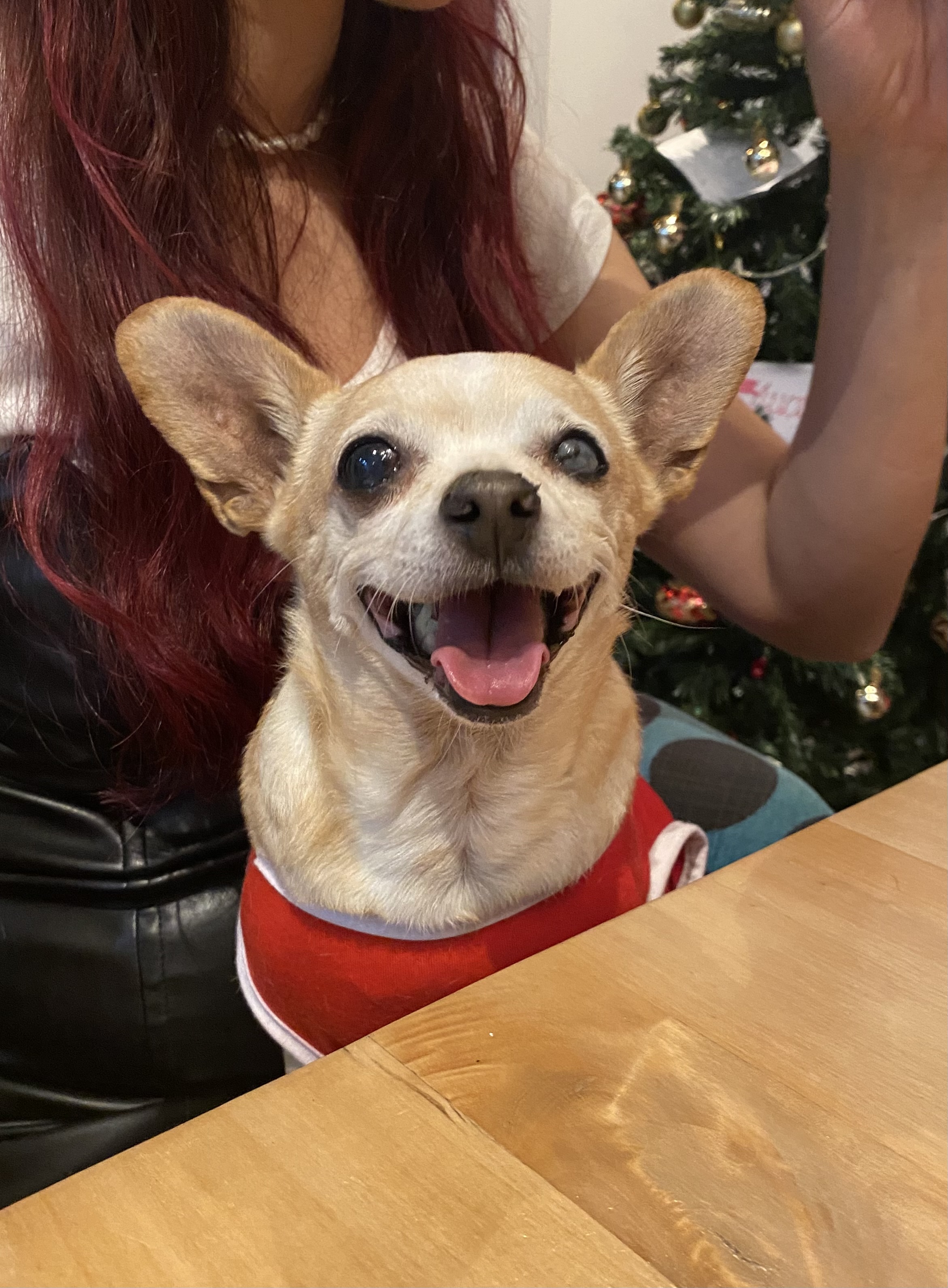
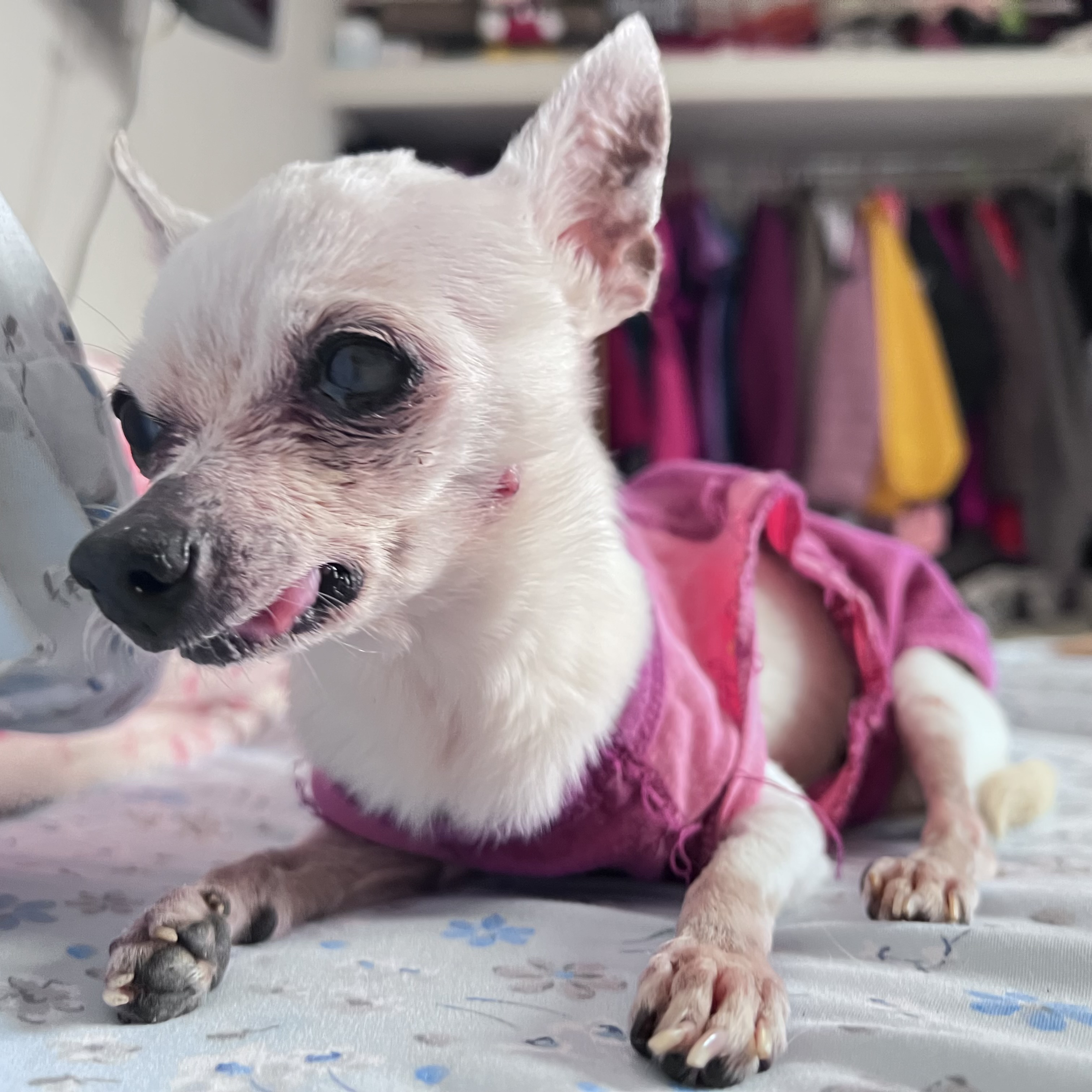
On the cover is Kiki’s Michelle from Monterrey, Mexico, born in April 2008 and one of the oldest members of our club. Dogs like her are a reminder of how long a Chihuahua’s life can be, and why the senior years deserve a plan of their own.
At home, we’re at the other end of the timeline. Romeo is 4, calm and sleepy. Lorenzo is 2 and alert to everything. Neither is anywhere near the age where cognitive dysfunction appears, so for us this is a guide to keep for later, and one we hope reaches the owners who need it now.