What Do Chihuahuas Usually Die From? Causes of Death by Age
What do Chihuahuas usually die from? Vet records point to heart disease, airway problems and accidents. The causes by life stage, and how to prevent each one.

What do Chihuahuas usually die from? It’s a question most owners only type into a search bar late at night, after a vet visit that left them uneasy, or once their dog’s muzzle has gone white. The honest answer is that a few causes account for a large share of deaths in this breed, they change with age, and more of them can be delayed or prevented than people expect.
This guide goes through what the best available data says, what’s behind each cause, and what you can actually do at every stage of your Chihuahua’s life.
This article is for information only and is not a substitute for advice from your veterinarian. If your Chihuahua is unwell right now, call your vet or an emergency clinic.
The short answer, from real vet records
Most of what you’ll read online about Chihuahua deaths comes from breed lists and guesses. The most solid evidence comes from a different place: the VetCompass program at the Royal Veterinary College (RVC) in London, which studies the anonymized clinical records of dogs seen at everyday vet practices across the UK.
In 2020, RVC researchers published the largest study to date on Chihuahua health using primary-care records, covering 11,647 Chihuahuas seen during 2016. Of the dogs that died that year with a recorded cause, the leading groups were:
- Heart disease, 18.8%
- Lower respiratory tract disorders (windpipe, airways and lungs), 16.3%
- Traumatic injury, 13.8%
- Brain disorders, 11.3%
Those four account for roughly six in ten recorded deaths. Everything else, from gut problems to kidney disease to cancer, came in well below.
What does the research actually say about Chihuahua deaths?
Here is the full picture from that study, with the groups that appeared more than once:
| Cause of death (grouped) | Share of recorded deaths |
|---|---|
| Heart disease | 18.8% |
| Lower respiratory tract disorder | 16.3% |
| Traumatic injury | 13.8% |
| Brain disorder | 11.3% |
| Enteropathy (intestinal disease) | 6.3% |
| Poor quality of life | 5.0% |
| Renal (kidney) disease | 3.8% |
| Behavior, endocrine, mass-associated and urinary disorders | 2.5% each |
Before treating those numbers as gospel, there are three caveats the researchers themselves point out, and they matter:
- The sample of deaths was small. There were 102 deaths in the year studied, and the cause was recorded for 80 of them. That’s why each percentage carries a wide margin of error.
- The population was young. Chihuahua ownership in the UK had boomed, so the typical dog in the study was under 3. A young population skews deaths toward accidents and early-life problems, and away from the diseases of old age.
- The median age at death, 8.2 years, is biased low for the same reason. The authors note that the Kennel Club reports a lifespan of over 12 years for the breed, and dogs in the study lived as long as 17.
Two more details from the same paper are worth knowing. About two in three deaths were by euthanasia, which tells you that most Chihuahuas don’t die suddenly: they decline from an illness, and the family and vet make a decision together. And females in that sample outlived males by a wide margin (10.2 versus 6.9 years), a gap the authors say is likely weighted toward early-life deaths and needs follow-up as the population ages.
The heart finding isn’t a UK quirk, either. The RVC authors cite a large analysis of deaths at US veterinary teaching hospitals in which Chihuahuas had the third-highest proportion of cardiovascular deaths out of 82 breeds.
Causes of death by life stage
No study ranks causes of death for Chihuahuas year by year, so the table below combines the VetCompass findings with the breed’s well-known weak spots. Read it as “what weighs most at this age”, not as exact odds.
| Life stage | Main causes of death | What drives them |
|---|---|---|
| Puppy (0 to 12 months) | Hypoglycemia, infections, congenital defects, accidents | Tiny energy reserves, incomplete vaccinations, inherited heart or brain problems, being dropped or stepped on |
| Adult (1 to 7 years) | Trauma, airway disease, neurological disorders | Falls, larger dogs, cars, collapsing trachea, seizures and hydrocephalus |
| Senior (8 years and up) | Heart disease, kidney disease, cancer, airway disease, general decline | Mitral valve degeneration, aging kidneys, years of dental infection, quality-of-life decisions |
The same study shows how fast the picture changes after 7. In Chihuahuas older than 7, periodontal disease was recorded in about 34% of dogs in a single year, and a heart murmur in about 12%, the second most common finding in that age group. In dogs under 2, a murmur was almost never recorded.
The main causes, one by one
Heart disease: mitral valve degeneration
In older small dogs, the heart problem behind most deaths is degenerative mitral valve disease. The valve between the two left chambers thickens with age and stops sealing, so blood leaks backward with every beat. According to the MSD Veterinary Manual, degenerative valve disease accounts for about 75% of heart disease in dogs, is especially common in small breeds, and shows no signs early on beyond a murmur the vet can hear.
The reassuring part: the same source notes that only about 30% of dogs with mitral regurgitation go on to develop heart failure. Caught early, the disease can be staged and treated, which is why the murmur matters so much. Stages, medication and how to count sleeping breaths at home are in our guide to heart murmurs and mitral valve disease.
Chihuahuas are also predisposed to two congenital heart defects, patent ductus arteriosus and pulmonic stenosis, which can show up as a murmur in a puppy. Any murmur in a young Chihuahua deserves a proper workup, not a shrug.
Trauma and accidents
This is the cause that hurts most, because almost all of it is preventable. A dog weighing 4 to 6 pounds (2 to 3 kg) can be badly hurt by things that wouldn’t bother a Labrador:
- Falls from arms, beds, couches or stairs.
- Being stepped on or caught in a closing door.
- Attacks by larger dogs, which can be fatal in seconds even in play.
- Cars, when a Chihuahua slips a collar or bolts through a gate.
Trauma ranked third overall in the VetCompass data, in a population that was mostly young. In practice, it’s the leading worry for Chihuahuas in their first few years.
Airway problems and collapsed trachea
“Lower respiratory tract disorder” covers the windpipe, bronchi and lungs, and the study doesn’t break it down further. One breed problem sits squarely inside it: tracheal collapse, where the cartilage rings of the windpipe weaken and flatten. The MSD Veterinary Manual’s page on tracheal collapse describes it as most common in toy and miniature breeds, with a dry, honking, chronic cough and labored breathing, more frequent in obese dogs, and with weight loss as a key part of management.
Pressure on the throat from a collar is something most vets advise avoiding in dogs with weak windpipes, which is one more reason Chihuahuas do better in a harness.
Brain and neurological disorders
Brain disorders made up 11.3% of recorded deaths in the study. In this breed, two conditions come up again and again: hydrocephalus (excess fluid putting pressure on the brain, more common in toy breeds and often linked to a domed skull) and seizure disorders (causes by age are in Chihuahua seizures). A large, persistent molera (the soft spot on top of the head) isn’t proof of hydrocephalus, but it’s worth mentioning to your vet. These problems tend to appear in young dogs.
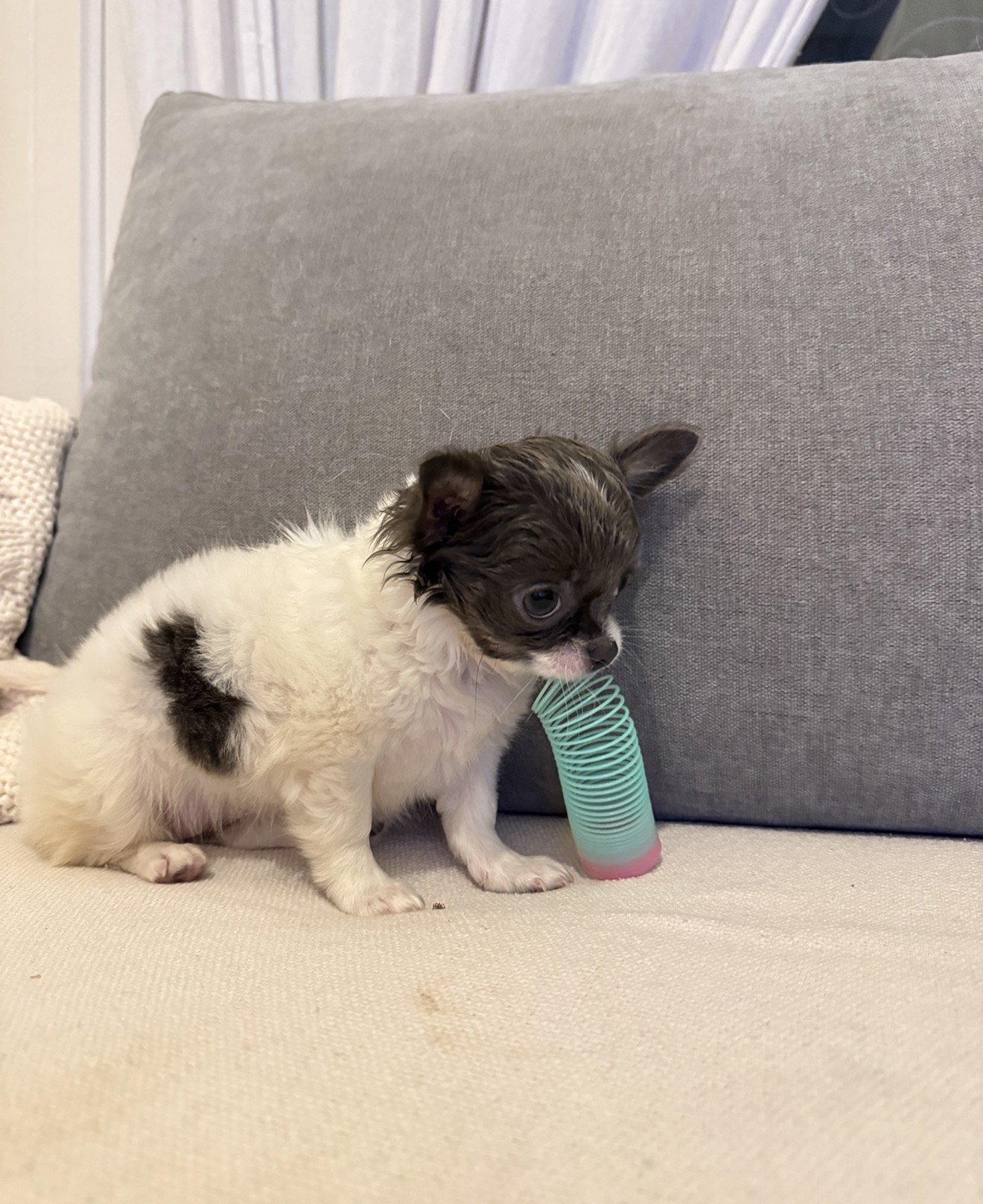
Hypoglycemia in puppies
A Chihuahua puppy has very little energy in reserve. Skip a meal, add cold, stress or a stomach bug, and blood sugar can crash. The signs are weakness, wobbling, trembling, glassy eyes, and in severe cases seizures or collapse. Frequent small meals of a quality puppy food are the main prevention, and the risk usually fades as the dog matures. A puppy that goes limp needs a vet immediately.
Kidney disease
Kidney disease accounted for 3.8% of recorded deaths in a young sample, and it becomes more common as dogs age. It develops slowly and quietly: drinking and urinating more, weight loss and a fading appetite are the usual first signs. Yearly bloodwork and a urine test from senior age catch it while diet and treatment can still slow it down.
Cancer
Cancer barely registered in the VetCompass deaths (neoplasia and mass-associated disorders together under 4%), but that study was dominated by young dogs. In dogs generally, cancer becomes more common with age, so expect it to matter more for Chihuahuas who reach their teens. Any new lump, a sore that won’t heal or unexplained weight loss is worth a vet visit rather than a wait-and-see.
Dental disease’s quiet role
Periodontal disease wasn’t listed as a cause of death in the study, yet it was the single most common disorder in the breed, at 13.5% overall and around a third of dogs over 7. It rarely kills directly. What it does is keep a low-grade infection going in the mouth for years, and vets have long associated that with strain on other organs. The research on exact cause and effect is still developing, but clean teeth remain one of the cheapest health investments you can make for a Chihuahua.
Old age and quality of life
Finally, 5% of recorded deaths were simply put down to poor quality of life: dogs who weren’t dying of one specific disease but whose bodies had worn out. For many Chihuahuas who make it to 15 or 16, this is how the story ends, with a decision made out of love.
Is 11 old for a Chihuahua?
It’s a senior, yes, but not near the end by default. With the Kennel Club putting the breed’s lifespan at over 12 years, and plenty of Chihuahuas reaching 14 to 16 or more, an 11-year-old in good shape may well have several years ahead. What changes at this age is the monitoring: the conditions that cause most senior deaths (heart, kidneys, cancer) are quiet in their early stages and need bloodwork and a stethoscope to be found. The full picture of lifespan, records and what shortens it is in how long Chihuahuas live, and the day-to-day adjustments for an older dog are in senior Chihuahua care.
What owners can actually do
Not everything on this list is preventable. Many things are, and the payoff is measured in years:
| Cause | What helps | Warning sign to act on |
|---|---|---|
| Heart disease | Heart listen at every checkup from age 7; echocardiogram if there’s a murmur | Cough at night, tiring fast, sleeping breathing rate above 30 per minute |
| Trauma | Harness and leash outdoors, supervised contact with big dogs, two hands when carrying | Any fall followed by limping, crying or lethargy |
| Collapsed trachea | Harness instead of collar, lean weight, no smoke in the house | Honking cough, especially with excitement or pulling |
| Hypoglycemia (puppies) | Small meals every few hours, warmth, no long fasts | Weakness, wobbling, trembling, glassy eyes |
| Kidney disease | Yearly bloodwork and urine test from about age 8 | Drinking or urinating more, weight loss |
| Cancer | Monthly hands-on check for lumps | New lump, non-healing sore, unexplained weight loss |
| Dental disease | Brushing several times a week, professional cleanings when advised | Bad breath, red gums, dropping food |
And the habits that cover several causes at once:
- Keep your Chihuahua lean for life. Extra weight worsens the trachea, the heart and the joints.
- Use a harness, always. It protects the windpipe and is much harder to slip than a collar.
- Never leave a Chihuahua loose or unsupervised around larger dogs, at the park or at home.
- Stay on top of vaccines and parasite control, especially in the puppy months.
- Move from yearly to twice-yearly checkups once your dog is a senior.
If something looks off and you’re not sure how urgent it is, our Chihuahua symptom checker helps you sort “call the vet today” from “watch and wait”. The broader map of the breed’s conditions, not only the life-threatening ones, is in common Chihuahua health problems.
When is it an emergency?
Go to a vet straight away, without waiting for an appointment, if your Chihuahua:
- Has blue or gray gums or tongue, or breathes with an open mouth at rest.
- Collapses, faints or has a seizure.
- Is a puppy that becomes limp, cold or unresponsive.
- Has been dropped, stepped on, hit by a car or bitten by another dog, even if they seem fine at first.
- Coughs up pink, frothy fluid.
Romeo and Lorenzo, at the young end of the table
Romeo is 4, a cream apple-head who weighs 5.3 pounds and spends most of the day asleep. Lorenzo is 2, fawn, 5.1 pounds and alert to every sound in the building. Looking at the life-stage table above, both sit in the years when the real risks are accidents and big dogs. The years when the heart and kidneys are what we watch are still ahead of us, and this is the guide we’re keeping for then.
That’s the useful thing about knowing what Chihuahuas die from. It isn’t meant to frighten you. It tells you where to look, at each age, so the years in between are as many and as good as they can be.