
Senior Chihuahua Care: Life After 10 Years Old
How to care for a senior Chihuahua: diet, joints, teeth, vet checks and lifespan. Everything your old Chihuahua needs to age happy.
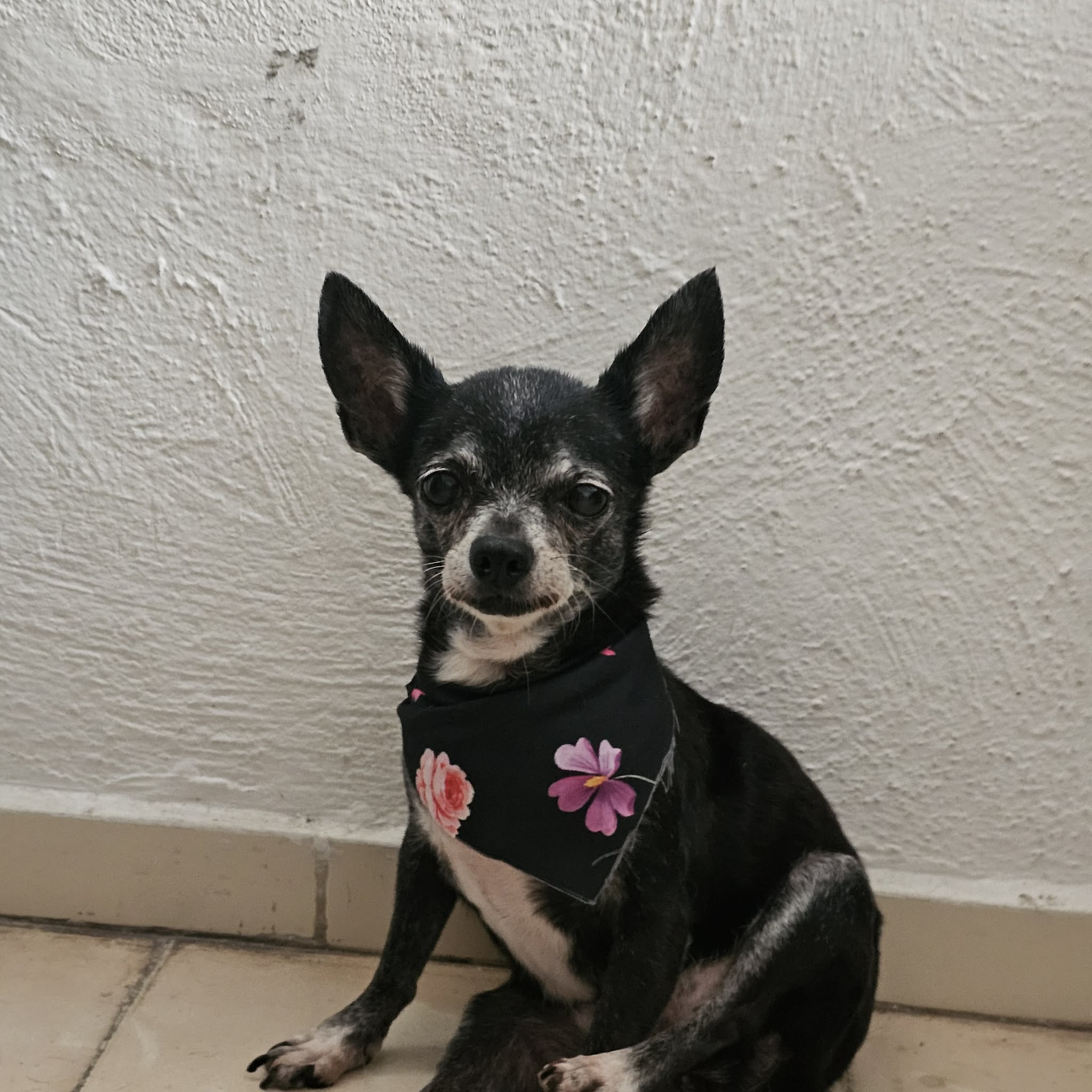
A senior Chihuahua is not a dog at the end of its road. It’s a dog entering one of the longest, gentlest chapters of its life. If your old Chihuahua just turned ten, you’re likely facing five to eight more years together, because this breed has one of the longest Chihuahua lifespans in the canine world: fifteen to eighteen years on average, sometimes more.
This article is for you if your Chihuahua has already passed the ten-year mark, or if you have a young one and want to be ready when the time comes. Because it will come, and the good news is that a well-cared-for Chihuahua ages slowly and keeps its spark for a very long time.
This article is informational and does not replace veterinary advice. Once your Chihuahua is over ten, checkups every six months stop being optional, they become essential.
When does a Chihuahua actually count as old?
A Chihuahua is considered senior from around ten years of age. That’s when most of them start showing subtle physical changes: they sleep more, play less, take a moment to climb out of bed, their nails grow faster, and the first white hairs appear around the muzzle.
But a Chihuahua does not age like a large dog. With a life expectancy of fifteen to eighteen years, and documented cases of Chihuahuas living past twenty, the senior phase can last five to eight years, longer than many breeds live in total. It’s not a final formality. It’s a long, rich stage where your dog is still very much himself, but needs slightly different things.
How long do Chihuahuas live?
The Chihuahua lifespan averages fifteen to eighteen years, making it one of the longest-living breeds on the planet, beaten only by a handful of other tiny dogs.
| Breed | Average lifespan |
|---|---|
| Chihuahua | 15-18 years |
| Yorkshire Terrier | 13-16 years |
| Pomeranian | 12-16 years |
| Pug | 12-15 years |
| Labrador | 10-12 years |
| German Shepherd | 9-13 years |
There are well-known records of remarkably long-lived Chihuahuas, including individuals documented at over twenty and even twenty-three years old. So a thirteen-year-old Chihuahua is squarely in the “average” range, with several good years still ahead given proper care.
What should change in the routine after ten?
There are six main adjustments worth anticipating:
- Vet checkups every six months, not yearly. At this age things move fast, and a heart murmur or arrhythmia caught early during a routine visit is treatable.
- Switch to senior dog food (sometimes labeled “mature” or “geriatric”). Softer kibble, fewer calories, more antioxidants.
- Split meals into two servings, morning and evening, instead of one. Digestion slows with age.
- Reduce exercise but do not eliminate it. Shorter, gentler walks. No marathon play sessions.
- An orthopedic or extra-comfortable bed. A senior Chihuahua spends far more time sleeping, and its body has earned the comfort.
- Mandatory dental care. Tooth loss is one of the most common problems in old Chihuahuas. Which products actually have evidence behind them is in what prevents tooth loss in this breed.
- Stop the jumping. This is the one most people skip, and it’s the one that does permanent damage.
Why the jumping matters more than the walks
A Chihuahua jumping off a sofa is landing a body on joints built for a dog a fraction of that drop. Repeated over years it wears down the knees — and this is the breed where patellar luxation is already the most common orthopedic problem. In a senior dog whose cartilage is thinner and whose muscle no longer absorbs the shock, a single bad landing can end in a limp that doesn’t go away.
The fix is unglamorous: give them a way up and down that isn’t a jump.
EHEYCIGA foam pet stairs
★ 4.4 · 11,248 valoraciones
Foam steps with rigid inserts, so they hold shape under a dog's weight instead of sinking — the complaint that ruins cheap foam stairs. Non-slip grips keep them from sliding away mid-climb, which is what teaches a dog to distrust them. Sold in several heights and 3 to 5 steps, so you can match a low sofa or a high bed.
Ojo: Measure the height of your bed or sofa before ordering — it's the single most repeated warning in the reviews, and the most common reason for a return. They also arrive vacuum-packed and need a few hours to expand fully, so don't judge them out of the bag.
Check the pet stairs on Amazon →Introduce them the boring way: treats on the bottom step, never lift the dog onto the middle, and let them work it out over a week. A senior Chihuahua that doesn’t trust the stairs will just jump beside them.
Diet: why switch to senior dog food
Older Chihuahuas that have lost teeth do much better on senior kibble, which is genuinely different:
- Smaller and softer, easy to chew with fewer teeth.
- Lower in calories, because a senior moves less and gains weight easily without adjustment.
- Richer in antioxidants (vitamin E, omega-3) to slow cellular aging.
- Lower in sodium to protect the heart.
- Supplemented with glucosamine for the joints.
You can soften dry food with a little warm water five to ten minutes before serving, or mix in wet food. The WSAVA global nutrition guidelines recommend a nutritional assessment at every visit, which is exactly the conversation to have when you switch a senior over. For a deeper look at what this breed should be eating across its life, our guide on what Chihuahuas eat covers brands, portions and balance.
Heart murmur and heart failure: the most common senior problem
Heart disease is a very frequent diagnosis in this breed. Studies suggest that around 75% of Chihuahuas over twelve develop some degree of valve disease, and the MSD Veterinary Manual’s guide to heart and blood vessel disorders in dogs points to chronic valve disease as the leading cause of heart failure in small breeds.
The three most common conditions are:
- Degenerative mitral valve disease: the valve grows leaky with age. Early sign: a dry cough, especially at night or after exertion.
- Heart murmur: detected by your vet with a stethoscope during a routine visit, graded from one to six.
- Congestive heart failure: the advanced stage of valve disease, requiring lifelong medication.
Modern treatment is genuinely good. With the right medication, often pimobendan / Vetmedin, a Chihuahua can live two to four more years with good quality of life after diagnosis. It’s a manageable condition, not a sentence.
When it is an emergency: a bluish tongue, open-mouth breathing without exertion, a cough with pink foam, or fainting. If you see any of these, go to the vet immediately.
Can a toothless Chihuahua eat normally?
Chihuahuas have tiny jaws with tightly packed teeth, so tartar builds up easily between them. Left uncleaned, the gums get infected and teeth fall out, especially after eight to ten years of age. It’s the sequence the MSD Veterinary Manual describes under mouth disorders in dogs: plaque, then tartar, then periodontal disease, then tooth loss.
The reassuring part: yes, a Chihuahua without teeth can eat perfectly well. You simply adapt the food:
- Soft or moistened kibble, softened with warm water before serving.
- Wet food (canned pâté) mixed into the kibble.
- Treats cut into smaller pieces.
To prevent the loss while there are still teeth to save:
- Brush two to three times a week minimum, with canine toothpaste only (human toothpaste contains xylitol, which is toxic).
- Dental chews that clean while the dog gnaws.
- Professional cleaning under anesthesia every one to two years from around age five. If you want to know what that costs, see our guide on dog teeth cleaning cost.
If your dog also struggles with chronic bad breath, that’s often the first clue something is wrong in the mouth.
How do I know if my senior Chihuahua is suffering?
Chihuahuas are good at hiding pain. They don’t always show it. There are subtle signals worth reading:
- Changes in sleep habits, sleeping far more or, oddly, not resting at all.
- Loss of appetite or weight loss with no diet change.
- Difficulty getting up, or whining when changing position.
- A dry cough, especially at night (a heart warning).
- Fast breathing at rest, more than 35 breaths per minute while asleep.
- Cloudy eyes or night blindness.
- Withdrawal: retreating to a corner instead of seeking company.
- A different kind of trembling than usual (our guide on why Chihuahuas shake helps tell them apart).
- Sudden incontinence with no obvious cause.
If you see two or more of these signs persisting, take your dog in. Do not wait for the scheduled checkup.
Do dogs grieve when they lose a companion?
Yes, and it deserves saying clearly: dogs feel grief. It’s not human projection. Canine grief has been documented scientifically since the 1990s, and a senior Chihuahua who loses a lifelong companion can be hit hard.
How grief shows up in a Chihuahua:
- Searching the house for the missing companion.
- Eating less for the first one to two weeks.
- Sleeping more, playing less.
- Becoming clingier with its human.
- Occasionally howling or whining for no clear reason.
How to support them:
- Keep the routine as unchanged as possible.
- Avoid long stretches alone in the first weeks.
- Let them sniff the places where the companion slept; it helps with closure.
- Do not rush a new dog into the home. They need time.
- Patience and affection, in large quantities, for both of you.
What Romeo and Lorenzo taught me
Romeo Carlitos has just turned eleven, and he’s living everything I’ve described above: check-ups every six months, softer food, long naps in the sun. Lorenzo Pablito, at two, still watches him without understanding why he sleeps so much. Seeing them together is seeing both ends of the same life.
Brushing their teeth from puppyhood. Never chocolate, never cooked bones. Keeping their weight steady. Taking them to the vet even when nothing seems urgent. With Romeo, all of that is paying off now: at eleven he still climbs onto the couch by himself. Those habits were investments, and Lorenzo is banking his own so that he arrives at Romeo’s age the same way. A Chihuahua’s spirit does not fade with age. It just concentrates.
If your Chihuahua is over ten, treasure the time. As one senior dog’s family once told me, the greatest lesson an old Chihuahua teaches is to make the most of the time with those we love.
Frequently asked questions
At what age is a Chihuahua considered senior?
How long do Chihuahuas live?
What does a senior Chihuahua need?
Written by Belen Salto, who shares her life with Romeo and Lorenzo, two Chihuahuas. · Ver en español