
Heart Murmur in Chihuahuas: Mitral Valve Disease, Stages and Life Expectancy
Heart murmur in Chihuahuas: what it means, the mitral valve disease behind it, stages A to D, how to count sleeping breaths, and how long dogs live with it.
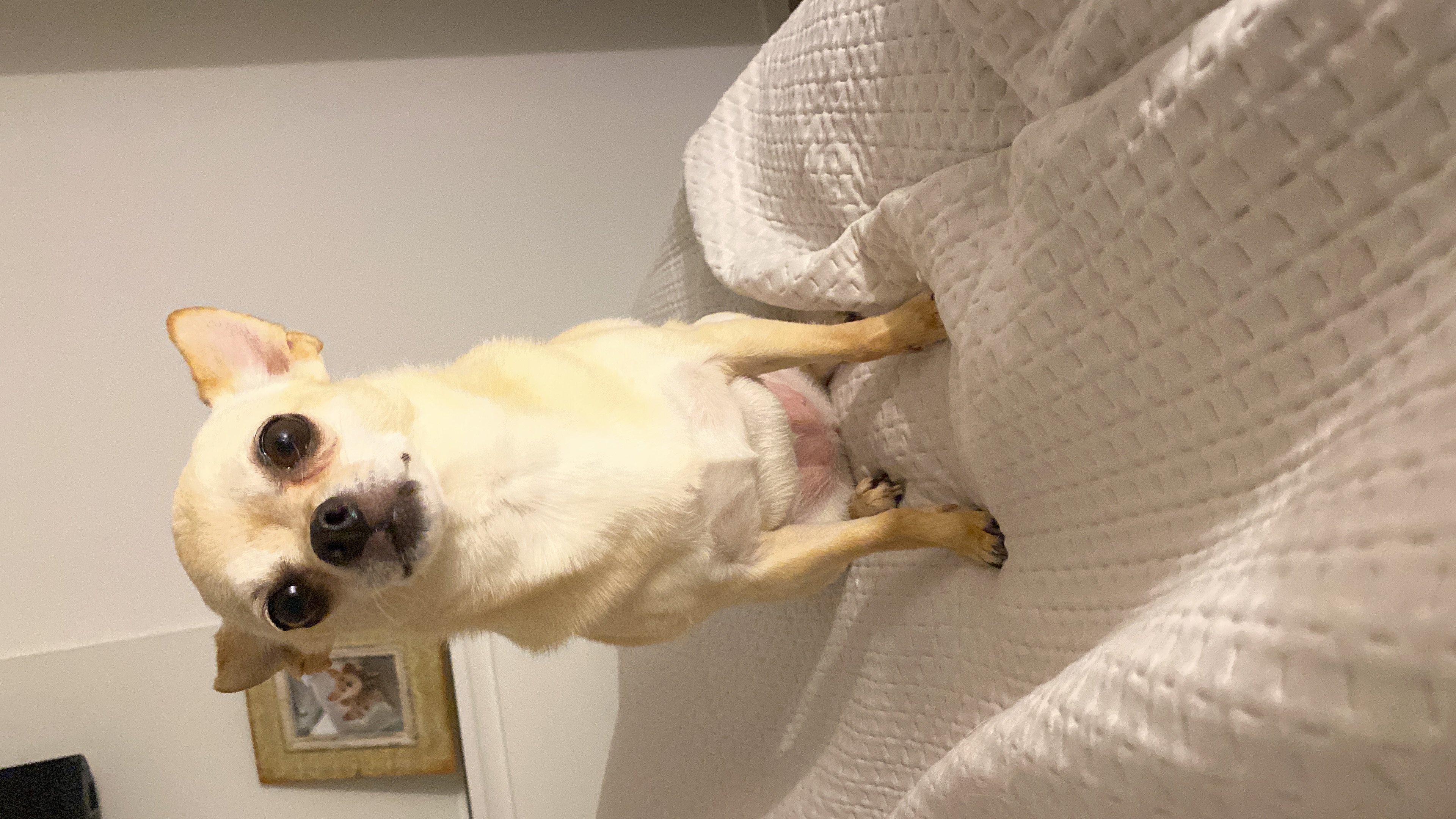
At some routine checkup, once your Chihuahua is past seven or eight, there’s a good chance the vet will hold the stethoscope a second longer than usual and say the words: “there’s a murmur.” It’s one of the moments Chihuahua owners dread most, and with reason: mitral valve disease is the leading cause of death in the breed at an advanced age.
But a murmur isn’t a sentence. Above all, it’s an early warning, and what happens from there changes years of life. This article explains what’s behind the murmur, how it progresses, what treatment exists at each stage, and what you can monitor at home with nothing more than a clock and some patience.
This article is for information only and is not a substitute for advice from your veterinarian. Any decision about heart medication is your vet’s, ideally with an echocardiogram.
What is a heart murmur?
The heart has four chambers separated by valves that open and close with every beat. When everything works, your vet hears a clean “lub-dub.” A murmur is an extra sound, like a whoosh or a hiss, produced by blood flowing turbulently somewhere in the heart. The American Kennel Club describes it that way and notes that murmurs are graded from I to VI by intensity: a grade I is barely audible in a quiet room; a grade VI can be heard with the stethoscope held inches from the chest.
Important: the grade measures how loud the murmur sounds, not how sick the heart is. A grade III murmur can go with a normal-sized heart, and a grade II with one that has already started to enlarge. That’s why diagnosis doesn’t end at the stethoscope.
In puppies, murmurs are often “innocent”: the AKC cites that about 28% of puppies under six months have one, and most resolve as they grow. In an adult or senior Chihuahua, by contrast, the cause is almost always the mitral valve.
Mitral valve disease: what happens inside the heart
The mitral valve separates the two chambers on the left side of the heart. Over the years, in small dogs, its edges thicken and deform until it no longer closes properly. With each beat, some blood leaks backward instead of going out to the body. That leak is the murmur.
According to the MSD Veterinary Manual, degenerative valve disease is the most common heart disease in dogs, accounting for about 75% of canine cardiovascular disease, and it’s more common in older, small-breed dogs. The underlying cause is unknown; in some breeds it’s believed to be inherited.
What follows is a slow process. The chamber receiving the leak enlarges to compensate. For months or years the dog feels nothing. If the valve keeps failing, pressure backs up into the lungs and fluid builds up there (pulmonary edema): that’s congestive heart failure, and that’s when coughing and fatigue begin.
One reassuring fact: the MSD Manual notes that only about 30% of dogs with mitral regurgitation develop heart failure. Most live with their murmur for years without reaching that stage.
The stages: A through D
Veterinary cardiologists (the ACVIM consensus, from the American College of Veterinary Internal Medicine) classify the disease in stages. Understanding them helps you understand what your vet is doing:
| Stage | What it means | What’s done |
|---|---|---|
| A | Predisposed breed, no murmur | Auscultation at every checkup |
| B1 | Murmur, but heart is normal size | Recheck every 6-12 months; no medication |
| B2 | Murmur and enlarged heart, still no symptoms | Pimobendan starts; follow-up echocardiograms |
| C | Heart failure: cough, fatigue, fluid in the lungs | Diuretics, pimobendan and other drugs combined |
| D | Heart failure no longer responding to standard treatment | Fine-tuning, quality of life |
The line that matters most is B1 to B2, because that’s where everything changes: a dog in B1 needs no medication, and a dog in B2 does. Telling them apart requires chest X-rays or, better, an echocardiogram, because from the outside they sound the same. So when a murmur shows up, the ultrasound isn’t a luxury: it’s what decides whether to medicate or not.
What treatment is there?
It depends on the stage, and your vet decides. But it helps to know what exists:
- Pimobendan (Vetmedin and generics): the drug that changed the prognosis most. In stage B2 dogs, the EPIC trial showed it delays the onset of heart failure by about 15 months on median. What it is, how it’s given, what it costs and its side effects are in pimobendan for dogs (Vetmedin).
- Diuretics (furosemide and others): pull fluid out of the lungs. The foundation of stage C.
- ACE inhibitors and spironolactone: reduce the harmful hormonal effects of heart failure.
- Antiarrhythmics, oxygen and others when needed.
The MSD Manual sums it up: with appropriate treatment, dogs with heart failure can live longer than a year, and optimal treatment is planned stage by stage. In practice, many Chihuahuas diagnosed early live two, three or more years with good quality of life.
What doesn’t help: over-the-counter “heart supplements,” miracle diets and, above all, waiting for symptoms before getting the echocardiogram.
What you can do: count breaths while your dog sleeps
This is the most useful part of the article. The MSD Manual recommends something that requires no equipment: count how many times your dog breathes per minute while asleep. If that number climbs, fluid may be building up in the lungs, sometimes before X-rays show it, and it also tells you whether treatment is working.
How to do it:
- Wait until your dog is deeply asleep, not just lying down.
- Count how many times the chest rises in 30 seconds.
- Double it. That’s the breaths-per-minute number.
- Write it down. Repeat three or four times a week, at the same time of day if you can.
Normal in a healthy dog, and in one with a stable murmur, is under 30 breaths per minute. What should alarm you isn’t one odd day, but a number consistently above 30 or a clear rise from their usual baseline (if they’re always at 18 and go to 28, that’s a warning). In that case, call your vet that day.
Free apps from veterinary cardiology companies exist for logging it, but a notebook does the same job.
Signs of congestive heart failure in a Chihuahua
When the disease moves to stage C, one or more of these appear:
- Coughing, especially at night, when lying down or on waking. Note: in a Chihuahua, a cough can also come from the windpipe; collapsed trachea covers the difference.
- Tiring quickly on walks, stopping, refusing to go on.
- Fast or labored breathing at rest.
- Not wanting to move or play, sleeping far more.
- Fainting, from poor blood flow or an arrhythmia.
- Swollen belly or swollen legs, if the right-side valve (tricuspid) is affected.
- Pale or bluish gums and open-mouth breathing: immediate emergency.
The MSD Manual warns that sudden death is rare but possible. That’s why timely checkups and treatment in B2, before symptoms, are what gain the most life.
How do I slow heart disease down?
There’s no way to prevent the valve from degenerating, but there is a way to make sure the heart reaches that stage in the best possible shape:
- Auscultation at every yearly checkup from age 7, and every six months from 10. A murmur caught early buys years.
- An echocardiogram as soon as there’s a murmur, then as often as your vet recommends.
- Ideal weight: a heart pumping for an overweight dog works harder. If in doubt, is my Chihuahua overweight? gives you their body condition score.
- Clean teeth: bacteria from the mouth travel through the blood and can damage the valves. One more reason for dental cleanings.
- Harness, not collar, and calm walks.
- No smoke in the house.
What all of this means for the breed’s lifespan is in how long do Chihuahuas live, and the rest of the care after age ten in senior Chihuahua care. The other conditions typical of the breed, each with its warning sign, are in common Chihuahua health problems.
A note on insurance
Heart disease is where pet insurance earns its keep: echocardiograms run a few hundred dollars each, and years of pimobendan plus rechecks add up. But it’s also where the pre-existing-condition clause bites hardest. Once a murmur is in the record, any heart-related claim is usually excluded. If you’re going to insure a Chihuahua, do it before the first murmur, which in this breed means before age seven.
Romeo and his murmur
Romeo is 11 and has a mild murmur that turned up at a routine checkup. Since then he gets an echocardiogram once a year, and for now his heart is the size it should be: stage B1, no medication. What did change is the household routine. A couple of times a week, when he’s deep asleep on his blanket, I sit next to him with my phone and count. Eighteen, twenty, sometimes twenty-two. Lorenzo, at 2, watches without understanding what I’m doing. Someday it’ll be his turn, and by then we’ll have had plenty of practice.
Frequently asked questions
What does it mean that my Chihuahua has a heart murmur?
How long can a Chihuahua live with a heart murmur?
What are the stages of mitral valve disease in dogs?
How do I count my Chihuahua's sleeping breathing rate?
What are the signs of congestive heart failure in a Chihuahua?
Written by Belen Salto, who shares her life with Romeo and Lorenzo, two Chihuahuas. · Ver en español