Chihuahua Harness vs Collar: Which Is Safer for a Tiny Dog?
Chihuahua harness vs collar: why the leash belongs on a harness, when a collar still earns its place, the main harness styles and how to fit one on a 5-lb dog.

The Chihuahua harness vs collar question comes up with almost every new puppy, and the answer is simpler than the pet store aisle makes it look: the leash goes on a harness. A collar can still be useful for carrying an ID tag, but on a dog that weighs about 5 pounds, a sudden tug on the neck puts force right where a toy breed is most fragile.
Below I explain why, when a collar still makes sense, which harness styles work for a Chihuahua and how to fit one properly on such a small body.
This article is general information and does not replace a consultation with your veterinarian. If your Chihuahua coughs, honks or struggles to breathe, see your vet.
The short answer, side by side
| Harness | Collar | |
|---|---|---|
| Where leash pressure goes | Chest and shoulders | Front of the neck |
| Best use | Walks, car trips, any time a leash is attached | Holding an ID or license tag |
| Risk for a toy breed | Low when it fits well | Pressure on the windpipe if the dog pulls or lunges |
| Escape risk | Low with a good fit | Higher; a Chihuahua’s head is often not much wider than its neck |
| Our verdict | Use for every walk | Optional, for tags only |
Why does the neck matter so much in a Chihuahua?
Because the windpipe (trachea) of a tiny dog is small and sits right behind the spot where a collar presses. The MSD Veterinary Manual describes tracheal collapse as most common in toy and miniature breeds, with a dry, honking, chronic cough and labored breathing as typical signs.
To be accurate about it: a collar is not considered the cause of tracheal collapse. The MSD notes that the cause is unknown, and that the condition is more frequent in dogs that are obese. But once the cartilage rings are weak, pressure on the neck is one of the things that can set off a coughing fit, which is why vets so often recommend that these dogs never walk on a collar. If you’ve ever heard the “goose honk,” our guide to collapsed trachea in Chihuahuas walks through diagnosis and treatment.
The American Kennel Club makes the same practical point from the other direction. In its comparison of dog harnesses and collars, it says a standard body harness with a back attachment is a popular choice for small dogs because it can prevent throat damage if the dog pulls, and that harnesses can help avoid injuries such as throat damage in small dogs.
Think about how a Chihuahua actually walks. They spot a big dog and lunge. They freeze to sniff and then bolt. They get startled by a skateboard. Each of those moments, on a collar, turns into a jolt at the throat. On a harness, the same jolt lands on the chest.
When is a collar still useful?
A collar isn’t the enemy. It’s just the wrong place for a leash. Here’s where it still earns its place:
- ID and license tags. A visible tag is the fastest way for a stranger to call you if your dog slips away. Some local rules also require a license tag, so check what applies where you live.
- Around the house. A light collar with a tag means your dog is identifiable if a door is left open, even when the harness is off.
- A backup to the microchip. A chip only helps once someone scans it. A tag works on the sidewalk.
If you keep a collar, choose a lightweight flat collar sized for a toy breed, with a small tag that doesn’t drag on a tiny neck. Skip choke chains, prong collars and anything designed to tighten. They have no place on a Chihuahua.
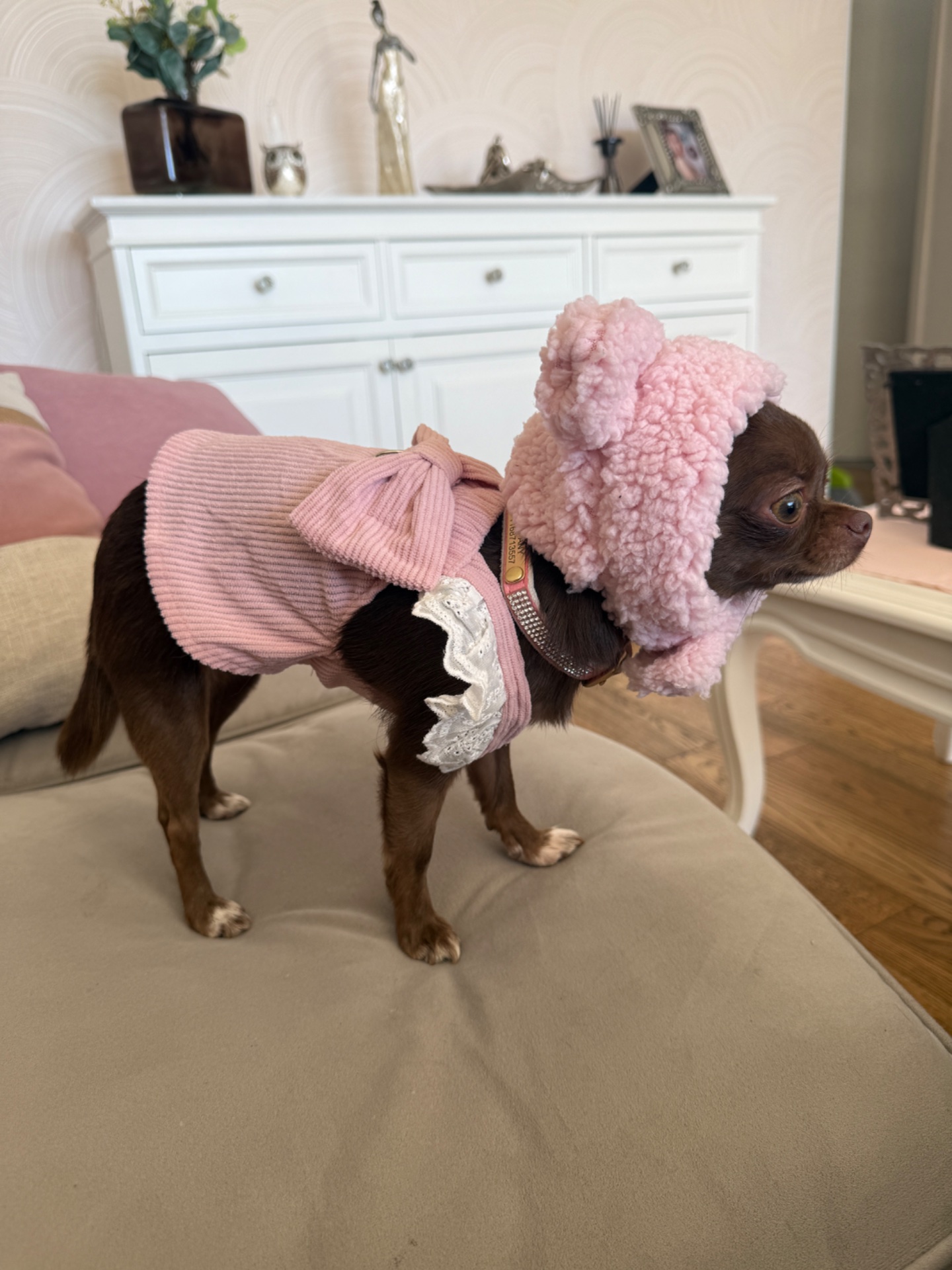
You can also skip the collar entirely: clip the ID tag to the harness ring, or use a harness with your phone number printed on it. That works well for dogs with a diagnosed tracheal problem, and it means one less thing around the neck.
What types of harness work for a Chihuahua?
Not every harness that says “small dog” on the label is designed for a 5-pound body. These are the main styles:
| Harness style | How it sits | Good for | Watch out for |
|---|---|---|---|
| Y-shaped step-in | Straps form a Y over the breastbone; back clip | Most adult Chihuahuas | Takes patience to fit the first time |
| Vest (soft mesh) | Wraps the chest; closes on the back | Puppies, cold days, short walks | Stiff fabric that blocks the shoulders or rides up to the throat |
| H-style | Neck loop and chest loop joined by a strap | Light everyday use | The neck loop can sit too high on a narrow chest |
| Escape-proof (three straps) | Adds a belly strap | Nervous or rescued dogs that wriggle out | More straps and more heat in summer |
| Front-clip / no-pull | Leash ring on the chest | Larger dogs that pull hard | Usually unnecessary for a Chihuahua; can twist on a tiny frame |
For most Chihuahuas, a Y-shaped or vest harness with the leash ring on the back is the safe default. The key test for any style: nothing should cross the front of the throat. Our best Chihuahua harness guide compares specific models and the red flags to avoid when shopping.
How to fit a harness on a 5-lb dog
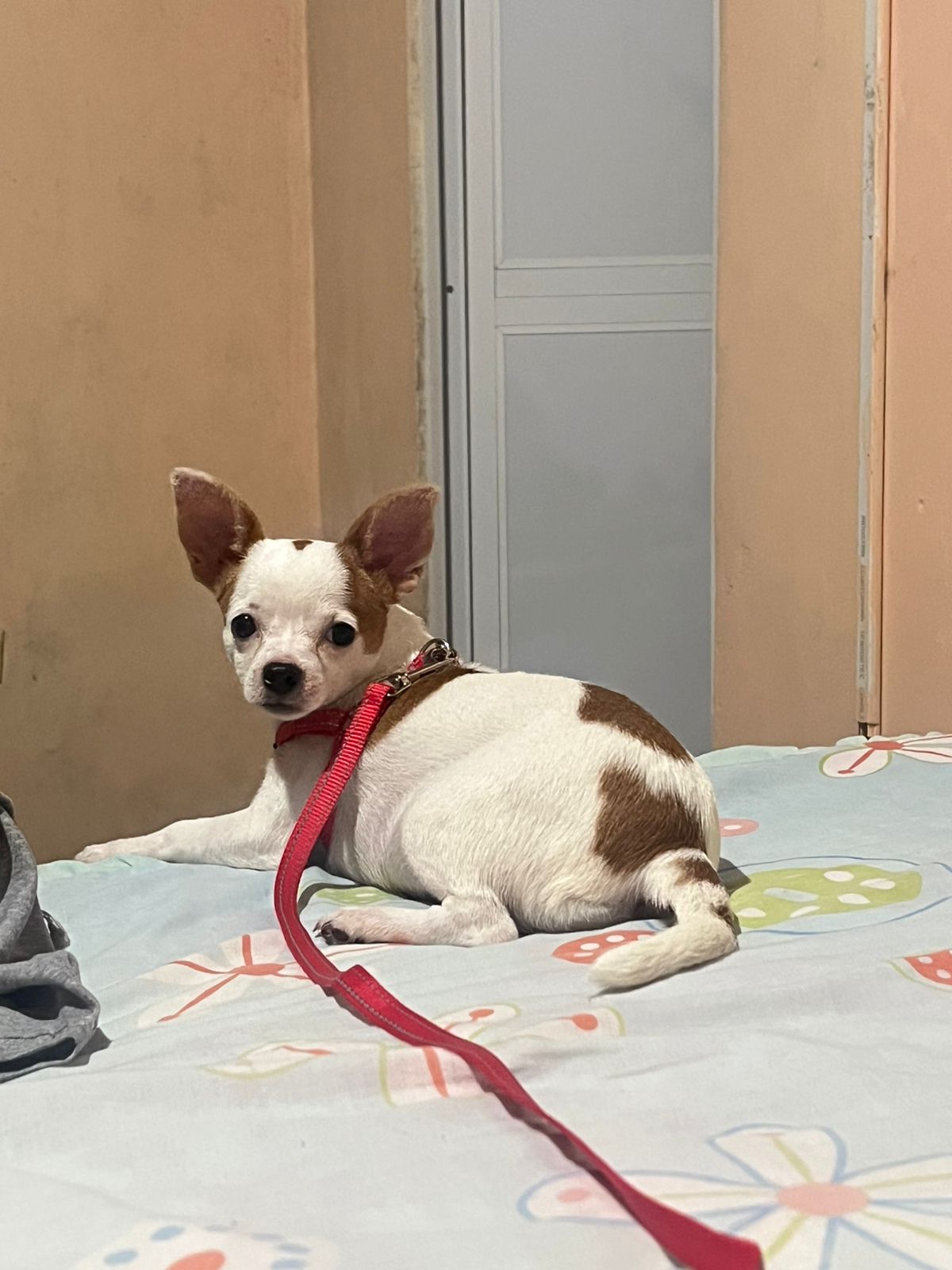
Fit is everything. A harness that’s too loose can slip off in exactly the moment you need it, and one that’s too tight rubs under the front legs.
- Measure the chest girth. Wrap a soft tape around the widest part of the rib cage, just behind the front legs.
- Measure the neck where a collar would sit, at the base.
- Weigh your dog. Weight alone isn’t enough to choose a size, but it helps you rule out sizes that are clearly wrong.
- Compare with the brand’s chart, not the “fits Chihuahua” label. Our Chihuahua harness size calculator turns your measurements into a starting size.
- Try it on and check the fit (see below), then watch your dog walk for a few minutes.
The finger test, adjusted for a tiny dog
You’ve probably heard of the two-finger rule: two fingers should slide between the harness and your dog’s body. We use it too. The AKC’s version is stricter for small dogs: one finger for small dogs, two for large breeds.
Why the difference? Two adult fingers on a 5-pound dog can be a lot of slack. So here’s how I’d combine them:
- Two fingers slid in flat should feel snug, never loose.
- If a third finger fits easily, it’s too big.
- The harness shouldn’t rotate when you gently tug the back ring sideways.
- The front of the Y should rest on the breastbone, not the throat.
- Straps should sit about a finger’s width behind the armpits, not rubbing into them.
Recheck the fit after the first few walks, after a bath (some fabrics stretch) and regularly while a puppy is still growing.
Signs the harness doesn’t fit
- Red skin or hair loss under the front legs
- Your dog backs out of it when they stop suddenly
- A strap creeping up toward the throat
- Coughing or gagging on walks (stop and see your vet)
- Shortened steps, as if the shoulders can’t swing freely
Extra weight also changes how a harness sits, and the MSD stresses that weight loss is critical for overweight dogs with tracheal collapse. If you’re unsure where your dog stands, our is my Chihuahua overweight? tool walks you through a body condition check.
Getting a Chihuahua used to the harness
Some Chihuahuas stand still for it. Others act as if you’ve strapped them into armor. Go slowly:
- Let your dog sniff the harness and reward that with a treat.
- Slip it on for a few seconds, treat, take it off.
- Build up to wearing it indoors during play or meals.
- Only then clip the leash and head outside.
Keep sessions short and cheerful. A few days of patience saves months of wrestling at the door.
What we use at home
Romeo is 4 and weighs about 5.3 pounds; Lorenzo is 2 and about 5.1 pounds. As I mentioned in our harness guide, both walk in a Y-shaped harness, and the leash never goes anywhere near their necks. With two young adults this small, I’d rather not take chances with their airways.
If you take one thing from this article, let it be this: tags can live on a collar, but the leash lives on the harness. Measure carefully, check the fit often and call your vet if you ever hear a honking cough on a walk.