
Chihuahua Puppy Care: The Complete First-Months Guide
Feeding, vaccines, socialization, hypoglycemia and home safety: everything your Chihuahua puppy needs in the first months.
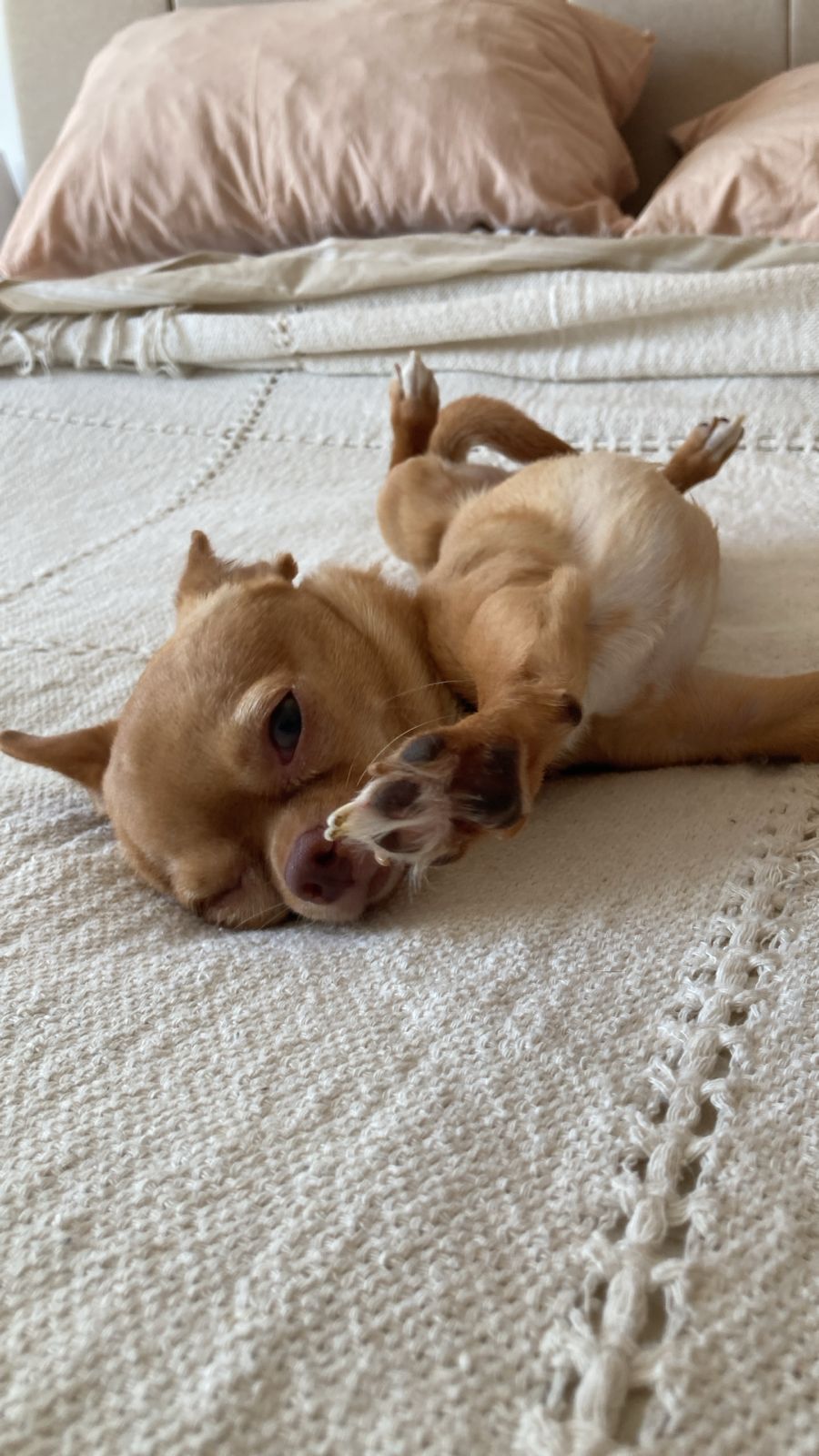
Getting Chihuahua puppy care right in the first months is one of the most rewarding and most demanding things you’ll do as an owner. These are small, fragile dogs with very particular needs: raising a Chihuahua puppy is nothing like raising a Labrador. This guide gathers what I’ve learned with Romeo and Lorenzo so those first months are as calm as they can be. If your dog is even smaller, a newborn or just days old, start with newborn Chihuahua care first.
This article is informational and does not replace veterinary advice.
Before the puppy arrives: prepare the house
Chihuahua puppies measure 5 to 7 inches at two months old. To them, a staircase is Everest and a couch is a cliff. Before yours arrives, walk through the house at its height and think like a curious dog with zero sense of danger.
Day-one essentials:
- A small, soft bed it can climb into and feel surrounded by. Igloo-style beds work well because they hold warmth.
- Ceramic or stainless steel bowls, low and tip-proof. Avoid plastic: it stains the muzzle skin and scratches easily.
- A potty pad or training area near the rest zone but not on top of it. Chihuahuas are not dirty; they simply have tiny bladders.
- Safety gates for stairs and balconies. A fall from 20 inches can fracture a shin.
- A small carrier with a blanket inside, for vet visits and as a home refuge.
Feeding: quality over quantity
A Chihuahua puppy’s stomach is roughly the size of a walnut. It eats little, very often. Poor feeding can lead to hypoglycemia, the most common emergency in toy-breed puppies.
How many times a day
- 2 to 4 months: 4 meals a day.
- 4 to 6 months: 3 meals a day.
- 6 months and up: you can drop to 2 meals a day, ideally morning and night.
What to feed
Choose a dog food specifically for toy or mini breed puppies, with named animal protein as the first ingredient (ideally identified, like “dehydrated chicken 30%,” not “dehydrated meat”). Kibble size matters: a large piece can choke a Chihuahua. If you’re unsure, your vet can recommend brands for your individual case. Hold off on commercial treats until 4 months; a small piece of boiled chicken or unsalted turkey does the same job more safely. Our broader guide to what Chihuahuas eat covers adult portions later on.
Signs of hypoglycemia (important)
If your puppy turns apathetic, walks in zigzags, trembles excessively, gets cold for no reason, rolls its eyes back or has a seizure: this is a veterinary emergency. While you get there, you can rub a pinch of honey or dissolved sugar on the gums. It does not replace the vet, but it buys time.
Royal Canin X-Small Puppy
★ 4.8 · 13,018 valoraciones
The X-Small line is built for breeds that will weigh under 9 pounds as adults — which is the Chihuahua exactly. Tiny kibble and high calorie density, which is what a body that can only eat a few mouthfuls at a time actually needs.
Ojo: Pricey per pound, and it only covers up to 10 months before you switch formula. Buy the smallest bag: your puppy will take weeks to finish it and opened kibble loses quality.
Check the puppy food on Amazon →Whatever you choose, look for the AAFCO statement on the bag and the word puppy — not “all life stages”.
Vaccination and deworming plan
A common schedule looks like this:
| Age | Action |
|---|---|
| 6 to 8 weeks | First combination vaccine (distemper, parvovirus, hepatitis) |
| 9 to 11 weeks | Second combination + first internal deworming |
| 12 to 16 weeks | Third combination + rabies (where required) |
| 16 weeks onward | Checkups every 6 months, annual boosters |
Exact dates are set by your vet based on your area, and the MSD Veterinary Manual’s guide to routine care and breeding of dogs explains why the series is spaced this way: maternal antibodies interfere with the early doses. Until the vaccination series is complete, the puppy should not set foot on the street or contact dogs of unknown origin.
Socialization: the window that never returns
Between 3 and 16 weeks puppies have a critical socialization window. What they learn then, what is safe and what is threatening, shapes their adult character. In Chihuahuas this matters doubly, because they have a reputation (often undeserved) for being “barky and grumpy,” usually the result of poor socialization. The breed’s true temperament is far warmer than the stereotype.
Practical ideas:
- Controlled exposure to sounds: vacuum, doorbell, hairdryer, traffic, always at low volume at first.
- Contact with diverse people: glasses, hats, kids, the elderly, always letting the puppy approach, never forced.
- Meetings with vaccinated, balanced dogs at a friend’s home. Avoid parks until the series is complete.
- Letting it stay alone gradually: 5 minutes, 10, 20. This prevents future separation anxiety, a topic we cover in Chihuahua separation anxiety.
Hygiene and bathing
A common mistake is bathing the puppy too soon or too often. Chihuahua skin is thin, and excessive baths strip the protective oils.
- First bath: not before two and a half months. Some vets recommend waiting until the vaccine series is done.
- Frequency: once every 4 to 6 weeks is usually enough. If it smells between baths, pet wipes or brushing beat another bath.
- Shampoo: always dog-specific, pH-balanced. Human shampoos, even baby ones, irritate their skin.
- Drying: towel first, then a dryer on low. A damp puppy gets sick.
Brush a short coat twice a week and a long coat daily. Check nails every 3 to 4 weeks; if they touch the floor when walking, it’s time to trim. And if the eyes water and stain the surrounding hair, our guide to Chihuahua tear stains explains why and what to do.
Teeth: the breed’s weak point
Chihuahuas are prone to periodontal disease because their tiny jaw crowds the teeth, and the MSD Veterinary Manual’s section on mouth disorders in dogs ranks it as the most common dental problem dogs face. From puppyhood, get yours used to having its mouth touched, the lip lifted, a finger run over the teeth.
- Brushing with veterinary paste (never human paste, it can contain xylitol or other toxins) 2 to 3 times a week. Daily is ideal.
- Dental chews for small breeds, as a complement, not a substitute.
- Professional checkup once a year from puppyhood.
Safety at home and outdoors
- Never let the puppy loose in unfenced areas. A hawk, a curious medium dog, or a car are real threats.
- Harness, never a choke collar. The Chihuahua’s trachea is extremely delicate, and collars can trigger tracheal collapse, which the MSD Veterinary Manual groups with the lung and airway disorders that hit toy breeds hardest.
- In summer, avoid hot asphalt: if you cannot hold your palm on it for 5 seconds, it burns the paw pads.
- In winter, a sweater is not a luxury, because Chihuahuas lose heat fast. Our guide on whether Chihuahuas get cold explains how to dress them right.
The most common mistake: treating it like a human baby
Chihuahuas are dogs. Small, yes, but dogs. Constantly carrying it, letting it eat off your plate, indulging growls because “it’s so tiny”… these affectionate gestures create anxiety, insecurity and behavior problems over time. Give all the affection you want, but also give limits, routine, and trust that it can stand on its own four paws.
What to expect in the first three months at home
The first two weeks are usually the hardest: crying at night, accidents off the pad, constant demands. It’s normal. By the third or fourth week, if routines are clear, puppies settle noticeably. Night crying in particular tends to fade once a sleep routine takes hold; our piece on the Chihuahua that won’t sleep at night walks through it.
A closing note with Romeo and Lorenzo
One last piece of advice: enjoy it. Chihuahua puppies double in size in two months. Those tiny photos in the palm of your hand, the clumsy hallway sprints, the first snores on your knee, they do not come back. Romeo arrived at two months, already past the most fragile phase, calm from the start. Lorenzo we knew as a tinier baby, all energy and trouble. Take photos, breathe deep when it drives you up the wall, and when in doubt, ask your vet and check a guide like this one. The rest, you and your puppy learn together.
Frequently asked questions
How do you take care of a Chihuahua puppy?
How often should a Chihuahua puppy eat?
When can a Chihuahua puppy go outside?
Written by Belen Salto, who shares her life with Romeo and Lorenzo, two Chihuahuas. · Ver en español