
Teacup Chihuahua: Sizes, Truth and the Mini Myth
Teacup, mini, pocket Chihuahua: only one size is real. The truth about Chihuahua sizes and why teacup is a health red flag.
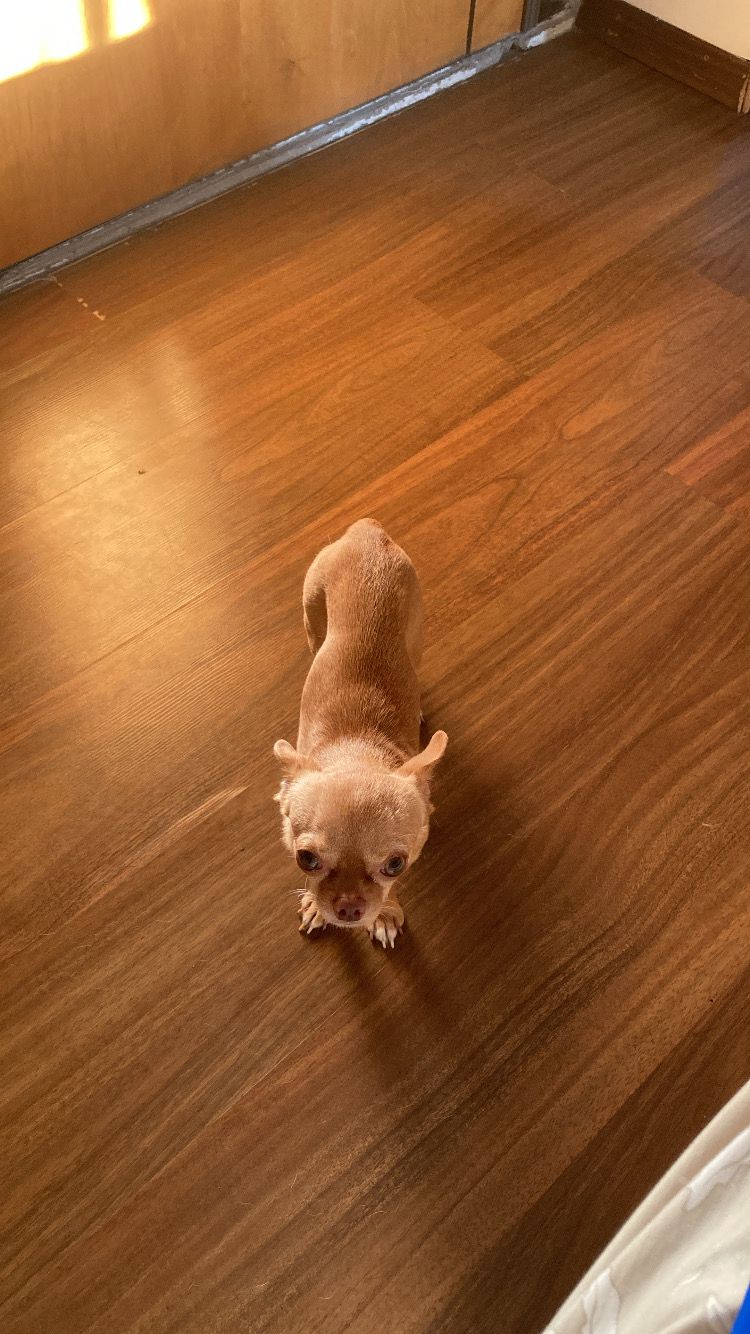
If you’ve searched online for a puppy, you’ve probably seen the labels: teacup Chihuahua, mini Chihuahua, micro Chihuahua, pocket Chihuahua. It sounds tempting, as if the smaller the dog, the rarer and more “premium” it is. Here’s the uncomfortable truth: the teacup Chihuahua is not an official size. Most of these categories simply do not exist. They’re marketing terms invented to sell puppies at higher prices, often at the cost of the dog’s health.
In this article I’ll explain what the international kennel organizations actually say about Chihuahua size, why “teacup” and “micro” dogs so often suffer serious health problems, and how to tell whether you’re looking at a responsibly bred Chihuahua or a puppy dressed up in misleading labels.
What do the kennel clubs say about Chihuahua size?
The major canine organizations, including the FCI and the American Kennel Club (AKC), share one clear, single standard for this breed:
- Ideal weight: between 3 and 6 pounds (1.5 to 3 kg) as an adult.
- Minimum acceptable weight: around 1.1 pounds. Below that, a dog is not valid for shows.
- Maximum acceptable weight: about 6.6 pounds.
- Height: roughly 15 to 25 centimeters, although height is not a primary criterion for the breed.
- Official varieties: only two, and both refer to the coat (smooth or long), not to size.
In other words, officially there is no “teacup,” no “mini toy,” no “pocket” Chihuahua. There is simply the Chihuahua, full stop. And it’s already one of the smallest dogs on Earth.
Do “teacup,” “micro” and “pocket” Chihuahuas really exist?
As an official category, no. They’re commercial names that some breeders and informal sellers use to single out smaller-than-standard puppies and justify a higher price. Here’s what tends to hide behind each label:
| Commercial name | Officially exists? | What it usually means in practice |
|---|---|---|
| Teacup Chihuahua | No | An extremely small puppy, often with health problems |
| Pocket Chihuahua | No | Informal synonym for “teacup,” equally problematic |
| Micro / ultra mini Chihuahua | No | Same as above, pure marketing |
| Mini toy Chihuahua | No | A normal-sized puppy labeled to seem special |
| Toy Chihuahua | No (the word “toy” belongs to other breeds) | Confusion with the toy category of other breeds |
| Standard Chihuahua | No (because there is only one) | Redundant: every Chihuahua is “standard” |
The word “toy” does exist in dog classification, but it applies to other breeds (toy poodle, toy fox terrier). The Chihuahua has no size sub-types, because the entire breed already fits into the toy group. Calling one a “mini toy” is like saying “small small.”
If you want to make a confident choice when bringing a puppy home, our guide on things to know before getting a Chihuahua walks through the signals that separate a good source from a bad one.
Why do sellers use these labels?
Three reasons, none of them good:
- To justify higher prices. A puppy labeled “teacup” can cost two or three times what a regular Chihuahua does. The label raises the price without adding any real value.
- To capture online searches. People search for “teacup Chihuahua” because they saw the term on social media, so sellers tag their listings that way to appear in those results, even when the puppy is a standard Chihuahua.
- Irresponsible breeding in disguise. In the worst cases, breeders mate excessively small dogs together to “produce” ever-tinier puppies. This results in litters with serious health issues.
What are the risks of an extremely small Chihuahua?
Here’s the part no teacup seller will tell you: Chihuahuas that weigh under 3 pounds as adults tend to have serious health problems. This is not opinion or exaggeration, it is what vets see every day.
This article is informational and does not replace veterinary advice. If you have a very small Chihuahua or are considering one, always consult a trusted professional first.
The most frequent issues in extremely small Chihuahuas include:
- Hypoglycemia: sudden drops in blood sugar, especially in puppies, which can cause fainting, severe trembling and, in extreme cases, death if untreated.
- Hydrocephalus: fluid buildup in the skull, more common in extreme apple-head dogs with a very open soft spot.
- Bone fragility: bones so small they fracture from minor falls, like jumping off a couch.
- Dental problems: a jaw so tiny the teeth crowd, hurt, or fall out.
- Heart murmurs: cardiac malformations are more common in very small dogs.
- Respiratory issues: a collapsing trachea, especially when a collar is used.
- A shorter lifespan: while a standard Chihuahua lives 14 to 18 years, a “teacup” often lives far fewer years due to accumulated complications.
If your Chihuahua shakes a lot during the day, it’s not always about cold or excitement. In very small dogs it can signal hypoglycemia or neurological trouble and is worth checking.
How do you spot responsible breeding?
If you’re about to bring a Chihuahua home, these are the signals that separate a serious breeder from an informal seller:
- They describe the dog without invented labels, saying “smooth-coat Chihuahua, cream colored,” not “ultra mini pocket teacup.”
- They show you both parents, visibly healthy, with weights inside the standard (3 to 6 pounds).
- They have up-to-date vaccination records and a vet certificate.
- They do not sell puppies before eight weeks of age. Early weaning is a sign of poor handling.
- They ask you questions: about your home, your schedule, other animals. A good breeder screens adopters.
- They offer a health guarantee and welcome follow-up.
- They never promise extreme sizes. No reputable breeder guarantees “it will stay under two pounds,” because adult weight depends on many genetic factors.
What if I already adopted a “teacup” without knowing this?
If your Chihuahua is already home and you’ve just learned the label was marketing, don’t panic. Your dog is a Chihuahua, plain and simple, just as loved and just as capable of being happy. The only thing that changes is your perspective: stop hunting for “teacup-specific” products or expecting an unrealistically low weight. If your puppy is growing toward 3 kilograms, that’s completely normal and healthy.
What matters is:
- Regular vet checkups, especially if it weighs under 3 pounds as an adult.
- Proper portions for its real weight.
- Avoiding falls, being stepped on, and rough play with bigger dogs.
- Using a soft harness instead of a hard collar; our roundup of the best Chihuahua harness helps here.
- Calling the vet at any sign of hypoglycemia, weakness or breathing trouble.
In short
- There is only one official Chihuahua size: between 3 and 6 pounds.
- “Teacup,” “mini,” “pocket,” “micro” and “ultra mini” are marketing names, not real breed categories.
- Excessively small Chihuahuas tend to have serious health problems.
- A responsible breeder never uses invented labels to sell puppies.
- If your dog weighs between 3 and 6 pounds as an adult, it’s perfect and within the standard.
Lorenzo, the younger of my two Chihuahuas, weighs about 5 pounds. Any listing would happily tag him as a “teacup” and double his price. But he’s simply a Chihuahua, no surname needed. Romeo, the older one, sits around 5.3 pounds and is just as much a Chihuahua. Both are within the standard, both are happy, and both will live many years if we care for them well. Your Chihuahua, whatever its weight, also deserves to be called what it is: a Chihuahua. Full stop. No marketing.
If you want to understand the breed’s many looks beyond size, our overview of the types of Chihuahua is a good next read.
Frequently asked questions
Is a teacup Chihuahua a real breed size?
How much does a teacup Chihuahua weigh?
Are teacup Chihuahuas unhealthy?
Written by Belen Salto, who shares her life with Romeo and Lorenzo, two Chihuahuas. · Ver en español