
My Chihuahua Won't Sleep at Night: Causes & Solutions
Why your Chihuahua won't sleep at night, broken down by age, what's really behind it, and a 7-night routine to get you both sleeping through again.
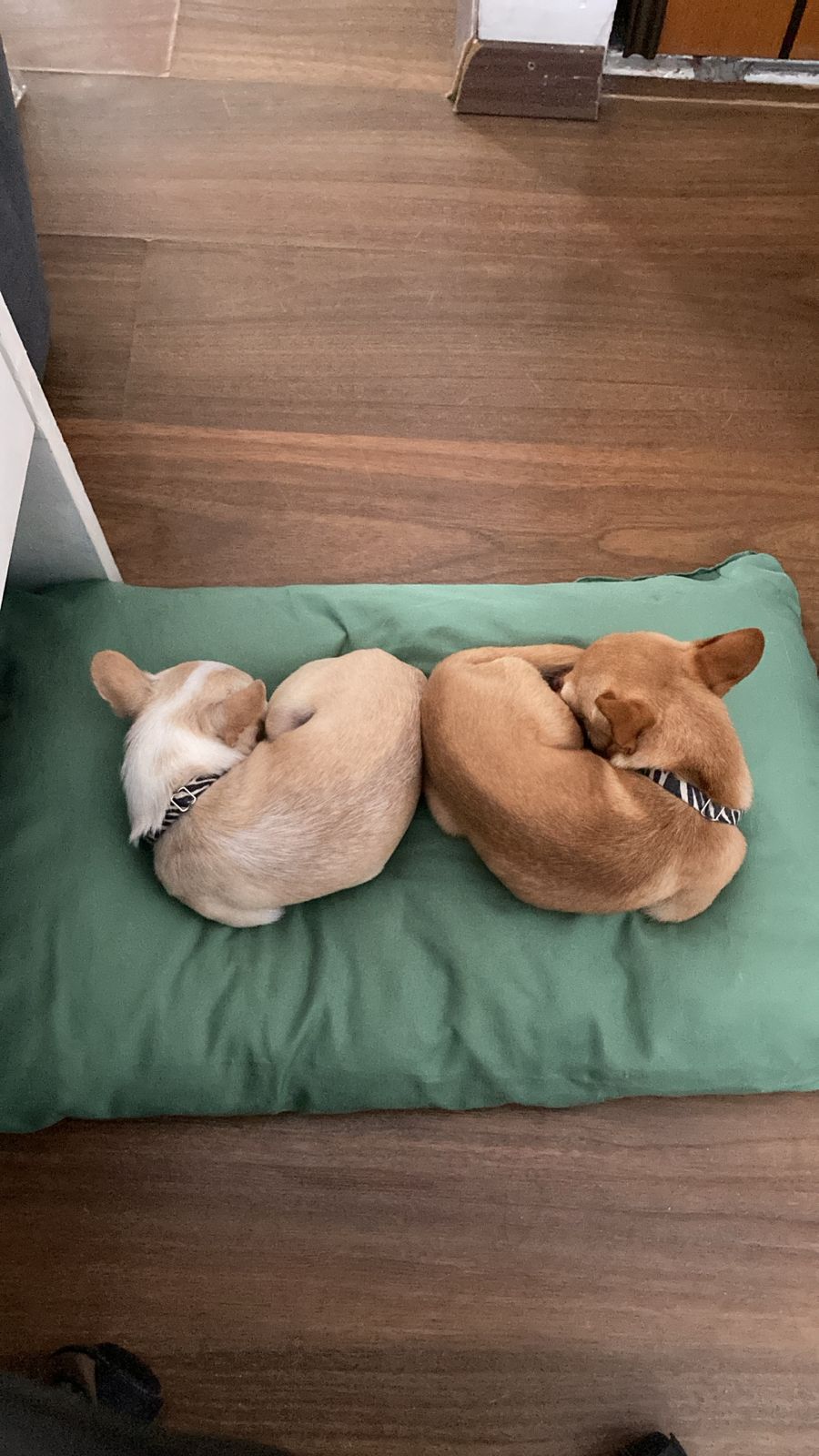
If you got here because your Chihuahua won’t sleep at night, take a breath: you’re not the only one with dark circles over a two-kilo dog. You turn off the light and the noise begins, a whimper, a short bark, a lap around the bed. Sometimes it’s a new puppy, sometimes an adult who slept fine for years and suddenly changed. Let me give you the important part up front: there’s almost always a solution, but you need to understand why it is happening before you reach for any trick.
A Chihuahua’s sleep changes with each stage
Before we talk causes, it helps to know how much your dog should be sleeping. A healthy Chihuahua sleeps far more than you do: between fourteen and twenty hours a day depending on age. Most of it is at night, but not all. They need long naps during the day too.
Here’s the full breakdown in case it helps: how much do Chihuahuas sleep by stage. Knowing what is normal is the first step to spotting what is not.
On an ideal night, your Chihuahua goes out like a light, sleeps deeply, maybe stirs once, and wakes at dawn. When that sequence breaks, there’s a concrete reason behind it.
Why does she wake up so many times at night?
This is the question that floods my inbox most. The answer changes with age. An eight-week-old puppy who just arrived is a completely different case from a five-year-old adult who slept beside you without fail for four years.
In puppies: transition, hunger, and the bladder
A puppy just separated from his mother lives the first nights as an emotional earthquake. He goes from sleeping with his littermates to being alone among unfamiliar smells. It is expected for a puppy to cry at night during the first week, sometimes two. It’s not stubbornness, it’s adjustment.
Physical factors at that stage:
- Real hunger: a two- or three-month-old puppy cannot go eight hours without eating.
- Pee and poop: the bladder is not in control yet, they need to go out or at least to a pee pad.
- Cold: they lose heat fast and wake up if the bed does not wrap around them.
- New noises: the fridge, the boiler, the street. Everything sounds new for the first time.
- Fear of total darkness: a very soft light reassures them.
Waking up is part of the process. If you’re in the first days, the Chihuahua puppy care guide will help.
In adults: anxiety, pain, and excessive thirst
A Chihuahua who used to sleep well and now won’t sleep at night is sending you a message. The most common causes are three:
- Nighttime anxiety: linked to intense attachment. If she follows you to the bathroom, she will pick up any change in your breathing and switch on. I explain it in Chihuahua separation anxiety, which is closely tied to night waking.
- Pain or physical discomfort: a dog in pain does not complain, she gets restless. She shifts position twenty times, whines softly. Joint, dental, or digestive pain is a frequent cause.
- Excessive thirst: if she drinks a lot of water and wakes to drink or urinate, take note. It is associated with metabolic conditions and warrants a vet check.
There are secondary causes too: heat or cold, hunger if dinner was very early, boredom from sleeping too much during the day, or external noises she has grown reactive to.
Quick table: type of waking, likely cause, and action
| Type of waking | Likely cause | Immediate action |
|---|---|---|
| Sustained whining in a puppy | Emotional adjustment, loneliness | Bed close to you, blanket with your scent |
| Waking every 3-4 h in a puppy | Immature bladder | Quick trip out, no fuss, back to sleep |
| Sudden bark at 3 a.m. in an adult | External noise, alertness | Lower the stimulus, curtains, soundproof |
| Restlessness, shifting position | Pain or digestion | Vet assessment if it repeats |
| Waking to drink water | Increased thirst | Bloodwork, do not restrict water blindly |
| Panting and circling | Nighttime anxiety | Strict routine, review daytime attachment |
| Whining with disorientation in a senior | Cognitive decline | Specific veterinary consult |
Use it as a guide, never as a diagnosis.
The correct nighttime routine, step by step
Most bad nights start before you turn off the light. If she reaches bed overstimulated, with a full bladder, or without burning energy, the night falls apart. At home I run this sequence with Romeo and Lorenzo without fail.
- Early dinner, at least two hours before bed, with her usual ration of quality dry food.
- A short final walk with sniffing, which is what actually tires them out.
- Water available until an hour before bedtime, then remove the bowl.
- A final trip out for pee before lights off, mandatory even if she does not ask.
- Dim light and a low voice for the last half hour. No games or loud laughter.
- A ready bed, no drafts, no appliance noise nearby.
- A dry goodnight: you say good night once and that’s it.
Repeated for ten days, this reprograms the internal clock. They’re creatures of habit: what feels strange today, in two weeks they ask for on their own.
The right bed: where she sleeps matters
The type of bed matters more than we think. A Chihuahua on a cold floor, on a flat bed with no edge, or in a high-traffic spot wakes up from pure discomfort. Look for these features:
- A high edge or cave style, so she feels lateral protection.
- An extra blanket underneath so she can burrow if she is cold.
- Away from drafts, far from windows and doors.
- In a stable zone, not in the middle of the hallway or beside the fridge.
On whether she should sleep in your bed or her own, there’s no single answer. Romeo sleeps in my bed and Lorenzo in his at the foot. What matters is not where, but that it is always the same spot. Inconsistency breaks sleep.
JOEJOY cave bed with attached blanket
★ 4.5 · 3,400 valoraciones
Chihuahuas burrow — it's instinct, not preference, and a dog that can't burrow will go looking for your duvet instead. A cave bed with an attached blanket gives them the covered, enclosed feeling they're after, which in practice means fewer trips to your bed at 3am.
Ojo: Check the size: a bed that's too big defeats the point, because the enclosed feeling is what settles them. And it needs washing more often than an open bed — trapped warmth plus a dog inside means it gets musty faster than you'd expect.
Check the cave bed on Amazon →A 7-night protocol to reset sleep
If she has been waking for weeks and you want a concrete plan, this is the one I recommend. Seven nights doing the same thing, no exceptions, because they learn by exact repetition.
- Night 1: dinner at 8:00, walk at 9:30, water removed at 10:00, dim lights at 10:30, final pee and bed at 11:00. If she wakes, you do not speak, do not turn on the light, do not pick her up.
- Night 2: exactly the same. If night 1 was bad, change nothing. Changing things creates more disorder.
- Night 3: repeat. A calmer pattern usually appears in the first stretch.
- Night 4: same routine. If she asks to pee, go out in total silence, no reward, and back to bed.
- Night 5: in puppies, the night stretch lengthens by an hour or two. In adults it starts to stabilize.
- Night 6: if there has been a setback, do not improvise. Keep the routine identical.
- Night 7: you assess. If it improved, keep going two more weeks. If not, rule out a medical cause.
The temptation to make exceptions is the protocol’s biggest enemy. The dog doesn’t understand half-measures.
When is it a health problem?
Some wakings are not behavioral, and treating them as such wastes time. See the vet without delay if:
- The wakings are sudden in a healthy adult who always slept well. An abrupt change with no apparent reason is a red flag.
- There is prolonged nighttime panting with no heat. It can point to heart or respiratory problems.
- She drinks much more water than before and urinates more.
- She wakes with a sharp yelp when she moves. Probable pain.
- She trembles continuously on waking, even in a warm room. Our piece on why Chihuahuas shake can help you read that sign.
- She gets disoriented on rising and does not recognize the bed. Common in seniors.
- She coughs at night or breathes with a new sound.
- She loses weight alongside sleeping worse.
Almost everything affecting sleep has a diagnosis and treatment when caught early. Waiting “to see if it passes” is rarely a good idea in such a delicate breed.
Common mistakes that drag the problem out
- Lifting her into bed the moment she cries the second night. You reinforce the crying.
- Giving treats or kibble when she wakes. You teach her that waking pays.
- Turning on bright lights to take her out. You switch her brain on.
- Changing beds every few nights. You destabilize her.
- Playing hard right before bed. You leave her overstimulated.
- Leaving unlimited water all night if she already wakes to drink.
- Allowing long naps after seven in the evening.
- Ignoring physical symptoms thinking it’s just a quirk.
Most of these come from love. But love without judgment ends up hurting the dog’s rest and yours.
My experience with Lorenzo when he arrived
Let me tell you how the first nights with Lorenzo went. He arrived at two and a half months, fawn with an already-marked apple head. The first night he cried for two straight hours. I, having lived it with Romeo, knew what was called for: bed close to mine, a blanket with my scent, candlelight, and not moving no matter how much he whined. The second night he cried forty minutes. The third, fifteen. The fourth, nothing. Within a week he slept through with two brief trips to the pee pad.
With Romeo, my cream apple head and now a senior, it was similar but longer: it took him ten nights to do the full stretch. Every puppy has its own rhythm. What helps is holding the structure and understanding that the move to a new home is emotional work for them, not malice.
Today Romeo sleeps against my hip and Lorenzo at the foot of the bed. Neither wakes me unless it’s an emergency. It was not magic, it was routine.
This article is informational and does not replace veterinary advice. With any sudden change in your adult Chihuahua’s sleep, book a consult without delay.
Written by Belen Salto, who shares her life with Romeo and Lorenzo, two Chihuahuas. · Ver en español