
Newborn Chihuahua Care: Weight and the Critical 30 Days
Newborn Chihuahua weight, feeding, warmth and the most critical first 30 days. A careful guide with a strong vet disclaimer.
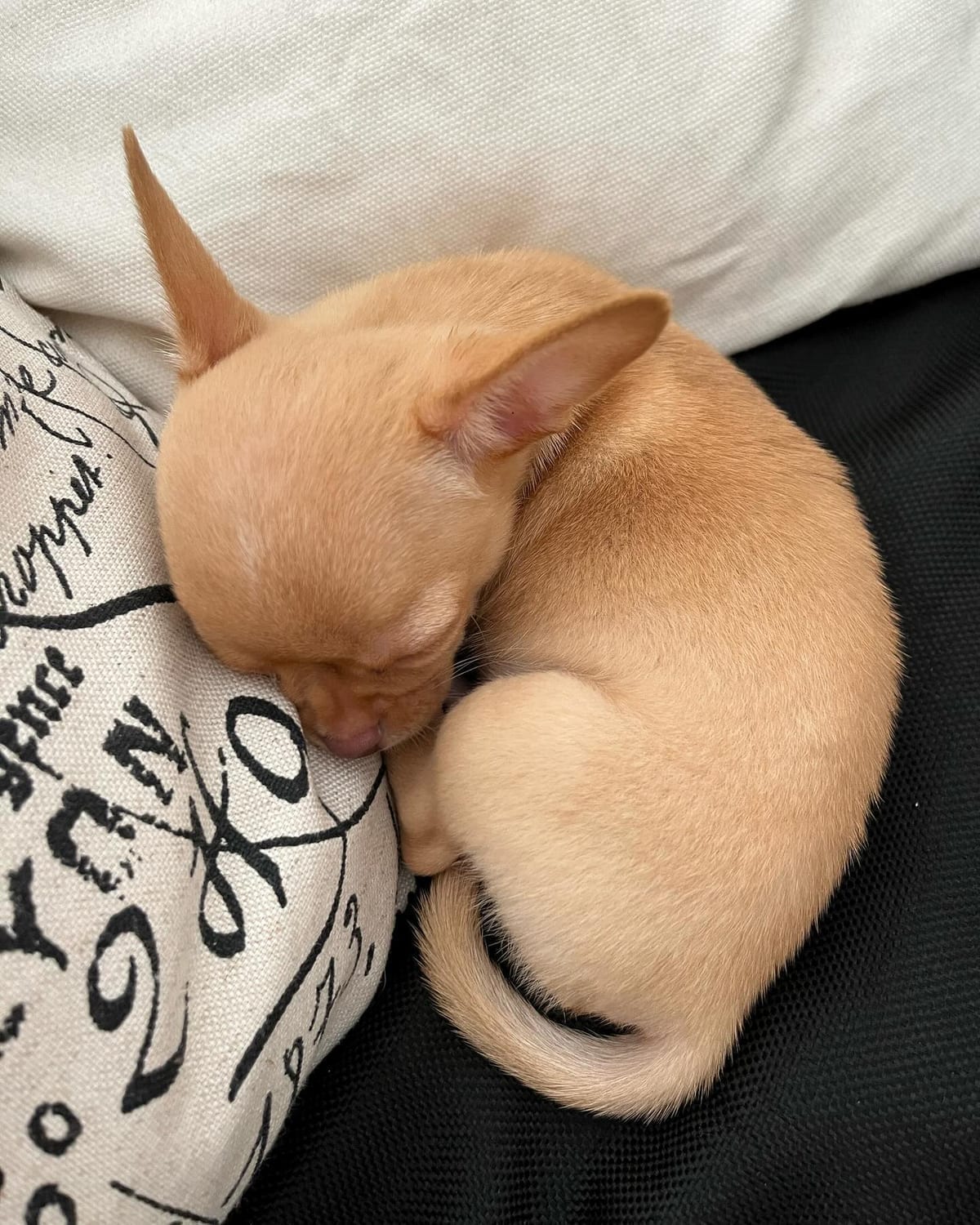
A newborn Chihuahua is one of the tiniest, most fragile and most fascinating creatures in the whole dog world. The American Kennel Club’s Chihuahua breed page caps the adult at 6 pounds, and a puppy starts far below that: at birth it weighs between 2.5 and 5 ounces, measures around 3 inches long, and is utterly helpless: it can’t see, hear, regulate its temperature or control its movements. The first 30 days are the most delicate stretch of its entire life, and many decisions made in those days shape its long-term health.
This guide is for anyone whose female has just had a litter, anyone considering adopting a baby Chihuahua, or anyone who simply wants to understand how this breed develops from day one. It does not replace veterinary follow-up, especially if there are complications, but it gives you the full map of what to expect and what to do.
Important veterinary disclaimer: newborn Chihuahua puppies are extremely vulnerable. Any warning sign (refusing food, persistent crying, a cold body, unusual weakness) needs immediate veterinary attention, not in hours, but as soon as possible. This article is informational and does not replace veterinary advice.
What does a newborn Chihuahua look like?
At birth, a Chihuahua puppy looks very different from the dog we know as an adult. Its main features:
- Weight: 2.5 to 5 oz, depending on litter size and genetics. Large litters tend to have smaller pups.
- Size: about 3 to 4 inches long. It fits in the palm of a hand.
- Closed eyes: born with the eyelids sealed. They open between days 10 and 14.
- Folded ears: the ear canals are closed at birth. Hearing begins around the second or third week.
- No teeth: the first ones appear around weeks 3 to 4.
- Limited movement: it only drags itself toward the mother with effort. It doesn’t walk or stand.
- Very short, soft coat: in long-coated Chihuahuas, the characteristic coat develops over the weeks.
- No temperature control: it depends on the warmth of the mother, the littermates and the environment.
Despite the tiny size, newborn Chihuahuas are proportionally larger in head and belly than in body. This is normal and evens out over the weeks.
How much do they weigh at birth, and how fast do they grow?
A baby Chihuahua’s growth is very fast in relative terms. In the first week of life, they roughly double their weight.
| Age | Typical weight | Main milestone |
|---|---|---|
| Newborn | 2.5 to 5 oz | Loses 5-10% in first 24 h, then gains |
| 1 day | Loses 5-10% of birth weight | Normal as it hydrates from milk |
| 3 days | Regains birth weight | The upward curve begins |
| 1 week | 5 to 10 oz (double the start) | Still blind and deaf |
| 2 weeks | 7 to 14 oz | Eyes open |
| 3 weeks | 10 to 19 oz | Hears, stands, first teeth |
| 4 weeks | 14 to 25 oz | Starts trying solid food |
On average they gain about 0.25 to 0.5 oz per day during the first 4 weeks. If your puppy does not gain weight, or loses weight after the first 3 days, that’s a warning sign that needs the vet immediately.
For the full picture beyond the first month, read the Chihuahua growth stages, where we cover what happens from one month all the way to adulthood.
The first 14 days: the most delicate phase
In the first fourteen days, the Chihuahua puppy lives in a closed world: no sight, no hearing, only smell, warmth and contact. This is the phase of total dependence.
What they do: sleep 18 to 22 hours a day, nurse every 1.5 to 2 hours day and night, drag instinctively toward the mother’s warmth and scent, cry when cold or hungry, and rely on the mother licking them to stimulate urination and defecation.
Key care this phase:
- Room temperature: crucial, and one of the points the MSD Veterinary Manual stresses in its guide to routine care and breeding of dogs, since newborns can’t hold their own body heat. The first 4 days it should be around the puppy at 85 to 90 F. Between days 7 and 10 it can drop gradually to about 79 F. After 4 weeks the ambient temperature can normalize.
- Weigh daily the first 7 days, ideally at the same time. Note each weight.
- Do not separate the puppies from the mother except in emergencies.
- Nest hygiene: clean, dry, no drafts.
- Away from cold floors and corners: use low-temperature heat mats or heat lamps at a safe distance.
Warning signs this phase: a cold body, persistent high-pitched crying, weight loss after day 3, a puppy that stays alone away from the group, diarrhea or vomiting, very pale or yellowish gums. Any of these is an emergency. Do not wait until tomorrow.
Weeks 2-3: eyes and ears open
This is the phase of sensory awakening. The puppy starts to register the world: eyes open around days 10 to 14 (vision still blurry), hearing kicks in around weeks 2 to 3, the puppy stands on wobbly legs around days 14 to 21, takes its first clumsy steps around day 21, and the first milk teeth break through around week 3.
It’s a very moving phase for caregivers, because the puppy goes from “a being that sleeps and eats” to one that looks, hears, plays clumsily and starts to show personality.
Recommendation: early socialization begins here. Talk softly, let them hear everyday sounds at low volume, handle them with clean hands a few minutes a day. Socialization in these days shapes how balanced the adult will be.
Weeks 3-4: weaning and first teeth
At 3 to 4 weeks weaning begins. The puppy starts showing interest in the mother’s food. What to do:
- Offer moistened solid food: small-breed puppy food, softened with warm water or puppy milk to a paste consistency.
- Small amounts, several times a day (4 to 5 times).
- Keep nursing in parallel, do not cut it off suddenly. The mother regulates this herself.
- Water available: in very shallow dishes so they can’t drown.
- Weigh every 2 to 3 days to confirm they keep gaining.
What are the serious risks in newborn Chihuahuas?
Three specific conditions affect Chihuahuas more than other breeds. Knowing them thoroughly can save a puppy’s life.
Hypoglycemia (low blood sugar)
This is the number one risk in Chihuahua puppies. Until about 5 months of age they have no glucose reserves in the liver, meaning they depend on eating every few hours to keep blood sugar stable. A sharp drop can lead to fainting, seizures and death if untreated.
Symptoms (in order of progression): disorientation and unfocused gaze, weakness, trembling and chills, cold body, muscle spasms on the floor, unconsciousness.
Emergency action (while you reach the vet): rub a drop of honey or glucose syrup on the gums (never force it to swallow, aspiration risk), keep the puppy warm, and go to the vet urgently, even if it seems to recover.
Prevention: ensure at least 4 to 5 small meals a day, never letting more than 4 hours pass without eating. Trembling can be an early sign of hypoglycemia that many owners mistake for cold or excitement; our guide on why do Chihuahuas shake helps tell them apart.
Hypothermia
Baby Chihuahuas cannot regulate body temperature until about 4 weeks of age. If the environment is cold, they chill fast and die fast. A body temperature below 95 F is already an emergency.
How to prevent it: correct room temperature (85 to 90 F the first 4 days), a heat mat or lamp in one zone of the nest (so the puppy can move away if too warm), and never leaving them away from the mother or littermates.
Fading puppy syndrome
A picture where the puppy loses vitality progressively and dies within the first 5 to 7 days with no obvious cause. It can be linked to infections, genetic defects, placenta problems or care failures.
Signs: a puppy that does not seek the teat, weak or absent crying, weight loss after day 3, a persistently cold body.
It can’t always be saved, but catching it early and reaching the vet improves the odds. Some cases respond to nutritional support and antibiotics; others do not.
When should you call the vet urgently?
Any of these signs needs an immediate visit, no waiting:
- Weight loss after day 3.
- A noticeably cold body.
- Sharp, constant crying.
- A puppy that will not eat or refuses the teat.
- Pale, yellowish or bluish gums.
- Uncontrollable trembling, spasms.
- Diarrhea or vomiting.
- Abdominal distension (a very swollen, hard belly).
- A puppy that stays away from the group and will not move.
For tiny Chihuahuas, hours can make the difference between life and death. Better to consult too much than too little, and if you want a second, independent read on neonatal warning signs, the Cornell Riney Canine Health Center publishes owner-facing guidance worth bookmarking.
How do you care for one if the mother is unavailable?
Sometimes the mother dies in birth, rejects the litter, or can’t nurse. Then you become the substitute, an enormous but possible challenge.
The essentials: puppy milk replacer (not cow’s milk, not human milk; bought at vet clinics), a special bottle for tiny puppies or a needle-free syringe, a feeding every 2 hours the first 2 weeks, day and night, stimulation of urination and defecation (a warm damp cotton ball over the genital and anal area after each feeding, mimicking the mother), constant warmth (a lamp or low heat mat), and daily weighing, consulting the vet if it does not gain or loses weight.
It’s intensive work, but lifesaving. Many puppies survive thanks to committed humans who take on that role for weeks. If the litter survives the first month, our Chihuahua puppy care guide picks up from there.
In summary
- Newborn Chihuahuas weigh 2.5 to 5 oz and measure 3 to 4 inches at birth.
- The first 14 days are the most delicate: blind, deaf, totally dependent.
- Eyes open at 10 to 14 days, hearing at 2 to 3 weeks, weaning at 3 to 4 weeks.
- Main risks: hypoglycemia, hypothermia and fading puppy syndrome.
- Daily weighing the first week is the best monitoring tool.
- Any warning sign means the vet, immediately.
We met Lorenzo when he was a tiny baby. Seeing him that small, the size of a fist, fragile, eyes barely opening, made me understand all at once how enormous the responsibility of caring for a Chihuahua puppy really is. Romeo, by contrast, arrived when he was already two months old, so I didn’t live through those first 30 days with him. But every time I see a newborn puppy, I keep confirming what so many vets say: the first 30 days are a race against time, where every gram, every feeding and every decision counts. If you’re caring for a litter right now, I’m rooting for you. And above all, the most important thing: do not wait when in doubt. Vet, always.
Written by Belen Salto, who shares her life with Romeo and Lorenzo, two Chihuahuas. · Ver en español