Spaying a Chihuahua: Best Age, Cost, Recovery and Toy-Breed Risks
Spaying a Chihuahua: what vets say about timing, what it costs in the US, a day-by-day recovery plan and the anesthesia risks that are specific to toy breeds.
Spaying a Chihuahua is one of the few surgeries most owners plan rather than react to, and that’s an advantage. You get to choose the timing, compare clinics, ask good questions and set up the house for recovery before the day comes. You also get to think about the things that matter more for a 4-pound dog than for a Labrador: anesthesia temperature, fasting and those stubborn baby teeth.
This guide covers what vets currently say about age, what spaying costs in the US, the recovery fortnight and the toy-breed risks worth raising with your vet. Most of it applies to neutering a male as well.
This article is for information only and is not a substitute for veterinary advice. Your vet knows your dog’s size, health and history, and the decision should be made with them.
Why spay or neuter at all?
For a pet Chihuahua that won’t be bred, the main reasons are medical. The ASPCA’s spay and neuter page says spaying prevents uterine infections and decreases the incidence of breast tumors, which are malignant in about half of dogs, and that spaying before the first heat offers the best protection.
Uterine infection (pyometra) is not a small thing. It usually means emergency surgery on a sick dog, which is a very different operation from a planned spay on a healthy one.
There are practical reasons too: no heat cycles every few months, no risk of an accidental litter, and for a Chihuahua, no risk of a pregnancy that could end in a C-section.
What is the best age to spay a Chihuahua?
This is where you’ll find the most confident and contradictory advice online, so here is what the veterinary guidance actually says.
The American Animal Hospital Association (AAHA) published a spay and neuter chart with its 2019 Canine Life Stage Guidelines. For dogs expected to weigh less than 45 pounds as adults, which includes every Chihuahua:
| AAHA suggestion for dogs under 45 lb | What it weighs | |
|---|---|---|
| Female | Spay before the first heat cycle, around 5 to 6 months | Lower risk of breast cancer; prevents unwanted litters |
| Male | Neuter at around 6 months | Prevents unwanted litters |
| Both | Talk to your veterinary team | AAHA calls this “evolving information” to apply to the individual dog |
Most of the debate you’ll read about delaying spay and neuter concerns bigger dogs. AAHA’s chart gives later windows for dogs over 45 pounds, because different breeds stop growing at different ages.
The ASPCA adds that the traditional age for neutering dogs is six to nine months, that healthy puppies can be operated on much younger, and that adults can be spayed too, with a slightly higher risk of complications in older, overweight or unwell dogs.
What your vet may weigh for a Chihuahua specifically:
- Size. A very tiny puppy may be better off waiting a few weeks to gain weight.
- Baby teeth. If retained teeth are going to need extracting, timing the spay to do both at once saves an anesthetic.
- Heart or liver findings. A murmur or an abnormal liver test changes the plan, not necessarily the decision.
How much does it cost to spay a Chihuahua?
Honest answer: it varies more than almost any other routine procedure, because clinics include very different things in the price.
| Where | What we can say | Source |
|---|---|---|
| Typical one-time cost (dog) | $300 | ASPCA cost table, 2021 update |
| Low-cost clinics and shelter programs | Often lower; varies by area and eligibility | ASPCA’s low-cost spay/neuter page points to the SpayUSA database |
| Private practice, full package | Usually higher, depending on what’s included | Ask for an itemized estimate |
The ASPCA’s cost page lists $300 for a dog’s spay or neuter as a one-time cost in its 2021 update, and its low-cost spay/neuter page suggests searching the SpayUSA database or asking a local shelter or vet.
When you compare quotes, compare what’s in them:
- Pre-anesthetic bloodwork
- IV catheter and fluids
- Pain medication to take home
- Warming support during surgery
- The cone or recovery suit
- The recheck visit
- Extraction of retained baby teeth, if needed
A quote that looks $150 cheaper may simply leave out the bloodwork or the pain meds. For a toy breed, those are not the places to save. Our Chihuahua vet costs guide puts the spay next to the other bills you’ll meet over a Chihuahua’s life.
What are the risks of anesthesia for a Chihuahua?
Modern anesthesia is very safe for healthy young dogs, but toy breeds have specific weak points. The AKC’s article on dog anesthesia notes that toy breeds are at increased risk for anesthetic complications because they’re more prone to hypothermia, and that they may be more difficult to intubate and monitor and more easily overdosed.
In practice, that leads to a few good questions to ask your vet:
- Will my dog be on a warming device and have her temperature monitored? A 4-pound body cools quickly on a steel table.
- Will she have bloodwork beforehand? It screens for liver and kidney problems that change drug choices.
- Will she have an IV catheter and fluids?
- Who monitors her during recovery, and until when?
Fasting and low blood sugar
Tiny dogs, and especially puppies, have very small energy reserves. That’s why hypoglycemia in Chihuahua puppies is a real emergency. The ASPCA’s advice is that adult dogs usually have no food after midnight before surgery, while for puppies the vet may advise that food not be withheld.
So: follow your vet’s fasting instructions to the letter, don’t extend them “to be safe,” and if your dog is very young or very small, ask whether surgery can be scheduled first thing in the morning.
Retained baby teeth
Small breeds like the Chihuahua often keep some baby teeth after the adult ones come in. The MSD Veterinary Manual says delayed loss of baby teeth is common, especially in small-breed dogs, that they can push the permanent teeth out of position within as little as 2 to 3 weeks, and that they should be removed by a vet as soon as possible.
Since your Chihuahua will be under anesthesia for the spay anyway, ask the vet to check her mouth at the pre-op visit. Doing both together means one anesthetic instead of two. Our article on Chihuahua teeth problems explains why those crowded little mouths matter later.
Recovery: the first two weeks
Depending on the clinic, your Chihuahua may come home the same day, groggy and a little cold. The ASPCA’s recovery advice is simple: a quiet place indoors away from other animals, no running or jumping for up to two weeks, no licking the incision, no bath for at least ten days, and a daily look at the incision.
| Time after surgery | What to expect | What you do |
|---|---|---|
| Day 0 (evening) | Sleepy, wobbly, may shiver | Warm, quiet crate or pen; small meal only if your vet says so |
| Days 1 to 3 | Appetite returns; may seem sore | Give pain meds on schedule; leash-only potty trips |
| Days 4 to 10 | Feels fine, wants to play | This is when incisions get damaged; keep her calm and off furniture |
| Days 10 to 14 | Incision closing | Recheck if your vet scheduled one; bathe only once your vet clears it |
Cone or onesie?
The ASPCA recommends a well-fitted Elizabethan collar to stop licking. On a Chihuahua, a stiff cone can be huge relative to the head, so it’s worth asking your vet about a soft cone or a recovery suit (a snug onesie that covers the belly). Whatever you use:
- It should stop her from reaching the incision with her mouth.
- She should be able to eat, drink and sleep in it. Raise the food bowl a little if the cone gets in the way.
- Check that it doesn’t rub her armpits or neck.
Jumping is the real enemy
A Chihuahua that feels better on day four will try to jump onto the couch. Block access to furniture, carry her up and down any stairs, and if she has to be left, use a small pen rather than the whole room.
Call the vet if you see
- Redness, swelling or discharge at the incision, or a gap in it
- Lethargy that gets worse instead of better
- Not eating after the first day
- Vomiting, pale gums or weakness
Our take
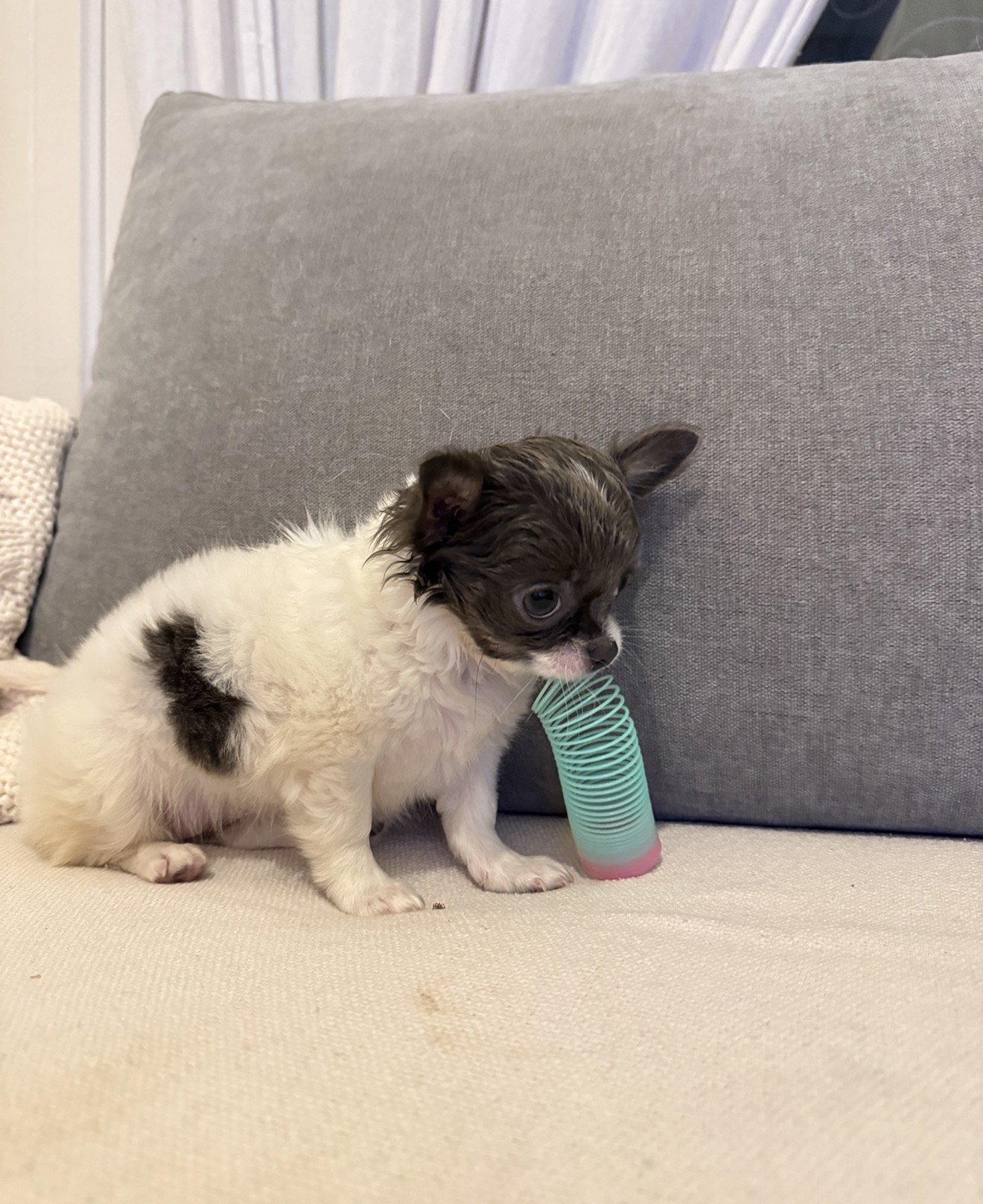
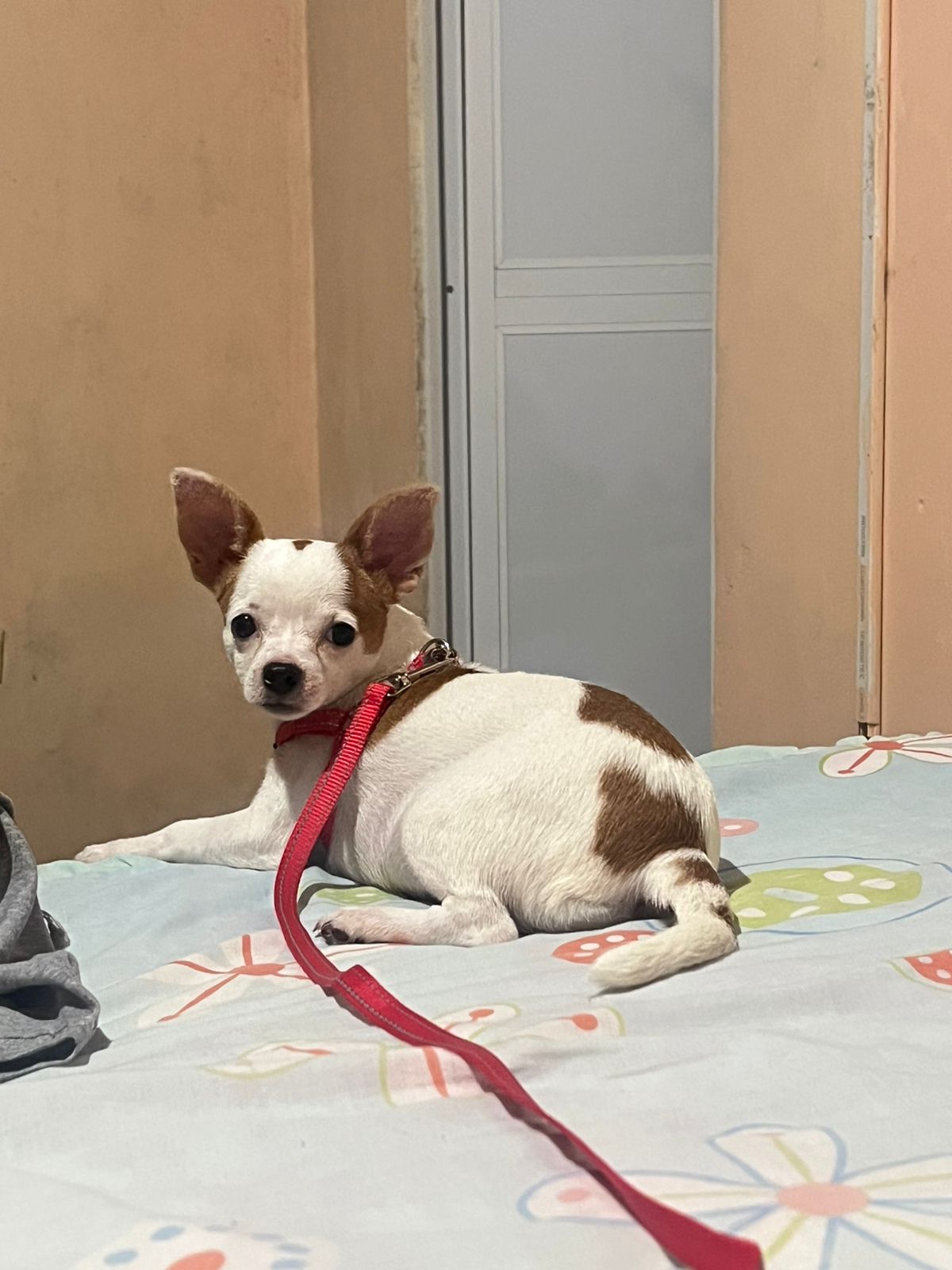
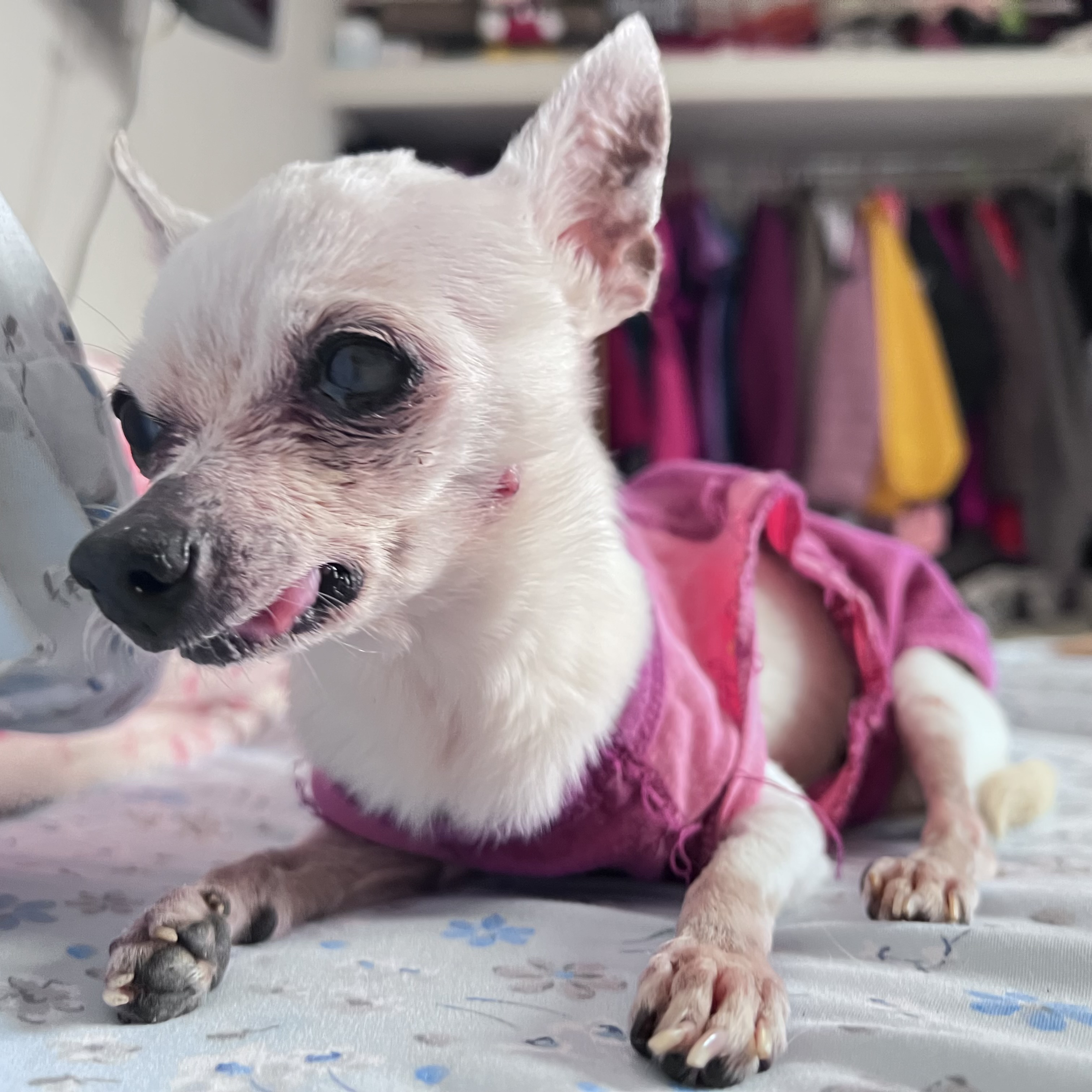
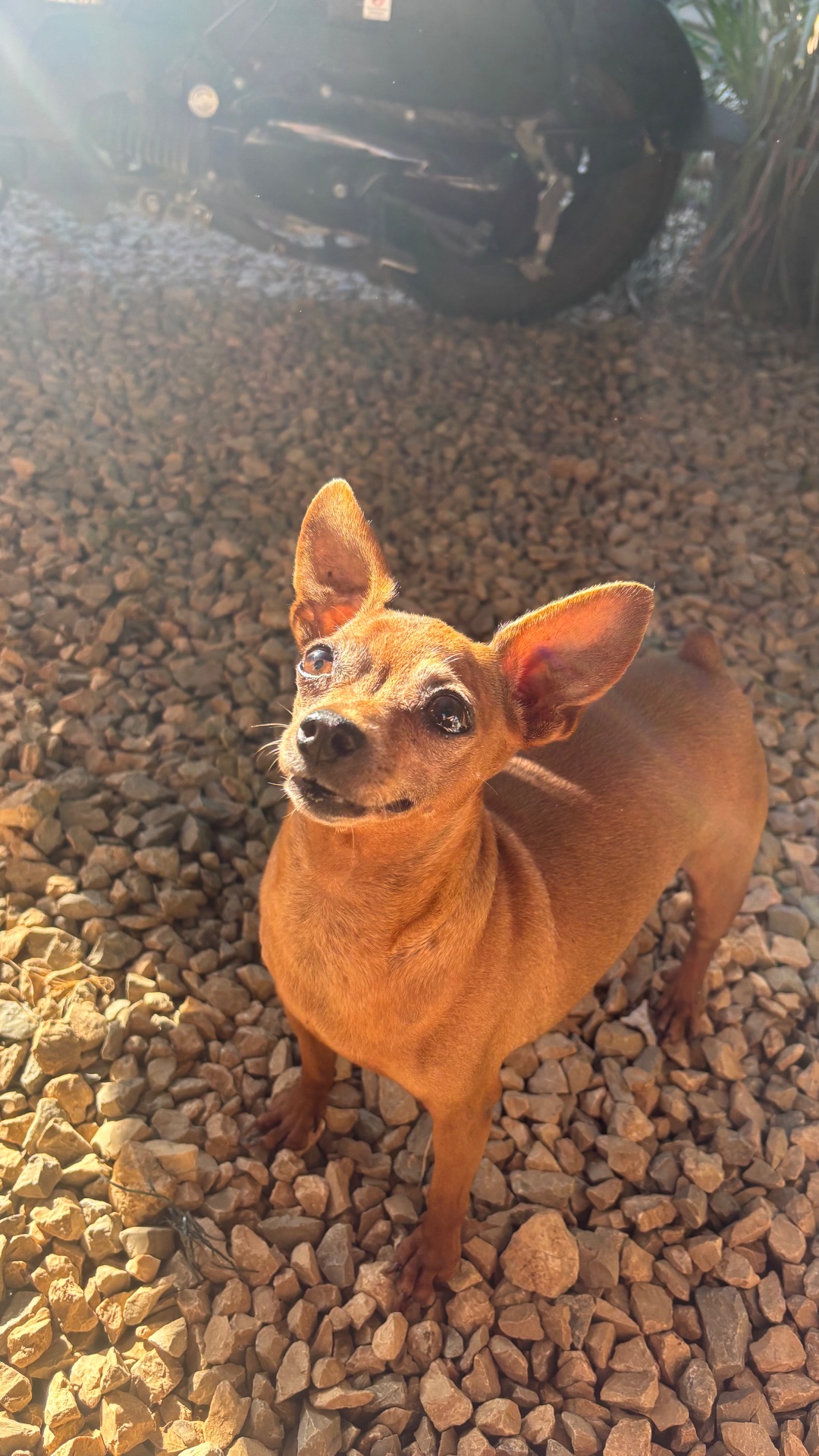
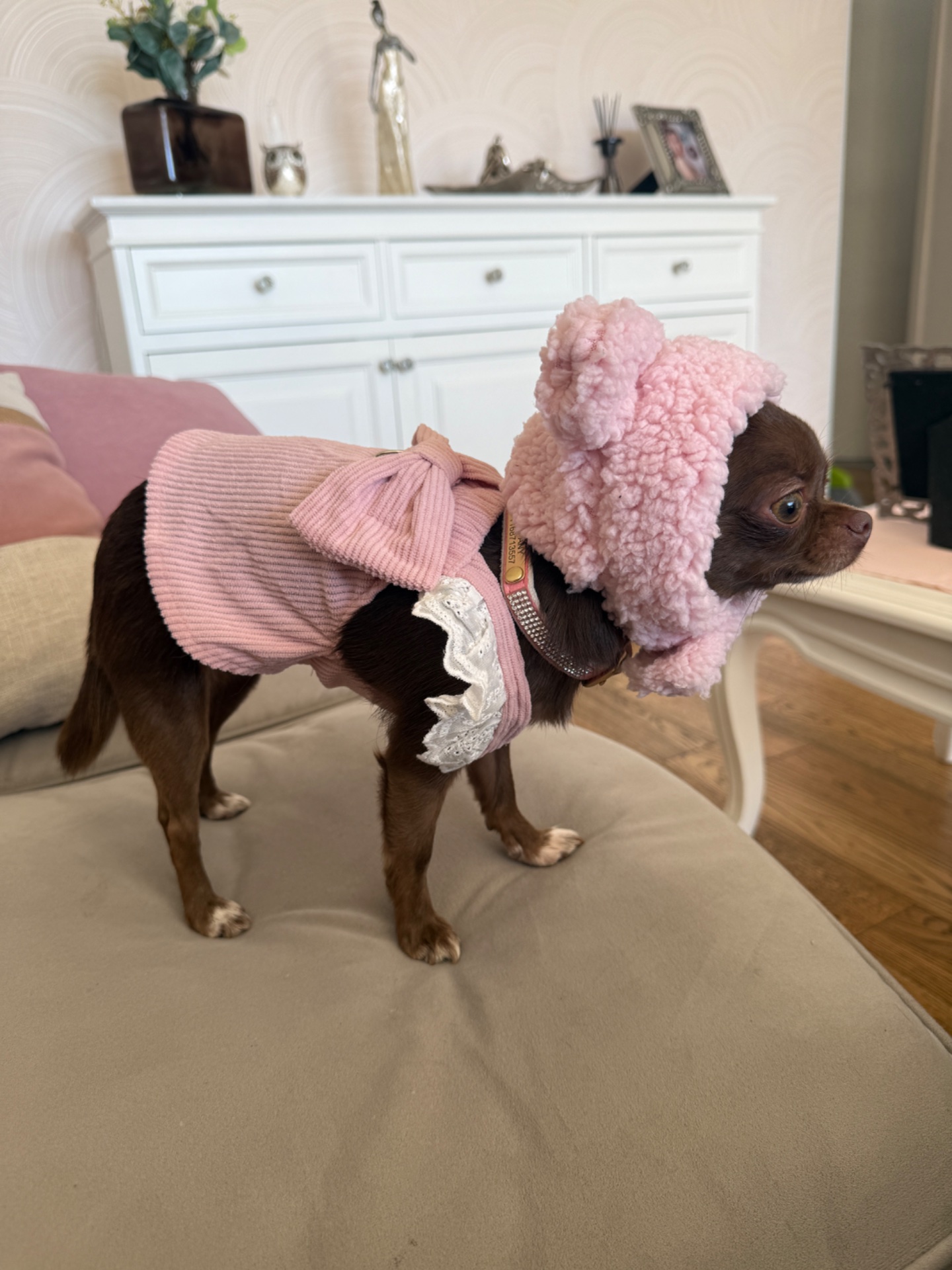
Whether it’s a girl like Kalesy, the club member in the photo at the top, or a boy like Romeo and Lorenzo, the surgery is the short part. The two weeks after it, keeping a bored, healing toy dog from launching herself off the sofa, are the real work.
Choose the clinic for how it handles small dogs, not just for the price. Ask about warming, fasting and baby teeth. Then clear your calendar for a quiet fortnight.