How Much Exercise Does a Chihuahua Need? Walks, Play and Age
How much exercise does a Chihuahua need? Daily minutes by age, how far they can walk, indoor games, puppy and senior limits, and heat and cold safety.
How much exercise does a Chihuahua need? Less than a Border Collie, more than a cushion. The AKC’s guide to whether a Chihuahua is right for you says the breed requires minimal exercise and is happy to curl up in an owner’s lap. That’s true, and it’s also the reason so many Chihuahuas end up bored, overweight or barking at every leaf. A tiny body still needs daily movement, and a busy mind needs even more.
Here’s what a sensible routine looks like at each age, how far a Chihuahua can walk, and how to keep it safe in heat and cold.
Small dog, real needs
A Chihuahua doesn’t need long runs. What it does need is daily activity: short walks, play, sniffing and a bit of training. When that’s missing, owners often see the same pattern:
- Barking, chewing or “zoomies” late in the evening.
- Weight gain, which is hard on small knees and on the trachea.
- Clinginess or restlessness when the house is quiet.
- Shyness or reactivity outside, because the world beyond the living room feels new every time.
Exercise isn’t only about burning calories. For a small, alert breed, walks are also how a dog learns that cars, bikes and other dogs are normal parts of life.
How many minutes a day, by age and health?
No kennel club publishes an exact daily number for Chihuahuas, so treat the figures below as typical ranges, not rules. Your dog’s weight, health and energy level matter more than any chart.
| Stage | Typical daily activity | What it looks like |
|---|---|---|
| Puppy (2 to 6 months) | Several short play sessions; walks of about 5 minutes per month of age | Play on soft floors, short supervised outings once your vet clears it |
| Junior (6 to 12 months) | 30 to 45 minutes total | Two short walks plus play and training |
| Adult, healthy | 30 to 60 minutes total | Two or three walks of 10 to 20 minutes plus games |
| Adult, overweight | Start at 15 to 20 minutes and build | Slow walks, more often, with your vet’s plan |
| Senior | 20 to 40 minutes total, gentle | Shorter strolls, lots of sniffing, easy indoor games |
| Heart, airway or joint problems | Whatever your vet advises | Often several very short sessions instead of one long one |
Splitting the day into small pieces suits the breed far better than one long outing. A tiny dog tires quickly, and two or three short walks give more variety and fewer chances to overdo it.
How far can a Chihuahua walk?
Further than people expect, in many cases. A fit adult Chihuahua with healthy joints can often cover a mile or more at an easy pace, with breaks to sniff. Some active dogs happily do longer hikes once they’ve built up to them.
Distance isn’t the best measure, though. Watch your dog instead:
- Lagging behind or slowing down a lot.
- Sitting or lying down and refusing to continue.
- Heavy panting, especially with a wide, flat tongue.
- Limping, skipping a step or carrying a back leg for a few strides.
- Coughing, or a honking sound when pulling on the leash.
Any of these means it’s time to head home, carried if needed. Skipping a step with a back leg can point to a luxating patella, a common knee problem in toy breeds, and a honking cough can be a sign of tracheal trouble. Both deserve a vet visit if they keep happening.
Indoor games that count as exercise
On rainy, icy or very hot days, indoor play does a lot of the work. These games burn energy and keep the brain busy:
- Hallway fetch. Short, low throws with a small, soft toy. Skip high tosses that make your dog leap and twist.
- Hide-and-seek. Ask your dog to stay, hide behind a door and call once. Great for recall too.
- Find the treat. Hide small treats around a room and let your Chihuahua sniff them out. Sniffing is surprisingly tiring.
- Gentle tug. Keep it low and calm, and let your dog win sometimes.
- Food puzzles and snuffle mats. Turn part of a meal into a five-minute job.
- Trick training. Spin, touch, sit pretty, go to bed. Five minutes of training can tire a young dog as much as a walk.
What about puppies and growing bones?
Puppies have plenty of energy, but their bodies are still developing. The AKC’s article on puppy exercise cites a rule of thumb from veterinary researchers: about five minutes of walking per month of age, once or twice a day. A 3-month-old puppy would walk around 15 minutes at a time, and a 4-month-old around 20.
The same article notes that the soft growth plates on a puppy’s bones need time to harden, which takes about 6 to 8 months in smaller breeds. Until then:
- Avoid long runs, especially on sidewalks and blacktop.
- Skip repeated jumping, like tossing a ball straight up.
- Lift your puppy on and off the sofa and bed rather than letting it leap down.
- Let free play on soft surfaces do most of the work. Puppies stop when they’re tired; forced walks don’t let them.
Before vaccinations are complete, ask your vet which outings are safe.
Exercise for senior Chihuahuas
Older Chihuahuas still need to move. Regular, gentle activity helps keep muscle tone, joint flexibility and a healthy weight, and it keeps life interesting. What changes is the style:
| Instead of | Try |
|---|---|
| One long walk | Two or three short strolls |
| Brisk pace | A slow walk with time to sniff |
| Hard pavement | Grass, dirt paths or a park |
| Stairs and jumps | Ramps, steps and being carried |
| Fetch with sprints | Scent games and food puzzles |
New stiffness, coughing, tiring after a short distance or breathing fast at rest are worth a call to the vet, because they can point to joint, heart or airway problems rather than plain old age. Our guide to senior Chihuahua care covers checkups, comfort and the changes to expect after age 10.
Weather: heat, cold and pavement
A Chihuahua’s size makes it sensitive to both ends of the thermometer.
In heat, small dogs can overheat quickly, and hot pavement can burn paw pads. Walk early in the morning and in the evening, stick to shade and grass, bring water, and keep summer walks short. If the pavement is too hot for the back of your hand, it’s too hot for your dog’s feet. Heavy panting, drooling, weakness or a bright red tongue mean you should get your dog somewhere cool right away and call your vet.
In cold, Chihuahuas lose body heat fast. Shorter walks, a well-fitting sweater or coat, and indoor games on freezing days make more sense than a long outing. Our guide to whether Chihuahuas get cold has a temperature table with what to do at each range.
Harness, not collar
For walks, clip the leash to a harness, not a collar. Pressure on the neck from a collar is a real concern in toy breeds, whose tracheas are delicate, and a Chihuahua that pulls or lunges puts all that force in one small spot. A well-fitted harness spreads it across the chest. Our guide to the best Chihuahua harness explains how to measure your dog and which styles fit small bodies best.
A few more walk basics:
- Use a light leash with a small clip. Heavy hardware is a burden for a 4-pound dog.
- Keep your Chihuahua close when bigger dogs pass, and pick it up if a loose dog approaches.
- Carry a small bag or sling for long outings, so a tired dog can ride home.
This article is general information and doesn’t replace advice from your veterinarian, especially for puppies, seniors and dogs with heart, airway or joint problems.
Two Chihuahuas, two exercise plans
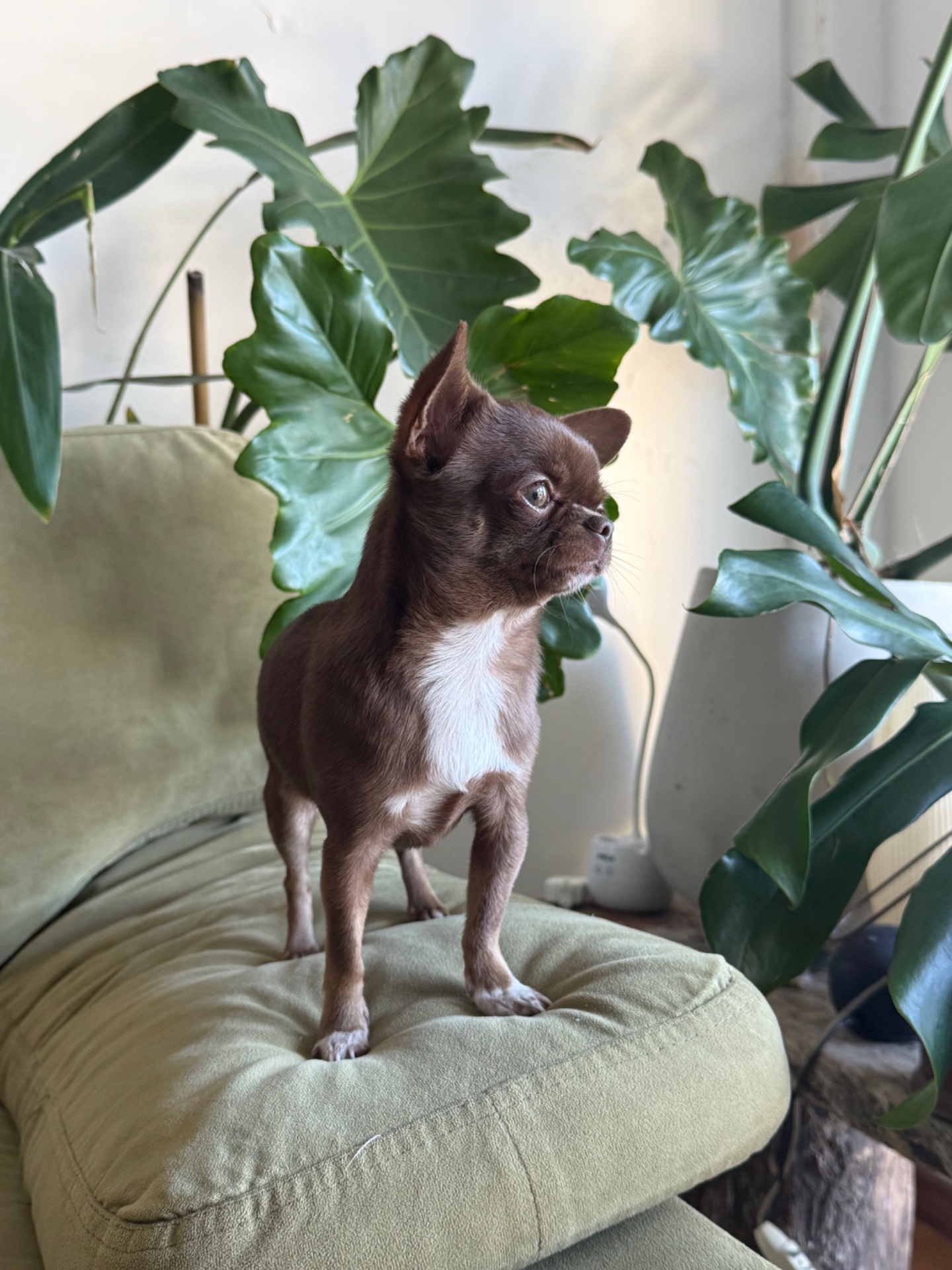
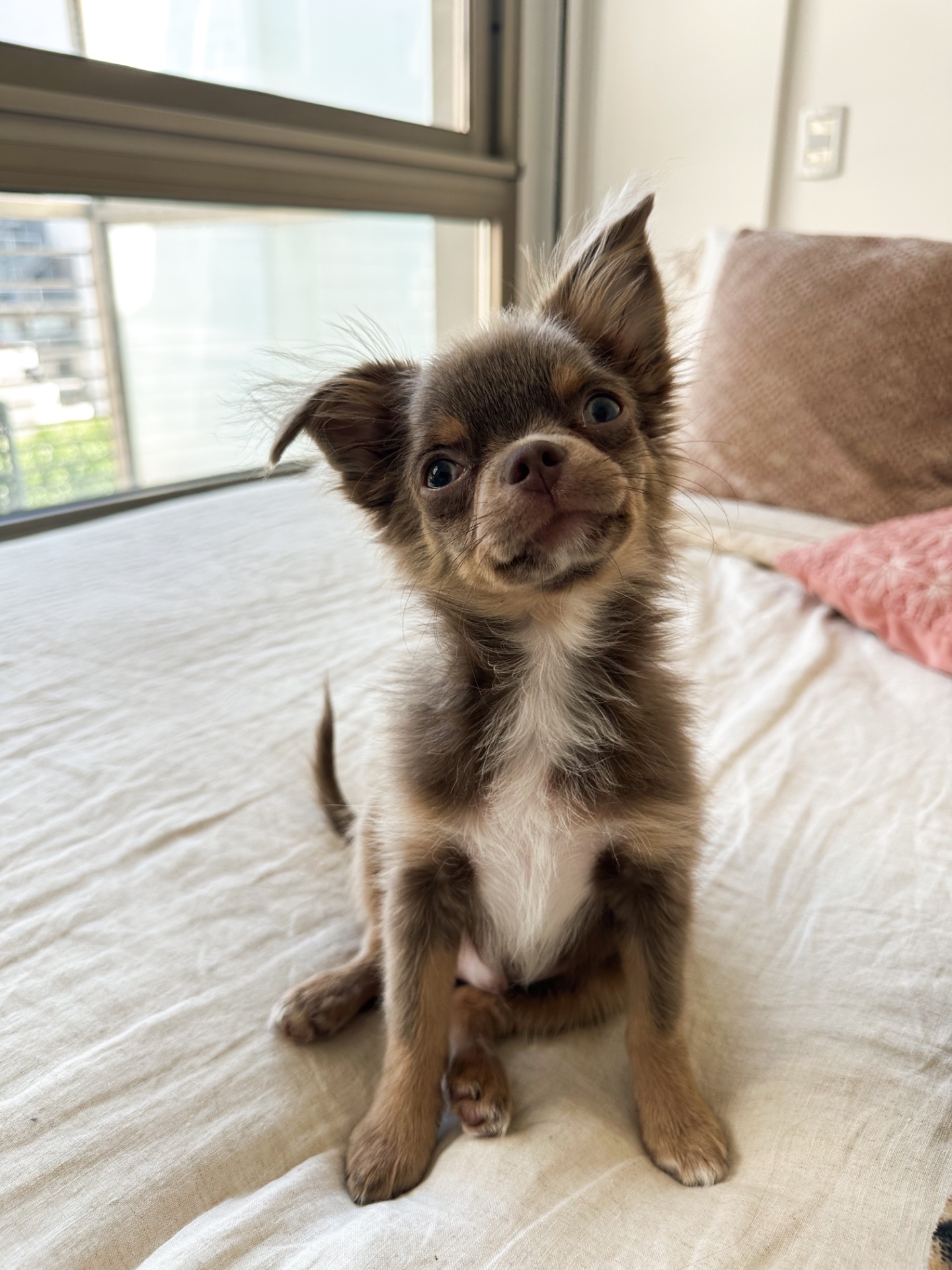
At home we see two very different energy levels every day. Lorenzo is two years old and electric, and a short walk barely scratches the surface for him. Games, sniffing and a bit of training matter as much as distance. Romeo is four, calm and a big sleeper, and for a dog like him, gentle, regular movement matters more than how far he goes.
That’s the real answer to how much exercise a Chihuahua needs: enough to come home pleasantly tired, curious and ready for a nap, adjusted for age, health and weather. Watch your dog, not the clock.