Flying With a Chihuahua: US Airline Pet Fees and Carrier Sizes
Flying with a Chihuahua in the cabin: US airline pet fees and under-seat carrier limits checked on official pages, plus booking, paperwork and sedation.

Flying with a Chihuahua is one of the real perks of loving a dog this small. A 5-pound dog doesn’t go in the cargo hold: it rides with you, in a soft carrier under the seat in front of yours. The catch is that every airline writes its own rules, charges its own fee and draws its own line on carrier size, and those rules change more often than most owners expect.
So I did the boring part. I went through each airline’s official pet page on October 31, 2026 and pulled the fees and carrier limits into one table. Where I couldn’t confirm something on the airline’s own site, I say so instead of guessing.
This guide is general information and not a substitute for advice from your veterinarian, especially about medication, health papers and whether your dog is fit to fly.
We may earn a commission from qualifying purchases, at no cost to you.
The short version
- Book the pet spot at the same time as your own ticket. Cabins have a cap on pets, and the spots go first.
- Measure your carrier against the specific airline’s limit, not a generic “airline approved” label.
- Your Chihuahua stays in the carrier, under the seat, for the whole flight.
- Sedation is not a shortcut. Carrier practice at home is.
US airline in-cabin pet fees and carrier limits
Verified on October 31, 2026 on each airline’s official pages. Policies change — confirm before booking.
| Airline | In-cabin pet fee (each way) | Under-seat carrier limit | How you add the pet | Official source |
|---|---|---|---|---|
| American | $150 per kennel (within the US and to or from Canada, Mexico, Central America and the Caribbean) | Soft-sided: 18 x 11 x 11 in on all flights. Hard-sided: 19 x 13 x 9 in (mainline), 16 x 12 x 8 in (American Eagle) | Online: find your trip, then “Add carry-on pets” | aa.com pets |
| Delta | $150 domestic (US, Canada, Puerto Rico, USVI) for tickets issued on or after April 8, 2025; $200 international | Soft-sided only. Varies by aircraft; Delta recommends 18 x 11 x 11 in | Call Delta Reservations; first come, first served | delta.com pet travel |
| Southwest | $125 per carrier (US mainland); $35 between the Hawaiian Islands | Up to 18 x 10.5 x 10 in; soft-sided recommended | By phone only, not online; pay at the ticket counter | Fees · Carrier size · Booking |
| Alaska | $100 per carrier ($35 if travel is entirely within Hawaii) | Soft-sided, no larger than 17 x 11 x 9.5 in | Book your ticket, then contact Guest Care to reserve pet space | Alaska Airlines newsroom, Aug 2026 |
| JetBlue | Not stated on the JetBlue pages we could load; the fee appears when you add the pet | 17 x 12.5 x 8.5 in; soft- or hard-sided. Pet and carrier count as your personal item | Add the pet and pay before check-in | jetblue.com pets |
| United | Not verified: United’s pet pages would not load for us on October 31 | Not verified | Check united.com or call United | — |
A few notes on reading the table:
- Alaska’s numbers come from the airline’s own newsroom, because its main policy page wouldn’t load for us. The article itself says its details aren’t exhaustive, so treat alaskaair.com as the final word.
- Southwest also sells its own carrier, which measures 15 x 10 x 10 inches.
- JetBlue’s height limit of 8.5 inches is the tightest in the group. A carrier that’s comfortable on American can be too tall here unless its soft sides compress.
- American caps the number of pet carriers per flight by aircraft, and on some regional jets that cap is a single carrier. One more reason to book early.
How do you book a Chihuahua on a flight?
Treat the pet spot as part of the ticket, not an extra you add at the airport.
- Pick the flight, then check pet space before paying. On Southwest and Delta that means a phone call. On American, you add the pet to your trip online.
- Have your carrier’s measurements ready. Delta asks for length, width and height when you call.
- Choose a seat that has under-seat space. American’s page lists bulkhead and exit rows among the seats where carry-on pets aren’t allowed. Other airlines have similar rules.
- Prefer nonstop flights. Fewer gate changes, fewer hours in the bag. American also notes that its fees apply per destination without a stopover of 4 hours or more, so long connections can change the price.
- Check minimum age. American, Delta and Southwest all require pets to be at least 8 weeks old for domestic travel.
- Count your bags. On American, your pet carrier plus one more item (a personal item or a carry-on) is the limit. JetBlue counts the pet as your personal item.
Health certificates and paperwork
For flights inside the US, there’s no single federal pet passport. USDA APHIS states that it doesn’t regulate owners moving their own pets between states, and that domestic requirements are set by the receiving state or territory. Those requirements can include a health certificate or up-to-date vaccines.
That leaves two places to check before you book the vet visit:
- The airline. Some ask for paperwork, some don’t.
- The destination state. Its state veterinarian’s office lists entry rules.
Even when nothing is required, the AKC’s air travel guide recommends having your vet look over your dog’s health and vaccines before the trip. For a toy dog, that visit is also the moment to ask about meal timing on travel day. If your dog’s shots aren’t current, our Chihuahua vaccine schedule shows the usual sequence.
Is it safe to sedate a Chihuahua for a flight?
This is the question I get most, and the answer is no, not as a routine. The AKC’s guide says that some medications, such as tranquilizers or sedatives, can increase the risk of heart or respiratory problems in dogs and generally aren’t allowed by airlines. It also says never to give your dog any medication before travel without consulting your veterinarian first.
A Chihuahua adds its own reasons for caution. Small bodies lose heat fast, and a sedated dog can’t shift position or shiver efficiently in a cramped bag. Some Chihuahuas also have a fragile trachea or a heart murmur by middle age. If your dog panics in the carrier, bring that problem to your vet weeks ahead, not the night before.
Preparing your Chihuahua for the carrier
The flight is the easy part if the carrier already feels like home. The AKC’s veterinary checklist suggests buying the crate well ahead and letting your dog use it as their “home” for at least a week before travel, with treats inside and free access.
A practice plan that works for small dogs:
- Weeks 1 to 2: carrier open in the living room, favorite blanket inside, treats tossed in. No zipping.
- Week 3: zip it for a few seconds while you sit next to it. Then a few minutes.
- Week 4: carry it around the house, then to the car, then on a short drive.
- Last days: set it on the floor under a chair and sit above it, the way it’ll be on the plane.
For the drive to the airport, buckle the carrier into the back seat; our guide to the best dog car seat for Chihuahuas explains which carriers have passed independent crash testing.
On travel day:
- Harness on, collar off for the tether. Clip the carrier’s interior leash to a harness, never a collar. Our best Chihuahua harness guide explains why the neck is off-limits.
- A light meal, timed with your vet. Very small dogs and puppies shouldn’t go long without food; our guide to hypoglycemia in Chihuahua puppies explains why skipping meals is risky at that size.
- A potty pad in the base, plus a spare and a zip bag.
- A thin sweater instead of a closed carrier. Planes can be chilly, but blocking the mesh is the wrong fix. More on that in do Chihuahuas get cold.
Two carriers that fit most US cabins
If you need a carrier, these two from our best Chihuahua carrier guide are the ones I’d check first. Compare their measurements with the table above: neither is a guaranteed fit on JetBlue or Alaska without compressing.

Sherpa Original Deluxe Travel Pet Carrier (Medium)
★4.5 · 8,533ratings
A spring wire frame lets you push the back end down several inches to fit under the seat, which is the whole game on a full flight. It opens from the top and the side, so you can lift a nervous Chihuahua out instead of dragging it. The Medium (17 x 11 x 10.5 inches) leaves a small dog room to stand and turn, and the base liner goes in the washing machine.
Heads-up:For a Chihuahua, buy the Medium, not the Small: the Small is only 8.5 inches tall inside, tight for a dog that wants to stand. It's also the heaviest of the three at about 3 pounds empty, and durability reviews are split, with some owners reporting straps that gave out.
Check the Sherpa on Amazon →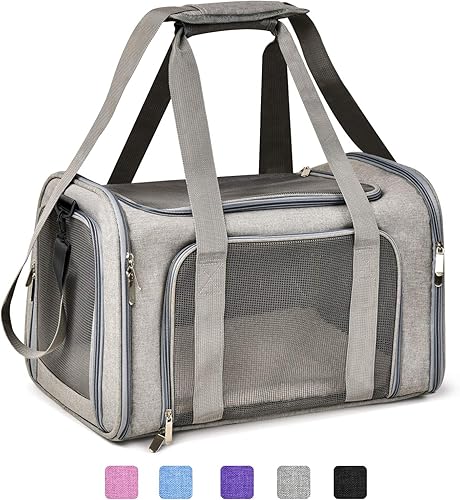
Henkelion soft-sided airline carrier (17 x 11 x 11 in)
★4.6 · 53,343ratings
Mesh on four sides, so it's the most ventilated of the three, and it's very light to carry through a terminal. It folds flat for storage, has a padded shoulder strap, and the handles loop over a seat belt or suitcase handle. With more than 50,000 ratings, it has the longest track record here.
Heads-up:Durability is its weak spot: among reviews that mention it, complaints outnumber praise, so treat it as a light-duty travel bag rather than something to last a decade. At 11 inches tall it relies on its soft sides compressing for tighter under-seat spaces, so check your airline's height limit.
Check the Henkelion on Amazon →Flying internationally with a Chihuahua
International trips are a different project, and the rules depend on the country, not just the airline. A few things the airline pages themselves spell out:
- American doesn’t allow carry-on pets on trans-Atlantic trips, or to and from Argentina, Brazil, Chile, Colombia and Uruguay. It also doesn’t allow them to or from Hawaii.
- Delta doesn’t allow pets in the cabin to or from several destinations, including Australia, Hawaii, the UK and the UAE.
- Coming back into the US, Delta’s page notes that dogs must appear healthy, be microchipped, be at least 6 months old and travel with a receipt for a completed CDC Dog Import Form.
Start months ahead, and use the USDA APHIS pet travel tool for the destination country’s requirements.
Our take
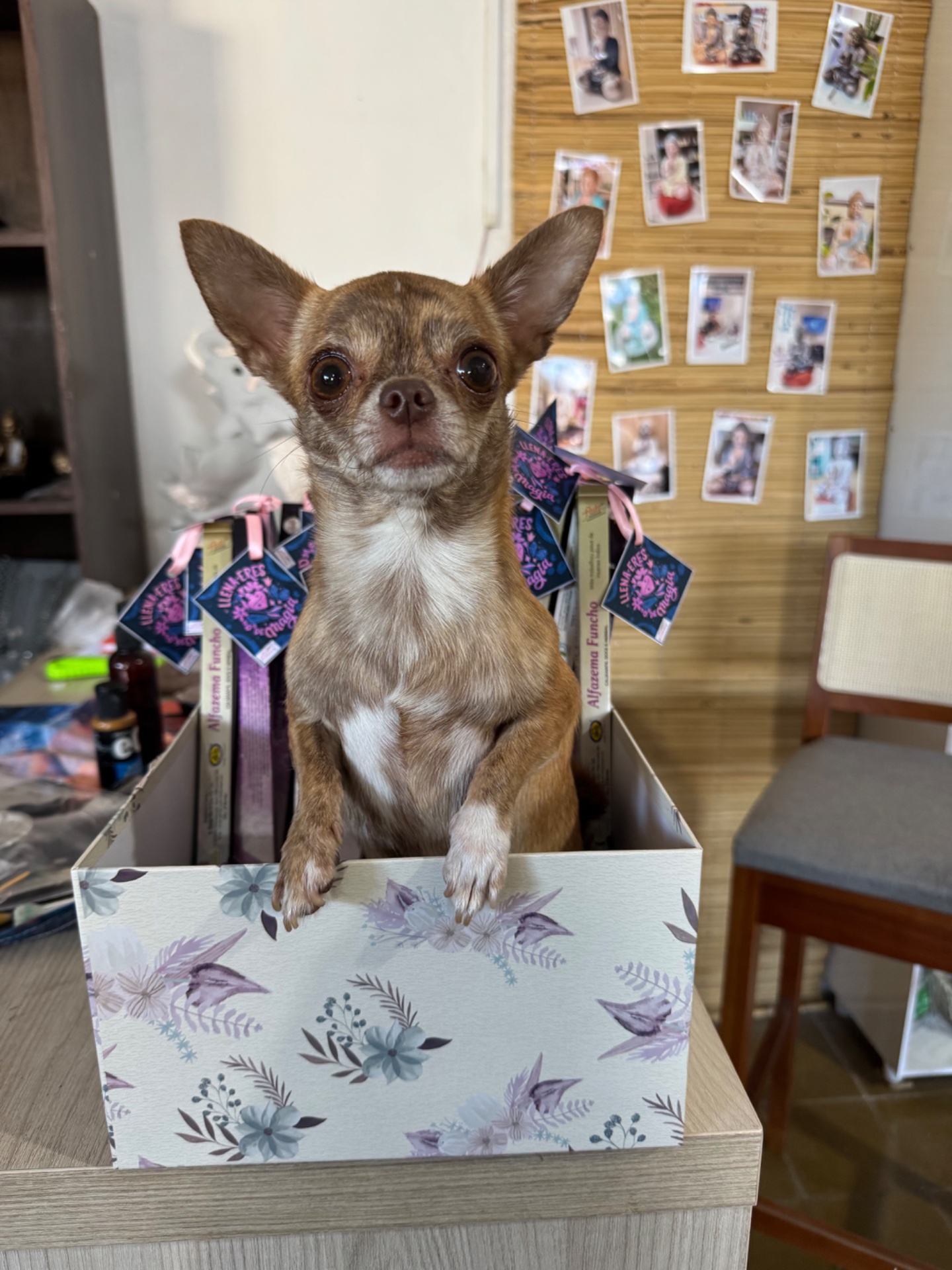
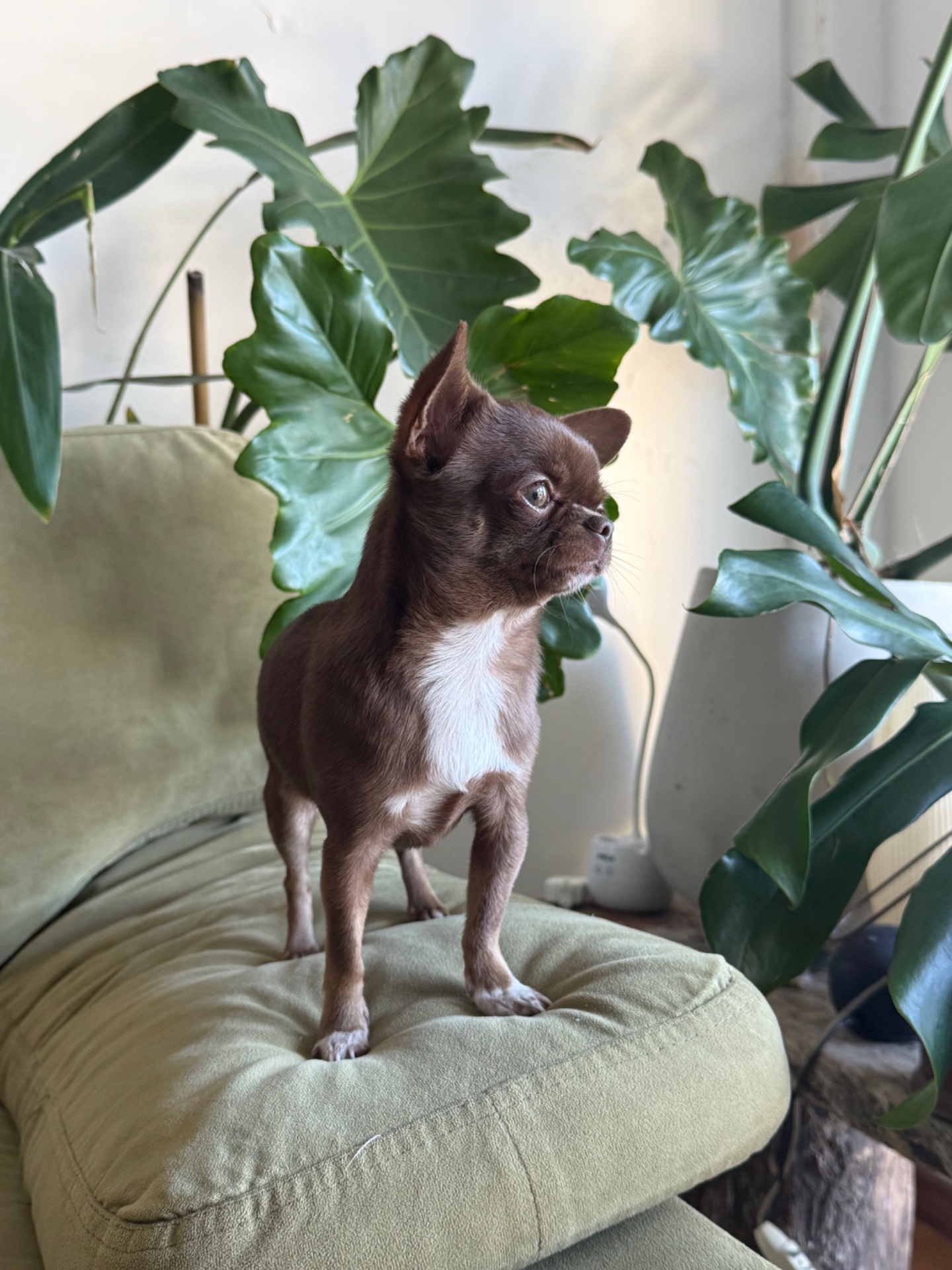
Romeo is 4 and weighs 5.3 pounds; Lorenzo is 2 and weighs 5.1. On paper, both fit under any seat in this table. What decides whether a flight goes well isn’t the dog’s weight, though. It’s whether the carrier is already a familiar place, whether the spot was booked before the cabin filled up, and whether you checked the rules that morning instead of trusting last year’s blog post.
Policies move. Bookmark the airline’s page, check it again the week you fly, and give your Chihuahua a month of carrier practice before the big day.