How to Clean Chihuahua Ears Safely, Step by Step
How to clean Chihuahua ears without overdoing it: when they need it, a gentle step-by-step for tiny ears, what to avoid, and signs of infection or ear mites.
Knowing how to clean Chihuahua ears is mostly about knowing when not to. Those big, upright ears are one of the breed’s signatures, and in most Chihuahuas they look after themselves pretty well. The trouble usually starts on the other side: an owner who cleans every few days “just in case,” a cotton swab that goes too deep, or a home remedy from the bathroom cabinet. A healthy ear needs a quick look most days and a gentle clean only now and then.
Below you’ll find how to tell whether an ear needs cleaning, a step-by-step routine sized for a very small dog, what never to put in there, and the signs that mean it’s a job for the vet instead.
This article is for information only and is not a substitute for advice from your veterinarian. If an ear is red, smelly, painful or has discharge, see your vet before cleaning it.
What a healthy Chihuahua ear looks like
Start with a baseline so you can spot changes. According to the American Kennel Club, a healthy ear is pink, odor-free and comfortable to touch. A bit of light wax is normal. What isn’t normal: redness, a strong or yeasty smell, dark or sticky discharge, crusts, or a dog that pulls away when you touch the ear.
The AKC also suggests making ear checks part of everyday handling. If your dog enjoys an ear rub one day and flinches the next, that’s information.
How often should you clean a Chihuahua’s ears?
Less often than most people think. The AKC says some dogs may almost never need their ears cleaned, cleaning is only needed when buildup becomes noticeable or causes odor, and over-cleaning can lead to infection and irritation. Cleaning too often strips away the ear’s protective oils and good bacteria.
| What you see | What to do |
|---|---|
| Pink, clean, no smell | Nothing. Just keep checking. |
| Light visible wax on the inner flap | Wipe the flap with a cotton ball and cleaner |
| Mild odor or more wax than usual, ear not red | A gentle full clean, then recheck in a few days |
| After a bath or swim | Dry the ears well with a soft towel |
| Red, swollen, painful, dark discharge or strong smell | Don’t clean. Vet visit |
| Coffee-ground debris and constant scratching | Don’t clean. Vet visit for possible mites |
That last part matters: the AKC warns that cleaning an already infected ear often causes more harm than good. The vet needs to see the ear as it is, and may need a sample of the discharge.
What you need
- A vet-recommended ear-cleaning solution made for dogs
- Cotton balls or gauze (the MSD Veterinary Manual specifies real cotton, not synthetic)
- A towel, and a room where a head shake won’t matter
- Small treats, because this should end on a good note
What to leave out:
- Cotton swabs inside the canal. The MSD Veterinary Manual says not to use them or anything that pushes debris deeper into the canal.
- Hydrogen peroxide. The AKC says not to use it on a dog’s ears: the tissue is sensitive, and repeated use can damage it.
- Over-the-counter wax removers, unless your vet approves them, per the MSD manual.
- Anything pointed, including tweezers, unless your vet has shown you exactly how and why.
How to clean a Chihuahua’s ears, step by step
This routine follows what the AKC and the MSD Veterinary Manual describe, adjusted for a dog that weighs around 5 pounds.
- Settle your dog on your lap or on a towel on the floor. A small dog on a high table is one wriggle away from a fall.
- Look and sniff first. If the ear is red, sore or smelly, stop here and call your vet.
- Lift the ear flap gently up and away from the head so you can see the opening.
- Fill the canal with the cleaner, as the MSD manual puts it. In an ear this small, that takes far less liquid than you’d guess, so go slowly and keep the bottle tip clean and outside the canal.
- Massage the base of the ear for about 30 seconds, as the AKC suggests. You’ll often hear a soft squish as the cleaner loosens debris.
- Let your dog shake. Hold the towel up to protect your face. This is what brings the loosened wax up to where you can reach it.
- Wipe what you can see with a cotton ball or gauze, going no deeper than about one knuckle, which the AKC recommends as the limit.
- Do the other ear with a fresh cotton ball.
- Treat and praise. Short, calm sessions now make every future vet exam easier.
If your Chihuahua hates the whole thing, the AKC’s advice is to go slowly, use treats and keep sessions short. Doing one ear today and the other tomorrow is perfectly fine.
Long-coated Chihuahuas and ear fringes
The breed standard calls for fringed ears in long-coated Chihuahuas, and those soft feathers are part of their charm. They also catch dust, food and burrs, and they hold moisture after a bath. Comb the fringes regularly so they don’t mat, and dry them well. If the hair right at the ear opening gets long enough to trap wax, ask your groomer or vet to tidy it rather than plucking it yourself. More on coat care in general is in the long-haired Chihuahua guide.
The AKC also recommends drying a dog’s ears thoroughly after baths or swimming, since moisture helps bacteria and yeast grow, and keeping water out of the canals during baths. The full bath routine is in how often to bathe a Chihuahua.
What are the signs of an ear infection?
An ear infection (otitis) is inflammation of the ear canal, usually with too much yeast, bacteria or both. The AKC’s guide to dog ear infections lists the common signs:
- Head shaking
- Scratching or rubbing the ear on furniture or the floor
- Dark discharge
- Odor, often yeasty or sour
- Redness and swelling of the canal
- Pain when the ear or head is touched
- Crusts or scabs in the ear
Infections rarely come from nowhere. The MSD Veterinary Manual notes that environmental allergies (dust mites, pollen, mold) and food allergies often cause red, itchy ears that can lead to ear canal infections. If your Chihuahua’s ears flare up in a pattern, along with paw licking or face rubbing, read Chihuahua environmental allergies and Chihuahua food allergies: treating the cause is what stops the cycle.
Ear mites
Ear mites are tiny parasites that live in the ear canal. The AKC describes the classic picture as frequent head shaking, intense scratching and a dark, crumbly discharge that looks like coffee grounds, sometimes with a strong smell. They’re highly contagious between dogs, cats, ferrets and rabbits, so a new puppy or a household cat can bring them in.
Ear mites and ear infections can look alike, and the AKC notes a yeast infection can also produce brown, coffee-ground-like debris. That’s why this is a vet diagnosis, not a guess: your vet looks at a sample of the debris under the microscope. The AKC adds that monthly parasite prevention approved by your vet is the main way to keep mites away.
When to see the vet
- Any of the infection signs above
- A soft, puffy swelling on the ear flap after a lot of head shaking
- Bleeding, or an ear that suddenly droops when it used to stand
- Ears that need cleaning more and more often
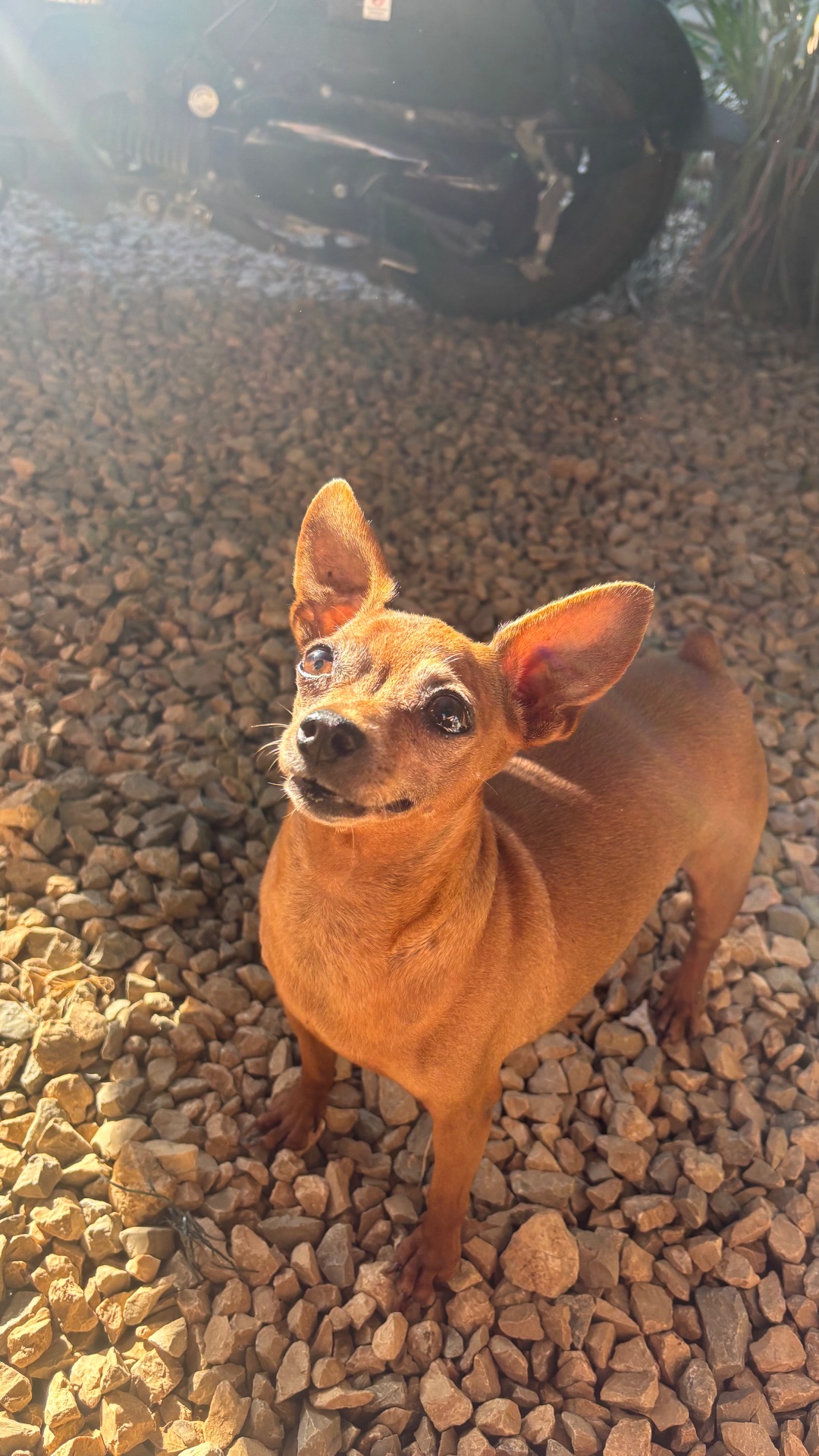
Romeo and Lorenzo are both short-coated apple heads, so their ears are about as low-maintenance as Chihuahua ears get. For dogs like them, ear care can be as simple as a look and a sniff during cuddles. That’s the habit I’d suggest to anyone: notice what normal looks like, and let the vet handle anything that isn’t.