
When Do Chihuahuas Stop Growing? Stages & Weight Chart
When do Chihuahuas stop growing? Most reach full size at 9 to 12 months. The 4 growth stages, a weight chart and a formula to predict adult size.
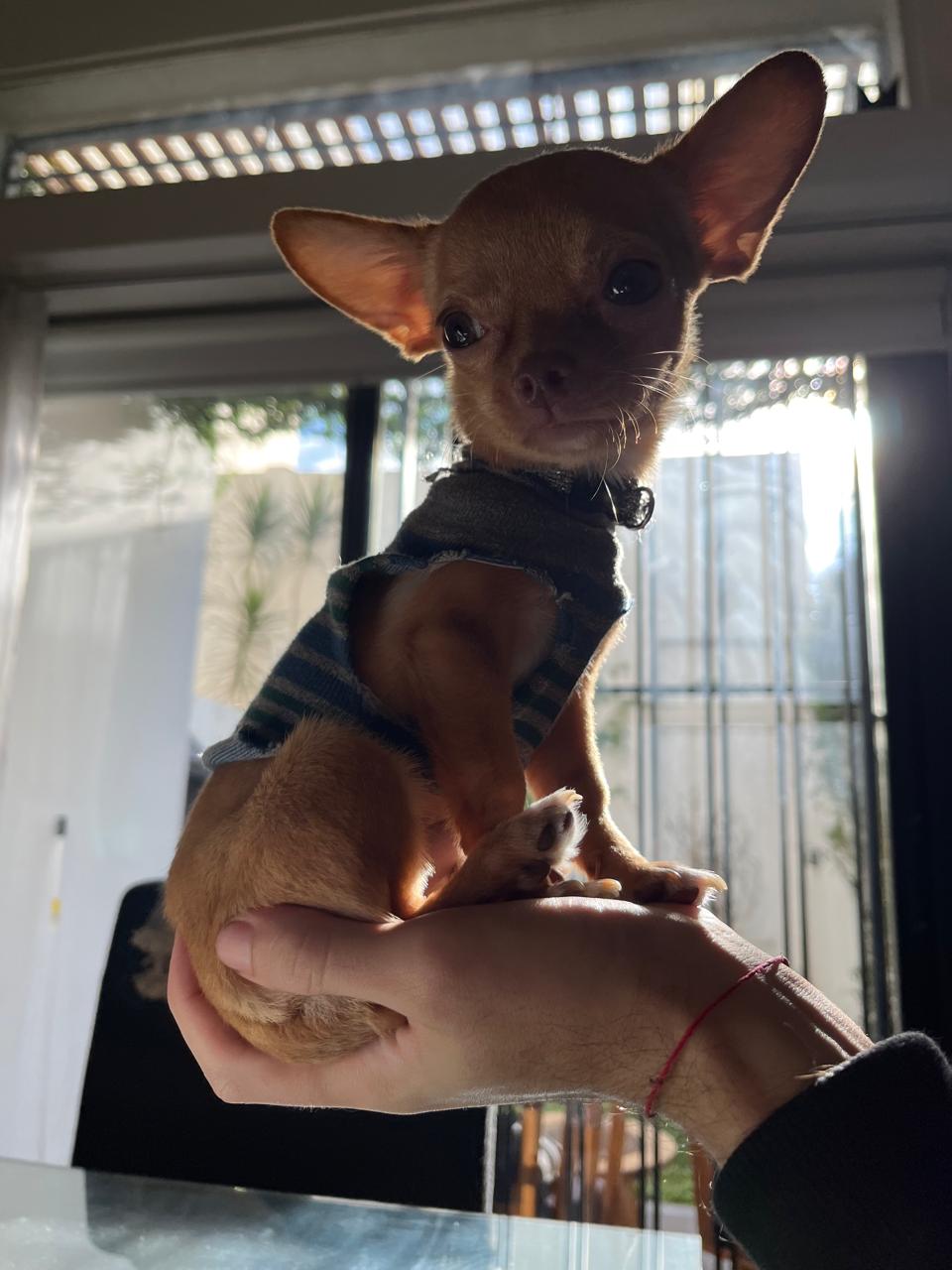
If you’ve just brought home a tiny puppy, you’ve probably asked yourself when do Chihuahuas stop growing and how big yours will end up. The quick answer: most Chihuahuas finish their physical development between 9 and 12 months, though some take a little longer to fill out the chest, up to around 14 months.
In this article we walk through the growth stages, give you a month-by-month weight chart, and share a simple formula to estimate adult weight. I will also tell you how Romeo and Lorenzo grew up, because they sit at two different ends of the timeline.
This article is informational and does not replace veterinary advice.
The stages of a Chihuahua’s development
Growth is not a straight line. It moves in phases, with growth spurts and quiet stretches in between.
- Newborn (0 to 15 days): eyes closed, fully dependent on the mother. They double their weight in the first week.
- Weaning (15 to 45 days): they try soft food, explore, play. Weight climbs fast.
- Young puppy (2 to 4 months): they arrive in your home and grow before your eyes. This is the big spurt.
- Pre-adolescent (4 to 8 months): growth slows, but they gain muscle and adult teeth.
- Young adult (8 to 12 months): they reach adult size. Some are already stable; others are still filling out the chest.
- Full adult (12 to 18 months): complete maturity, final weight locked in.
After the first year, even if your dog still looks like a baby, it’s biologically an adult.
At what age do they reach adult weight?
This is the key point. Adult size is reached between 9 and 12 months. Many puppies stop growing in height around 8 months and only keep gaining muscle mass up to the one-year mark.
Factors that influence the timing:
- Parents’ genetics: offspring of small parents finish earlier.
- Sex: females tend to close growth before males.
- Head type: apple heads finish their skull development (the molera) by around 6 months, while deer heads stretch out a bit longer.
- Nutrition and health: a puppy carrying parasites will grow more slowly.
Romeo, our cream apple head, stopped growing at 10 months. He settled at about 5.3 pounds and hasn’t budged since.
Month-by-month weight chart
This guideline chart shows the expected weight month by month based on the final adult weight. Use it as a reference, not as a reason to obsess over the scale.
| Age | 3.3 lb adult | 4.4 lb adult | 5.5 lb adult | 6.6 lb adult |
|---|---|---|---|---|
| 1 month | 0.5 lb | 0.6 lb | 0.7 lb | 0.9 lb |
| 2 months | 0.9 lb | 1.1 lb | 1.4 lb | 1.7 lb |
| 3 months | 1.4 lb | 1.8 lb | 2.2 lb | 2.6 lb |
| 4 months | 1.8 lb | 2.4 lb | 3.0 lb | 3.6 lb |
| 6 months | 2.5 lb | 3.4 lb | 4.2 lb | 5.1 lb |
| 9 months | 3.1 lb | 4.1 lb | 5.2 lb | 6.2 lb |
| 12 months | 3.3 lb | 4.4 lb | 5.5 lb | 6.6 lb |
These are averages. A 10% swing up or down is within normal range. If yours falls well outside that in either direction, check with your vet.
How do I estimate my puppy’s final weight?
There’s a simple, fairly reliable adult-weight formula for toy breeds. It’s not exact, but it lands close in most cases.
- Weigh your puppy at exactly 3 months, in grams or ounces.
- Multiply that weight by 2.
- Add a small margin (a few ounces) if the puppy comes from a large litter or its parents were on the heavier side.
- The result is roughly the adult weight.
Real example: Lorenzo weighed about 2.3 pounds at 3 months. Doubled, that’s 4.6 pounds, plus a small margin. Estimate: around 5 pounds. Today he weighs about 5 pounds. Spot on.
Another quick check: an adult Chihuahua usually weighs about 4 times what it weighed at 6 weeks. Cross those two references and you will not be far off.
What are the signs a Chihuahua has stopped growing?
How do you know your puppy has hit its ceiling? Watch for these:
- Stable weight for three months straight on the same food routine.
- Adult body proportions: it no longer looks “big-headed” relative to the body.
- Complete, settled dentition (42 teeth).
- Behavior shifts: less hyperactivity, more routine.
What can slow down or speed up growth?
- Badly calculated portions: underfeeding delays growth; overfeeding does not make a bigger dog, it makes an obese one.
- Early weaning: puppies separated before 8 weeks grow worse.
- Parasites and deficiencies: a puppy with worms gets nothing from its food.
- Very early spay/neuter: can delay the closing of the growth plates and produce a slightly taller dog.
It’s worth saying plainly: you can’t make a Chihuahua grow bigger by feeding it more. The final size is written into its genes and set by the parents. Extra food only turns into fat, which is far more dangerous on a tiny frame than it would be on a large dog. The goal in the first year is not a bigger dog, it is a healthy one growing at a steady, even pace.
Does the head shape change the timeline?
A little. Apple head Chihuahuas, like both of mine, finish their skull development early, often by six months, because the domed skull and the molera (the soft spot) close on a faster schedule. Deer head Chihuahuas tend to have a slightly longer, leggier build and can keep stretching a touch longer into the young-adult phase. Neither is “more grown” than the other; they simply reach their final proportions on slightly different clocks. The difference is small, and it never changes the core answer: by 12 months, almost every Chihuahua of either head type has reached its adult size.
Is the teacup myth true?
The most common myth: “a teacup stays tiny forever.” False. A minuscule Chihuahua is not a special type, just a puppy below standard. It will grow like any other, only on a more fragile frame. If you want to separate myth from reality, our piece on the different types of Chihuahua explains the real FCI standard and weight, and the guide to teacup Chihuahua sizes goes deeper into why “teacup” is a marketing label, not a breed category.
Another myth: “if it weighs X at 6 months, it won’t grow more.” Also false. There is still room left, especially in males.
When should you worry?
See your vet if you notice:
- A puppy that gains no weight for two straight weeks before 6 months.
- Early obesity: visible rolls of fat at 4 to 5 months.
- Lethargy, brittle coat, persistent soft stools.
- A huge gap from the chart (more than 25% above or below).
To adjust portions by age, our guide to what Chihuahuas eat helps, and if you are still in the early phase, the broader Chihuahua growth stages article maps out what comes after the first year.
Closing: Romeo grown, Lorenzo still young
We see this every day at home. Romeo is a full adult now: a steady 5.3 pounds, calm, classic apple head, endless naps. He closed his growth at 10 months and hasn’t changed an ounce in over a year.
Lorenzo Pablito is still settling in. With his apple head and slim body, he weighs about 5 pounds, but I still see him gain a little chest when he runs. The lesson: every Chihuahua has its own rhythm. The chart is a guide, not a verdict. If your puppy is healthy, active, eating well and growing steadily, you’re on the right track, and your vet always has the final word.
Frequently asked questions
When do Chihuahuas stop growing?
How big will my Chihuahua get?
At what age is a Chihuahua fully grown?
Written by Belen Salto, who shares her life with Romeo and Lorenzo, two Chihuahuas. · Ver en español