
Why Is My Chihuahua Chewing Furniture? Fix It Without Punishment
Why your Chihuahua chews furniture and how to stop it without punishment: boredom, teething and anxiety explained, with a real two-week fix plan.
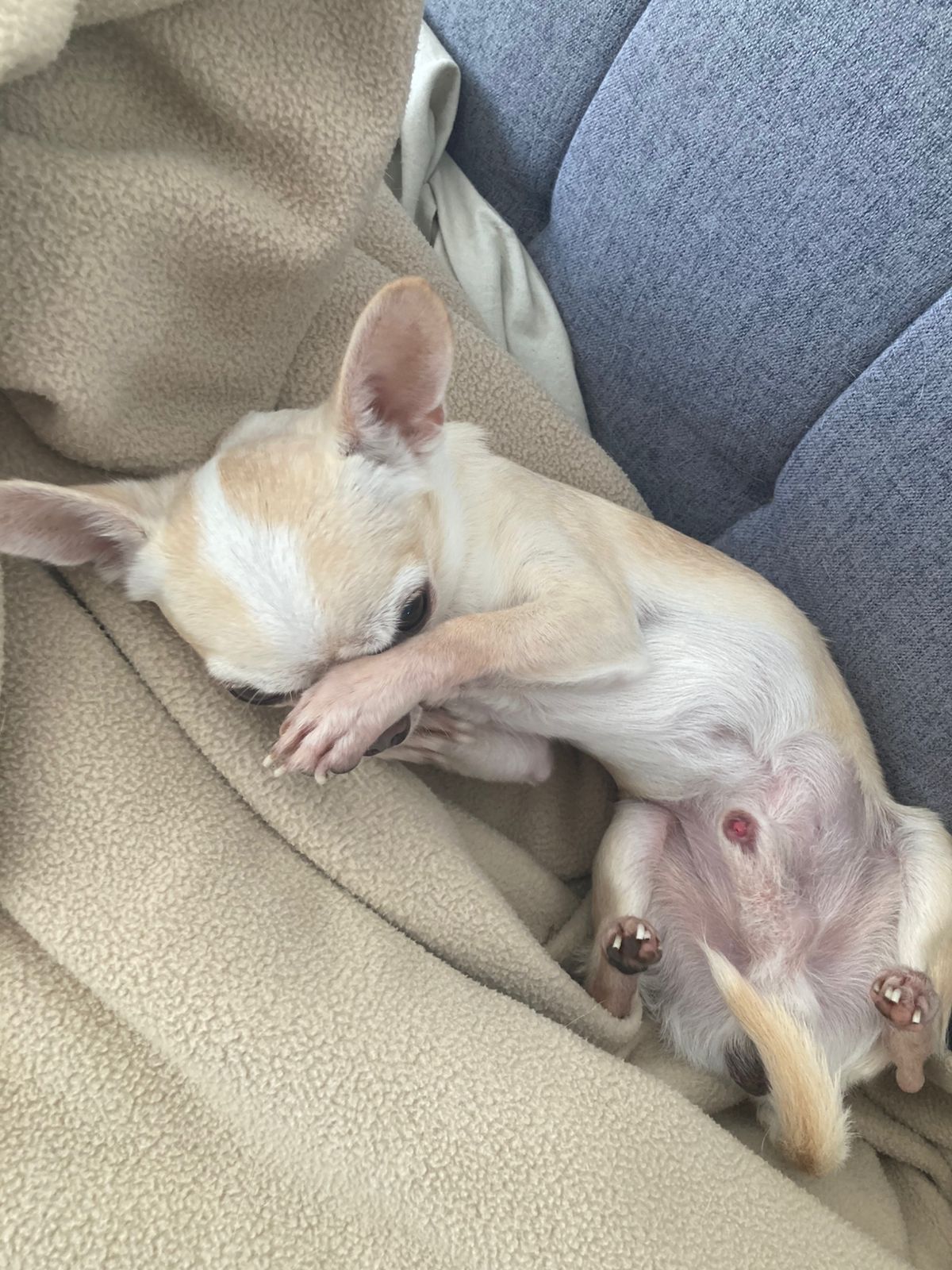
Coming home to find your Chihuahua chewing furniture the moment you turn your back is an unpleasant surprise. Today a chair leg, tomorrow a baseboard, the day after your favorite slipper. We’ve lived through it with Lorenzo, my fawn apple head. When a Chihuahua chews furniture, he’s not doing it “to spite you”: there’s always a biological or emotional reason. Find it, and the behavior corrects itself. Miss it, and no matter how much you scold, the damage comes right back.
How your dog ends up wrecking the house
A Chihuahua doesn’t wake up one morning and decide “I’m going to destroy the living room.” He falls into a loop: he has an unmet need, finds an object within reach that relieves it, and his brain learns that this object is worth something. The object barely matters; what sits behind it is what counts.
With Lorenzo I see it crystal clear: when he has gone two hours without activity, he heads straight for the sock on the floor. Romeo, my cream apple head and now a senior, hasn’t chewed anything he shouldn’t in years. That’s age, routine, and acquired self-control.
Why does my Chihuahua chew everything in sight?
These are the five causes that explain, almost every time, a Chihuahua who gnaws on everything he finds.
1. Teething in puppies
Between 3 and 7 months, Chihuahuas swap their baby teeth for the adult set. Their gums itch and they need to chew anything with some resistance to ease it. In a Chihuahua it shows more because the mouth is small and crowded. During those weeks, puppy teething is shorthand for “everything here is half a centimeter from disappearing.” I cover it in the Chihuahua puppy care guide.
2. Boredom and a lack of mental exercise
An adult Chihuahua who spends the day between the sofa and his bed, with no stimulating walks or games that make him use his nose, builds up mental energy with nowhere to go. And that energy often comes out through the teeth. It’s classic to come home from work and find the remote chewed to bits. It is not malice: it is a dog whose brain was switched off for eight hours.
3. Separation anxiety
When a Chihuahua doesn’t know how to be alone, his nervous system fires up the moment you close the door. Chewing furniture is a common way to channel that distress. If you notice your dog destroys things only when you leave, we’re probably looking at separation anxiety, where I explain how to tell a healthy attachment from a problematic one.
4. Curiosity and exploratory instinct
Puppies discover the world with their mouths. Chewing a baseboard doesn’t signal a problem: it means your dog is exploring. The key is not to correct, it is to manage the environment.
5. A shortage of suitable chew items
If your Chihuahua has no safe objects at home, sized for him, with varied textures and free to chew, he’ll find his own. The solution is not less chewing: it is well-channeled chewing.
Dog’s age, main cause, and recommended action
Here is a summary table of what we usually see:
| Dog’s age | Main cause | Recommended action |
|---|---|---|
| 2-4 months | Exploration and first teething | Manage the environment, soft cold toys |
| 4-7 months | Intense teething | Rubber teethers, small ropes, firm routine |
| 7-12 months | Adolescence and mental energy | Varied walks, scent work, calm training at home |
| 1-3 years | Boredom or separation anxiety | Environmental enrichment, desensitization to being alone |
| 4 years and up | Anxiety, dental pain, or changes at home | Vet check + positive trainer |
The table does not replace a diagnosis, but it points you in the right direction before booking a consult.
What to do when your Chihuahua chews furniture
Let’s get practical.
Manage the environment first
Before training, prevent. The Chihuahua chews shoes that are within reach; if they’re not there, he doesn’t chew them. He chews cables because they dangle accessibly; hide them and the problem disappears while you work on the rest. Managing the environment means:
- Picking shoes, bags, and clothes up off the floor.
- Protecting cables with channels or specific covers.
- Closing off rooms with valuable furniture until he matures.
- Using a playpen or exclusion gate during teething.
- Temporarily removing prized rugs and cushions.
This isn’t giving up: it’s giving your dog an environment where he cannot fail.
Safe toys and rotation
Buy three or four chew toys designed for small breeds. Mix textures: rubber, tough fabric, thin rope, a plush with a squeaker. Leave two out and hide the other two. After a week, rotate. You renew his interest without buying anything new.
Avoid recycled human items as toys. An old slipper “for him to chew” teaches him that all slippers are fair game. His brain can’t tell the old one from the good one.
A physical and mental exercise routine
An adult Chihuahua needs:
- Two daily walks of 20 to 40 minutes, with time to sniff.
- Short play sessions at home, five minutes, spread out.
- Scent work: hiding kibble along the hallway, snuffle mats, a Kong.
- Mini obedience sessions: “sit,” “stay,” “look at me,” two minutes, with treats.
A dog who is mentally tired does not go looking for chair legs.
Gentle redirection
If you catch him chewing something he shouldn’t, do not yell or punish. Approach calmly, say something short and neutral (“not that”), take the object, and offer a proper chew. If he starts chewing the toy, reward him with a cuddle or a tiny piece of special food. You’re teaching him what he can chew.
Give the jaw somewhere else to go
Punishing the chewing without replacing it just moves the behavior to a new piece of furniture. The part that works is having something better within reach at the moment the urge shows up.
Petstages Orka dental chew toy
★ 4.3 · 10,400 valoraciones
Firm synthetic rubber with ridges, so it survives an actual chewing session instead of shredding in ten minutes — and the texture works the gums while the dog uses it, which is a real bonus in a breed with this much dental trouble. Sized for small jaws rather than a shrunken big-dog toy.
Ojo: No chew toy is indestructible, and this one isn't either — check it weekly and bin it once pieces start coming off, because a swallowed fragment in a 5-pound dog is an obstruction, not an inconvenience. And if your Chihuahua chews out of anxiety rather than boredom, a toy won't fix it.
Check the chew toy on Amazon →What NOT to do when it happens
This section is almost more important than the last.
- Do not punish physically. No taps, no shoves, no grabbing by the neck. He loses trust and learns to hide the behavior, not to stop it.
- Do not yell. Chihuahuas are sensitive to tone. A shout creates stress, and stress increases the need to chew.
- Do not spray water in his face. It breaks the bond and creates negative associations with your presence.
- Do not use punishment, electronic, or vibrating collars. No serious professional recommends them on toy breeds.
- Be cautious with commercial deterrents. Bitter-apple sprays work on some dogs and not others. They don’t solve the cause.
- Do not stuff the chewed object in his mouth “to teach him.” It teaches fear, not judgment.
- Do not scold after the fact. If you come home to the damage, getting angry is useless. Your dog doesn’t connect your anger to a chew from two hours ago.
Punishment can look like it works short-term because the dog stops doing it in front of you. But the underlying problem stays put, and it usually comes back worse.
Five steps to re-educate a furniture-chewing Chihuahua
If you’re already in the thick of the storm, apply this plan for two straight weeks without skipping a step.
- Audit the environment. Walk the house at the dog’s height. Remove, hide, or protect everything you don’t want chewed.
- A varied chew kit. Three or four chews his size. Two in rotation, two stored.
- A daily mental exercise plan. Three fixed moments a day of five to ten minutes of scent work, play, or obedience.
- Drama-free departures. If you suspect separation anxiety, practice short absences, no goodbyes. Reward calm, ignore excitement.
- An incident log. Note the day, time, and object every time he chews. Within a week you’ll see a very clear pattern.
After two weeks, if you follow the steps, the frequency drops a lot. If it doesn’t drop at all, it’s time for professional help.
When to call a positive trainer or a behaviorist
Asking for help is not a failure; it is the opposite. I recommend consulting a positive dog trainer when:
- After two or three weeks of a structured plan, the damage continues unchanged.
- The behavior comes with other stress signs (compulsive licking, trembling, loss of appetite).
- You clearly suspect separation anxiety and it does not improve with home desensitization.
And it’s time for a veterinary behaviorist when the behavior is sudden and destructive in an adult Chihuahua who never chewed before. A mature dog who starts wrecking furniture overnight usually has pathological anxiety, dental or joint pain, or a life change (a move, a loss) behind it. The home plan is not enough: it calls for a clinical diagnosis and, sometimes, temporary medication support.
Adaptive intelligence and a mind of their own
The Chihuahua is a dog with a great deal of intelligence and a strong mind of his own. I talk about it in the real Chihuahua temperament. If he has learned that chewing the sofa relieves him, he won’t quit because you give him a dirty look. He needs you to offer an equally effective alternative from his point of view. The moment he finds it, he lets go of the sofa. But he chooses it, not you.
This article is informational and does not replace veterinary advice.
Lorenzo and the sock obsession
I will finish with what I lived. Lorenzo has one confessed weakness: the dirty socks in the laundry basket. For months it was impossible to leave one out of place without it turning up chewed. We never yelled. We did three simple things: a tall basket with a lid, a play routine with a fabric rope, and a big reward of kibble when he dropped the sock and grabbed his chew. In three weeks he stopped going after socks. Today he sleeps curled around his rope as if it were the best invention in the world.
Romeo, meanwhile, watches the whole scene from his blanket with a face that says “I told you this would happen.” He’s eleven now and figured out long ago where his toys are and where mine are. Getting there is a matter of time, patience, and method. If your Chihuahua chews furniture, you’re not failing: you’re learning alongside him. Breathe, set up the plan, and give it two weeks.
Written by Belen Salto, who shares her life with Romeo and Lorenzo, two Chihuahuas. · Ver en español