
Why Does My Chihuahua Snore So Much? Causes & Warning Signs
Why does my Chihuahua snore so much? Is it normal, why apple-head Chihuahuas snore more, and the warning signs that mean it's time for a vet visit.
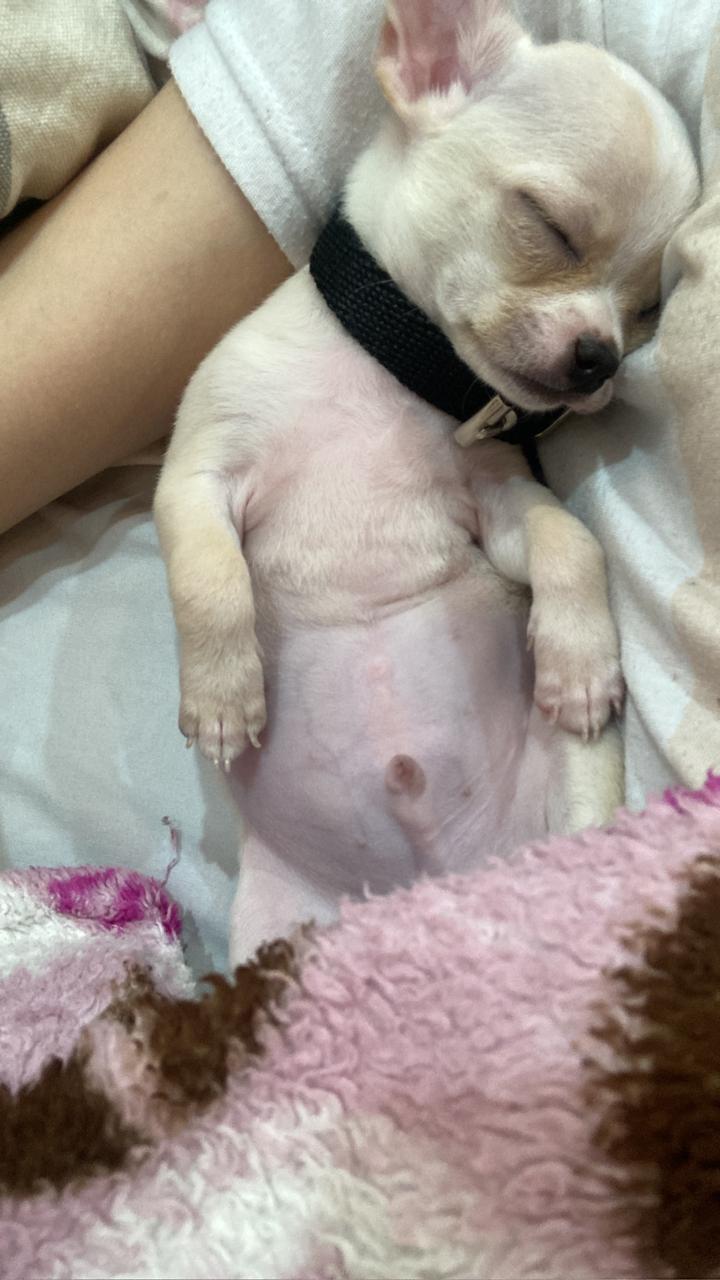
If you ever lie awake wondering why does my Chihuahua snore so loudly for such a tiny dog, you’re not imagining it and you’re far from alone. Most people picture snoring in big breeds or flat-faced dogs, yet our little pocket companions rattle the bedroom too. The good news is that most of the time a snoring Chihuahua is perfectly normal. The trick is learning to tell the harmless snore from the one that deserves a phone call to the vet.
What Is Actually Happening Inside That Tiny Nose
A snore is the sound soft tissue in the throat and palate makes when it vibrates as air squeezes through a passage narrower than it should be. A Chihuahua’s airway is already small to begin with, so it takes very little, a folded neck or a touch of mucus, for that vibration to start.
Not every Chihuahua snores the same way. Head shape, weight, age, and sleeping position all play a part. Before you panic, it pays to learn which kind of snore your dog actually has.
Are Chihuahuas Naturally Heavy Snorers?
Partly, yes. Apple-head Chihuahuas, the only head type recognized by the official FCI breed standard, have a rounded skull, a short muzzle, and a sharply defined stop. As I explain in our guide to the types of Chihuahua, this gives them a mild brachycephaly. They’re nowhere near as extreme as a Bulldog, but their skull anatomy does compress the upper airway just a little.
Deer-head Chihuahuas, with their longer muzzle, tend to snore less. It’s not an absolute rule, but it’s a clear tendency.
On top of that mild brachycephaly you often find a soft palate that can be long enough to hang over the entrance to the throat, plus a thin trachea that vibrates easily. Add in the many hours Chihuahuas spend asleep, something I cover in how much do Chihuahuas sleep, and you have the recipe for routine snoring.
Types of Chihuahua Snoring
Not every snore means the same thing. This table helps you place yours:
| Type of snore | Likely cause |
|---|---|
| Soft, intermittent, changes when they move | Position (folded neck, lying on back) |
| Dry nasal whistle | Mild obstruction or mucus |
| Loud, with mucus and sneezing | Cold or allergy |
| Guttural, constant | Elongated soft palate |
| New in a dog that gained weight | Weight and snoring |
| Shrill, honking, with coughing | Collapsing trachea |
If your dog fits the first two rows, you usually just need to reposition them. If you land in the last four, keep reading.
When Is Snoring a Medical Sign?
Some snores are not “just a sleeping dog” but a symptom. Look closely if you notice:
- A new snore in an adult that never snored before.
- Breathing pauses (apnea) lasting several seconds.
- A goose-like honking cough, especially on waking or after drinking.
- Bluish gums or tongue after an episode.
- Extreme tiredness with the slightest effort.
- Startled awakenings, gasping for air.
- Labored breathing while awake.
Serious respiratory obstruction can show up as a collapsing trachea or obstructive apnea. Both deserve a vet visit without waiting.
Important warning: if the snore is new and you also see breathing trouble while your dog is awake, strange panting without exercise, breathing with the neck stretched out, pale or purple gums, that is a veterinary emergency. Do not wait until morning.
Why Your Chihuahua Snores: From Harmless to Worrying
Sleeping Position
The most common reason by far. Sleeping on their back or with the neck folded narrows the airway. The moment you reposition them, the snoring stops. Romeo is the undisputed champion of this style.
Excess Weight
Even 300 extra grams on a Chihuahua is a lot. Fat around the neck and chest squeezes the airway. The link between weight and snoring is so direct that sometimes losing those grams is all it takes for the noise to disappear.
Dry or Stuffy Air
Heating, air conditioning, dust, or smoke dry out the mucous membranes and increase the vibration.
Cold, Allergy, or Rhinitis
If the snore comes with sneezing, mucus, or watery eyes, suspect a passing episode. It usually clears in a few days. If it does not, see the vet.
Elongated Soft Palate
When the palate droops over the throat, it vibrates with every breath. In Chihuahuas it’s usually mild and manageable with weight control and position.
Tracheal Collapse
More common in older dogs. The trachea loses rigidity and flattens, producing the dry honking cough. It needs an X-ray to diagnose. The MSD Veterinary Manual’s guide to lung and airway disorders in dogs describes collapsing trachea as a condition of toy and small breeds, which is exactly where the Chihuahua sits.
Home Tricks to Reduce the Snoring
Here’s my list, tested at home. It doesn’t replace the vet when there is a clinical concern, but for mild snoring it works:
- Keep their weight in check with monthly weigh-ins and measured portions of their dog food. The WSAVA global nutrition guidelines include a body condition score your vet can teach you to run at home in thirty seconds.
- Raise their head slightly with a small pillow or a rolled-up blanket.
- Offer beds with side support so they cannot sleep with a twisted neck.
- Humidify the room in winter, especially with the heating on.
- Air the room daily and avoid smoke, strong perfumes, and air fresheners.
- Check for seasonal allergies if the snoring worsens in spring or fall.
- Skip tight collars; use a well-fitted harness instead.
- Do not feed kibble right before bed: digestion affects breathing.
Combined, these noticeably reduce how loud the snoring gets.
Sleep Sounds That Are Not Snoring
Sometimes we confuse snoring with sighs, REM-sleep whimpers, or vocalized twitches. I break each one down in why does my Chihuahua shake while sleeping, where I separate the different sleep sounds.
When to See the Vet Without Hesitation
Book an appointment soon if you notice:
- A snore that appears suddenly with no change in weight or position.
- Apnea or noticeable breathing pauses.
- A repeated honking cough.
- Bluish gums or tongue.
- Exercise intolerance during gentle activity.
A fifteen-second video of the episode is worth its weight in gold for your vet.
Romeo and Lorenzo, Two Different Soundtracks
At home I have the contrast playing out live. Romeo Carlitos, my cream apple-head senior, is snoring incarnate: he sleeps on his back, tucks his head under the blanket, and lets out a rhythmic snore you can hear from the hallway. With his age, a slightly softer palate, and that apple-head build, it was to be expected. I manage it by keeping his weight just right and propping his neck up with a rolled blanket.
Lorenzo Pablito, my young fawn apple-head, is the silent one. He breathes clean and only lets out the occasional sigh. Same house, same dog food, different skull. Anatomy rules.
Snoring, in most Chihuahuas, is endearing. It only stops being endearing when it shows up suddenly, changes, or comes with choking. At that point, see the vet without a second thought.
This article is informational and does not replace veterinary advice. If anything about your dog’s breathing feels off, book an appointment.
Written by Belen Salto, who shares her life with Romeo and Lorenzo, two Chihuahuas. · Ver en español