
Hairless Chihuahua: The Rare Variety Almost Nobody Knows
The hairless Chihuahua is real: a cross with the xoloitzcuintle. Origin, skin care, health and a real club member named Maya from Costa Rica.
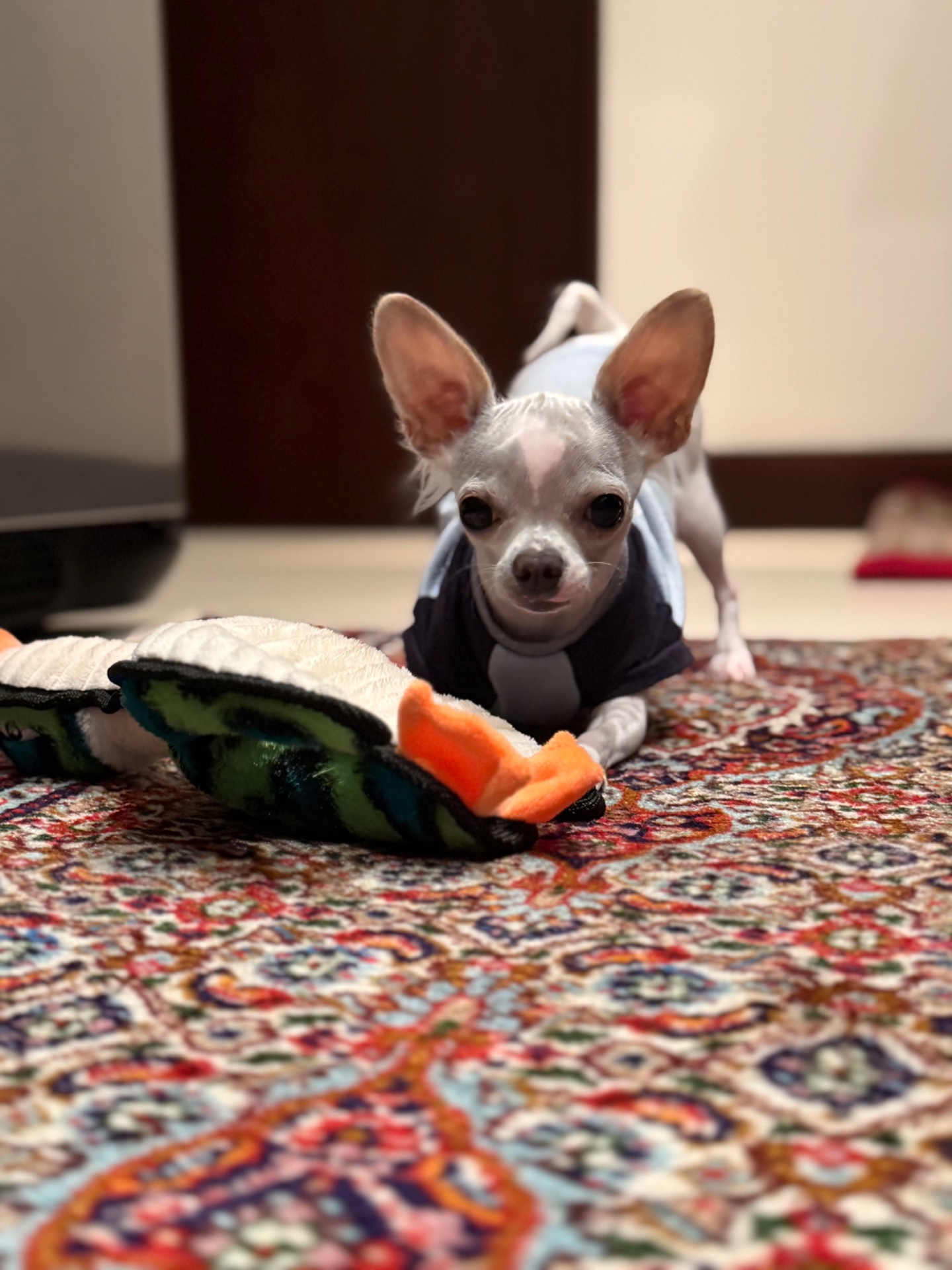
The first time you see a hairless chihuahua, you do a double take. It’s hard to process: that tiny alert body, that unmistakable chihuahua face — but with no coat. It isn’t a disease or alopecia. It’s a real, extremely rare variety, born from one specific cross. And although almost nobody knows it exists, these dogs live with their families around the world.
A rare variety, not a medical problem
Let’s clear this up first: the hairless chihuahua is not a normal chihuahua that lost its coat. It doesn’t come from alopecia, stress or bad food. If your lifelong chihuahua suddenly starts losing hair, that’s a completely different issue that needs a vet — see our guide on why chihuahuas shed to tell them apart.
The hairless chihuahua is a variety deliberately produced by breeders: they crossed chihuahuas with the xoloitzcuintle (the Mexican hairless dog, or “xolo”) until they got litters that looked almost exactly like a chihuahua but without a coat. It has no official recognition from any kennel club, and the dogs in the world number in the hundreds.
Where does the hairless chihuahua actually come from?
To understand it, think about the xoloitzcuintle — one of the oldest breeds in the Americas, the sacred dog of the Aztecs. The gene behind its hairlessness is dominant: a single cross with a xolo gives the next generation a strong chance of inheriting it.
Breeders repeated the cycle: cross the offspring that looked most like a chihuahua (size, head, eyes, ears) with another standard chihuahua, generation after generation. The result gets closer and closer to a pure chihuahua, but hairless. Technically, it’s still a hybrid — which matters for health, size and especially skin.
What does it look like?
- Height: 6–10 inches at the shoulder, slightly smaller than the standard chihuahua on average.
- Weight: 4–9 lbs, in line with a toy chihuahua.
- Skin: bare instead of coated, in very variable tones — pink, gray, black, brown, spotted or mottled.
- Residual fuzz: some keep a faint, almost invisible fuzz on the head, feet and tail tip.
- Head and eyes: round skull, big expressive eyes, erect triangular ears — all inherited straight from the chihuahua.
Quick table: Hairless Chihuahua vs standard Chihuahua
| Trait | Hairless Chihuahua | Standard Chihuahua |
|---|---|---|
| Coat | None or minimal | Short or long |
| Origin | Cross with xoloitzcuintle | Purebred |
| Official recognition | No | Yes (AKC, FCI) |
| Sun sensitivity | Very high | Low |
| Cold sensitivity | Very high | High |
| Availability | Very scarce | Very common |
What’s their temperament like?
Genetics speak clearly here: the hairless inherits the chihuahua’s temperament far more than the xolo’s. Alert, bold, attached to one person, smart and sensitive — if you know our guide on chihuahua temperament, you’ll recognize all of it.
Skin care: what really changes
This is the big difference with a standard chihuahua. With no coat, the skin is fully exposed:
- Dog-safe sunscreen whenever they go out on a strong-sun day. Sunburn is real and raises long-term skin cancer risk.
- Sweaters in winter and cool nights. A standard chihuahua already gets cold fast (see do chihuahuas get cold); the hairless is double the risk.
- Skin moisturizing with a dog-safe, fragrance-free lotion if you see dryness.
- Gentle, infrequent baths every 2–3 weeks with a pH-neutral hypoallergenic shampoo.
- Weekly skin checks for lumps, irritation or marks.
Health: chihuahua plus a bit of xolo
They inherit nearly all the chihuahua’s predispositions: luxating patella, hydrocephalus, dental problems, hypoglycemia in puppies, eye issues and collapsing trachea. The xolo cross adds one specific trait: incomplete dentition — many hairless dogs are missing premolars or lose teeth earlier. Daily dental care matters even more.
Average lifespan: 12–16 years, slightly below a standard chihuahua, mostly due to skin and dental risks.
This article is informational and does not replace veterinary advice.
How much does a hairless chihuahua cost?
They’re expensive and hard to find. Legitimate breeders are few, mostly in the US, Mexico and parts of Europe. Reported prices start around $1,500 and can top $5,000. If you’re offered one cheap, be suspicious: it may be a plain xolo, a dog with pathological alopecia, or a badly done cross.
Meet Maya, a hairless from the club
In our community we have a member that shows this perfectly. Maya lives in Costa Rica with her sister Merlina. Maya is hairless — bare skin, tiny body, a textbook chihuahua face. Merlina has a short fawn coat. Same house, same owner. The visual difference between them is a masterclass in what changes and what doesn’t in this variety.
In our home we have Romeo, cream and apple-headed, and Lorenzo Pablito, fawn and also apple-headed — both with their warm short coats. Seeing hairless chihuahuas reminds me that the breed, in any of its varieties, is always the same essence: tiny size, giant heart. If you ever pass one in the street, stop and admire it. There are very few of them, and they’re impossible not to love.
Written by Belen Salto, who shares her life with Romeo and Lorenzo, two Chihuahuas. · Ver en español