
Why Does My Chihuahua Follow Me Everywhere?
Why does my Chihuahua follow me everywhere? The real meaning behind your velcro dog shadowing you room to room, and when it tips into separation anxiety.
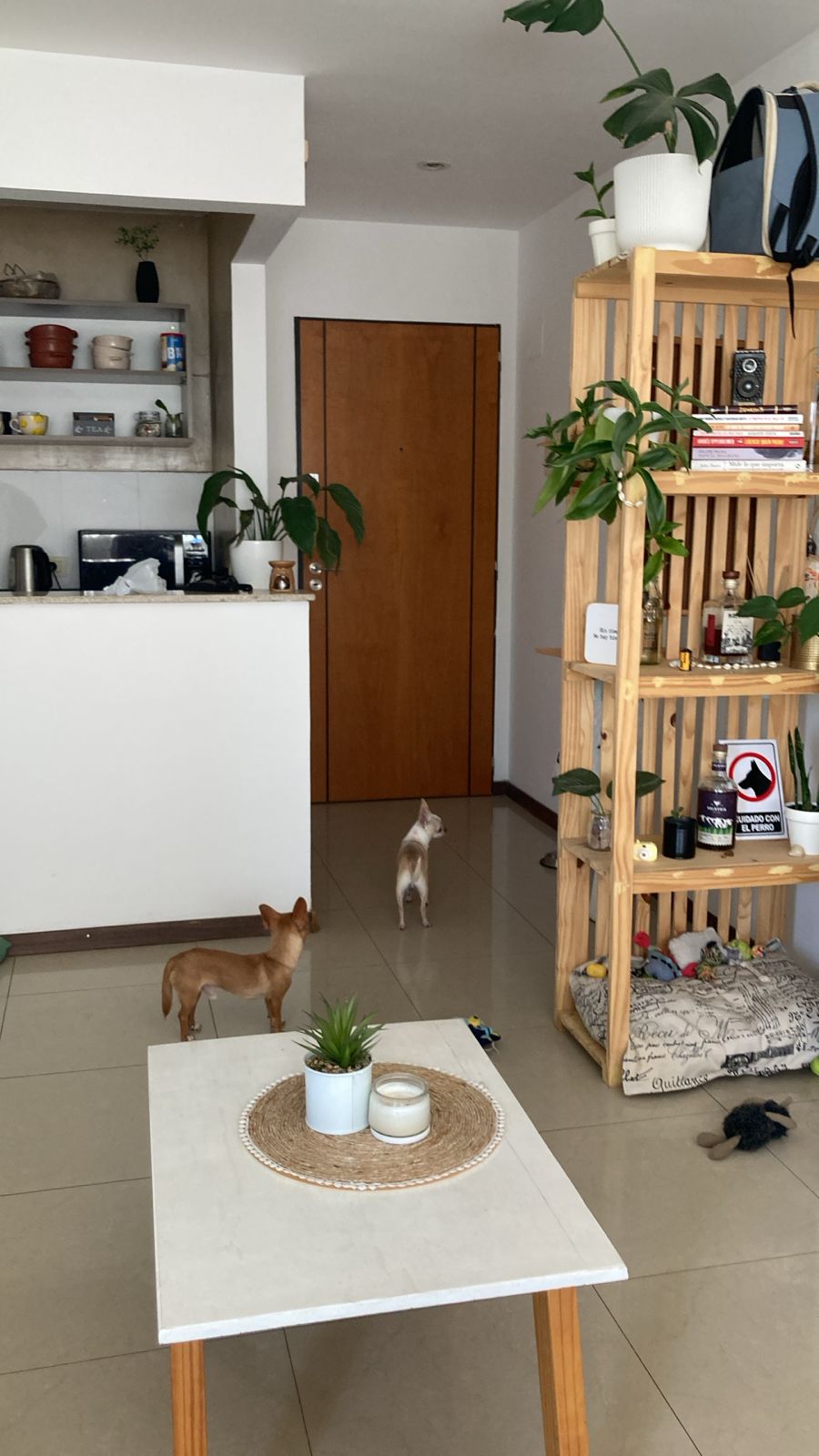
If you’ve typed “why does my Chihuahua follow me everywhere” into Google, relax: you’re far from the only one. It’s probably the most talked-about behavior among those of us who share a home with this breed. You get up from the couch and there they go. You head to the kitchen and there they go. You step into the bathroom and, of course, there they go too. You shift in bed at 3 a.m. and feel two little eyes locked on you from the pillow beside you. Romeo has done it with me for years without missing a day. This behavior has a name, a biological explanation, and important nuances worth unpacking.
Your Chihuahua Is Not Clingy, They Are a Velcro Dog
In canine behavior, dogs that follow their person from room to room are called shadow dogs or Velcro Chihuahuas. It’s not a flaw or an illness: it describes a very common pattern in small breeds.
A shadow dog basically does this:
- Follows you around the house even when you do not call them.
- Sits at your feet while you cook or work.
- Changes rooms when you do, even if they were asleep.
- Follows you to the bathroom and waits until you come out.
None of that is, in itself, a problem. It’s their way of saying “you’re my person.” That said, it’s worth telling healthy attachment apart from the overwhelmed kind.
Why Are Chihuahuas So Clingy?
The tendency to follow their human is not a whim. It runs on three very concrete drivers.
1. A Recalibrated Pack Instinct
Every dog descends from social animals. That pack instinct hasn’t vanished, it has recalibrated. Your Chihuahua understands the human family as their group, and within it almost always picks one person. If that person moves, they move along. As simple, and as ancient, as that.
2. Size and Vulnerability
A Chihuahua weighs between one and a half and three kilos. In a world of stairs, shifting chairs, vacuum cleaners, and humans who do not watch the floor, they know they depend on you. Following you isn’t just affection: it’s also survival. We dig into this in our piece on Chihuahua temperament, where attachment is one of the traits that best defines the breed.
3. Ancestral Heritage
Chihuahuas descend from the Techichi, a small dog of pre-Hispanic America that lived glued to people in Toltec and Mexica homes. They were not herding or hunting dogs: they were companions, centuries ago. That role is in their DNA.
Why Is the Chihuahua More Velcro Than Other Breeds?
There are affectionate dogs in every breed. But the Chihuahua stands out, and not by chance:
- Selective breeding: they have been bred for generations as lap companions.
- Emotional sensitivity: they read your mood and sync with your movements.
- Moderate energy indoors: their favorite activity is being with you, not patrolling a yard.
- Attachment to one person: they often pick a preferred human and live tuned to them.
All of this makes them a companion for someone who wants an intense bond, and a tricky dog for someone seeking an emotionally independent animal.
When Is the Attachment Healthy (and When Is It Not)?
Here’s the important part. That they follow you doesn’t mean there’s a problem, but it does not mean everything is fine by default either. The key lies in how they handle your absence, not how close they want to be when you are present.
| Sign | Healthy attachment | Problematic attachment |
|---|---|---|
| When you move around the house | Follows you relaxed | Gets up agitated, pants |
| When you leave | Protests a little, lies down | Cries, barks, scratches doors |
| Alone at home | Sleeps, eats, plays with toys | Won’t eat or drink, destroys things |
| Contact with you | Seeks affection but accepts “no” | Tolerates no separation, not even two meters |
| When you return | Normal joy, then settles | Prolonged extreme excitement |
If your Chihuahua falls under “healthy attachment,” you have a Velcro dog and nothing more, so enjoy it. If several signs land in “problematic attachment,” you’re probably looking at a case of separation anxiety, and there you do need to step in.
Four Clear Signs of Healthy Attachment
- They follow you, but they also stay. They can rest in another room when tired.
- They accept you closing the bathroom door without drama. Maybe a one-second whine, then they settle.
- They eat, drink, and sleep when you are gone. The best proof they handle absence well.
- They greet you happily and calm down within minutes when you come home.
Four Warning Signs
- Destruction while you are away, especially around doors and frames where you left.
- Prolonged vocalizing: barking, howling, or whining the neighbors can hear.
- Refusing food and water: they won’t touch either when you’re not there.
- Over-excitement on your return that does not ease within twenty minutes, sometimes with shaking. If your Chihuahua shakes a lot when you separate, the trembling accompanies anxiety more often than we think.
When Does the Attachment Become a Real Problem?
When it stops being a preference and turns into an inability. A healthy Chihuahua prefers your company but can function without you for a reasonable stretch: dozes, stretches, looks out the window, gnaws a chew toy. One with separation anxiety cannot: their nervous system fires the moment you cross the door and doesn’t settle until you’re back. Sustained day after day, that wears down the dog, the neighbors, and the bond itself. Hence the importance of catching it early and working on it with method, not intuition. We cover the full plan in our guide to Chihuahua separation anxiety.
How to Build Emotional Security
The good news is that attachment is shaped by small daily details:
- Be predictable. Stable schedules for food, walks, and rest lower baseline anxiety.
- Do not dramatize departures or arrivals. Coming and going should be boring.
- Reinforce calm. If they are quiet in their bed, reward it. If they whine at your feet, ignore it.
- Give them their own spaces. A bed in another room, a sniffing toy. Teach them that being alone can be pleasant too.
- Do not pick them up every time they get restless. It teaches them your lap is the only answer to stress.
A Practical Plan: Desensitizing to Your Absence
If you notice your dog does not handle solitude well, work through these steps in order:
- The “no drama” routine: practice exits and entries without looking at or talking to them. One week.
- Ten-second absences: grab your keys, open, step out, close, return. No greeting. Repeat several times a day.
- One-to-three-minute absences: go down to the lobby, come back. Reward calm, ignore excitement.
- Five, ten, twenty-minute absences: lengthen gradually. If there is a setback, drop a level.
- Absence with a positive stimulus: a stuffed Kong only when you leave. Associate your departure with something good.
- Supervised absences with a camera: watch what they do when you are gone. Real information is gold.
The goal is not for them to “not care” that you leave: it’s for them to know that you always come back.
When to Consult a Professional
If, after several weeks of steady work, you see no improvement, or if the symptoms are severe from the start (destruction, self-inflicted injuries, severe loss of appetite), see a positive-reinforcement dog trainer or, better, a veterinary behaviorist. Separation anxiety is a real clinical problem and sometimes needs temporary medication support.
This article is informational and does not replace veterinary advice or the personalized diagnosis of a canine behavior professional, who can observe your dog in context and design a tailored plan.
Romeo, My Official Shadow
I’ll close with what I live every day. Romeo, my cream apple-head Chihuahua, now a senior and calm as ever, is the most obvious shadow dog I know. If I shower, he sleeps on the bathroom rug. If I write, he curls up beside me. If I go to the kitchen for five minutes, he appears with that slow trot only veteran Chihuahuas have, sits in the doorway, and waits. He doesn’t protest when I leave the house: I leave him his blanket, a treat, and the TV on, and when I come back he’s still lying where I left him. That’s healthy attachment at its best.
Lorenzo Pablito, fawn, young, and also apple-head, has another way of loving me: he doesn’t follow as much, but he seeks me out through play, jumps, and high energy. Each Chihuahua picks their own way of bonding with you, and none is more valid than another. If your Chihuahua follows you everywhere, breathe: they’re telling you, in their stubborn way, that you’re their home. Just make sure that, when you are not there, they also know how to be.
This article is informational and does not replace veterinary advice.
Written by Belen Salto, who shares her life with Romeo and Lorenzo, two Chihuahuas. · Ver en español