
The 4 Ages of a Chihuahua: How Personality Changes
How a Chihuahua's personality changes by age, from playful puppy to feisty senior. The 4 ages and exactly what to expect from your dog at each one.
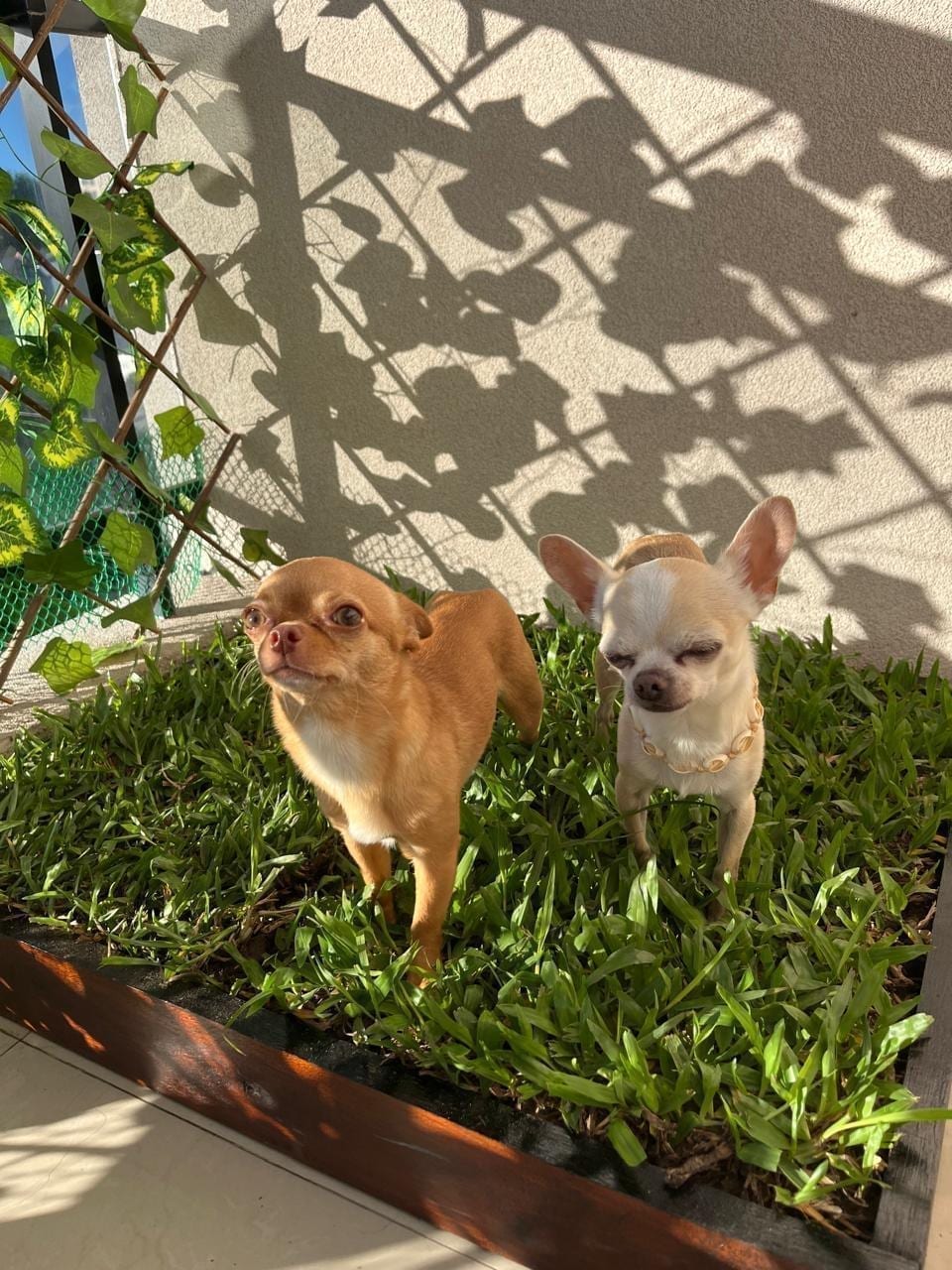
A Chihuahua’s personality by age changes more dramatically than in almost any other breed, and the puppy you bring home at two months is not the dog you’ll have at twelve years. They go from helpless baby to tiny dinosaur, from refined gentleman to a feisty old-timer who demands respect. Each stage asks for a different version of you as an owner.
What I’m sharing here is what I learned living with Romeo Carlitos (my cream senior, already crossing into “feisty old-timer” territory) and Lorenzo Pablito (my young fawn, still deep in adolescence). Four stages, four different dogs inside the same one. Knowing them spares you the frustration that leads so many people to think “this dog isn’t what I expected.”
Why Does a Chihuahua’s Personality Change So Much With Age?
For two reasons. The first is biological: the Chihuahua matures slowly. Unlike large breeds that are adults by 18 months, a Chihuahua doesn’t truly settle until somewhere between 2 and 3 years. Until then, its brain is wired to explore, test, chew, and challenge. That’s not a defect, it’s a stage.
The second reason is hormonal and emotional: every passing year shifts its tolerance, its energy, and the way it relates to you and the world. A four-month-old puppy barking nonstop is not the same dog as a six-year-old adult barking; the first is learning, the second is telling you something specific.
This matters because most Chihuahua surrenders happen between 6 and 18 months, right when the hardest phase hits. The owner thinks the dog “broke” and gives up. The truth is that the phase ends, and what comes after is an incredible companion, but you have to ride it out.
The 4 Ages of a Chihuahua, One by One
Here they are in order, with what you’ll see, what you’ll feel, and what works best at each point.
0 to 3 Months: The Tender Baby
This is the shortest and most vulnerable stage. The puppy weighs between 7 ounces and 1.5 pounds, sleeps 18 to 20 hours a day, barely sees or hears at first, and is completely dependent.
What you’ll notice:
- Constant, very fragmented sleep
- Frequent hypoglycemia if it goes too long without eating
- Fear of almost anything new: noises, different floors, voices
- Total attachment to whoever cares for it
The most important thing in this phase isn’t learning commands, it’s gathering experiences. The first 16 weeks are the socialization window: what the puppy meets now (different people, balanced dogs, types of floors, everyday noises) shapes the adult it becomes. Skip socialization in this window and you’ll have a fearful or reactive adult for life.
Romeo at this stage fit in my hand and looked at me as if I were the entire universe. All that fragility is held together with patience. This isn’t the time for intensive training, it’s the time for presence.
4 Months to 3 Years: The Dinosaur
Here everything changes. The tender puppy disappears and a miniature dinosaur shows up, chewing furniture, barking at leaves, climbing where it shouldn’t, and looking at you with a “who, me?” face. It’s the longest stage and the one that separates owners who persevere from those who give up.
What you’ll live through:
- Intense play biting, especially between 4 and 8 months
- Territory marking, particularly in intact males
- Selective deafness: it ignores you when convenient
- Rebellious adolescence (8-18 months): things it already did well seem forgotten
- Explosive energy in waves: 20 minutes of madness, two hours asleep
- Extreme curiosity: investigates everything, tests everything, breaks everything
This is the hardest stage to raise a Chihuahua. People buy a small dog expecting a decorative object and find an animal with an enormous personality packed into two kilos of body.
What works: solid routines (set times for meals, walks, play), constant positive reinforcement, and understanding that this stage ends. If you want to dig into how that character forms, our guide to Chihuahua temperament covers it in full.
Lorenzo is in full dinosaur mode as I write this. Three months ago he ate a remote control. Two weeks ago he decided the table leg was his personal enemy. And still, when he falls asleep on my lap, every disaster is forgiven.
3 to 8 Years: The Refined Gentleman
Here comes the adult Chihuahua people dream of having when they adopt. Settled personality, measured energy, clear preferences. It knows what it likes, what it doesn’t, where it wants to sleep, and who it wants talking to it.
How this stage looks:
- Established routines: eats at the same time, sleeps in the same spot, tells you when it’s time to go out
- Balanced tolerance: no longer bites in play, but won’t be teased either
- A deep bond: by now it knows you better than you know yourself
- Medium energy: efficient walks, no need to run for three hours
- Purposeful barking: when it barks, there’s a reason (someone at the door, an odd noise, hunger)
- Social discrimination: it knows who’s family and who isn’t, and treats each one differently
This is the best stage for advanced tricks, travel, and new environments. If the dinosaur stage is chaos, this one is choreography.
Romeo entered this stage with an impressive turn: he stopped chewing shoes, started requesting breakfast with the face of a classic film actor, and chose one specific pillow as his throne. Move him from it and he’d give you that “you’ve picked the wrong day, mortal” look.
8 Years and Up: The Feisty Old-Timer
And here we reach the senior age. A Chihuahua lives 14 to 17 years on average (some reach 18), so there are still many good years ahead. But the personality shifts again: more selective, firmer, less patient with nonsense. This is the Chihuahua that demands respect.
What you’ll notice:
- Less tolerance for new dogs, loud children, unexpected visitors
- Defense of its space: its pillow is its pillow, its corner is sacred
- Selective but intense affection for those it loves
- Longer, deeper sleep
- Heightened sensitivity to cold and noise
- Progressive health issues: teeth, joints, vision, heart
Don’t be fooled by the new slowness; inside, it’s still pure personality. Respect it and it respects you. Touch its pillow without warning and it’ll grumble at you as if it were 25 again.
In this stage, care priorities change: vet checkups every six months, adapted food (kibble formulated for seniors), weight control, non-slip floors, and ramps so it doesn’t jump heights that hurt its joints. Our full guide to senior Chihuahua care walks through all of it.
This article is informational and does not replace veterinary advice. Every Chihuahua ages at its own pace; if you notice sudden changes in temperament, it could signal pain or illness worth checking with your vet.
Which Stage Is the Hardest to Raise a Chihuahua?
Without a doubt, the dinosaur (4 months to 3 years). For two reasons. First, the duration: almost three straight years of a dog testing you every day. Second, the expectations: most people buy a Chihuahua imagining the “refined gentleman” and are stunned to receive a miniature velociraptor.
The good news: if you make it through those years with patience, positive reinforcement, and routines, what follows is an incredible companion for another 10 to 14 years. Worth every day.
The bad news: many Chihuahuas end up in shelters during exactly this stage, returned by families who couldn’t hold on. That’s why adopting an adult Chihuahua (four years and up) is often the best decision: the hard phase is over, and you get a fully formed companion.
How to Adapt Your Life to Each Stage
The essentials in one table:
| Stage | Main focus | Mistakes to avoid |
|---|---|---|
| 0-3 months | Socialization + frequent meals | Isolation, separating before 8 weeks |
| 4 months to 3 years | Routines + positive reinforcement | Physical punishment, overprotection, no boundaries |
| 3 to 8 years | Maintain bond + mental stimulation | Boredom, too few walks |
| 8+ years | Health + respecting its space | Forcing interactions it no longer wants |
There are no shortcuts. Each stage asks for its version of you, and once you understand that, everything gets easier for both of you.
Romeo and Lorenzo, the Two Ends
As I write this, Romeo is asleep on his pillow, the one he defends as if it were a family heirloom. He’s crossing from refined gentleman to feisty old-timer: he already grumbles at Lorenzo when he steps on the bed, already asks for his food with a look that brooks no delay. And still, if I sit on the sofa, he comes running (slowly) and curls up against my leg like he did as a puppy.
Lorenzo, meanwhile, is in full dinosaur mode. Last week he decided my slippers were a personal enemy. Five minutes ago he attacked a dry leaf like it was a dragon. And in another five he’ll surely do something I’ll have to clean up.
Two Chihuahuas. Same breed, same home, different stages. That’s why it helps to know where your dog is, and where you are with it. If you’re just starting out, our Chihuahua puppy care guide takes you through it step by step.
Each stage has its own beauty. The key is to stop wishing the hard one would pass and the easy one would stay forever. Just walk alongside them, with the patience they deserve.
Written by Belen Salto, who shares her life with Romeo and Lorenzo, two Chihuahuas. · Ver en español