
My Chihuahua Has Diarrhea: Causes, Home Care & When It's an Emergency
Chihuahua diarrhea: why a 4-pound dog dehydrates in hours, what each color means, the safe home protocol (no long fasting) and the red flags that can't wait.
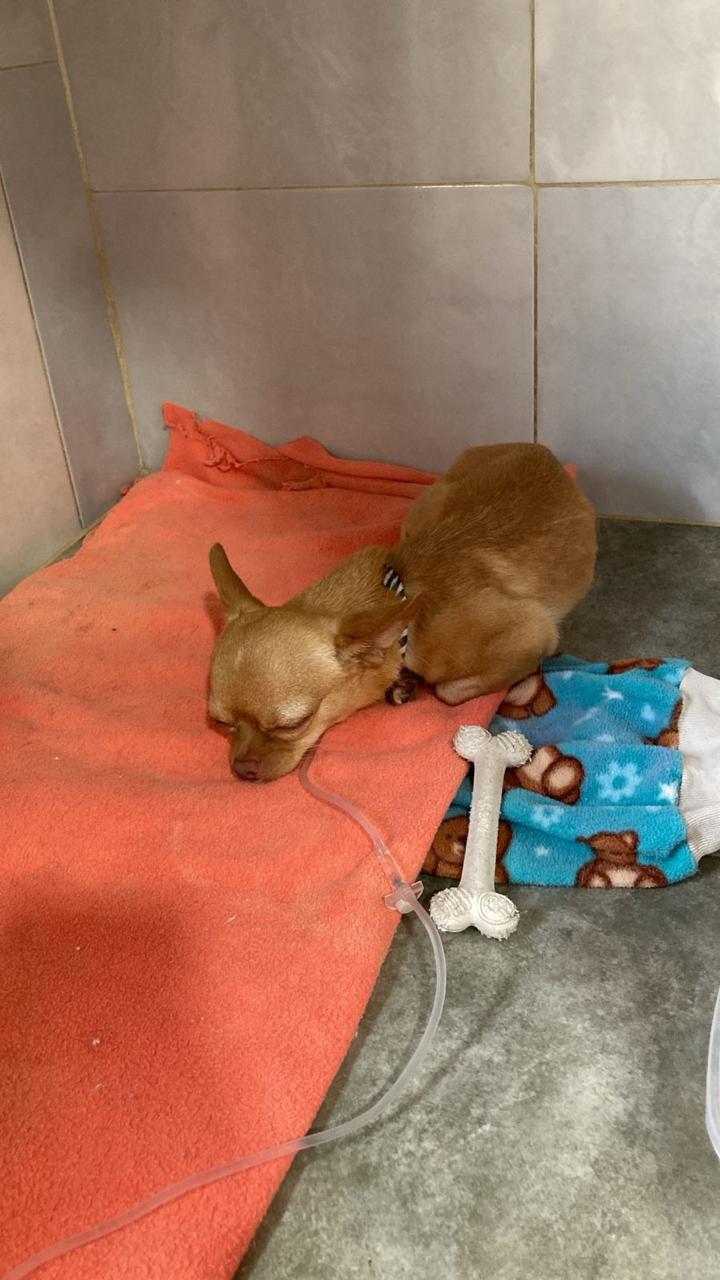
If your Chihuahua has diarrhea, the first thing to understand is that the clock runs differently for them than for a big dog. In a 4-pound (2 kg) body, every loose stool carries away a share of water a Labrador wouldn’t even notice, and what would be “let’s see how he is tomorrow” in another dog can turn into dehydration in a Chihuahua within hours.
That doesn’t mean rushing to the vet over one soft stool. It means knowing what to look at: the color, whether there’s blood or mucus, whether they’re also vomiting, whether they seem flat, whether they’re a puppy or a senior. That’s exactly what this guide gives you: how to read your Chihuahua’s diarrhea, what to do at home in the first 24 hours without making the most common mistake (a long fast), and the signs that can’t wait. None of this replaces your veterinarian; it’s so you arrive knowing what to tell them.
Why diarrhea in 4 pounds is not the same as in 45
A 45-pound (20 kg) dog that loses a pint of fluid in a day is uncomfortable. A 4-pound Chihuahua that loses a tenth of that is, proportionally, in the same trouble, and has far less room to keep losing. Dehydration in toy breeds moves fast, and it takes the electrolytes (sodium, potassium) the gut lets slip along with it.
There’s a second breed quirk almost no general guide mentions: hypoglycemia. Chihuahuas, especially puppies and adults under 5.5 pounds (2.5 kg), have very small glucose reserves. The classic advice to “fast for 24 hours to rest the gut” is written for big dogs, and in a Chihuahua it can end in trembling, wobbling and lethargy from low blood sugar. I’ve already covered in the guide on what happens when a Chihuahua won’t eat how quickly that spirals; add diarrhea and you’re losing fluid on top.
And a third: the MSD Veterinary Manual describes a condition called hemorrhagic gastroenteritis to which young toy and miniature breeds appear predisposed: sudden vomiting and bloody diarrhea in a dog that was perfectly well. It isn’t common, but it’s the reason blood in a Chihuahua’s diarrhea is never something to sleep on.
What do the color and texture of the diarrhea tell me?
Look before you clean up. I know it isn’t pleasant, but the look of the stool is the single most useful piece of information you can give your vet, and the one that best separates mild from serious.
| What it looks like | What it usually means | What to do |
|---|---|---|
| Soft, still shaped, brown | Food change, something they ate, mild stress | Watch for 24 h on a bland diet |
| Liquid, brown, no blood | Dietary indiscretion, mild virus, parasites | Home protocol; vet if it lasts beyond 24-48 h |
| Yellow or greenish | Fast transit, bile; sometimes a sudden diet switch | Watch; vet if it repeats or there’s yellow vomit |
| Jelly-like mucus, small amounts, many times | Colitis (large-bowel inflammation), stress | Vet within 24-48 h; sooner if there’s blood |
| Fresh red blood | Colitis, parasites, hemorrhagic gastroenteritis | Vet the same day |
| Black, sticky, tar-like | Digested blood: bleeding in the stomach or upper gut | Emergency |
| Watery, very frequent, foul-smelling, in a puppy | Suspected parvovirus | Immediate emergency |
| With white foam or yellow vomit | Empty irritated stomach, gastritis, or something worse | Vet if they vomit more than 2-3 times |
Two notes on that table. According to the MSD manual, colitis shows up as small-volume, more liquid stools with mucus and sometimes blood, plus straining; in nervous Chihuahuas it’s a classic after a move, a houseful of visitors or fireworks. And yellow vomit on an empty stomach is usually bile from irritation: not serious in itself, but alongside diarrhea and lethargy, the story changes.
The most common causes, from mildest to most serious
- They ate something they shouldn’t have. Cause number one. A piece of cheese, barbecue scraps, bread from the table. The ASPCA warns that dairy causes diarrhea because dogs lack enough lactase, and that fatty foods can trigger vomiting, diarrhea and even pancreatitis. In a Chihuahua, “just a little” is a full serving.
- A sudden food switch. Changing brands overnight. Transitions take 7 days, mixing increasing proportions; I walk through it in the Chihuahua feeding guide.
- Stress. Anxious Chihuahuas, routine changes, being left alone longer than usual. Produces the typical mucus-coated diarrhea.
- Intestinal parasites. Giardia, roundworms, hookworms. Very common in puppies. The MSD manual on parasites notes that the eggs of some parasites may not show up in a stool test until 16 days after infection, so one negative result doesn’t always close the case: sometimes it has to be repeated.
- Coprophagia. If your Chihuahua eats poop, their own or another dog’s, they’re taking in bacteria and parasites with every mouthful.
- Food intolerance or allergy. Chronic, on-and-off diarrhea, sometimes with itchy skin.
- Toxins. Chocolate, grapes, xylitol (the sweetener in chewing gum), onion. It starts with vomiting and diarrhea and gets worse from there. Emergency.
- Viruses. Parvovirus in unvaccinated puppies or those with an incomplete series. Canine coronavirus.
- Organ disease. Pancreas, liver, kidney, inflammatory bowel disease. More likely in seniors and in diarrhea that drags on for weeks.
When is it a veterinary emergency?
Keep this list. If any of these show up, it’s not “we’ll see tomorrow”; it’s today:
- Blood in the diarrhea, red or black.
- Repeated vomiting on top of the diarrhea (fluid lost from both ends).
- Lethargy: doesn’t get up to greet you, won’t play, hides.
- Trembling, wobbling or a glazed look (suspected hypoglycemia).
- Pale, white or tacky gums.
- A hard belly or pain when touched.
- A puppy under 6 months, or a senior.
- You suspect they ate something toxic or swallowed an object.
- The diarrhea has gone more than 24 hours without improving, even if it seems mild.
That last one is the hardest to accept. With a big dog, waiting 48 hours can be reasonable. With a Chihuahua, 24 hours of liquid diarrhea already justifies the visit.
What to do at home in the first 24 hours
If there are no red flags (the stool is soft or liquid but with no blood, and your Chihuahua is active, eating and drinking), here’s what you can do:
- Water available at all times. You never take water away from a dog with diarrhea unless they’re on IV fluids. If they vomit after drinking, offer a teaspoon every 15-20 minutes instead of a full bowl.
- No long fast. If they aren’t vomiting, don’t withhold food. The MSD Veterinary Manual notes that reintroducing food early is associated with faster recovery, and in a Chihuahua fasting carries the added risk of hypoglycemia. If they are vomiting, wait a few hours (not a whole day) for the stomach to settle before offering anything.
- A bland diet in tiny portions. Boiled skinless, unsalted chicken, shredded, with well-cooked white rice. Or plain cooked pumpkin. One tablespoon every 3-4 hours, not two big meals. In a 4-pound Chihuahua, “little and often” is the rule.
- Oral electrolyte solution from a vet pharmacy, if your vet okays it over the phone. For mild dehydration without vomiting, it replaces the sodium and potassium being lost.
- Canine probiotics, also with your vet’s guidance. They help the gut flora recover.
- No human medication. No anti-diarrheals, no anti-inflammatories, no laxatives. The dose for 4 pounds is minuscule and the margin for error is enormous. The MSD specifically warns that laxatives formulated for humans can be very dangerous for animals.
- Write it down. Time of each stool, what it looked like, whether they ate, whether they drank. When you call the vet, that’s worth more than any description from memory.
- Return to their regular food over 2-3 days, mixing it gradually into the bland diet.
How do I know if my Chihuahua is dehydrated?
Three checks you can do at home right now:
- The skin on the neck. Gently pinch the skin between the shoulder blades and let go. In a hydrated dog it snaps back in under a second. If it’s slow, or stays up like a tent, there’s dehydration.
- The gums. They should be pink, glossy and moist. Dry, tacky to the touch or pale means trouble.
- The eyes. Sunken, dull, with less sparkle than usual.
If any of the three fails, don’t try to rehydrate at home: in a Chihuahua, IV fluids are the only safe way to replace what’s been lost once the signs are visible.
Puppies and seniors: the two ages that can’t wait
A Chihuahua puppy with diarrhea is a same-day visit, always. Three reasons: hypoglycemia arrives faster, parasites are practically the norm at that age, and parvovirus is real. According to the MSD, parvo begins with vague signs (dullness, loss of appetite, fever) and within 1 to 2 days progresses to vomiting and bloody diarrhea; with supportive treatment, 68% to 92% of dogs survive, but without it some die within hours. A complete vaccination series is the only real prevention.
At the other end, a senior Chihuahua with diarrhea deserves the same urgency. Past 10 years, the kidneys, liver and pancreas no longer forgive dehydration, and diarrhea can be the first sign of something that was already brewing. I go into it in more detail in the guide to senior Chihuahua care.
And what if it’s the opposite and they won’t poop?
It happens more than you’d think, often right after a bout of diarrhea: the gut has emptied out and takes a day or two to have anything new. That’s not constipation. Worry if it goes past 48 hours, if they strain with no result, if they cry trying, or if they’re also vomiting: that can be an obstruction (a bone, a toy, a fruit pit) and it’s an emergency. And once again: no human laxatives.
How to prevent the next one
- Zero table scraps. The most common cause and the most avoidable.
- Food changes over 7 days, never overnight.
- Deworming on schedule, following your vet’s calendar.
- Full vaccinations, especially in puppies.
- Trash and plants out of reach. A Chihuahua gets into places you wouldn’t imagine.
- A stable routine. Chihuahuas somatize; a calm dog has a calm gut.
At home
The photo at the top of this article is from a day I’d rather not repeat: Lorenzo, all 5 pounds (2.3 kg) of him, lying on a blanket at the vet clinic with an IV line in his leg. Seeing him like that, so small with that tube, taught me something no guide had made quite so clear: in a body that size there is no margin. What’s lost gets replaced with fluids, or it doesn’t get replaced.
Romeo, who is 11 now, is the one who holds me to the “today, not tomorrow” rule. With him, any change in his stool is a call to the vet before dark, not out of paranoia but because at his age the body whispers instead of shouting. Lorenzo, on the other hand, is my stress-diarrhea specialist: a night of fireworks is enough to give him two days of mucus. Two dogs, two causes, one rule: look, write it down, and don’t wait too long.
Nothing in this guide replaces a consultation with your veterinarian. It’s written so you arrive with clear information, and so that in the mild cases you know what to do without doing harm.
Frequently asked questions
What can I give my Chihuahua for diarrhea?
How long can diarrhea last in a Chihuahua?
Why does my Chihuahua have bloody diarrhea?
My Chihuahua is vomiting yellow and has diarrhea. What does it mean?
Can I give my Chihuahua Imodium (loperamide)?
Written by Belen Salto, who shares her life with Romeo and Lorenzo, two Chihuahuas. · Ver en español