Reverse Sneezing in Chihuahuas: What That Noise Is and How to Stop It
Reverse sneezing in Chihuahuas: why they make that choking snort, how to stop an episode in seconds, how to tell it from a collapsed trachea and when to see the vet.
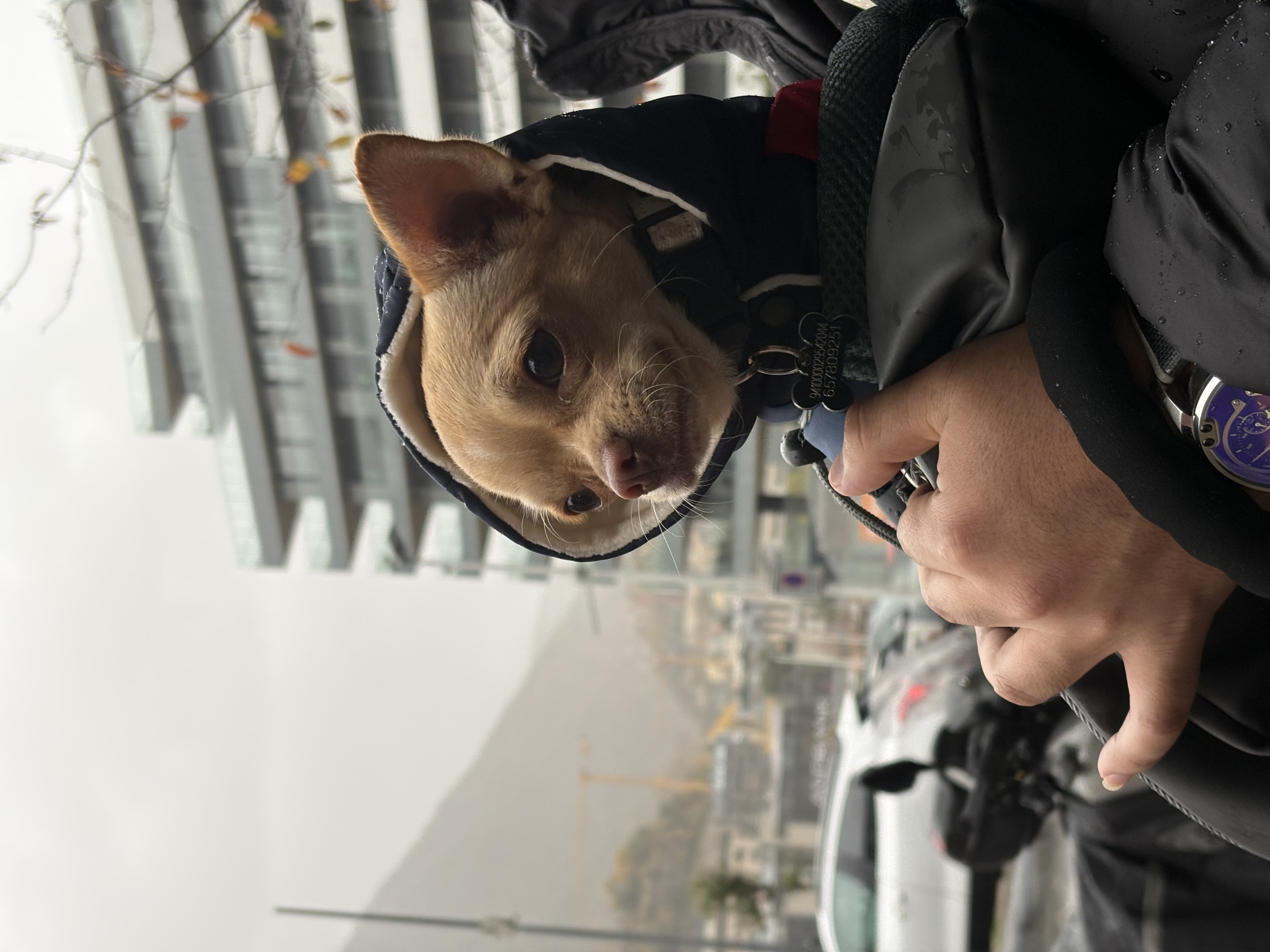
The scene is always the same. Your Chihuahua is relaxed, then suddenly goes stiff, stretches the neck out, eyes wide, and starts making a horrible noise: a series of forceful inhalations through the nose, like a snore in reverse, as if they were choking. It lasts twenty seconds that feel like twenty minutes. Then they go right back to what they were doing.
That’s called reverse sneezing, and it’s one of the most common reasons first-time Chihuahua owners call the vet, usually with their heart in their throat. The good news first: in the vast majority of cases, it isn’t dangerous. This article explains what it is, how to stop it, and most importantly, how to tell when it isn’t a reverse sneeze.
This article is for information only and is not a substitute for advice from your veterinarian.
What is reverse sneezing?
In a normal sneeze, a dog blasts air out through the nose to clear an irritant. In a reverse sneeze, the opposite happens: the dog pulls air in, rapidly, forcefully and repeatedly, with the mouth closed and the neck extended. That’s why it sounds like snorting or choking rather than sneezing.
The American Kennel Club describes it as a “paroxysmal” respiratory response, meaning it comes in spasm-like episodes, and attributes it to irritation or inflammation of the nasal passages, pharynx or sinuses. It may be the body’s way of trying to expel something bothering the upper airway. It affects all kinds of dogs but is far more common in small ones and in short-faced breeds.
In a Chihuahua, with a tiny throat and a soft palate that’s long for the size of the mouth, the smallest irritation can set off the spasm.
What triggers it?
Almost always something that irritated the soft palate or throat. The usual suspects:
- Dust, pollen, dirt, or a blade of grass they sniffed.
- Perfume, aerosols, air fresheners, cleaning products.
- Excitement: someone arriving, play, greetings.
- Pulling on the leash, if they wear a collar.
- Eating or drinking too fast.
- Seasonal allergies, just like in people.
- Sudden temperature changes, like stepping out into the cold.
Less often, there’s an underlying cause: a foreign object in the nose, nasal mites, an infection or, in very short-faced dogs, an elongated soft palate. Those cases stand out because episodes become frequent or come with other symptoms.
How do I stop a reverse sneezing episode?
You don’t have to do anything: it ends on its own, usually in under a minute. But if you want to cut it short, the most effective thing is to make the dog swallow, because swallowing relaxes the spasm:
- Stay calm and speak softly. Your panic makes theirs worse.
- Gently massage the throat, stroking downward.
- Briefly cover the nostrils with your fingers. It forces a swallow and the episode usually stops.
- Blowing gently in their face has the same effect on many dogs.
- Take them outside if the room has smoke, perfume or dust in the air.
What not to do: shake them, slap their back like a choking person, or put your fingers in their mouth. They are not choking.
And one piece of advice worth its weight in gold: record it on your phone. An episode that’s alarming at home almost never happens in the exam room, and with a 20-second video your vet knows exactly what it is.
Reverse sneezing or collapsed trachea?
This is the confusion that matters most, because both make a strange noise and both are typical of Chihuahuas, but one is harmless and the other needs treatment.
| Reverse sneezing | Collapsed trachea | |
|---|---|---|
| The air | Goes in (inhaled through the nose) | Goes out (a cough) |
| The mouth | Closed | Open |
| The sound | Loud snort, “like they’re choking” | Dry cough, “like a goose” |
| The posture | Neck stretched, legs stiff | Neck stretched, sometimes gagging at the end |
| Duration | Seconds to a minute | Minutes, in repeated fits |
| When | After sniffing something, excitement, air changes | Leash pulling, heat, eating, at night |
| Age | Any, often from puppyhood | Mostly adults and seniors |
| What to do | Nothing, or help them swallow | See the vet: it’s progressive and treatable |
If there’s a real cough, if the noise comes when they pull on the leash, or if your Chihuahua is over five and the noise is new, read collapsed trachea in Chihuahuas. When in doubt, your vet can tell them apart by feeling the neck and, if needed, with an X-ray.
When should I worry?
An occasional reverse sneeze is normal. What isn’t normal is a change in pattern. Take your Chihuahua to the vet if:
- It’s the first time, to confirm that’s what it is and not something else.
- Episodes are daily or getting more frequent.
- They last over a minute, or the dog doesn’t bounce back right away.
- They come with nasal discharge, nosebleeds, coughing or repeated normal sneezing.
- The dog seems lethargic, off their food, or breathes differently between episodes.
And it’s an emergency if, during an episode, the gums or tongue turn bluish, if the dog collapses, or if breathing doesn’t return to normal once it ends. That is no longer a reverse sneeze.
Is there a treatment?
Reverse sneezing itself isn’t treated, because it isn’t a disease. What gets treated, when there is one, is the underlying cause: antihistamines for allergies, antiparasitics for nasal mites, antibiotics for an infection, or surgery in the rare cases of an overly long soft palate.
At home, what reduces episodes most is removing irritants: no perfume or aerosols around them, less dust where they sleep, and a harness instead of a collar, since pressure on the neck is a known trigger. To pick one that fits, the best Chihuahua harness covers the models we recommend and how to measure.
The other noises and signs typical of the breed, and which ones deserve a vet visit, are in common Chihuahua health problems. And if what your Chihuahua does is snore while asleep rather than spasm while awake, that has its own explanation in why does my Chihuahua snore.
What we learned at home
Lorenzo had his first reverse sneeze at a few months old, mid-greeting, and it was a real scare. We recorded the second episode, showed it to our vet at the next visit, and the answer was reassuring: textbook reverse sneezing. Now, when he does it, I massage his throat, it passes in ten seconds and he gets on with his day. Romeo, at 11, almost never does it. I suppose with age you learn not to get quite so excited.
Frequently asked questions
What is reverse sneezing in a Chihuahua?
How do I stop a reverse sneezing episode?
Is my Chihuahua choking when they make that noise?
Reverse sneezing or collapsed trachea?
When should I see the vet about reverse sneezing?
Written by Belen Salto, who shares her life with Romeo and Lorenzo, two Chihuahuas. · Ver en español